

Senegal’s newly created Constitutional Court struck down a constitutional amendment on Thursday that would have shifted significant authority away from the presidency, delivering a setback to the parliamentary majority behind the change and deepening a political rift at the top of the West African country’s government.
The court ruled that the amendment, adopted by the National Assembly on June 29, violated the constitution. Lawmakers had passed the measure by an overwhelming majority, but President Bassirou Diomaye Faye asked the court to examine the procedures used to pass it, a review that ultimately found grounds to invalidate the reform.
A break between former allies
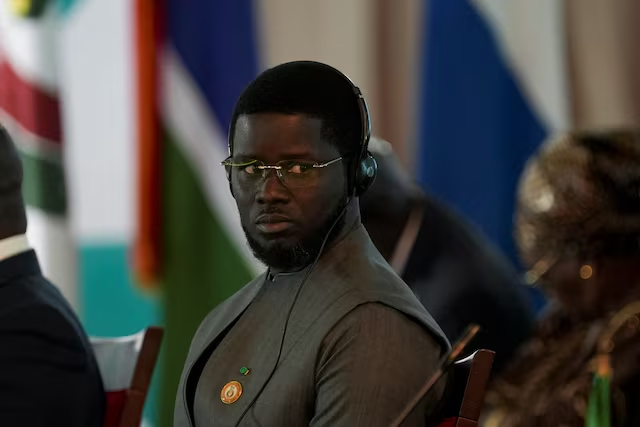
The amendment was the product of a rupture between Faye and Ousmane Sonko, once his closest political partner and the man who helped bring him to power. Faye removed Sonko as prime minister in May, and Sonko was quickly elected speaker of the National Assembly, a body Sonko’s Pastef party controls with a commanding majority of 130 out of 165 seats.
From his new post, Sonko pushed the constitutional changes through parliament. The reform would have expanded the powers of the National Assembly and the office of prime minister while narrowing those of the presidency. It also included a provision barring a sitting president from simultaneously leading a political party, a restriction that would have directly affected Faye, who said last week he intends to form his own party.
Opponents of the amendment, including figures within Faye’s own presidential coalition, characterized it as retaliation by Sonko following his dismissal. Aminata Toure, a leader within the presidential coalition, said at a briefing that parliament was being used to weaken the president. Critics outside government made similar arguments, framing the push as an attempt by Sonko to consolidate influence through the legislature after losing his position in the executive branch.
The measure also proposed replacing Senegal’s Constitutional Council with a new, larger Constitutional Court made up of nine members instead of seven, along with new limits on the president’s ability to dissolve the National Assembly and new restrictions on executive decisions made in the period between a presidential election and the official announcement of results.
Protests and a promised referendum
The amendment’s passage in late June triggered street demonstrations in Dakar. Opponents gathered outside the National Assembly building chanting slogans in defense of the existing constitution, and police used tear gas to disperse the crowd. Inside the chamber, opposition lawmakers boycotted the vote, and the session grew heated enough that security personnel removed at least one lawmaker by force.
Faye initially responded by declining to sign the bill outright and instead announcing plans for a national referendum, saying voters themselves should decide on changes that would reshape the balance of power between the presidency and parliament. His government did not set a date for that vote before the Constitutional Court intervened.
Justice Minister Moussa Sarr had told parliament ahead of the amendment’s passage that the president wanted the text put directly to the public rather than settled through the legislature alone. Pastef defended the reform as a rebalancing of power among Senegal’s executive, legislative and judicial branches, arguing the country’s presidential system had concentrated too much authority in one office.
A widening political rift
Thursday’s ruling represents a win for Faye in his escalating standoff with Sonko, though the two men led the coalition that won Senegal’s 2024 presidential election together and built their political movement on a shared platform. Their split has played out largely through institutions, with Sonko using his position atop the legislature to advance changes that would constrain the presidency he no longer occupies.
Sonko responded to the court’s decision on the social media platform X, saying he respected the ruling. The measured response suggests Pastef may pursue other paths to revive elements of the reform rather than directly challenge the court, though the party retains its large legislative majority and the ability to bring similar measures back for another vote.
The Constitutional Court said Faye had specifically asked it to examine the procedures lawmakers followed in passing the amendment, a review aimed at identifying violations serious enough to invalidate the entire text. That procedural focus, rather than a ruling on the substance of shifting power from the presidency to parliament, leaves open the possibility that a revised version of the reform could return through proper channels.
Complications for an ongoing debt crisis
The power struggle between Faye and Sonko carries consequences beyond domestic politics. Senegal has spent the past two years working to resolve a financial crisis that emerged after the government disclosed in 2024 that previous administrations had misreported the country’s debt levels, an admission that shook investor confidence and complicated the country’s relationships with international lenders.
Faye and Sonko came to power promising greater transparency in how the country manages its finances, and the debt disclosure became an early test of that pledge. A protracted rift between the president and the parliamentary leader who commands a supermajority in the Assembly threatens to slow the coordinated response Senegal needs to rebuild trust with creditors and stabilize its finances.
With the Constitutional Court’s ruling now in place, attention shifts to whether Sonko and Pastef attempt to bring a revised amendment back to parliament, and whether Faye proceeds with plans to launch his own political party now that the provision barring him from doing so has been struck down. Neither side has signaled a retreat from the broader fight over how power should be distributed among Senegal’s presidency, parliament and courts.