Nearly three months after a chaotic mass border crossing into Ceuta on July 30, thousands of migrants remain stranded in the Spanish enclave on Morocco’s northeast coast. Spain’s government is preparing faster asylum procedures meant to send most of them home, mainly to Morocco, while charities warn that the plan puts migrants’ rights at risk.
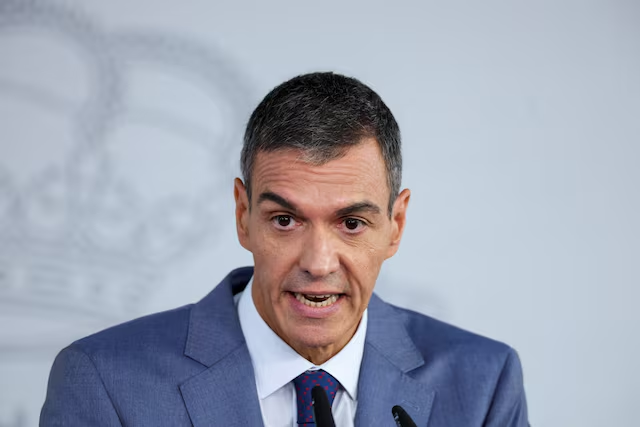
Prime Minister Pedro Sanchez faces pressure from the European Union and a frustrated public to resolve the crisis, and he heads into a snap election on November 29. The pressure is also arriving at a hospital bed, a pavement outside a police station and a church-run shelter that now houses dozens of people it was never built to hold.
A Pregnant Mother, a Disabled Son and a Sick Newborn
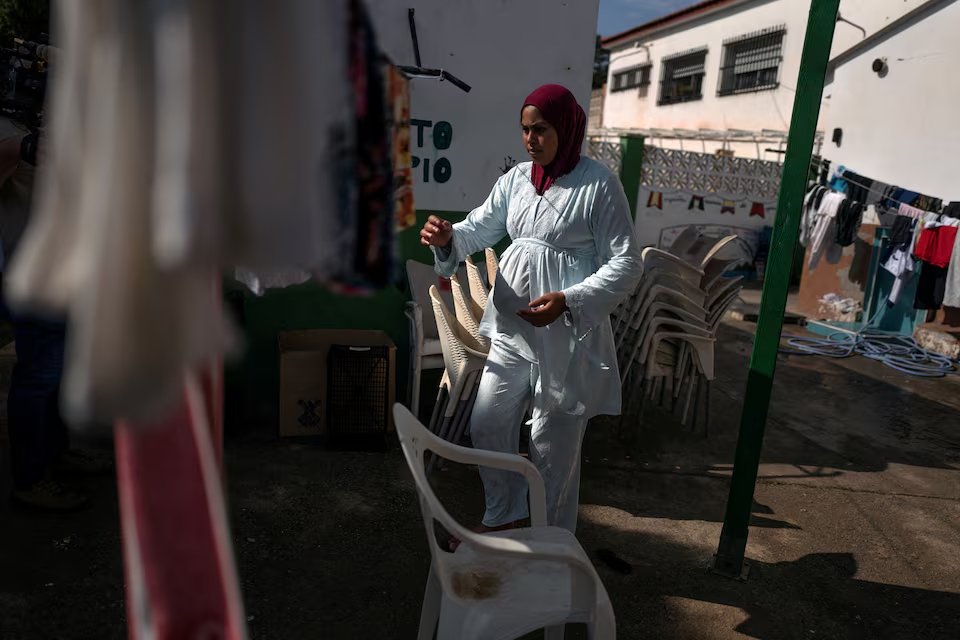
Fatna was heavily pregnant when she arrived in Ceuta with her disabled son during the crossing on July 30. She hoped officials would put her high on the list for help.
She is 21 now, and her newborn daughter has kidney problems. The family needs to reach mainland Spain for specialist hospital treatment. Travelling there while an asylum claim is under review requires a permit, and Spain’s socialist government, which ordinarily argues for immigration, has been reluctant to grant that permit to any of the thousands of migrants still in Ceuta.
Her husband Mohamed said the family wants to stay in Spain. They fear for the baby and are convinced their 3-year-old disabled son would die in Morocco. “We are doing everything for our son,” he said.
Fatna’s family is staying at San Antonio, a Catholic migrant reception centre. Its coordinator, Wendell Soares, said the centre has taken in the family and dozens more vulnerable people, far beyond its usual capacity of seven.
Thousands Remain in a City of 20 Square Kilometres

Ceuta covers only 20 square kilometres. It has 84,000 residents and holds Europe’s only land border with Africa. Some of the migrants who crossed in July still sleep on the streets or hide in the hills around the city.
The police union estimates that 7,000 to 8,000 more migrants are scattered across the city. Some sleep rough. Others are squeezed into facilities run by charities and civil society groups that are filling the gap left by Ceuta’s overwhelmed social services. At those figures, migrants would equal roughly 8 to 10 percent of the enclave’s population.
Local media documented unaccompanied minors sleeping on the pavement in front of police headquarters over the weekend, waiting to be registered. They had been evicted from an industrial estate near the Moroccan border.
The government has declined to comment on estimates of unregistered migrants. Territorial Policy Minister Angel Victor Torres told reporters on October 14 that it was impossible to know how many were hiding.
Registration Moves Slowly

A shortage of resources, from staff to working computers, has slowed the process. According to police union representative Raul Piera, only around 100 migrants’ cases were being registered each day as of October 14.
Registration is only the first step before a claim can be assessed. At 100 a day, registering 7,000 to 8,000 people would take 70 to 80 days, assuming the pace holds and no one else arrives. Piera expects the work to last far longer. “Looking at the remaining workload, this will last well into next summer,” he said.
Frontline workers and NGOs on the ground say Ceuta has shown that the 12-week limit in the EU’s migration pact for processing asylum applications is unrealistic. Seven of them told Reuters they expect the process to drag on for months.
Madrid Wants Fast Returns
The government is working on shortcuts for asylum applications. The goal is to send most people home, mainly to Morocco, on the grounds that they are economic migrants and not genuine asylum-seekers. NGOs fear that approach risks violating migrants’ rights.
Reuters conducted more than 20 interviews with migrants, lawyers, NGOs and security forces. Many of the people who remain appear to have clear grounds for asylum or humanitarian protection. They include unaccompanied minors, LGBT Moroccans who fear imprisonment if deported, and families like Fatna’s that EU law classifies as vulnerable.
The political setting is tense. Spain’s right-wing and far-right parties were already angry with Sanchez’s government for giving legal status to nearly 1 million irregular migrants earlier this year. They describe July’s crossing as a deliberate invasion by Morocco, an accusation Morocco denies, and they demand that all migrants be returned.
Sanchez is one of Europe’s few remaining left-leaning leaders. Last week he said Spain was handling the caseload “responsibly, with a sense of solidarity and respecting migrants’ human rights.”
What the Rules Require

Current rules require that migrants be assessed one case at a time. The EU is developing a new procedure that would allow accelerated deportations in future emergencies, but it does not change that requirement today.
Most of the migrants are from Morocco. In August, however, the government estimated that more than 1,000 of those remaining came from sub-Saharan countries. According to government statistics, Spain grants asylum to nationals of those countries in over 90 percent of cases.
The EU’s new migration pact requires that cases be processed in border zones to allow faster deportations. It does not require applicants to stay where they arrived. That leaves room to transfer them to other border zones in Spain and ease the pressure on Ceuta.
Juan Miguel Morales, director-general of the NGO Sur Acoge, said that if vulnerable migrants’ cases are to be assessed properly, such transfers are the “only option.”
So far, 262 minors have been moved to the Spanish mainland since the July crossing. For adults, the government’s strategy has been to convince as many as possible to go back of their own will.
Andrea de Petris, an immigration expert at the Freiburg-based think tank CEP, pointed out that Morocco’s status as a “safe country of origin” under EU rules does not remove its citizens’ right to apply for asylum. “Each individual must be guaranteed a specific assessment of their personal circumstances,” he said. He estimates that the procedure would inevitably be “lengthy and costly.”
Who Is Still Waiting
The people left in Ceuta are not one group. Most are Moroccan, and the government treats many of them as economic migrants. More than 1,000 come from sub-Saharan countries, and their nationalities win asylum in over 90 percent of cases in Spain. If that rate held for those 1,000, roughly 900 would be recognised as refugees, which sits uneasily with a plan to send most people home.
Then there are the minors, the families with sick children, and migrants who say they face prosecution in Morocco. Each of these groups has a separate legal route, and each needs its own assessment. That is the work NGOs say the fast-track plan would skip.
Pressure From Both Sides
The government is squeezed from two directions. The right and far right want every migrant returned. Charities want every case examined. The EU, for its part, wants the crisis resolved. Sanchez has about six weeks until the vote on November 29 to show progress to all three.
The figures on returns suggest which pressure is winning. Since mid-August, 12,000 people have crossed back, which averages roughly 1,200 to 1,300 a week. Registrations of those staying run at around 700 a week, going by the police union’s figure of 100 a day. Returns are moving faster than assessments, and that gap is what the NGOs’ coercion complaints are about.
Voluntary Returns, or Not
The government said this week that 12,000 people had chosen to cross back since mid-August.
Interior Minister Fernando Grande-Marlaska rejected any suggestion of forced removals. “There are no covert deportations under any circumstances,” he said. He described the returns as voluntary and said Spain had received up to 1,200 asylum applications and resolved 700 of them.
Rights groups tell a different story. At least nine NGOs have said, in public statements or in interviews with Reuters, that migrants they support were coerced into returning.
Last week, eight charities, including Oxfam and Amnesty International, filed a complaint with Spain’s ombudsman alleging “grave rights violations” in Ceuta. Reuters has seen the complaint. It describes the forced return of migrants from conflict-hit countries and the denial of interpreters and legal assistance.
One of the charities, Asociación Elin, said in the complaint that migrants from Sudan and Chad were summoned by police on September 24 and 25 and deported without warning.
Spokespeople for Spain’s central government, interior ministry, territorial policy ministry and migration ministry did not respond to Reuters requests for comment on the accusations of mistreatment.
“They Deported Us Without Explanation”
Reuters reviewed text messages from Azhaar Chaouni, a Moroccan migrant, to volunteers at the German NGO Mission Lifeline. He wrote that he and other migrants faced the same fate as the Sudanese and Chadian group. Police had picked them up in buses from makeshift camps on the beach and told them they were being taken to reception centres.
“They deported us without explanation,” Chaouni wrote. He said he was in Morocco.
Stories of others disappearing have frightened Rayane, a 19-year-old gay Moroccan who is waiting for news on his asylum application at the San Antonio centre. His family rejected him, and same-sex sexual acts are prosecuted in Morocco, so he cannot live openly there. He is desperate to reach mainland Europe.
“I can’t even imagine myself going back to Morocco. I’d kill myself before even crossing the border,” he said.
A Hospital Under Strain
Doctors at Ceuta’s only hospital are treating migrants for scabies, tuberculosis and gastrointestinal infections caused by long periods outdoors, according to Enrique Robiralta, head of the doctors’ union. At least seven women have given birth.
Fatna is one of those mothers. Her baby’s kidney condition is the reason the family needs a transfer to a mainland hospital with specialist care, and the permit that would allow it has not come.
Soares: “Every Person Has Their Own Story”
Soares, whose centre houses Fatna’s family, argues that some migrants face real danger. “There are people who will truly be in enormous danger if they are returned to Morocco,” he said.
He also objects to how the migrants are talked about. “When the word ‘immigrant’ is used, it creates a collective image, as if they were all the same. Every person has their own story,” he said.
What Remains Unverified
Several of the biggest numbers rest on a single side. The government says the 12,000 returns were voluntary, and at least nine NGOs say some were coerced. The police union puts 7,000 to 8,000 migrants in the city, and the government says it cannot know how many are hiding. Four ministries did not answer Reuters about the mistreatment claims.
Nothing in the reporting settles those disputes. The ombudsman now has the charities’ complaint, and the Sudanese and Chadian deportations of September 24 and 25 are the clearest test case, because Asociación Elin has named the dates. An official account of what happened on those two days would show whether the complaint holds.
What Comes Next
Several numbers will decide how this plays out. About 100 registrations a day is the pace police reported on October 14. The government counts 12,000 returns since mid-August and up to 1,200 asylum applications received, of which 700 have been resolved. The police union counts 7,000 to 8,000 people still scattered through the city.
The election on November 29 falls inside the registration backlog. Whoever governs Spain after that vote will inherit a queue that, by the union’s estimate, runs well into next summer. Until the government explains how it will assess each case, as current rules demand, and until it answers the charities’ complaint, families like Fatna’s remain in a city too small to hold them, waiting for a permit that decides where their children get treated.