Clicxpost

World News

Trump, Xi and Putin Sign “Peace Declaration” at Unprecedented Three-Way Summit in Shenzhen

Trump Xi Putin summit

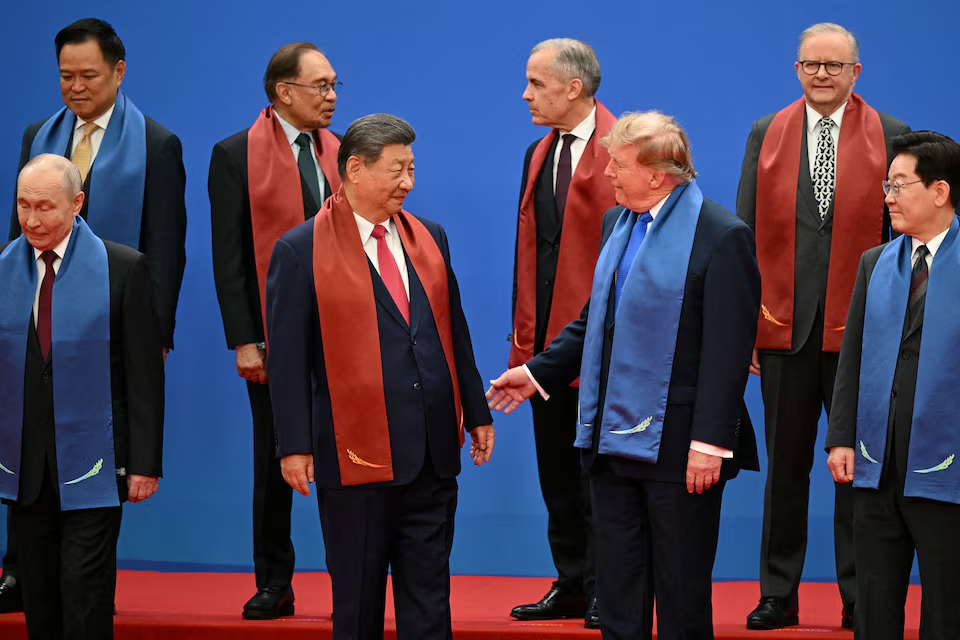
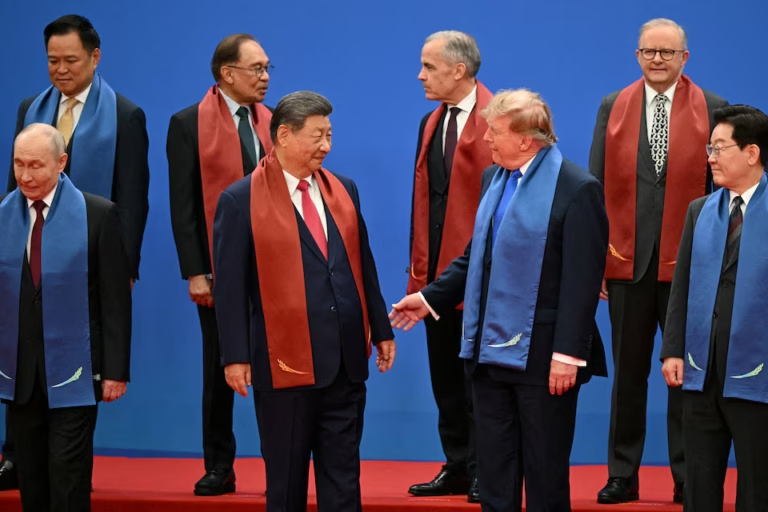
SHENZHEN, China, Nov 19, 2026: The presidents of the United States, China and Russia met together for the first time on Thursday and agreed on a “peace declaration.” In it they restated that a nuclear war should never be fought, according to statements from Beijing and Moscow.

The three-way meeting took place on the sidelines of the Asia-Pacific Economic Cooperation (APEC) summit in the southern Chinese city. It ended a three-day Asian tour by U.S. President Donald Trump. The trip delivered little in concrete results, despite his repeated claims that he was making history and brokering peace. It also gave U.S. allies fresh reason to ask how close Trump has grown to Russian President Vladimir Putin, whose country is still at war with Ukraine.

Chinese state news agency Xinhua and the Kremlin both published the text of the declaration. Trump boarded his flight home after the meeting without making any public comment.

What the declaration says

Beyond the line on nuclear war, the three leaders committed to several other goals:

  • Reforming the United Nations. The statement pledges to push for changes to the world body, though it gives no detail on what those changes would be.
  • Boosting refined fuel supplies. The leaders said they would work to increase supplies of refined petroleum products to all countries.
  • Protecting official immunity. They pledged to uphold the immunity that state officials enjoy before international courts.

That last point drew the most attention from analysts, because of Putin’s legal position. The International Criminal Court in The Hague has issued arrest warrants for him and five other Russian officials. Putin and Maria Lvova-Belova, Russia’s children’s commissioner, are accused of unlawfully deporting and transferring Ukrainian children. The remaining warrants concern alleged war crimes and crimes against humanity during Russia’s full-scale invasion of Ukraine. Moscow rejects all of the accusations.

Jonathan Eyal, international director at the London-based think tank RUSI, said the challenge to international norms and courts was the most revealing part of the text. In his view it reflects a world in which major powers set the rules while smaller states bear the consequences.

Eyal also assessed who gained most. Putin, he said, came away with added credibility and a way out of pariah status. Trump, in his words, received a photo opportunity he had no need for.

A meeting in a lakeside villa

The leaders sat around a round table at the Kylin Villa, a retreat set among wooded hills beside a lake. The venue has hosted sensitive diplomacy before. Past visitors include the late North Korean leader Kim Jong-il, Xi’s father Xi Zhongxun, and envoys of the Dalai Lama.

Before reporters were ushered out, all three called the occasion historic. Trump told his counterparts the group was making history, and argued that peace has never been achieved by turning down chances to talk. Earlier in the day he held separate meetings with Xi and Putin and described both men as friends.

Putin’s diplomatic win

China hosts the APEC summit

For Putin, the sit-down was a clear diplomatic success. Russia’s economy is only about a tenth the size of China’s, and sanctions have shut most Russian businesses out of trade with the West. Appearing as an equal alongside the American and Chinese presidents was therefore of real value to Moscow.

The timing was awkward for the Kremlin on the battlefield. Putin arrived just after a setback in the war with Ukraine, in which a key bridge linking Crimea to Russia was crippled. He said the three countries share many interests in settling regional conflicts, and he named the war in Ukraine explicitly.

Xi did not mention Ukraine directly. He instead offered a general principle: when major powers live in harmony the world is at peace, and when they clash it falls into turmoil.

The summit also ended only hours before a separate gathering in Berlin. Ukraine and the leaders of its main European allies were due to meet Trump’s envoys Steve Witkoff and Jared Kushner there, a reminder of how divided Western and Russian positions on the war remain.

Deep differences remain

Despite the show of unity, the three countries disagree sharply on Ukraine, Iran, nuclear weapons and trade. Those gaps cast doubt on whether the declaration can produce anything lasting. The meeting has also unsettled smaller countries, which worry that the three giants could settle matters among themselves while ignoring everyone else’s interests.

Pageantry in Shenzhen

Trump had made his own reception a talking point before the trilateral took place. In a Fox News interview he dwelt on the ceremony that greeted him in China, which contrasted with the quieter welcomes given to other leaders, Putin among them.

Xi personally met Trump at the airport. It was the first time he has done so for any visiting leader since becoming president, and it returned a gesture Trump made at Joint Base Andrews in September, when the two men last met. The two leaders also shared a brief embrace.

Trump called Xi one of China’s great presidents and noted that he had never gone to an airport to greet anyone before. He described the gesture as a win for both countries. He also praised the crowds, the children, the soldiers and the overall spectacle.

Japanese Prime Minister Sanae Takaichi had a very different experience. She arrived with no official welcoming ceremony and appeared isolated through much of the summit. Tokyo’s relations with Beijing have been strained since 2025, when she said Japan might use its military if a Chinese move against Taiwan also endangered Japanese territory. Takaichi said this week that Japan’s position on Taiwan has not changed since 1972.

Taiwan also featured in the Trump–Xi talks. Xi told his American counterpart that Washington must “do the right thing” if it wants to avoid serious damage to the relationship.

Nuclear arms: a hard sell

China hosts the APEC summit

Trump had insisted that nuclear arms control be a central topic. That was a difficult ask, because China has repeatedly refused to join arms-control negotiations with the United States and Russia. Beijing’s usual argument is that its arsenal is far smaller than those of the other two, which hold the vast majority of the world’s nuclear warheads.

At the start of the meeting, Trump acknowledged the difficulty, saying that giving up such weapons is not easy. The declaration they ultimately produced reaffirms the principle that nuclear war must be avoided. As described in the Chinese and Russian readouts, it does not appear to include any binding limits or a framework for talks.

Trade tensions in the background

The summit also took place against a mixed backdrop in U.S.–China economic relations. Trump and Xi met after the two countries extended their trade truce earlier this month. But new friction has emerged over reports that Nvidia chips are being diverted to China via Southeast Asia. Those reports raise doubts about how well U.S. export controls are working and about whether China will keep access to advanced technology.

Why it matters

The Shenzhen declaration is mostly symbolic. It sets out broad principles without enforcement mechanisms, and the three signatories disagree on most of the issues that drive global tension. The agreement on nuclear restraint repeats a position that has been stated before, and the pledge to protect state officials’ immunity in international courts will be read by many as a direct response to the warrants against Putin.

What the meeting does change is the optics. Putin appeared at the same table as the leaders of the world’s two largest economies, a few hours after a military setback. Xi showed that Beijing can host the American and Russian presidents together. Trump, who has made personal diplomacy the centerpiece of his foreign policy, got the image of a historic summit, though not a deal on Ukraine, Iran or arms control.

For U.S. allies in Europe and Asia, the main question is what comes next. The Berlin meeting on Ukraine, scheduled for the same day, will test whether Washington’s engagement with Moscow and Beijing translates into anything for Kyiv. For smaller states, the concern is simpler: that major powers are increasingly willing to settle global questions among themselves.
RECOMMENDED
World News

Trump Lands in Manila Amid Protests, Days Before Quad Meeting and Talks With Xi and Putin

By George Mensah 7 min read

US President Donald Trump arrives in the Philippines on Tuesday, November 17, 2026, for the closing days of a Southeast Asian summit, with protesters already in the streets of Manila and the first Quad leaders’ meeting in two years waiting on the schedule. His flight leaves behind a Republican midterm defeat at home and carries him toward a Chinese-hosted forum where a three-way meeting with Xi Jinping and Vladimir Putin is under discussion.

The Quad brings together the United States, Japan, Australia and India. It last gathered two years ago, and it will be Trump’s first meeting with the group’s leaders. His predecessor Joe Biden treated it as a signature foreign policy initiative.

A trip with three stops and little room for error

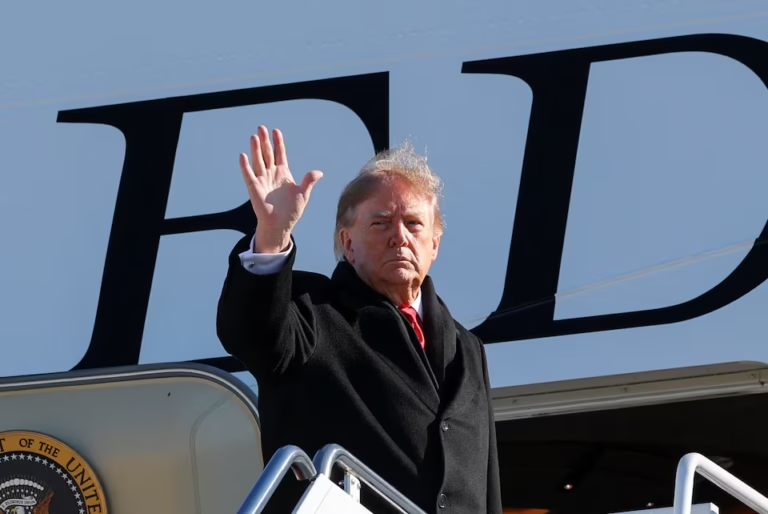
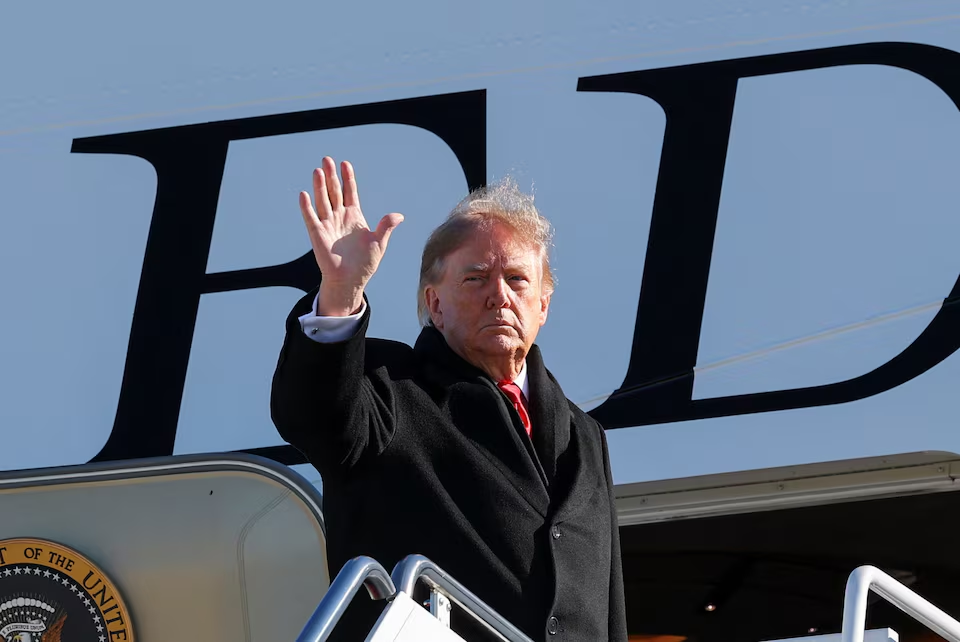
US President Donald Trump departs for his trip to the Philippines and China from the White House

Trump boarded Air Force One at Joint Base Andrews, Maryland, on Monday, November 16. After Manila he is due at the Asia-Pacific Economic Cooperation forum in Shenzhen, China, hosted by Xi. The Manila stop sits at the tail end of the Association of Southeast Asian Nations (ASEAN) summit, so Trump will see the region’s leaders in a compressed window rather than across several days of talks.

Two developments at home and abroad complicate the itinerary. Republicans lost the midterm elections, and spy allegations have surfaced that could strain the fragile trade-war truce between Washington and Beijing. Trump heads into the Shenzhen talks after an election loss, with a trade pause that could break if the espionage claims escalate.

Protests in Manila before he lands

Demonstrations in Manila have run for days. Protesters have burned effigies of the president, called for an end to the Middle East war, and demanded that the Philippines scrap Pax Silica, a US-led initiative to secure supply chains for semiconductors, artificial intelligence and rare earth elements.

Pax Silica has become the local flashpoint. Washington plans a critical technology hub at New Clark City, north of Manila, on land that was once part of a US military reservation including Clark Air Base. The Philippines took that land back in 1991. Supporters of the plan say it would bring about 200,000 jobs and up to $70 billion in investment. President Ferdinand Marcos Jr. said on August 14 that Manila’s involvement is economic and “purely practical.”

Analysts describe the hub as a defense against Chinese influence, and Xi launched a rival World Artificial Intelligence Cooperation Organization in July 2026. Opponents read it differently. Teddy Casino, who leads the nationalist group Bayan, says the hub would let US military personnel into the country and compromise Philippine sovereignty. Bayan marched in Manila on August 13. Senator Raffy Tulfo has filed a resolution to investigate the project’s economic, environmental, social and security effects, including its impact on indigenous peoples’ land.

The Philippines is a US defence ally, which makes the timing awkward for both governments. Trump meets Marcos on Wednesday, and the protests give Marcos a domestic audience that is watching how closely he stands to Washington.

Why the Quad meeting carries weight for Beijing

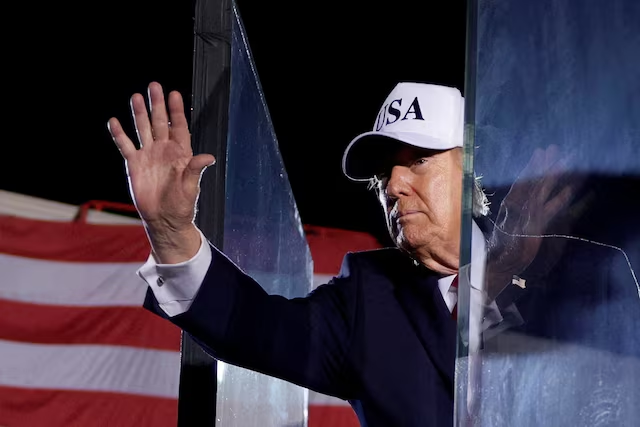
Protest during the first day of the 49th ASEAN Summit in Manila

The Quad meeting comes just before APEC, and Xi has previously objected to the group as an effort to encircle China. Quad members say it is not directed against any one country.

Kurt Campbell, a former US Deputy Secretary of State, credited Secretary of State Marco Rubio with the timing and with reconvening the group. Campbell, co-founder of The Asia Group, said the Quad had lost ambition under Trump. He described the Quad meeting as a signal sent before the trilateral talks.

“Part of what he (Rubio) is thinking is that this is probably the best possible signal if you’re going to go into a trilateral meeting,” Campbell said, referring to Thursday’s US-China-Russia talks.

He also pointed to Japan. “The linchpin of everything that we do in Asia is the US-Japan relationship, and a perception that this is not at the top of the president’s mind would concern me,” Campbell said.

The White House framed the Quad in different terms. Spokesperson Olivia Wales said on Friday that under Trump’s leadership the Quad had shown it is “a partnership of action, tackling the region’s toughest challenges and driving opportunities to ensure a free and open Indo-Pacific.”

A Japanese foreign ministry official said last week that Quad leaders were expected to try to show unity. Maritime security, export restrictions, diversification of critical-minerals supply chains and artificial intelligence are among the possible topics.

Those topics overlap with the trade dispute Trump will carry into Shenzhen. Export restrictions and mineral supply chains are the same levers Washington and Beijing have used against each other, so any Quad language on them will be read in Shenzhen as a message, whatever the communiqué intends.

The Shenzhen meeting with Xi and Putin

The trilateral meeting is reportedly pencilled in for November 18 and 19 on the sidelines of APEC. China has not confirmed it. Foreign Ministry spokesperson Mao Ning said Beijing is “in communication with relevant parties.” Kremlin spokesman Dmitry Peskov said work is underway to coordinate it and that he hopes it will be finalized in the coming days. Trump has said he is open to three-way talks focused on nuclear weapons.

Beijing’s position is cooler than Moscow’s. China’s Foreign Ministry has rejected joining trilateral nuclear disarmament negotiations at this stage. German President Frank-Walter Steinmeier said Xi told him the meeting would not discuss Ukraine, and that Europeans must take part in any such talks. Analysts quoted by Al Jazeera expect few concrete results. Inderjeet Parmar argued that Trump wants a high-profile encounter to present himself as a dealmaker after the midterms, and warned that a three-way format breaks from the post-1945 habit of consulting allies before engaging Moscow or Beijing.

Campbell’s warning about Japan reflects the same concern. Tokyo is one of the four Quad capitals, and its foreign ministry is already setting expectations for the agenda. If Trump gives the meeting less attention than the Shenzhen talks, Japan and the other members will notice. That last point explains why Campbell’s comment about Japan carries weight. Allies in Tokyo, Canberra and New Delhi will read the order of the week closely. A Quad meeting that comes first, followed by talks with Xi and Putin, tells them something about priorities, and the Manila stage is where Trump can reassure them or fail to.

ASEAN wants both Washington and Beijing

Chinese Premier Li Qiang spoke at the ASEAN summit on Monday. He praised what he called “truly extraordinary” economic achievements of China and ASEAN in the face of global trade restrictions. He pledged Beijing’s commitment to free trade and said the sides need to “stand united, ward off interference, and work together.”

China is ASEAN’s biggest trading partner and a major source of investment. The bloc has 11 members and a combined GDP of more than $3.9 trillion. Its largest economies still want to deepen ties with the United States, despite the trade and diplomatic uncertainty of the Trump administration.

That position explains the choreography in Manila. On Tuesday, before Trump’s late afternoon arrival, ASEAN leaders meet counterparts from Japan, South Korea, China and India ahead of the annual East Asia Summit. Trump will skip the East Asia Summit. He will instead join a US-ASEAN “Special Summit” and meet Marcos on Wednesday. Skipping the larger gathering means Li’s message gets the main stage, while Trump speaks to ASEAN on a separate track.

Thailand and the trade question

Trump is also expected to hold talks with Thai Prime Minister Anutin Charnvirakul on Tuesday, according to Thai media quoting the commerce minister. A joint statement is planned on negotiations toward a reciprocal trade agreement.

The numbers show why Bangkok wants the deal. The United States is Thailand’s largest export market and took 24% of its total shipments this year. Washington designated Thailand a major non-NATO ally in 2003. Bangkok has a concrete stake in the outcome, because a lower tariff or a quota change affects a quarter of what the country ships abroad. The Thai talks are the clearest test in Manila of whether Trump’s reciprocal trade approach produces signed agreements with Southeast Asian partners or stays at the negotiating stage.

What to watch next

Several dates now matter. The Thai joint statement and the ASEAN sessions come Tuesday. The US-ASEAN Special Summit and Trump’s meeting with Marcos follow Wednesday. The reported Shenzhen trilateral sessions fall on November 18 and 19 and still await Beijing’s confirmation, and the Quad leaders meet just before APEC.

Three questions will decide how the week is remembered. Will the Quad issue a joint statement that mentions export restrictions and critical minerals? Will Marcos defend Pax Silica in front of Trump while protesters stay in the streets? And will China confirm the three-way meeting, or let it lapse?

Campbell’s reading is that Rubio is sequencing the week on purpose: allies first, adversaries second. Whether Xi and Putin see it that way will become clear in Shenzhen.

World News

Flavio Bolsonaro Refuses to Concede as Lula Wins Fourth Term in Brazil

By George Mensah 9 min read

Brazilian Senator Flavio Bolsonaro has refused to accept defeat in Sunday’s presidential runoff, following the example of his father, the jailed former president Jair Bolsonaro. Leftist President Luiz Inacio Lula da Silva won a fourth term on October 25, 2026, and the senator says he will ask for the result to be annulled.

Bolsonaro, a right-wing senator and the son of the former president, questioned a decision made late on Sunday by a Supreme Court justice appointed by Lula. The justice extended voting by two hours over alleged irregularities in public transport. Bolsonaro told journalists the ruling made it impossible for him to accept the outcome.

“It is impossible to recognize the election results, given the circumstances under which things unfolded,” he said.

His refusal came as most of the world moved the other way. Leaders in Europe, Latin America, Asia and Russia congratulated Lula quickly. Financial markets reacted just as fast, with sharp falls in Brazil’s currency, stock index and public debt after a result that private polling had not predicted.

The numbers work against the annulment request

Lula beat Bolsonaro by more than 4 million votes. Analysts quoted by Reuters said a margin that wide makes it unlikely the annulment effort will succeed.

The disputed two-hour extension adds to the weakness of the case. Pedro Burgos, a professor at the Insper school, analysed electoral records and found that fewer than 35,000 votes were cast in the extra time. That is about 0.03 per cent of all ballots. Set against a lead of more than 4 million, the extension involved fewer than one late vote for every 114 votes in the winning margin. Even if every one of those late ballots went to Lula, removing them would not change the winner.

Bolsonaro’s own campaign has also weakened the argument. It asked for a voting extension too, citing heavy rains in the conservative-leaning south of the country. A campaign that wanted more voting hours for its own supporters has a harder time arguing that extra hours invalidate the result.

The petition may fail in court and still carry a political cost. Observers cited by Reuters said that a refusal to concede could lead to protests in a country where trust in the electoral system and in the independence of its judges has been under strain in recent years.

What the petition has to prove

An annulment request carries a heavy burden. Bolsonaro would need to show that the extra voting hours changed the outcome or corrupted the process, and the figures in the public record point the other way. The late ballots were a tiny share of the total, the margin is large, and his own campaign sought a similar extension.

His argument also rests on who made the decision. He is objecting to a ruling by a justice appointed by Lula, which lets him frame the extension as favouring the winner. That framing is political as much as legal. Its target is the voters who already distrust the courts, and the audience that matters most may not be the judges who read the petition.

A family precedent

Brazil's presidential runoff election

Flavio Bolsonaro is repeating a pattern set by his father. After the 2022 election, Jair Bolsonaro refused to accept the result, and his supporters stormed government buildings in protest. He was later sentenced to 27 years in prison for plotting a coup.

That history gives the son’s statement more weight with both sides. Supporters who stormed buildings in 2022 may read a refusal to concede as a signal. Opponents will read it as an attempt to repeat a strategy that has already led to a prison term for the person who used it. The senator’s words so far focus on one court decision and not on fraud in general, which suggests a narrower argument than his father made. Whether the courts or his supporters see the difference is not yet known.

Foreign leaders move quickly

While Bolsonaro disputed the result at home, foreign leaders accepted it. Congratulations came from the European Union, Mexico, France, Canada, India and Russia.

French President Emmanuel Macron said France and Brazil had “much to build together”. European Commission President Ursula von der Leyen said “democracy and multilateralism have won in Brazil.”

The Kremlin welcomed Lula’s re-election and praised his contribution to bilateral ties and to BRICS. Ukrainian President Volodymyr Zelenskiy also congratulated Lula on “remarkable election results” and said he looked forward to expanding cooperation.

Right-wing governments also recognised the result. Recently elected presidents in Colombia, Peru and Chile joined the leaders who accepted the outcome. These are governments that share Bolsonaro’s politics and could have chosen to back his challenge. They did not, which removes an argument he might have used: that the political right abroad shares his doubts.

Two names were missing. The White House and the US State Department did not immediately comment, and President Javier Milei of neighbouring Argentina had not said anything either. The silence from Washington stands out because the State Department under President Donald Trump led a campaign to return the Bolsonaros to power. The result is likely to disappoint the Trump administration, and its response will show whether it backs Bolsonaro’s challenge or accepts the count.

Lula wins against the polls

Brazil's presidential runoff election

Lula’s win went against the polls, against precedent and against a wave of anti-incumbent feeling in elections around the world. It also interrupted a run of right-wing election victories across Latin America.

He trailed Bolsonaro in the first round of voting. In the runoff he convinced enough people to turn out for him to overturn that gap and win by more than 4 million votes.

Private polling had pointed the other way. Investors had built their positions on the expectation that Bolsonaro would win, and many of those bets lost money overnight.

The first round put Bolsonaro ahead, and a surge of conservative voters pushed Congress to the right. Those results made a Bolsonaro win look like the continuation of a trend. The runoff turned on turnout, and Lula won it.

Markets sell off

The reaction in financial markets was severe. Brazil’s currency fell by more than 11 per cent against the US dollar in early spot trading, one of its biggest one-day declines on record. The Bovespa, Brazil’s benchmark stock index, dropped by more than 15 per cent. That was its largest daily percentage fall since 1998. Brazilian public debt also fell in value.

Investors were reassessing the country’s fiscal outlook under Lula. Falling prices for Brazilian debt mean higher borrowing costs for the government, and a weaker currency raises the cost of imports and of debts held in dollars.

Andres Abadia, chief Latin America economist at Pantheon Macroeconomics, said the first wave of selling might ease. “The initial selloff could moderate as election-related positions are unwound, but investors will demand convincing fiscal commitments before rebuilding exposure,” he said.

His comment separates two causes. One is mechanical, as traders close out positions that assumed a different winner. The other is a judgment about Lula’s spending plans, which only the new government’s budget decisions can settle.

What the sell-off means for ordinary Brazilians

A currency that loses more than 11 per cent in a day raises the price of anything bought in dollars, from imported goods to foreign travel, and makes dollar-denominated debts harder to repay. A stock index that falls more than 15 per cent cuts the value of savings invested in Brazilian shares. These effects reach households and companies within weeks, long before any government policy changes.

The new government also starts with less room to manoeuvre. When investors demand more to hold Brazilian debt, the state pays more to borrow, and that leaves less money for any spending plans. Abadia’s reference to “convincing fiscal commitments” points to the first test of the term: the budget Lula submits and how he explains it to markets.

Lula’s speech

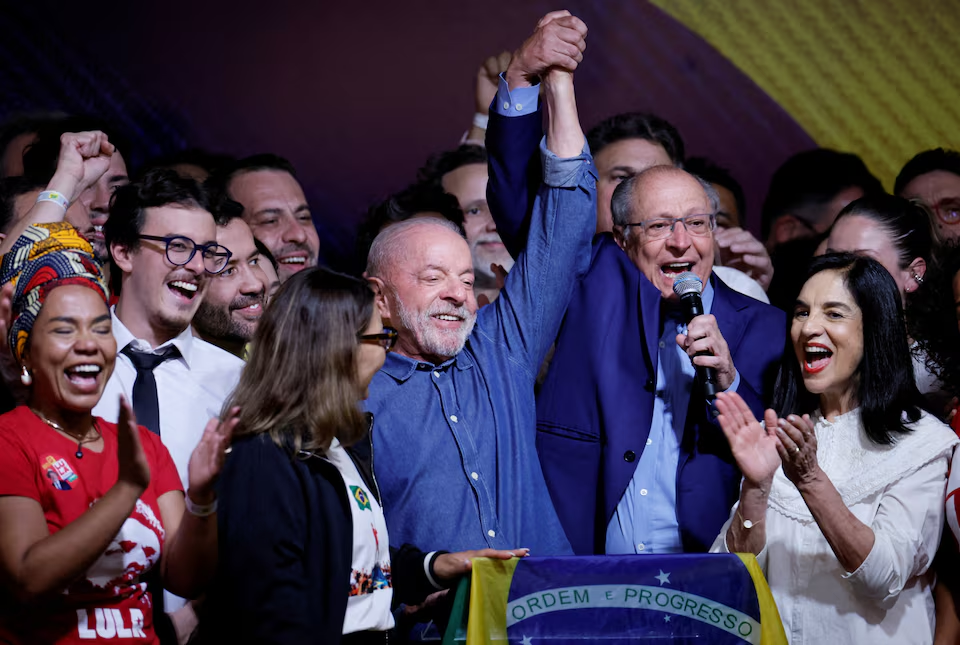
Speaking at a hotel in Sao Paulo late on Sunday, Lula took a conciliatory tone. He did not call for national unity, and he explained why.

“I won’t speak of national unity, because that doesn’t always fit the reality of this country. No one is obliged to like the elected president, but he was put in place to govern for everyone,” Lula said.

The remark accepts that Brazil is divided and that many voters chose his opponent. It sets a smaller goal than reconciliation. He said he would govern for everyone, including those who did not vote for him, and did not ask them to like him.

A Congress that leans right

During the campaign, Lula pointed to his record of cutting poverty and inequality. He also cited record low unemployment, illiteracy and deforestation.

His fourth term may be difficult. He will face a hard fight to pass his agenda in a Congress full of Bolsonaro allies. A surge of conservative voters in the first round of the general election pushed the legislature further to the right.

That arithmetic limits what a president can do, whatever the size of his winning margin. Spending plans, tax changes and any attempt to reassure investors on the budget will need votes from lawmakers who campaigned against him.

“The challenges are countless,” said Carlos Melo, a political science professor at Insper in Sao Paulo.

The risk of street protests

Reuters reports that observers see protests as a possibility, and Brazil has a recent example of how they can turn. The storming of government buildings after the 2022 election shows that anger over a result can lead to physical action against state institutions. The size of Lula’s margin and the broad acceptance abroad give the authorities a stronger position than they had in earlier disputes. They do not remove the risk, because a refusal to concede from a leading opposition figure can keep supporters who already doubt the system from accepting the count.

What to watch next

Several things will show how this election ends. The first is whether Flavio Bolsonaro files his annulment petition and how the courts respond. The second is whether his supporters take to the streets, as they did after the 2022 election. The third is whether the United States recognises Lula’s victory, since the White House and the State Department have so far said nothing. The fourth is how markets behave once the initial selling slows, and whether Lula’s government offers the fiscal commitments that Abadia says investors want.

The answers will arrive at different speeds. Court filings and market prices move within days. A decision from Washington depends on a White House that has not yet spoken. Congress will show its hand only when the new government sends its first bills.

For Lula, the immediate task is to take office with a result that most of the world has accepted and a minority at home that has not. His opponents hold a large share of Congress, and his opponent has said he will not recognise the vote. The next few weeks will show whether that refusal stays a statement or becomes a mass movement.

ADVERTISEMENT
Scroll to Top