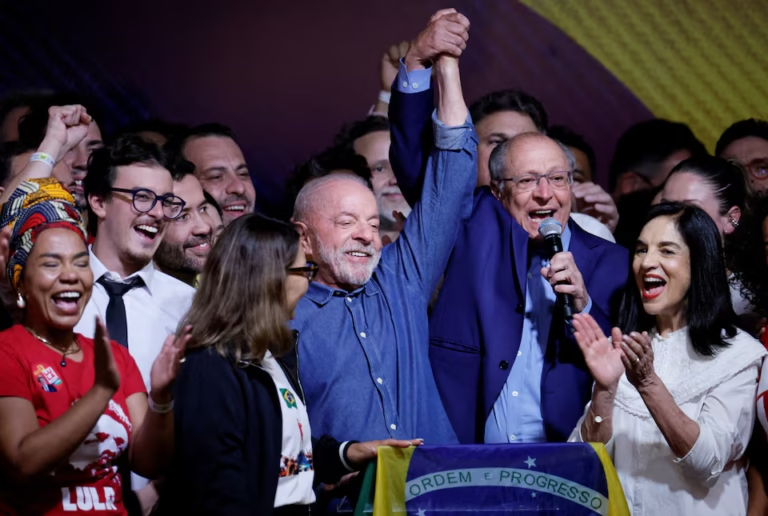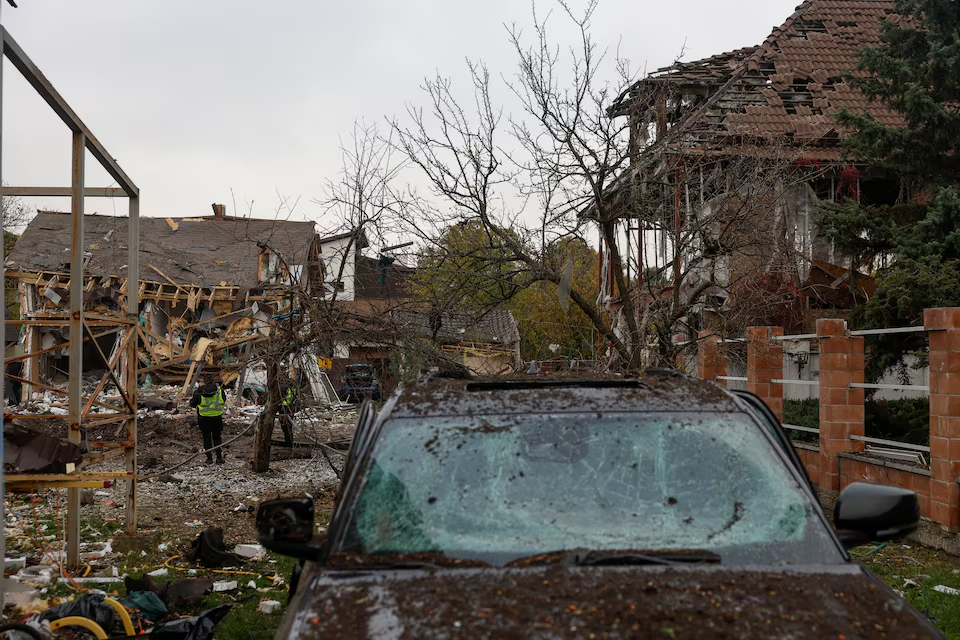

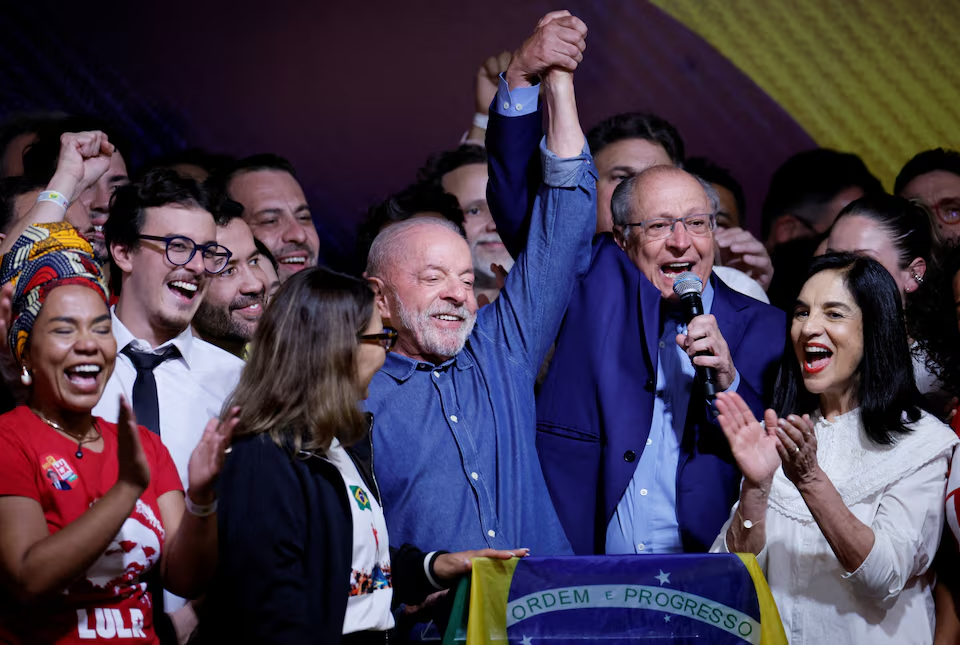
Brazilian Senator Flavio Bolsonaro has refused to accept defeat in Sunday’s presidential runoff, following the example of his father, the jailed former president Jair Bolsonaro. Leftist President Luiz Inacio Lula da Silva won a fourth term on October 25, 2026, and the senator says he will ask for the result to be annulled.
Bolsonaro, a right-wing senator and the son of the former president, questioned a decision made late on Sunday by a Supreme Court justice appointed by Lula. The justice extended voting by two hours over alleged irregularities in public transport. Bolsonaro told journalists the ruling made it impossible for him to accept the outcome.
“It is impossible to recognize the election results, given the circumstances under which things unfolded,” he said.
His refusal came as most of the world moved the other way. Leaders in Europe, Latin America, Asia and Russia congratulated Lula quickly. Financial markets reacted just as fast, with sharp falls in Brazil’s currency, stock index and public debt after a result that private polling had not predicted.
The numbers work against the annulment request
Lula beat Bolsonaro by more than 4 million votes. Analysts quoted by Reuters said a margin that wide makes it unlikely the annulment effort will succeed.
The disputed two-hour extension adds to the weakness of the case. Pedro Burgos, a professor at the Insper school, analysed electoral records and found that fewer than 35,000 votes were cast in the extra time. That is about 0.03 per cent of all ballots. Set against a lead of more than 4 million, the extension involved fewer than one late vote for every 114 votes in the winning margin. Even if every one of those late ballots went to Lula, removing them would not change the winner.
Bolsonaro’s own campaign has also weakened the argument. It asked for a voting extension too, citing heavy rains in the conservative-leaning south of the country. A campaign that wanted more voting hours for its own supporters has a harder time arguing that extra hours invalidate the result.
The petition may fail in court and still carry a political cost. Observers cited by Reuters said that a refusal to concede could lead to protests in a country where trust in the electoral system and in the independence of its judges has been under strain in recent years.
What the petition has to prove
An annulment request carries a heavy burden. Bolsonaro would need to show that the extra voting hours changed the outcome or corrupted the process, and the figures in the public record point the other way. The late ballots were a tiny share of the total, the margin is large, and his own campaign sought a similar extension.
His argument also rests on who made the decision. He is objecting to a ruling by a justice appointed by Lula, which lets him frame the extension as favouring the winner. That framing is political as much as legal. Its target is the voters who already distrust the courts, and the audience that matters most may not be the judges who read the petition.
A family precedent

Flavio Bolsonaro is repeating a pattern set by his father. After the 2022 election, Jair Bolsonaro refused to accept the result, and his supporters stormed government buildings in protest. He was later sentenced to 27 years in prison for plotting a coup.
That history gives the son’s statement more weight with both sides. Supporters who stormed buildings in 2022 may read a refusal to concede as a signal. Opponents will read it as an attempt to repeat a strategy that has already led to a prison term for the person who used it. The senator’s words so far focus on one court decision and not on fraud in general, which suggests a narrower argument than his father made. Whether the courts or his supporters see the difference is not yet known.
Foreign leaders move quickly
While Bolsonaro disputed the result at home, foreign leaders accepted it. Congratulations came from the European Union, Mexico, France, Canada, India and Russia.
French President Emmanuel Macron said France and Brazil had “much to build together”. European Commission President Ursula von der Leyen said “democracy and multilateralism have won in Brazil.”
The Kremlin welcomed Lula’s re-election and praised his contribution to bilateral ties and to BRICS. Ukrainian President Volodymyr Zelenskiy also congratulated Lula on “remarkable election results” and said he looked forward to expanding cooperation.
Right-wing governments also recognised the result. Recently elected presidents in Colombia, Peru and Chile joined the leaders who accepted the outcome. These are governments that share Bolsonaro’s politics and could have chosen to back his challenge. They did not, which removes an argument he might have used: that the political right abroad shares his doubts.
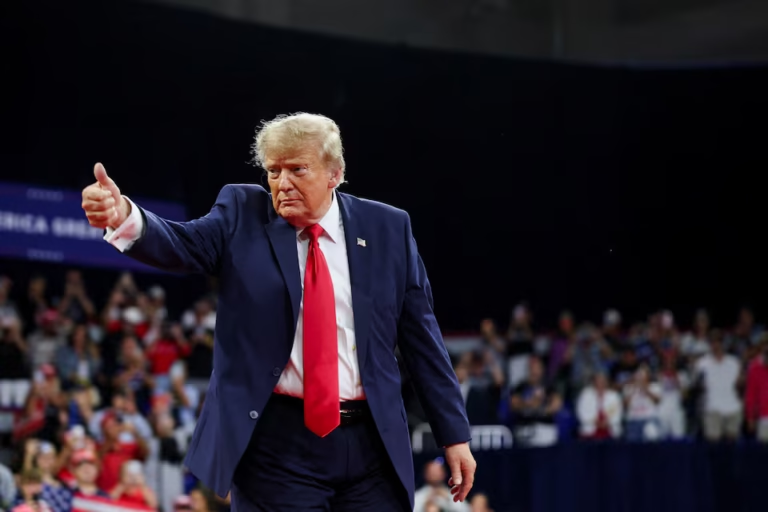
Two names were missing. The White House and the US State Department did not immediately comment, and President Javier Milei of neighbouring Argentina had not said anything either. The silence from Washington stands out because the State Department under President Donald Trump led a campaign to return the Bolsonaros to power. The result is likely to disappoint the Trump administration, and its response will show whether it backs Bolsonaro’s challenge or accepts the count.
Lula wins against the polls

Lula’s win went against the polls, against precedent and against a wave of anti-incumbent feeling in elections around the world. It also interrupted a run of right-wing election victories across Latin America.
He trailed Bolsonaro in the first round of voting. In the runoff he convinced enough people to turn out for him to overturn that gap and win by more than 4 million votes.
Private polling had pointed the other way. Investors had built their positions on the expectation that Bolsonaro would win, and many of those bets lost money overnight.
The first round put Bolsonaro ahead, and a surge of conservative voters pushed Congress to the right. Those results made a Bolsonaro win look like the continuation of a trend. The runoff turned on turnout, and Lula won it.
Markets sell off
The reaction in financial markets was severe. Brazil’s currency fell by more than 11 per cent against the US dollar in early spot trading, one of its biggest one-day declines on record. The Bovespa, Brazil’s benchmark stock index, dropped by more than 15 per cent. That was its largest daily percentage fall since 1998. Brazilian public debt also fell in value.
Investors were reassessing the country’s fiscal outlook under Lula. Falling prices for Brazilian debt mean higher borrowing costs for the government, and a weaker currency raises the cost of imports and of debts held in dollars.
Andres Abadia, chief Latin America economist at Pantheon Macroeconomics, said the first wave of selling might ease. “The initial selloff could moderate as election-related positions are unwound, but investors will demand convincing fiscal commitments before rebuilding exposure,” he said.
His comment separates two causes. One is mechanical, as traders close out positions that assumed a different winner. The other is a judgment about Lula’s spending plans, which only the new government’s budget decisions can settle.
What the sell-off means for ordinary Brazilians
A currency that loses more than 11 per cent in a day raises the price of anything bought in dollars, from imported goods to foreign travel, and makes dollar-denominated debts harder to repay. A stock index that falls more than 15 per cent cuts the value of savings invested in Brazilian shares. These effects reach households and companies within weeks, long before any government policy changes.
The new government also starts with less room to manoeuvre. When investors demand more to hold Brazilian debt, the state pays more to borrow, and that leaves less money for any spending plans. Abadia’s reference to “convincing fiscal commitments” points to the first test of the term: the budget Lula submits and how he explains it to markets.
Lula’s speech
Speaking at a hotel in Sao Paulo late on Sunday, Lula took a conciliatory tone. He did not call for national unity, and he explained why.
“I won’t speak of national unity, because that doesn’t always fit the reality of this country. No one is obliged to like the elected president, but he was put in place to govern for everyone,” Lula said.
The remark accepts that Brazil is divided and that many voters chose his opponent. It sets a smaller goal than reconciliation. He said he would govern for everyone, including those who did not vote for him, and did not ask them to like him.
A Congress that leans right
During the campaign, Lula pointed to his record of cutting poverty and inequality. He also cited record low unemployment, illiteracy and deforestation.
His fourth term may be difficult. He will face a hard fight to pass his agenda in a Congress full of Bolsonaro allies. A surge of conservative voters in the first round of the general election pushed the legislature further to the right.
That arithmetic limits what a president can do, whatever the size of his winning margin. Spending plans, tax changes and any attempt to reassure investors on the budget will need votes from lawmakers who campaigned against him.
“The challenges are countless,” said Carlos Melo, a political science professor at Insper in Sao Paulo.
The risk of street protests
Reuters reports that observers see protests as a possibility, and Brazil has a recent example of how they can turn. The storming of government buildings after the 2022 election shows that anger over a result can lead to physical action against state institutions. The size of Lula’s margin and the broad acceptance abroad give the authorities a stronger position than they had in earlier disputes. They do not remove the risk, because a refusal to concede from a leading opposition figure can keep supporters who already doubt the system from accepting the count.
What to watch next
Several things will show how this election ends. The first is whether Flavio Bolsonaro files his annulment petition and how the courts respond. The second is whether his supporters take to the streets, as they did after the 2022 election. The third is whether the United States recognises Lula’s victory, since the White House and the State Department have so far said nothing. The fourth is how markets behave once the initial selling slows, and whether Lula’s government offers the fiscal commitments that Abadia says investors want.
The answers will arrive at different speeds. Court filings and market prices move within days. A decision from Washington depends on a White House that has not yet spoken. Congress will show its hand only when the new government sends its first bills.
For Lula, the immediate task is to take office with a result that most of the world has accepted and a minority at home that has not. His opponents hold a large share of Congress, and his opponent has said he will not recognise the vote. The next few weeks will show whether that refusal stays a statement or becomes a mass movement.