
Clicxpost

World News

Israel Votes as Be’eri Survivors Demand Netanyahu Answer for October 7

Israel election Netanyahu

Israelis vote on Tuesday, October 27, in an election that many survivors and relatives of the October 7, 2023 victims see as a chance to remove the prime minister who led the country on the day of the Hamas attack and has led it ever since. Polls point to a sharp fall in support for Benjamin Netanyahu’s Likud party, yet none of the likely outcomes guarantees the formal reckoning his critics want.

At Be’eri, a kibbutz near the Gaza border, the vote carries a personal weight. Gal Cohen, 61, walks along a memorial wall engraved with the names of the men, women and children killed there on the day of the attack. He says the thought that Netanyahu could win again hurts.

“If this government will stay, many hearts and minds will be broken. It will be really hard to continue,” Cohen said.

A community that lost one in ten

Hamas killed 1,200 people in its surprise attack of October 7, 2023, the deadliest single day in Israel’s history. One in ten residents of Be’eri was among them. With around 1,000 residents today, that ratio points to roughly 100 people lost from one small community. Dozens more were among the 251 people taken hostage to Gaza.

In the days after the attack, the kibbutz was full of Israeli soldiers moving through burnt and shattered homes. Floors were stained with blood and doors were pierced with bullet holes. In some spots the smell of dead bodies still hung in the air. Shelling and the noise of Israeli war planes flying over Gaza did not stop.

Three years later, the place looks different. The kibbutz is running again, and construction crews are building new houses across its green grounds. Most members now live in another kibbutz and are expected to return by summer.

Cohen says Netanyahu should have taken responsibility and stepped down. That he has served a full term since, in Cohen’s words, is a “slap in the face”. He calls Tuesday’s election critical for Israel.

What Netanyahu says, and what he has refused

Gal Cohen walks along a memorial wall engraved with the names of the men, women and children slain in the October 7 2023 Hamas attack on Kibbutz Beeri

Netanyahu has rejected blame for the security breach. He has also resisted calls for an independent investigation into the failures of that day. His opponents describe the failure as the worst in generations, and many of them see this election as the first practical chance to hold someone to account for it.

The prime minister gives a different account of his record. He says Israel’s wars against Hamas in Gaza and against Hamas’s allies in Lebanon and Iran will produce a more peaceful Middle East. On the campaign trail he has said the task will be complete only with the downfall of Iran’s clerical rulers, and that only he has the conviction and standing to deliver it.

That argument sets the terms of the contest. Voters who accept it see Netanyahu as the leader best placed to finish a military campaign. Voters who reject it see a man asking for more time after the worst day in the country’s history, without having answered for it.

A likely loss, but no clear winner

Miri Gad Messika, who survived the deadly attack by Hamas on October 7, 2023 looks on during a visit to Kibbutz Beeri

Opinion polls have predicted for months that Likud will lose a large share of its seats. Netanyahu is Israel’s longest-serving prime minister, and a fall of that size would cost him seats in the coalition he has led.

A loss in seats does not mean a loss of power. The rival alliance trying to unseat him spans parties on the right, the left and the centre. Reuters reports that it also has no clear path to a majority. The likely result is months of political stalemate, with Netanyahu possibly at the head of a caretaker government while the parties bargain.

That outcome would be the worst case for the people who want a verdict. A caretaker prime minister keeps his office and his authority over the investigation question. The independent inquiry that his critics demand would stay unsettled for as long as the coalition talks run.

The campaign has run alongside the wars he cites. Israel has fought Hamas in Gaza and Hamas’s allies in Lebanon and Iran, and Netanyahu presents those campaigns as unfinished. His critics say the same record raises a question he has not answered. If the wars are the reason to keep him in office, they ask, who is responsible for the failure that started them?

“Two clicks to the right”

Be’eri’s politics make the picture harder to read. The kibbutz was founded in 1946 as a collective community. It reflects the socialist values that shaped Israeli politics in the country’s early decades. Nearly all its votes went to the centre-left in the 2022 election, and only around 4 per cent went to parties in Netanyahu’s nationalist-religious coalition.

The attack changed how many residents think about peace. It made them question longstanding views that peace with the Palestinians was possible in this generation.

“Everyone in Be’eri has made two clicks to the right,” Cohen said. “But I still think that most of us will stay with the opposition, the parties that want to replace this government.”

So the shift is real but limited. Residents who once voted for the centre-left are more hawkish on security. They have not moved to Netanyahu. The vote at Be’eri, like the national vote, depends on whether that hardening helps the prime minister or only changes what voters want from the opposition.

Miri Gad Messika, 48, is a third-generation member of the kibbutz and has not yet decided how to vote. She is sure of one thing. It will not be for Netanyahu.

“He failed as a leader so many times. And he shouldn’t be in politics anymore,” she said. “I’m looking for a leader. Unfortunately, it’s hard for me to see any leader in Israel at the moment.”

She added: “I want to be optimistic, and I can only hope for a better change.”

Her comment points to a problem for the opposition. A voter can be sure about the man they reject and still be unsure about the person to put in his place.

The hostage families keep the pressure on

For much of the past three years, opposition to the government has gathered around the families of hostages taken to Gaza. Some of them accused the government of dodging responsibility and doing too little to win their relatives’ release.

A Tel Aviv open space came to be known as Hostages Square and became the site of constant rallies and vigils. The last of the hostages were released under a ceasefire brokered by the United States a year ago. The families remain among the most visible voices calling for accountability.

“I don’t see any legitimate reason why this government is running again for election,” said Ofri Bibas. Her nephews, a 4-year-old and a 9-month-old, were killed in captivity in Gaza along with their mother. Their father, her brother Yarden, was freed in an early 2025 truce.

Bibas said her aim now is to make every Israeli remember October 7. She wants people “to take it with them to the day of the election and remember what happened here and who still hasn’t taken responsibility.”

With the hostages home, the families’ focus has moved from securing releases to demanding answers. Their stated aim is accountability for what happened.

A final rally before the vote

On Saturday, thousands of Israelis rallied again in Hostages Square. One of the speakers was Danielle Alony, who was kidnapped from the kibbutz of Nir Oz with her 5-year-old daughter and freed from Gaza in a brief truce weeks later.

“Go vote,” Alony told the crowd. “In three days we can start writing a new chapter for our children. One in which truth is stronger than fear, responsibility stronger than dereliction and hope is stronger than pain.”

What to watch after Tuesday

Three questions will decide whether the vote delivers what these families want. The first is how many seats Likud loses, because the size of the fall sets how much bargaining power Netanyahu keeps. The second is whether the opposition alliance, which covers parties from the right to the left, can agree on a candidate and a programme, since its members share an aim of removing him but not a shared platform. The third is whether any government that forms will agree to an independent investigation, which Netanyahu has so far resisted.

If the count produces a stalemate, Israelis may spend weeks or months in coalition talks with Netanyahu as caretaker prime minister. For residents of Be’eri who are moving back into rebuilt homes by summer, that would mean returning to a community that still has no official account of how October 7 happened and no ruling on who was responsible.

RECOMMENDED
World News

Flavio Bolsonaro Refuses to Concede as Lula Wins Fourth Term in Brazil

By George Mensah 9 min read

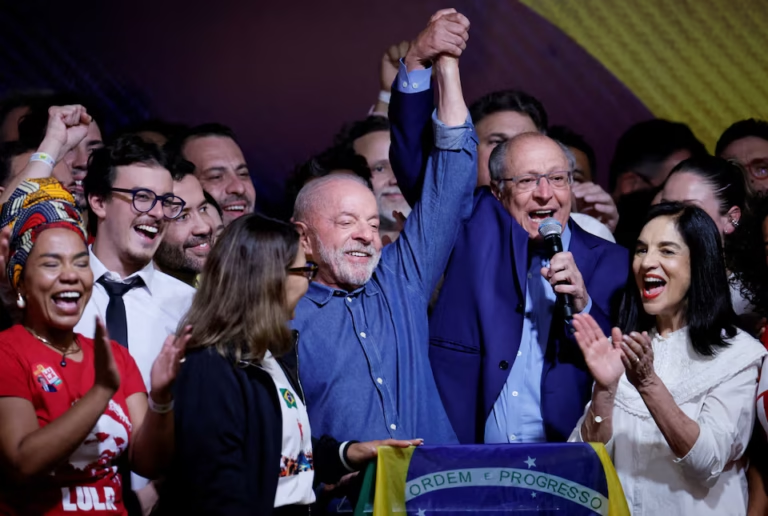
Brazilian Senator Flavio Bolsonaro has refused to accept defeat in Sunday’s presidential runoff, following the example of his father, the jailed former president Jair Bolsonaro. Leftist President Luiz Inacio Lula da Silva won a fourth term on October 25, 2026, and the senator says he will ask for the result to be annulled.

Bolsonaro, a right-wing senator and the son of the former president, questioned a decision made late on Sunday by a Supreme Court justice appointed by Lula. The justice extended voting by two hours over alleged irregularities in public transport. Bolsonaro told journalists the ruling made it impossible for him to accept the outcome.

“It is impossible to recognize the election results, given the circumstances under which things unfolded,” he said.

His refusal came as most of the world moved the other way. Leaders in Europe, Latin America, Asia and Russia congratulated Lula quickly. Financial markets reacted just as fast, with sharp falls in Brazil’s currency, stock index and public debt after a result that private polling had not predicted.

The numbers work against the annulment request

Lula beat Bolsonaro by more than 4 million votes. Analysts quoted by Reuters said a margin that wide makes it unlikely the annulment effort will succeed.

The disputed two-hour extension adds to the weakness of the case. Pedro Burgos, a professor at the Insper school, analysed electoral records and found that fewer than 35,000 votes were cast in the extra time. That is about 0.03 per cent of all ballots. Set against a lead of more than 4 million, the extension involved fewer than one late vote for every 114 votes in the winning margin. Even if every one of those late ballots went to Lula, removing them would not change the winner.

Bolsonaro’s own campaign has also weakened the argument. It asked for a voting extension too, citing heavy rains in the conservative-leaning south of the country. A campaign that wanted more voting hours for its own supporters has a harder time arguing that extra hours invalidate the result.

The petition may fail in court and still carry a political cost. Observers cited by Reuters said that a refusal to concede could lead to protests in a country where trust in the electoral system and in the independence of its judges has been under strain in recent years.

What the petition has to prove

An annulment request carries a heavy burden. Bolsonaro would need to show that the extra voting hours changed the outcome or corrupted the process, and the figures in the public record point the other way. The late ballots were a tiny share of the total, the margin is large, and his own campaign sought a similar extension.

His argument also rests on who made the decision. He is objecting to a ruling by a justice appointed by Lula, which lets him frame the extension as favouring the winner. That framing is political as much as legal. Its target is the voters who already distrust the courts, and the audience that matters most may not be the judges who read the petition.

A family precedent

Brazil's presidential runoff election

Flavio Bolsonaro is repeating a pattern set by his father. After the 2022 election, Jair Bolsonaro refused to accept the result, and his supporters stormed government buildings in protest. He was later sentenced to 27 years in prison for plotting a coup.

That history gives the son’s statement more weight with both sides. Supporters who stormed buildings in 2022 may read a refusal to concede as a signal. Opponents will read it as an attempt to repeat a strategy that has already led to a prison term for the person who used it. The senator’s words so far focus on one court decision and not on fraud in general, which suggests a narrower argument than his father made. Whether the courts or his supporters see the difference is not yet known.

Foreign leaders move quickly

While Bolsonaro disputed the result at home, foreign leaders accepted it. Congratulations came from the European Union, Mexico, France, Canada, India and Russia.

French President Emmanuel Macron said France and Brazil had “much to build together”. European Commission President Ursula von der Leyen said “democracy and multilateralism have won in Brazil.”

The Kremlin welcomed Lula’s re-election and praised his contribution to bilateral ties and to BRICS. Ukrainian President Volodymyr Zelenskiy also congratulated Lula on “remarkable election results” and said he looked forward to expanding cooperation.

Right-wing governments also recognised the result. Recently elected presidents in Colombia, Peru and Chile joined the leaders who accepted the outcome. These are governments that share Bolsonaro’s politics and could have chosen to back his challenge. They did not, which removes an argument he might have used: that the political right abroad shares his doubts.

Two names were missing. The White House and the US State Department did not immediately comment, and President Javier Milei of neighbouring Argentina had not said anything either. The silence from Washington stands out because the State Department under President Donald Trump led a campaign to return the Bolsonaros to power. The result is likely to disappoint the Trump administration, and its response will show whether it backs Bolsonaro’s challenge or accepts the count.

Lula wins against the polls

Brazil's presidential runoff election

Lula’s win went against the polls, against precedent and against a wave of anti-incumbent feeling in elections around the world. It also interrupted a run of right-wing election victories across Latin America.

He trailed Bolsonaro in the first round of voting. In the runoff he convinced enough people to turn out for him to overturn that gap and win by more than 4 million votes.

Private polling had pointed the other way. Investors had built their positions on the expectation that Bolsonaro would win, and many of those bets lost money overnight.

The first round put Bolsonaro ahead, and a surge of conservative voters pushed Congress to the right. Those results made a Bolsonaro win look like the continuation of a trend. The runoff turned on turnout, and Lula won it.

Markets sell off

The reaction in financial markets was severe. Brazil’s currency fell by more than 11 per cent against the US dollar in early spot trading, one of its biggest one-day declines on record. The Bovespa, Brazil’s benchmark stock index, dropped by more than 15 per cent. That was its largest daily percentage fall since 1998. Brazilian public debt also fell in value.

Investors were reassessing the country’s fiscal outlook under Lula. Falling prices for Brazilian debt mean higher borrowing costs for the government, and a weaker currency raises the cost of imports and of debts held in dollars.

Andres Abadia, chief Latin America economist at Pantheon Macroeconomics, said the first wave of selling might ease. “The initial selloff could moderate as election-related positions are unwound, but investors will demand convincing fiscal commitments before rebuilding exposure,” he said.

His comment separates two causes. One is mechanical, as traders close out positions that assumed a different winner. The other is a judgment about Lula’s spending plans, which only the new government’s budget decisions can settle.

What the sell-off means for ordinary Brazilians

A currency that loses more than 11 per cent in a day raises the price of anything bought in dollars, from imported goods to foreign travel, and makes dollar-denominated debts harder to repay. A stock index that falls more than 15 per cent cuts the value of savings invested in Brazilian shares. These effects reach households and companies within weeks, long before any government policy changes.

The new government also starts with less room to manoeuvre. When investors demand more to hold Brazilian debt, the state pays more to borrow, and that leaves less money for any spending plans. Abadia’s reference to “convincing fiscal commitments” points to the first test of the term: the budget Lula submits and how he explains it to markets.

Lula’s speech

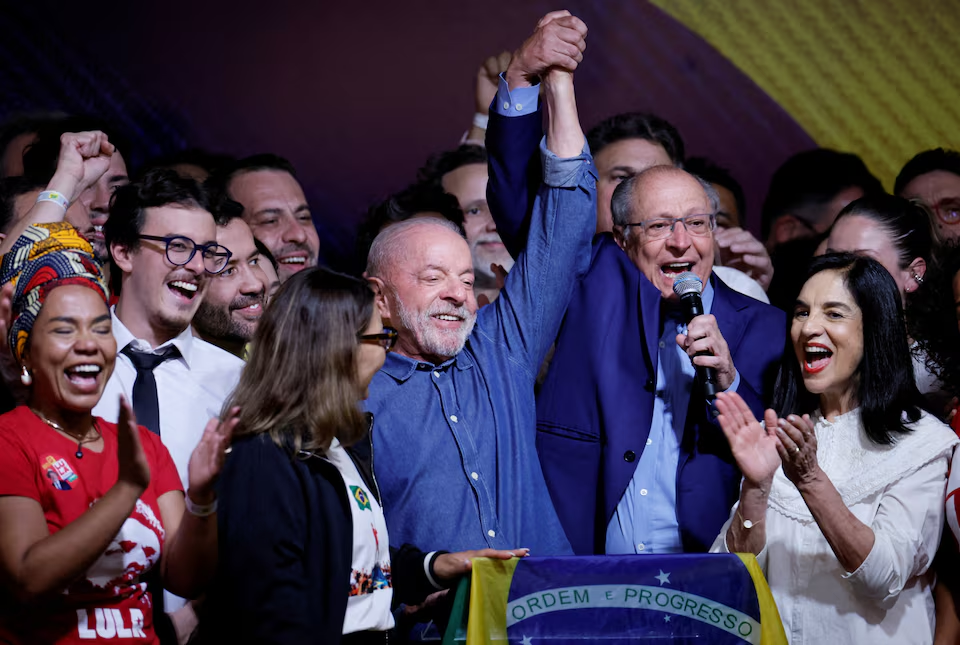
Speaking at a hotel in Sao Paulo late on Sunday, Lula took a conciliatory tone. He did not call for national unity, and he explained why.

“I won’t speak of national unity, because that doesn’t always fit the reality of this country. No one is obliged to like the elected president, but he was put in place to govern for everyone,” Lula said.

The remark accepts that Brazil is divided and that many voters chose his opponent. It sets a smaller goal than reconciliation. He said he would govern for everyone, including those who did not vote for him, and did not ask them to like him.

A Congress that leans right

During the campaign, Lula pointed to his record of cutting poverty and inequality. He also cited record low unemployment, illiteracy and deforestation.

His fourth term may be difficult. He will face a hard fight to pass his agenda in a Congress full of Bolsonaro allies. A surge of conservative voters in the first round of the general election pushed the legislature further to the right.

That arithmetic limits what a president can do, whatever the size of his winning margin. Spending plans, tax changes and any attempt to reassure investors on the budget will need votes from lawmakers who campaigned against him.

“The challenges are countless,” said Carlos Melo, a political science professor at Insper in Sao Paulo.

The risk of street protests

Reuters reports that observers see protests as a possibility, and Brazil has a recent example of how they can turn. The storming of government buildings after the 2022 election shows that anger over a result can lead to physical action against state institutions. The size of Lula’s margin and the broad acceptance abroad give the authorities a stronger position than they had in earlier disputes. They do not remove the risk, because a refusal to concede from a leading opposition figure can keep supporters who already doubt the system from accepting the count.

What to watch next

Several things will show how this election ends. The first is whether Flavio Bolsonaro files his annulment petition and how the courts respond. The second is whether his supporters take to the streets, as they did after the 2022 election. The third is whether the United States recognises Lula’s victory, since the White House and the State Department have so far said nothing. The fourth is how markets behave once the initial selling slows, and whether Lula’s government offers the fiscal commitments that Abadia says investors want.

The answers will arrive at different speeds. Court filings and market prices move within days. A decision from Washington depends on a White House that has not yet spoken. Congress will show its hand only when the new government sends its first bills.

For Lula, the immediate task is to take office with a result that most of the world has accepted and a minority at home that has not. His opponents hold a large share of Congress, and his opponent has said he will not recognise the vote. The next few weeks will show whether that refusal stays a statement or becomes a mass movement.

World News

Missiles Hit Kyiv and 630 Drones Head for Moscow, Days Before Planned US-Backed Talks

By George Mensah 6 min read

Russian missiles struck Kyiv in the early hours of Thursday, a Reuters witness said, and Ukraine sent hundreds of drones toward Moscow overnight. Both sides kept up their attacks even as the United States tries to mediate an end to the war.

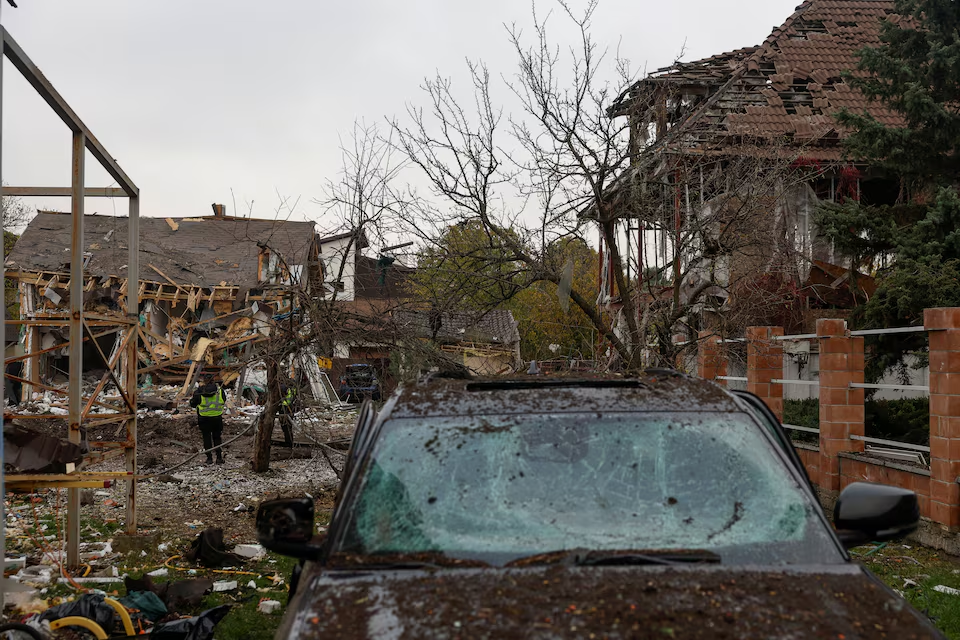
The Russian strikes on the Ukrainian capital wounded 15 people, Kyiv authorities said. They also damaged subway infrastructure on the Southern Bridge over the Dnipro River and restricted traffic across it. The attack came after another strike on the city on Wednesday evening that wounded six people.

In Russia, Moscow Mayor Sergei Sobyanin said 630 drones were sent toward the capital during the night, and two people were wounded near the city. The overnight exchange came days after US presidential envoy Steve Witkoff held talks with Ukrainian President Volodymyr Zelenskiy and Russian President Vladimir Putin.

Kyiv Hit Two Nights in a Row

The Thursday strikes were the second attack on Kyiv in about 12 hours. On Wednesday evening, a missile attack wounded six people. A Reuters witness reported the early-morning missile strikes, and city authorities then gave the casualty figure of 15 wounded.

The damage to the Southern Bridge matters to daily life in the city. The bridge crosses the Dnipro, and officials said the strike hit subway infrastructure on it and restricted traffic. Authorities did not say how long the restrictions would last or whether train service on that section had stopped.

Taken together, the two attacks wounded 21 people in Kyiv in less than a day. The authorities’ figures for both attacks list wounded people only.

A Woman Killed in Kharkiv

Aftermath of a Russian missile attack in Kyiv

Farther northeast, a Russian strike killed a woman and injured four other people in the Kharkiv region. Regional Governor Oleh Syniehubov reported the casualties on Telegram.

The report gave no further detail on where the strike landed or what it hit.

Drone Hits Energy Site Near Kremenchuk

A drone struck energy infrastructure in the Kremenchuk area of the Poltava region, a local official said on Telegram. The official gave no details on the damage or on whether power was cut.

Kremenchuk sits on the Dnipro River and is a major industrial hub. It is home to one of Ukraine’s biggest oil refineries. Russian strikes have hit the area repeatedly, including a 2022 attack on a crowded shopping mall that killed at least 21 people.

630 Drones Toward Moscow

On the Russian side, Sobyanin wrote on Telegram that 630 drones were sent toward Moscow overnight. Two people were wounded near the capital. Most of the drones were shot down at long range, he said.

The figure is large. Sobyanin did not say over how many hours the drones arrived, so no hourly rate can be worked out. He also did not say how many drones got through, and he did not name a location for the two injuries beyond “near Moscow.”

Lipetsk Apartments and a Clinic Hit

Aftermath of a Russian missile attack in Kyiv

The drones also reached Lipetsk, a city with a major steel plant about 400 kilometres (250 miles) south of Moscow. A man was injured there when drones hit apartment buildings and a medical facility, Governor Igor Artamonov said on Telegram.

Lipetsk is about 400 kilometres from Moscow, and the governor’s account says drones hit two apartment buildings and a medical facility there.

Two Different Scales of Damage Reporting

The two sides reported the night in different ways. Ukrainian officials described what was hit: a subway structure on a bridge, an energy site near Kremenchuk, a region where a woman died. Russian officials led with how many drones were launched and how many were stopped. Sobyanin’s figure of 630 drones is a count of attempts. Syniehubov’s report of one death is a count of harm. The two cannot be compared directly, and each government has a reason to emphasise the number that suits its case.

For readers, the useful comparison is of what is confirmed. On the Ukrainian side, the reports name specific places and injuries. On the Russian side, the reports name two places, Moscow’s surroundings and Lipetsk, and three injured people in total.

The Night in Numbers

Reports from both countries add up to at least 28 people wounded and one person killed in the incidents described.

  • Kyiv, Thursday: 15 wounded
  • Kyiv, Wednesday evening: 6 wounded
  • Kharkiv region: 1 killed, 4 injured
  • Near Moscow: 2 wounded
  • Lipetsk: 1 injured

These are the figures given by each side’s officials. Only the Kyiv missile strikes were reported with a Reuters witness account. The casualty and damage numbers elsewhere come from local authorities and their Telegram posts.

Talks Are Planned, Strikes Continue

The attacks follow a week of diplomacy. Witkoff held talks this week with both Zelenskiy and Putin to mediate an end to the conflict.

On Wednesday, Zelenskiy said Ukraine supports a US proposal for three-way talks among Ukraine, Russia and the United States, held at the level of negotiators and as soon as possible. The Kremlin said Putin has agreed to resume US-mediated peace talks with Kyiv as soon as next month.

Both governments are therefore on record in favour of talks while their forces trade strikes. Neither side has announced a pause in attacks, and the reports do not mention any proposal for one.

Diplomacy and strikes are running side by side. What has changed this week is that both governments have said, on the record, that negotiators could sit down within weeks.

Why Mediation and Strikes Overlap

Strikes did not pause for the talks. Witkoff met Zelenskiy and Putin this week, and the reports describe no halt in attacks on either side.

The proposal on the table is narrow. It calls for three-way talks at negotiator level, which means officials below the presidents. Such meetings often settle procedure first: who attends, where, and in what order issues are taken up. That is slower than a summit, and it fits the Kremlin’s “as soon as next month” timeline better than Zelenskiy’s request for talks as soon as possible.

Background

Russia invaded Ukraine in 2022, eight years after it annexed the Crimean peninsula from its southern neighbour. The conflict is the deadliest in Europe since World War Two.

What Is Not Yet Known

Several details are still missing from the reports. Kyiv authorities have not said how long the Southern Bridge restrictions will last. The Poltava official did not describe the damage at Kremenchuk. Sobyanin did not say how many of the 630 drones were intercepted close to Moscow, only that most were downed at long range. No date or place has been set for the three-way talks.

Whether the talks begin on the Kremlin’s timetable of next month, or on the faster schedule Zelenskiy asked for, will show how far either side is willing to move while its cities are under fire.

What to Watch Next

Three developments will show where this goes. The first is whether a date and venue for negotiator-level talks are announced. The second is whether strikes on Kyiv, Kharkiv and Moscow continue at the same pace once a date is set. The third is whether Kyiv’s subway service and bridge traffic return to normal in the next few days.

For residents of Kyiv, the immediate effect is practical: a damaged crossing on the Dnipro and traffic restrictions on it. For the two governments, the open question is whether talks and strikes continue together or one replaces the other.

ADVERTISEMENT
Scroll to Top