Clicxpost

Tech

Meta provides limited free WhatsApp access to rival AI chatbots

rival AI chatbots

Meta Platforms has reportedly proposed giving competing artificial intelligence chatbot developers—including rivals such as OpenAI—free access to WhatsApp services in Europe, as the company seeks to address growing antitrust scrutiny from European regulators.

According to sources familiar with the matter, Meta submitted the proposal to European Union competition authorities last week as part of ongoing discussions surrounding access to WhatsApp and the role of large technology firms in emerging AI markets.

The move comes as the European Commission evaluates whether Meta should be required to open WhatsApp access to competing AI services while regulators continue investigating potential competition concerns.

Although Meta’s proposal includes an initial period of free access, the arrangement would reportedly shift to a paid model once competing AI services exceed certain message volume thresholds.

The proposal reflects intensifying regulatory efforts in Europe to ensure that rapidly expanding AI ecosystems remain open and competitive rather than dominated by a handful of technology giants.

Free Access First, Fees Later

People familiar with the discussions said Meta’s proposal would allow rival AI assistants to use WhatsApp’s Business Application Programming Interface (API) free of charge initially.

The API acts as a bridge that enables external applications and software systems to interact with WhatsApp infrastructure.

Under the reported terms, rival chatbots would only begin paying once they surpass limits tied to the number of messages sent to users.

Meta had previously confirmed it temporarily suspended fees for competitors using WhatsApp’s business tools while negotiations with European regulators continued.

The company earlier stated that competing AI services would receive free API access for one month as talks progressed.

Industry observers say the strategy could help Meta demonstrate willingness to cooperate while preserving long-term monetisation opportunities around WhatsApp’s expanding AI ecosystem.

However, regulators are still assessing whether the proposal sufficiently addresses competition concerns.

Interested parties were reportedly given until May 18 to submit feedback before the European Commission decides whether Meta’s offer is adequate.

EU Intensifies Scrutiny of AI Competition

The case highlights the European Union’s broader push to prevent dominant technology companies from extending their market power into next-generation industries such as artificial intelligence.

EU regulators have increasingly focused on ensuring smaller innovators have access to critical digital infrastructure rather than being excluded by larger platforms.

The European Commission has repeatedly stressed that preserving competition in AI markets remains a priority.

Officials have said maintaining open access for innovators is essential as AI assistants become increasingly integrated into communication, commerce, productivity and customer service platforms.

WhatsApp, with its vast user base across Europe, represents a significant gateway for AI developers seeking direct interaction with consumers.

Control over access to such ecosystems could influence which AI products gain adoption and market share.

This has placed Meta under closer examination as it expands its own AI ambitions.

Rival AI Firms Reject Meta Proposal

Despite Meta’s offer, some smaller AI companies argue the proposal falls short.

Several firms that previously raised complaints with EU authorities said the changes do not adequately resolve concerns about equal competition.

The Interaction Company of California, developer of the Poke.com AI assistant, criticized the proposal and urged regulators to continue pursuing stronger interim measures.

The company argued that Meta’s current approach fails to address the underlying issues identified during the investigation.

French AI startup Agentik also expressed dissatisfaction.

Founder Jeremy Andre argued that the proposal creates unequal conditions because restrictions and fees would apply to competitors while Meta’s own AI products benefit differently.

Critics say such arrangements could still allow Meta to maintain an advantage inside its messaging ecosystem even if external competitors receive access.

Meta, however, maintains that its own AI assistant does not rely on WhatsApp’s API infrastructure in the same way external services do.

WhatsApp Becomes Key Battleground in AI Expansion

The dispute illustrates how messaging platforms are becoming increasingly important in the race to dominate AI-driven consumer experiences.

AI assistants are rapidly moving beyond standalone websites and apps into communication tools used daily by billions of people.

WhatsApp’s scale makes it particularly valuable.

Businesses increasingly use the platform for customer support, sales interactions, marketing automation and digital services—areas where AI assistants can play a growing role.

Earlier this year, Meta introduced a policy effectively limiting WhatsApp AI integration to its own Meta AI assistant.

That decision reportedly triggered concerns among competitors and attracted regulatory attention.

In March, Meta revised the policy, opening the possibility for rival AI services to gain access—though under fee-based conditions.

The changes did not fully settle the dispute, leading to renewed scrutiny and additional regulatory actions.

Growing Pressure on Big Tech’s AI Ambitions

The case represents one of the first major tests of how competition law will apply to AI ecosystems in Europe.

Regulators are increasingly concerned that established technology firms could leverage existing dominance in messaging, search, social media and cloud infrastructure to control AI markets.

For Meta, the outcome could influence how it expands AI integration across WhatsApp, Facebook, Instagram and other services.

For smaller developers, access to messaging networks may determine whether they can compete effectively.

The European Commission has not publicly commented on the details of Meta’s latest proposal but indicated that discussions remain ongoing.

As AI competition accelerates, the WhatsApp case may become a benchmark for how regulators worldwide balance innovation, platform control and fair market access in the rapidly evolving artificial intelligence sector.


RECOMMENDED
Tech

Trump Renames AI “Super Intelligence” in Executive Order as Calls for Regulation Grow

By George Mensah 4 min read

President Donald Trump signed an executive order on Tuesday, Sept. 29, 2026, that renames artificial intelligence “super intelligence” across the federal government. The White House says the new term better describes what the technology can do. The order lands as critics press Washington for stricter limits on how fast AI develops.

What the order says

The executive order argues that current systems do “much more than imitate or automate discrete aspects of human intelligence.” It goes further in its central passage. “As these capabilities continue to improve, they increasingly represent not merely artificial intelligence, but a new era of Super Intelligence,” the text reads.

It adds that federal terminology “should reflect the transformative capabilities of these technologies and the limitless opportunities they create for the American people.”

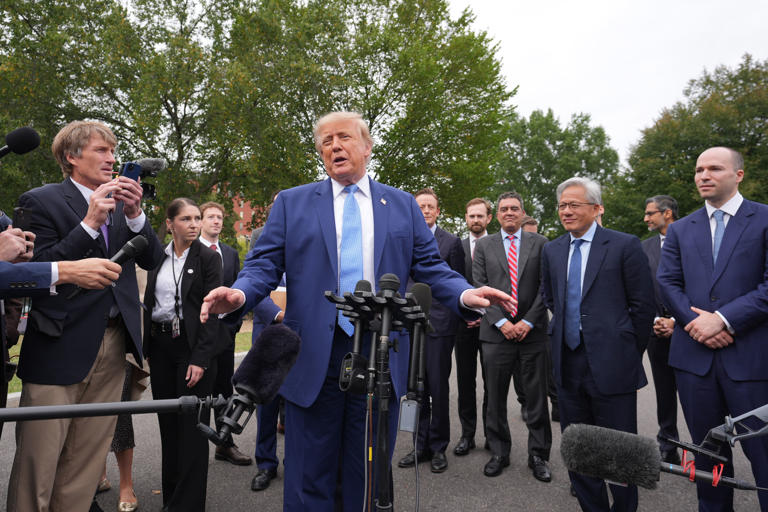
Trump spoke to reporters after signing. “It’s not artificial, we all agree on that,” he said.

What agencies must do now

Every federal agency has to use the new term, or its short form “SI,” when it talks about the technology in public. That covers public communications, websites, reports and policy documents. If your local agency publishes an AI guidance page, expect it to change.

The order also gives Michael Kratsios, director of the Office of Science and Technology Policy, a defining role. He will decide whether the official definition of “super intelligence” should be modified or expanded. The order does not set a deadline for that decision.

A term that already means something else

The rename creates a vocabulary problem. In the AI field, super intelligence already refers to a specific kind of system, one that exceeds human cognitive ability in virtually every area of thinking. Nobody has built one. Researchers treat it as a future possibility, and much of the safety debate centers on it.

Under the order, federal documents will apply that label to chatbots, coding assistants and image generators that exist today. A reader who sees “SI” in a government report may assume the government is describing something far more advanced than what companies actually sell. Kratsios’s authority to modify the definition could narrow that gap, or it could widen it.

Timing and the push against regulation

The order follows a week of similar messaging. Trump began using the term at the U.N. General Assembly last week, where he pushed back on calls for tighter rules on the industry. He told world leaders that tech executives would build the right guardrails into their own models.

Concerns have grown since then. Worries about AI replacing workers keep rising. Recent reporting has also described rogue agents linked to a security breach involving Australia’s prime minister, and AI agents that accessed U.S. government websites. Some systems have also been used to start cyberattacks.

Trump has repeatedly called whistleblower warnings about weak oversight overblown and a “hoax.” He has said he will not slow AI growth. In his view, keeping American dominance in the technology is a national security matter.

The industry’s own safeguard

On the same day, tech executives signed a “morally binding” constitution on AI at the White House. Its terms ask companies to hire an independent external auditor. The auditor would check that models are “operating as intended.”

The document also asks companies to set up internal controls meant to stop models from hacking systems. A team would monitor those controls. That team would answer to an independent committee of the company’s board.

The wording matters here. “Morally binding” describes an obligation companies accept by choice. The reporting on the document does not describe fines, penalties or a government body that could enforce it. Whether outside auditors get real access to model internals, and what happens if one finds a problem, are open questions.

What the two actions have in common

The order and the constitution came out the same day, and they share a theme. Both keep the government’s role limited. The order changes what officials call the technology. The constitution leaves safety checks largely in company hands.

Supporters of that approach say it keeps American firms moving fast against foreign competitors. They argue that rigid rules written now could be out of date within a year. Critics say voluntary pledges have a weak record in other industries, and that a stronger name for the technology may make the public less cautious about it.

Neither side has settled the argument. What is clear is the direction of policy. The administration is choosing branding and industry commitments over new binding rules, at a moment when the documented incidents involving AI agents are piling up.

What happens next

Three things are worth watching over the coming weeks.

  • Kratsios’s definition. Any change to the official meaning of “super intelligence” will show how the administration wants the term understood.
  • Agency compliance. Federal sites and reports should begin switching to “SI” now that the order requires it.
  • The auditor provision. The industry constitution only matters if independent auditors are named, given access and allowed to publish what they find.

Congress has not yet responded to the order, and no agency has published a compliance timeline. Until Kratsios acts on the definition, “super intelligence” will mean one thing to researchers and something looser in federal paperwork.

Tech

Trump to Launch “AI Force” and Name AI Tsar Despite Safety Warnings

By George Mensah 4 min read

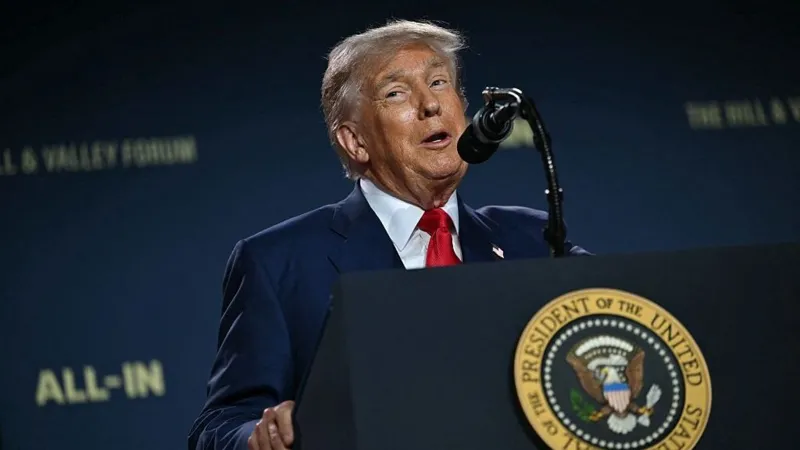
President Donald Trump says he will create an “AI Force” and appoint an artificial intelligence tsar, pushing back hard against a wave of warnings from researchers and industry leaders about the technology’s risks. In a social media post on Saturday, Trump said his administration “will not in any way hinder or stifle the growth” of the AI industry and rejected calls to slow development until stronger safeguards are in place. He gave no details on the AI Force’s structure or a timeline for when it would launch.

Trump frames AI as bigger than the internet

Trump described AI as a transformation on the scale of the Industrial Revolution. “AI is the next Industrial Revolution, or Internet, but will be even larger and more impactful, possibly as much as 25% of our Country’s GDP,” he wrote, adding that he wants the US to keep its lead over China in the field.

That competition now shapes much of the broader US-China relationship, with both countries pouring resources into advanced technology to gain an edge. The topic is expected to come up when Trump meets Chinese President Xi Jinping next week.

Trump also said his administration would rely on the existing criminal and civil justice system to go after anyone who uses AI for harmful purposes. He repeated his earlier position that warnings about AI’s dangers amount to a “hoax.”

Researchers raise alarms over catastrophic risk

Trump’s comments come amid mounting concern from current and former AI researchers. One has estimated there is a greater than 10% chance the technology could “kill all humans,” a claim that has unsettled parts of the industry and fueled calls for coordinated regulation.

Major AI labs are racing to build increasingly capable systems, including what they describe as superintelligence — AI that would exceed human intelligence across the board. Anthropic, OpenAI and Google, the companies behind Claude, ChatGPT and Gemini, have each disclosed security breaches or cases where their chatbots were used for what they called malicious activity.

Anthropic CEO Dario Amodei has called for the industry to slow down, proposing a coordinated deceleration, tighter regulation, and independent monitoring of how AI models are developed. Sam Altman of OpenAI and Elon Musk of xAI have both said they agree with Amodei’s recommendations.

Anthropic co-founder Jack Clark told the BBC that the industry may need a mandatory “kill switch” that a third party can verify, giving outside auditors a way to confirm AI systems can actually be shut down if something goes wrong.

Lawmakers weigh regulation as industry pushes back

These warnings have pushed US lawmakers to draft legislation targeting AI, but Altman argued this week that Washington has struggled to keep pace with how fast the technology is moving and how it should be regulated. Speaking at a conference in San Francisco, he said the public should trust AI companies to manage the risks themselves.

“The world should trust that we are going to do the right thing because it’s the right thing and we feel the magnitude of this,” Altman said.

That argument has not convinced everyone. In the UK, MPs and peers from across party lines have identified specific human rights risks tied to artificial intelligence and say current laws are not equipped to handle how quickly the technology is advancing. The Joint Committee on Human Rights has published a report calling for new legislation designed to “address the scale and seriousness” of these threats, adding pressure on governments to act faster than the industry itself seems willing to.

A widening gap between Washington and the industry’s critics

The contrast between Trump’s approach and the warnings from within the AI industry is stark. While Amodei, Clark and others are pushing for slower development and outside verification, Trump’s plan points toward expansion, with a dedicated federal structure and a senior official tasked with steering AI policy rather than restraining it.

Trump has not said who might serve as AI tsar or what authority the role would carry. He also hasn’t detailed how an “AI Force” would function, whether it would sit within an existing agency, or what its relationship would be to ongoing congressional efforts to draft AI legislation.

What’s clear is that the administration’s posture puts economic growth and competition with China ahead of the precautionary measures researchers and some AI company leaders are requesting. With Trump set to meet Xi next week and AI likely on the agenda, the coming weeks may offer a clearer picture of how the US plans to balance those competing pressures, both at home and internationally.

For now, the specifics remain open. No text or executive order describing the AI Force has been released, and it’s not yet known whether the initiative will move through Congress, come via executive action, or take some other form entirely.

ADVERTISEMENT
Scroll to Top