Clicxpost

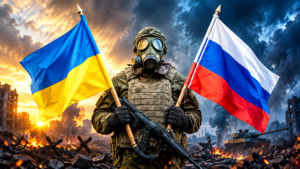
Ukraine Builds Ground Robot Army to Cut Soldier Deaths as War Enters Fifth Year

Ukraine Ground Robot Army

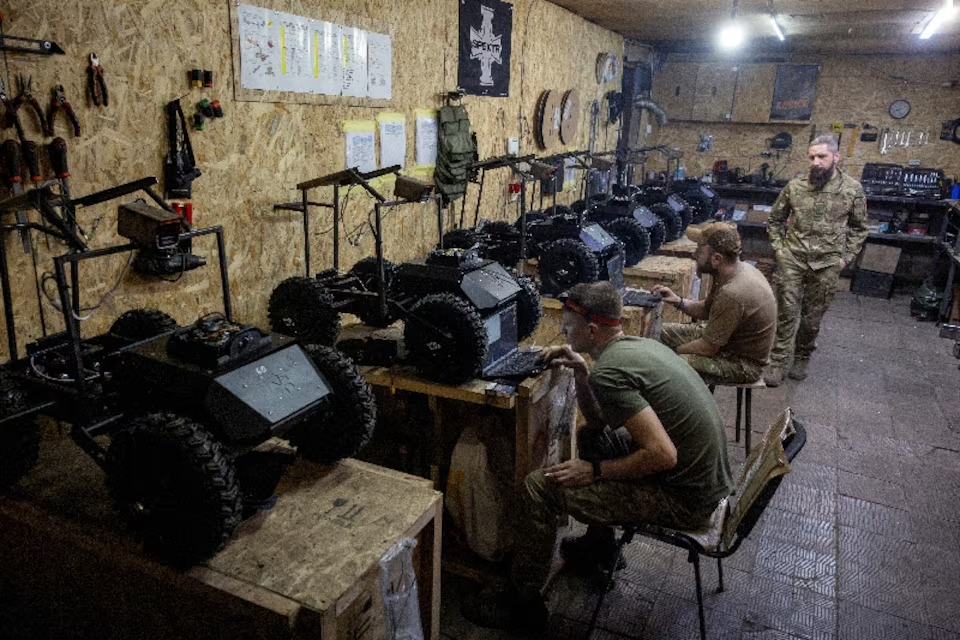
Ukrainian military mechanic “Chimera” spends his days in a small workshop near the front line in northeastern Ukraine, preparing four-wheeled robots for combat. His unit calls them “Hyenas.” Loaded with explosives, they roll toward Russian positions to hit dugouts or stop enemy advances before a single soldier steps into the open.

Chimera, 44, asked to be identified only by his call sign. He said similar unmanned ground vehicles, or UGVs, have already forced Russian soldiers to surrender.

“Imagine what 20 kilograms (44 pounds) of explosives is like: it’s very powerful,” he said. “Very powerful.”

His workshop belongs to Ukraine’s Third Army Corps, one of dozens of similar operations that have opened along the 1,200-kilometer (745-mile) front line. Kyiv’s military, outnumbered by Russian infantry, is turning to robotics to close the gap in personnel five years into the war.

A Weapon Built to Save Lives

Behind the killer robots of Ukraine's new warfare 'revolution'

Unmanned ground vehicles now sit at the center of Ukraine’s plan to protect its troops. On a battlefield saturated with surveillance drones, exposed movement often draws immediate fire. Most Ukrainian brigades and regiments run dedicated unmanned systems units, and those units are adding ground vehicles to their existing drone fleets.

Reuters visited NC13, a unit under the Third Army Corps that specializes in combat use of these machines, to see how the technology is changing how Ukraine fights on land.

Inside the workshop, mechanics work on a mix of experimental designs. Some run on tracks, others on wheels. One carries a hose for putting out fires. Another holds a rack built to launch portable rockets.

Brigadier General Andrii Biletskyi commands the Third Army Corps. He calls the shift toward UGVs the next major turn in the war, following the earlier rise of aerial drones. His corps, regarded as one of Ukraine’s strongest fighting forces, aims to replace about a third of its frontline infantry with machines by the end of the year.

“The West slept through the (drone) revolution in many ways,” Biletskyi said. He added that infantry soldiers now handle only about 10 percent of the tasks they once did, before aerial threats made constant movement dangerous.

“If the West really wants to not just keep up with the times, but to get slightly ahead, it needs to think about the next revolution,” he said.

Machines on the Supply Line

Behind the killer robots of Ukraine's new warfare 'revolution'

In Donetsk region’s so-called fortress belt, ground drones have become a regular sight, hauling ammunition and rations into besieged towns and carrying wounded soldiers out. Ukraine’s defence ministry said in June that these vehicles had completed more than 50,000 logistics and evacuation missions so far this year.

At NC13’s command post, set up in a basement in Ukraine’s Kharkiv region, operators sit at rows of screens, controllers in hand, watching black-and-white video feeds from the field. The unit was formed last year. On one recent operation, an operator sprayed a tree line with a machinegun mounted on a UGV.

Screens glow across the room, and chatter over Discord, the messaging app the team uses to coordinate, fills the air. Deputy commander “Bar” said the unit runs missions almost daily.

In one operation, the team loaded three bombs onto a trailer, pulled it onto a bridge used by Russian forces for supply routes, and detonated it. In another, a UGV armed with a machinegun held off an infantry assault while kamikaze drones struck from above.

“To me, it’s a wonderful recipe,” said Bar, 23, a former bartender, describing how ground and air drones now work together. He said at least two Russian soldiers have surrendered directly to NC13’s ground vehicles.

The machines have real limits. They cannot climb over obstacles the way soldiers can, and they cannot clear a building or a trench. Ukraine also has not produced enough of them to deploy in the large numbers used for aerial drone swarms, Bar said.

Even so, the vehicles have started taking over dangerous jobs once assigned to people.

“They don’t need food, they don’t need water, they don’t need logs delivered to build shelters,” Bar said. “Basically, we don’t need to feel for them. It’s a hunk of iron sent to do the job we used to send soldiers to do.”

A Shift in How Commanders Fight

Biletskyi described ground drones as one part of a broader change in warfare, alongside the growing use of artificial intelligence to analyze battlefield data. He said the technology gives human commanders more room to focus on planning and judgment calls rather than direct exposure to risk.

That shift could open the door to bolder battlefield decisions, ones that might have cost too many lives to attempt in the past.

“War is a creative activity; it’s an art,” Biletskyi said. “Otherwise, a commander is not called a commander, but a butcher.”

Ukraine’s former top general, Oleksandr Syrskyi, faced criticism from some service members who described his leadership style as rooted in Soviet-era tactics with a high tolerance for casualties. His successor, Mykhailo Drapatyi, is viewed by many in the military as more willing to protect troops, in part by pushing new technology like UGVs into wider use.

Biletskyi himself was promoted last month, taking on a broader role helping oversee the defense of Ukraine’s Donetsk region.

Bar, like most members of NC13, served as an infantryman earlier in the war and fought in some of its largest battles. He said the outcome for many of those he served alongside could have been different with today’s technology.

If ground drones had existed back then, he said, “a great number of my friends would still be alive.”

RECOMMENDED

UP NEXT

Houthi Red Sea Strait

Houthi Advance on Key Red Sea Strait Deepens Trump’s Middle East Crisis

A fast-moving Houthi offensive in Yemen has put the Iran-aligned militants within reach of controlling one of the world’s most critical oil shipping routes, adding a new layer of difficulty to President Donald Trump’s ongoing war with Iran, now in its seventh month. Houthi fighters have pushed south along Yemen’s coastline in recent days, expanding their reach toward the Bab el-Mandeb Strait, sometimes called the “Gate of Tears,” at the southern entrance to the Red Sea. Control of that passage would give Tehran leverage over both of the region’s major oil corridors at once. On Friday, Houthi forces reached the island of Perim, positioned in the middle of the strait between Yemen and the African coast. The advance is particularly troubling for Saudi Arabia, which has relied heavily on Red Sea ports to ship its oil since the war closed off much of the Strait of Hormuz on the other side of the Arabian Peninsula. A Setback for Trump’s Pressure Strategy The timing complicates matters further for Trump, who is already dealing with record-low approval ratings and looking for an exit from the broader conflict. He recently unveiled an economic pressure campaign meant to squeeze concessions out of Iran’s government. Rising U.S. gasoline prices tied to the war have put his Republican Party’s hold on Congress at risk ahead of the November midterm elections. Iran, despite sustaining serious military and economic damage, has shown no sign of backing down. “Just weeks ago, Trump adopted a strategy of squeezing Iran’s economy while keeping military conflict at levels too low to squeeze the American economy,” said Stephen Wertheim, a senior fellow at the Carnegie Endowment for International Peace. “The Houthis have shattered Trump’s plan.” Washington Weighs the Cost of Getting Involved The U.S. cannot easily accept a scenario where the Houthis shut down the strait, spiking energy prices and disrupting global trade. But taking direct military action against a group that has already outlasted attacks from both Saudi Arabia and the United States would pull American forces into a new and risky mission at a moment when the military is already committed to the fight with Iran. Saudi Crown Prince Mohammed bin Salman called Trump on Thursday to request U.S. military assistance against the Houthis, according to three sources who spoke with Reuters. The sources said Washington told him it would not intervene directly for now, offering intelligence support instead. Trump confirmed the call on Saturday. He said the Houthis had also reached out to his administration, asking that Washington stay out of the conflict directly. A senior Trump administration official would not answer specific questions about the situation but said the U.S. remains focused on protecting freedom of navigation in the Red Sea “while empowering our regional partners to take the lead in managing and resolving regional security challenges.” Saudi Arabia, Iran and the Houthis did not respond to requests for comment. Iran’s foreign ministry said Thursday that the conflict in Yemen cannot be resolved through blockades or military strikes against the Houthis and called instead for dialogue, without addressing Iran’s own involvement in the group’s operations. Two Choke Points Under Pressure Iran already retaliated against U.S. and Israeli strikes earlier this year by disrupting traffic through the Strait of Hormuz, a passage that once carried roughly a fifth of the world’s oil supply. If the Houthis succeed in closing the Bab el-Mandeb as well, that would threaten another 7 percent of global petroleum supplies and about 12 percent of global trade. “This was always the worst-case scenario, that the Iranians exert control not only of Strait of Hormuz but Bab el-Mandeb, two of the leading energy choke points in the world,” said David Schenker, who served as Assistant Secretary of State for Near East Affairs during Trump’s first term and now works at the Washington Institute for Near East Policy. “It’s an enormous amount of leverage that [the Iranians] have in hand,” Schenker said. Analysts and former officials say Trump faces a difficult decision: commit U.S. forces and limited air-defense munitions to repelling the Houthis, or leave the fight to Saudi Arabia and its allies, including a Yemeni government based in the south of the country. The Houthis have held Yemen’s capital for 12 years, surviving a Saudi-led military campaign that has failed to remove them from power. Ending an Existing Truce Would Carry Risks A U.S. move against the Houthis would also unravel an arrangement Trump reached last year, under which Washington agreed to stop bombing the group in exchange for an end to Houthi strikes on Red Sea shipping. Breaking that deal would likely expose American forces to missile fire from Yemen. It would also place additional strain on a U.S. military already stretched thin. Officials say confronting the Houthis would demand substantial naval and air resources, along with intelligence assets needed to track Houthi positions that have shifted considerably since last year’s ceasefire. A sustained campaign against Houthi drones and missiles could also draw down already limited U.S. stockpiles of munitions and air-defense interceptors. The senior administration official rejected the idea that resource constraints were a concern. “The United States Military has more than enough munitions, ammo, and stockpiles to serve all of the Commander-in-Chief’s strategic goals and beyond,” the official said. Tim Lenderking, who served as U.S. special envoy for Yemen under former President Joe Biden and now works as a principal at the law firm Squire Patton Boggs, said Trump’s reluctance to intervene militarily means Washington needs to increase intelligence sharing with Saudi Arabia’s air campaign and boost diplomatic and material support for Yemen’s internationally recognized government. “This administration came in asking the question, ‘What can Yemen do for us?’” Lenderking said during a webcast hosted by the Middle East Institute in Washington. “Well, Yemen can spoil our day.”

Read More »

Xi Urges BRICS to Push for Peace in Middle East During New Delhi Summit

Chinese President Xi Jinping called on the BRICS bloc to act as a peacemaker in the Middle East during an address to member countries gathered in New Delhi on Saturday. China will work alongside other BRICS members in that role, Xi said, because the ongoing war “does not serve the common interests of the international community.” State broadcaster CCTV carried the remarks. BRICS started in 2009 with five founding members: Brazil, Russia, India, China and South Africa. The group later added Egypt, Ethiopia, Indonesia, Iran and the United Arab Emirates. Its original goal was to offer developing nations a counterweight to a world order shaped largely by the United States and its Western allies. Today, BRICS members make up more than 40 percent of the world’s population and close to a quarter of the global economy. Xi Frames BRICS as a Global South Leader Xi described the bloc as a “leading group” within the Global South and pointed to it as an example of self-reliance for emerging and developing economies. He said the group should push harder toward innovation-driven growth. China will take over the BRICS chairmanship next year and host the 19th BRICS summit, CCTV reported. Xi and Modi Meet on Summit Sidelines Xi also met with Indian Prime Minister Narendra Modi during the summit. According to state news agency Xinhua, Xi told Modi that China views its relationship with India through a “strategic, long-term perspective.” Xinhua quoted Xi saying the two countries can learn from each other’s strengths and pursue shared development together. The meeting marked Xi’s first visit to India in seven years. Analysts say the trip may help move the diplomatic relationship between the two neighbors forward, though little evidence yet points to any real improvement in business ties between them. A Relationship Shaped by Old Tension China and India share a difficult history. The two countries fought a brief war in 1962, and that conflict has colored their relationship for decades since. Tensions flared again after a border skirmish in 2020 left 20 Indian soldiers and four Chinese soldiers dead. Despite that history, ties between the two countries have eased somewhat in recent years. Modi traveled to China last year, a visit that helped set the stage for warmer contact. Both nations are also navigating unpredictable relationships with Washington, which may be pushing them toward closer coordination with each other. BRICS Summit Continues Broader Diplomatic Push Xi’s remarks on the Middle East come as BRICS leaders work through a joint declaration during the New Delhi gathering. The bloc has increasingly positioned itself as a platform for countries outside the traditional Western alliance system to coordinate on global conflicts and economic policy. For China, the summit offers a chance to reinforce its role as a leading voice among developing nations while also managing a delicate bilateral relationship with India. The upcoming Chinese chairmanship of BRICS next year gives Beijing an opportunity to shape the bloc’s priorities directly, including how it approaches conflicts like the one in the Middle East. Whether BRICS can meaningfully influence the Middle East war remains an open question. The bloc includes Iran, one of the parties most directly affected by the conflict, alongside countries like Brazil and South Africa that have taken more distant diplomatic positions on the issue. Modi’s government, meanwhile, continues to balance its own relationships with the United States, Russia and China. The New Delhi summit puts that balancing act on public display, with Xi’s visit serving as one of the most closely watched moments of the gathering. No immediate details emerged on what concrete steps BRICS members might take toward peacemaking in the Middle East, or how member states with differing interests in the region might coordinate such an effort.

Read More »
hezbollah-vs-hamas-differences

Hezbollah vs Hamas: 8 Key Differences Explained

Hezbollah vs Hamas is a comparison that comes up constantly in Middle East coverage — if you’ve been following the news, you’ve probably heard the two names mentioned in the same breath, almost like they’re two branches of the same organization. They’re not. The Hezbollah vs Hamas comparison actually reveals two groups with different roots, different religious identities, and different playbooks, even though both end up on the same side of the fight against Israel. Hamas operates out of the Gaza Strip and grew from the Palestinian nationalist movement. Hezbollah is based in Lebanon and grew out of a very different set of circumstances tied to Iran’s Islamic Revolution. Both receive backing from Tehran, both are labeled terrorist organizations by the US and several Western governments, and both have fought bloody wars with Israel. But once you dig past the surface, the Hezbollah vs Hamas story splits into two separate paths worth understanding on their own terms. What Is Hamas? Hamas is short for Harakat al-Muqawama al-Islamiyya, which translates to the Islamic Resistance Movement. The group was founded in 1987 during the First Intifada, the Palestinian uprising against Israeli occupation, and it grew out of the Palestinian branch of the Muslim Brotherhood. Its founders, including Sheikh Ahmed Yassin, wanted an organization that mixed Islamist ideology with Palestinian nationalism. Hamas is a Sunni Muslim organization, and its founding charter called for the establishment of an Islamic state across historic Palestine. The group won legislative elections in 2006, then took full control of the Gaza Strip in 2007 after a violent split with its rival, Fatah, which continued running parts of the West Bank instead. From that point on, Hamas functioned as both a governing authority in Gaza and an armed resistance movement, with its military wing, the Izz ad-Din al-Qassam Brigades, carrying out attacks against Israel for decades. Leadership has shifted a lot in the past two years. Longtime political chief Ismail Haniyeh was assassinated in Tehran in mid-2024, and Yahya Sinwar, the architect of the October 7, 2023 attack, was killed by Israeli forces later that same year. Khalil al-Hayya now leads the group’s political bureau. Under the 2025 Gaza peace plan, Hamas formally stepped back from day-to-day civil administration of Gaza, though disputes over its disarmament continue to stall the next phase of that agreement. What Is Hezbollah? Hezbollah, which means “Party of God” in Arabic, formed in 1982 in the middle of the Lebanese Civil War, right after Israel invaded Lebanon to push out the Palestine Liberation Organization. Iran’s Revolutionary Guard Corps helped train, fund, and organize the new group almost from day one, and that relationship has never really loosened since. Unlike Hamas, Hezbollah is a Shia Muslim organization, drawing much of its support from Lebanon’s Shia population in the south of the country, the Bekaa Valley, and parts of Beirut. It describes itself as a resistance movement against Israeli occupation and Western influence in the region. Over the decades, though, Hezbollah built something far bigger than a militia. It runs hospitals, schools, and social services, and it holds seats in the Lebanese parliament, functioning as a genuine political powerbroker inside Lebanon’s government. Hassan Nasrallah led Hezbollah for 32 years and turned it into arguably the most capable non-state armed actor in the world. Israel killed Nasrallah in a September 2024 airstrike on Beirut, and Naim Qassem, his longtime deputy, took over as secretary-general shortly after. A ceasefire between Israel and Hezbollah took effect in late November 2024, though tensions along the border have flared repeatedly since. Hezbollah vs Hamas: How Are the Two Groups Different? The sectarian divide is the starting point of any Hezbollah vs Hamas comparison. Hamas follows Sunni Islam, while Hezbollah follows Shia Islam, and that split shapes almost everything else about the two groups, including their theological outlook and their patron-client relationship with Iran, a Shia-majority state. Geography matters just as much. Hamas is rooted in the Gaza Strip and the Palestinian cause specifically, aiming for Palestinian statehood and the end of Israeli control over Palestinian territory. Hezbollah, on the other hand, operates from Lebanon and frames its mission around resisting Western and Israeli influence across the whole region, not just the Palestinian issue. It rallied behind Hamas after October 7, but Hezbollah’s core purpose was never exclusively about Gaza. Their level of integration into formal politics also diverges quite a bit. Hezbollah holds a real, entrenched role inside Lebanon’s parliamentary system alongside its armed wing. Hamas briefly governed Gaza as a de facto authority, but it never operated as a conventional political party embedded in a functioning national government the way Hezbollah does in Lebanon. What Is the Relationship Between Hamas, Hezbollah, Iran, and Israel? Iran sits at the center of the Hezbollah vs Hamas relationship, though it holds the reins far more tightly with one group than the other. Hezbollah was essentially built by Iran’s Revolutionary Guard, and analysts widely describe it as the most loyal and controlled member of Iran’s so-called “Axis of Resistance,” a loose network that also includes Yemen’s Houthi movement and various Iraqi militias. Hezbollah’s weapons, training, and much of its funding trace directly back to Tehran. Hamas is different. Iran supplies money, weapons, and training, but Hamas is a Sunni group with its own independent leadership structure and its own decision-making process, so Tehran’s influence over Hamas is real but noticeably looser than its grip on Hezbollah. Both groups, though, share Israel as their primary adversary, and both have called for its destruction at various points in their history, even as their tactics and priorities diverge. Hamas and Hezbollah’s Military Capabilities This is where the gap in the Hezbollah vs Hamas comparison becomes obvious. Hezbollah fields what many analysts consider a small national army rather than a typical militia, with Nasrallah himself once claiming over 100,000 fighters. Its arsenal reportedly includes precision-guided missiles, Russian-made Yakhont and Chinese Silkworm anti-ship missiles with ranges stretching past 180 miles, and a substantial drone fleet used for both surveillance and strikes. Years of fighting alongside Iranian and Russian forces in Syria also gave Hezbollah fighters real battlefield experience. Hamas relies on a different approach. Its Qassam Brigades built an extensive underground tunnel network beneath Gaza, used for storing weapons, moving fighters, and sheltering hostages, alongside shorter-range rockets and small arms. Hamas leans heavily into asymmetric warfare and urban combat rather than the kind of longer-range precision arsenal Hezbollah has assembled. Israel’s military campaigns since 2023 and 2024 have degraded both groups’ capabilities substantially, killing senior commanders and destroying large stockpiles of weapons. A History of Hamas and Hezbollah’s Conflict With Israel Hezbollah’s most defining clash with Israel came in the 2006 Lebanon War, a 34-day conflict triggered by a cross-border raid that killed and captured Israeli soldiers. Hamas, meanwhile, has fought Israel repeatedly since taking control of Gaza, including major rounds of fighting in 2008-09, 2014, and 2021. Year Event 2006 Israel-Hezbollah war in Lebanon 2008-09 Israel-Hamas conflict (Gaza) 2014 50-day Gaza war Oct 2023 Hamas-led attack on southern Israel; Gaza war begins Sept-Nov 2024 Israel kills Nasrallah; Israel-Hezbollah ceasefire Oct 2024 Israel kills Yahya Sinwar Oct 2025 Gaza peace plan ceasefire takes effect 2026 Disarmament talks continue amid disputes Everything changed on October 7, 2023, when Hamas launched a coordinated assault on southern Israel, killing roughly 1,200 people and taking around 250 hostages back into Gaza. Israel’s retaliation turned into the deadliest war in the territory’s history. Hezbollah opened a second front along the Lebanese border soon after in solidarity with Hamas, which eventually escalated into a full Israeli ground and air campaign that killed Nasrallah and much of Hezbollah’s senior leadership by late 2024. A ceasefire with Hezbollah followed in November 2024, and a phased Gaza peace plan between Israel and Hamas took effect in October 2025, though disarmament remains a sticking point well into 2026. Why Hamas and Hezbollah Matter in the Wider Middle East Conflict Neither group operates in isolation. Both function as pieces of Iran’s broader regional strategy, which also leans on Yemen’s Houthis and various militias in Iraq and Syria to pressure Israel and US interests without Tehran directly entering a war itself. When Hamas and Hezbollah act together, or even just rhetorically support each other, the risk of a wider regional war involving Iran, Israel, and potentially the United States rises sharply. The Hezbollah vs Hamas dynamic also shapes Lebanese and Palestinian domestic politics far beyond the battlefield. Hezbollah’s grip on southern Lebanon complicates any lasting peace deal with Israel, and Hamas’s post-war role in Gaza’s governance remains a central unresolved question in the current ceasefire negotiations. Neither conflict can really be settled without addressing the other, which is part of why global powers keep treating them as connected crises rather than separate regional disputes. For background on how each group is officially classified, both are listed on the U.S. State Department’s Foreign Terrorist Organizations register, and independent backgrounders from the Council on Foreign Relations cover each group’s origins in more depth: U.S. State Department: Foreign Terrorist Organizations CFR Backgrounder: What Is Hamas? CFR Backgrounder: What Is Hezbollah? Hamas vs Hezbollah: Key Similarities and Differences Here’s the full Hezbollah vs Hamas comparison in one place: Category Hamas Hezbollah Founded 1987 1982 Sect Sunni Islam Shia Islam Base Gaza Strip Lebanon Iran relationship Backed, less controlled Backed, tightly controlled Political role Formerly governed Gaza Seats in Lebanese parliament Military style Tunnels, urban warfare Precision missiles, drones, larger force Current leader Khalil al-Hayya Naim Qassem Shared goal Opposing Israel Opposing Israel Frequently Asked Questions Are Hamas and Hezbollah the same organization? No. They’re separate groups with different founding histories, different religious sects, and different bases of operation, even though they share Iranian backing and hostility toward Israel. Does Iran control both groups equally? Not really. Iran built Hezbollah from the ground up and maintains close command over it, while Hamas receives Iranian support but keeps more independent decision-making. Which group is militarily stronger? Hezbollah generally fields a larger, better-armed force with longer-range missiles and more battlefield experience, though both groups have suffered major losses since 2023. Do Hamas and Hezbollah work together? They coordinate at times and share a common enemy in Israel, but they don’t operate under a single unified command, and each group sets its own strategy. What’s the current status of conflicts involving these groups? A ceasefire between Israel and Hezbollah has held since late 2024 with occasional flare-ups, while the Israel-Hamas ceasefire under the 2025 Gaza peace plan remains fragile, with disarmament negotiations still unresolved in 2026.

Read More »
US Canada trade war

US Bans Range of Canadian Products After Ottawa’s Retaliatory Tariffs Take Effect

  The United States will ban imports of several Canadian products, including alcoholic spirits, certain dairy goods and motorbikes, after Canada’s retaliatory tariffs on American goods took effect this week. President Donald Trump signed a series of executive orders Tuesday accusing Canada of “discriminating” against the US and outlined the new restrictions, which take effect September 29. Officials on both sides have said they want to reach a trade deal, but no new talks have been scheduled since negotiations broke down in late August. Canada’s trade minister, Dominic LeBlanc, called the latest US measures “unjustified” and said he would work to protect Canadian workers, families and businesses. “Our core focus is on what we can control: building strength at home, diversifying our partnerships abroad, and building Canada strong for all Canadians,” he said. LeBlanc added that he had reached out to his US counterpart and pledged to work “in good faith” to ease tensions. Earlier Tuesday, Canadian Prime Minister Mark Carney said in a video address that his country’s shift away from relying on the US as its largest trading partner “will come at a cost.” A Long-Running Trade Dispute The new US restrictions mark the latest escalation in a months-long trade war between the two countries, which have historically been close economic allies. More than two-thirds of Canada’s total exports go to the US. In 2025, Canada’s alcoholic spirits exports to the US were worth $687 million, dairy products totaled $269 million and motorbikes came to $90 million, according to UN data compiled by Trading Economics. Stephen Brown, chief North America economist at Capital Economics, said the ban covers just 0.25% of Canada’s exports to the US. “Nonetheless, Trump’s willingness to impose an import ban is further evidence, if it were needed, that these latest measures are about inflicting economic pain rather than raising revenue,” he said. Canada remains the second-largest trading partner of the US after Mexico, though its exports are less diversified than those of the US. Business owners on both sides of the border have said in recent months that they expect prices to rise and customer numbers to fall as the dispute continues. Last month, the White House imposed 50% tariffs on roughly $20 billion worth of Canadian goods after several rounds of negotiations collapsed. Those tariffs hit Canada’s furniture and wine industries along with some sporting and fishing equipment businesses. Canada responded with what Carney called “dollar-for-dollar” tariffs on US goods including steel, clothing and furniture. Canada’s counter-duties took effect after midnight Tuesday. The White House said Canada was discriminating against US businesses by restricting American goods while not applying the same restrictions to similar products from other countries. What’s Banned and What Costs More Some products, including whey and non-alcoholic beer, are banned from import entirely under the new orders. Tariffs have also been raised on other goods, including cheeses and cheese substitutes that were not covered by the outright bans, along with motorboats. Products banned outright include certain dairy items like whey, cane molasses, non-alcoholic beer, a range of wine, rum and vodka products, beer made from malt, and motorbikes including mopeds. Products facing higher import taxes include various types of cheese, raw hides and skins, paper, some furniture and mattresses, some metals including aluminum and iron, motorboats, golf carts, fishing rod parts and accessories, and switchboards. Washington has targeted “significant industries” for Canada, including its politically influential dairy sector, according to Scott French, an economics lecturer at the University of New South Wales in Australia. Trump has previously argued that Canada’s dairy system, which includes production quotas, set pricing and import limits on dairy, eggs and poultry, is unfair to American farmers. French said the new bans and tariffs will increase pressure on Canada’s leaders to make concessions to Trump’s demands. He said the trade war will prove “costly for both sides due to the historical level of integration of the North American economy,” and that consumers in both countries will end up as “the biggest losers.” On Monday, Trump signaled further trade restrictions could follow, warning Canadian aircraft manufacturer Bombardier that it would lose access to the US market unless it moved its manufacturing there. Trump has long argued that tariffs help correct trade imbalances between the US and its trading partners, though his broader tariff policies have strained relationships with several longtime US allies. Some Canadians have organized boycotts of US products, including alcohol, which have disappeared from some store shelves since Trump’s global tariff campaign began last year. Deborah Elms, a trade expert at the Hinrich Foundation, told the BBC the import ban could have a “strong” impact on individual Canadian businesses that sell to US buyers, though early estimates suggest a “modest impact” affecting around $1 billion worth of goods overall. She said Canada will likely “hold course for now” and adjust its business support measures in response to the latest US actions. “The bigger question is what it will take for the two sides to sit back down together,” Elms said. “The language in these proclamations, as an example, isn’t helpful in getting to the negotiating table.” Carney addressed the cost of Canada’s response as its counter-tariffs took effect Tuesday. “There’s always a cost to action,” he said. “But it doesn’t come close to the cost of standing still.” The dispute between the two countries has extended beyond trade in recent weeks. In August, Trump ordered that Lake Ontario be renamed Lake America, a move that drew objections from Canadians and some Americans alike.

Read More »
Nepal climate justice compensation

Why Nepal says $20 Million is not Charity, it’s justice

Nepal is calling for $20 million in compensation and what its leaders describe as “climate justice” following floods that killed more than 1,300 people and left over 5,000 missing across the country and China’s Tibet region. The disaster struck on August 26 when part of a mountain glacier collapsed, sending water and mud pouring into Nepal’s Rasuwa and Nuwakot regions and across the border into Tibet. Nepal’s Foreign Minister Shisir Khanal made the country’s position clear last week. “We are paying the ultimate price for a global crisis we did not create,” he said. “Support for Nepal should not be seen from an angle of aid or charity, but should be seen from the perspective of climate justice,” he told AFP. President Ramchandra Paudel repeated the appeal Monday during an address to the nation. “I make a heartfelt appeal to the international community not only to listen to the voices of ecologically vulnerable countries, including Nepal, but also to take concrete and effective steps to ensure climate justice for them,” he said. Nepal’s Ministry of Finance and Ministry of Environment sent a joint letter to the United Nations requesting $20 million from the Loss and Damage Fund, which the UN created in 2022 under the 2015 Paris Agreement to help countries cope with climate-related disasters. The fund currently faces a $2.8 billion funding gap as it prepares to approve its first recovery projects. A Small Emitter Facing Outsized Risk Nepal produces less than 0.1% of global greenhouse gas emissions and gets most of its electricity from renewable sources. Its location in the Himalayas still leaves it exposed to some of the most severe effects of a warming climate. Glaciers across the Hindu Kush Himalaya range, which stretches across Afghanistan, Bangladesh, Bhutan, China, India, Myanmar, Nepal and Pakistan, lost ice 65% faster between 2011 and 2020 than in the decade before. Nepal’s own glaciers, positioned between two of the world’s largest carbon emitters, India and China, have lost close to a third of their ice volume over roughly 30 years, according to a 2023 United Nations report. Tanuja Pandey, a Nepal-based climate activist and lawyer, said the flooding has deepened a frustration that has built for years. “People here feel the world often pays attention to Nepal only when a climate disaster becomes impossible to ignore,” she told Al Jazeera. “It is deeply painful to people here that global attention intensifies when headlines report thousands of people dead or missing and in the end, their suffering does not generate any urgency to fight climate change.” Shreya KC, a 28-year-old climate activist from Solukhumbu district in eastern Nepal, home to Mount Everest, said the glacial collapse has changed how people in her region think about their own safety. “After the glacial collapse happened two weeks ago, people in my region have realised that this can now happen anywhere in Nepal since the Himalayas are warming and glaciers are melting faster,” she told Al Jazeera. She has worked on clean hydropower and forestry projects in the country and said the responsibility for the current crisis lies elsewhere. “Because of other countries, today Nepalis are the ones most impacted by climate change. So people want justice.” Whether “Climate Justice” Holds Up as a Legal Claim Nepal’s National Disaster Risk Reduction and Management Authority estimates property, housing and infrastructure losses from the floods at roughly $2.56 billion, an amount far larger than the $20 million Nepal has formally requested. Joyeeta Gupta, a professor of Environment and Development in the Global South at the University of Amsterdam, said turning the concept of climate justice into an actual compensation claim is not straightforward. The United Nations defines climate justice as the moral and ethical principle addressing the disproportionate impact of climate change on vulnerable communities and future generations. Gupta offered her own definition: “a system of justice where others’ perspectives are taken into account, and no harm is caused to others.” “Nepal is a country that has very low emissions but is facing the brunt of climate issues which it never created,” she said. “That is reason enough for Nepal to claim climate justice.” The practical path to compensation is less certain. Gupta said international discussions before 1990 focused on the idea that large emitters should compensate countries harmed by their emissions, but the term “compensation” largely disappeared from climate treaties after that period, replaced by discussions about assistance for developing countries. A July 2025 advisory opinion from the International Court of Justice found that all nations carry binding legal duties under international law to prevent significant climate harm. The opinion also states that countries breaching their climate obligations can be required to make full reparations, including financial compensation, to nations harmed by their actions. The ICJ opinion is not legally binding, but Gupta said it strengthens Nepal’s international appeal. A Prime Minister Heads to the UN Nepal’s prime minister, Balendra Shah, a rapper-turned-politician, is scheduled to travel to New York on September 22 and address the UN General Assembly’s 81st session on September 24. Nepal’s climate justice appeal is expected to be central to his remarks. Shreya KC said international meetings carry some weight, but Nepal’s immediate need is financial. “So much of our money allotted for healthcare, education and to transition into a more developed nation is now being spent on fighting climate change,” she said. She argued that countries in the global north responsible for higher emissions need to contribute more to the Loss and Damage Fund, and that money from the fund should reach vulnerable communities as compensation rather than as a loan. Pandey pointed out that this is not Nepal’s first climate disaster and said the government that took power in March, following the country’s Gen Z protests last year, has not made climate a budget priority. She said Nepal’s international appeals need to be matched by changes to its own development approach. “There is no climate justice without internal justice within the country itself,” she said. “I hope that even in our development, partners and investors stop treating climate resilience as an optional addition to development in Nepal just because we are economically vulnerable. Investing in Nepal without investing in sustainability is simply a bad investment.” Mourning and the Road Ahead Nepal held a national day of mourning Monday for the more than 1,300 people confirmed dead in the floods, with thousands still unaccounted for. President Paudel used the moment to call for unity rather than political division. “This is not a time for division. Nor is it a time to blame one another or become entangled in political disputes and confrontation,” he said. “This is a time to demonstrate national unity and solidarity. It is also a time for reconstruction, rehabilitation and economic recovery.” Gupta said Nepal’s larger challenge is establishing a precedent that other countries facing climate disasters could later invoke. “It was recently a glacial collapse in the country, but soon, it will become a bigger issue as time goes on because the monsoon patterns will change, the sea level will rise,” she said. Other developing nations, including island states at risk of being submerged, face similar threats, which Gupta said makes wealthy nations wary of setting a compensation precedent. “That is going to be a very big reason why many rich countries will probably be unwilling to pay compensation, because that would set a precedent for future issues,” she said. Still, she added that Nepal’s situation makes a strong case for accelerating global efforts to phase out fossil fuels: “The issues countries like Nepal are facing are a very strong argument to try and convince the whole world to accelerate action to phase out fossil fuels and fight climate change.”

Read More »
Apple folding iPhone

Apple Set to Unveil Its First Folding iPhone Under New CEO Ternus

  Apple is expected to unveil a folding iPhone at a launch event Wednesday at its Cupertino, California, headquarters, with a price tag that could top $2,000. The event marks the first major product launch under new CEO John Ternus and represents the biggest change to Apple’s flagship device since the company removed the physical home button from the iPhone X in 2017. The iPhone generated $209.6 billion in Apple’s most recent fiscal year, more than half of the company’s total sales. Wednesday’s keynote will also be Ternus’s first extended public address since taking over as CEO. He previously ran Apple’s hardware division and had kept a low public profile outside a handful of product launches and sustainability announcements. He now faces the task of convincing Apple’s customer base to pay a premium price for a foldable device in a category that has yet to break into the mainstream. A Late Entry Into a Growing Category Samsung Electronics and Huawei Technologies have sold folding phones since 2019, but the devices have mostly stayed a niche product among tech enthusiasts rather than a mass-market seller. Apple’s decision to enter the category years later comes with an expected price above $2,000, a new high for a company that has built its brand on mass-market luxury. Despite the cost, analyst firms including IDC expect Apple to sell every foldable iPhone it can produce and to capture 40% of the folding phone market by the end of next year. Analysts say Apple’s late entry could work in its favor, giving the company time to solve engineering problems that have challenged competitors, including building a hinge sturdy enough to survive repeated folding while keeping the crease at the screen’s fold line as minimal as possible. One challenge that remains unresolved is how well Apple’s foldable will hold up against dust and water. Google’s Pixel 10 Pro Fold currently holds an edge over Samsung’s folding phones on this front, carrying an IP68 rating that means the device is dust-tight and can survive being submerged in a meter of water for a period of time. Apple has not confirmed whether its foldable will match or exceed that rating. A Shift in Apple’s Product Calendar Wednesday’s event is also expected to bring a change to how Apple releases new phones each year. Analysts anticipate the company will introduce new Apple Watch models alongside the folding iPhone but will hold off on updating its more affordable iPhone lineup until next spring. Instead, Apple is expected to limit Wednesday’s announcements to the folding device and the iPhone Pro and Pro Max models. The change appears designed to spread out Apple’s sales cycle over the year rather than concentrating nearly all iPhone releases around the same date. Apple’s revenue currently sees its largest jump during the year-end holiday quarter in the U.S. and Europe, when new iPhone models typically go on sale just before the shopping season begins. Splitting the product lineup across two release windows could smooth that pattern and give Apple two distinct sales pushes instead of one. What’s at Stake for Ternus The launch carries added weight because it is Ternus’s first major test as CEO. He spent years overseeing Apple’s hardware engineering before moving into the top role, and Wednesday’s event will show whether he can translate that background into a product that expands Apple’s reach rather than simply adding a high-priced option for existing customers. A folding iPhone priced above $2,000 sets Apple apart from rivals that have generally sold their foldable models at lower price points to build market share first. Apple’s approach mirrors its usual strategy of entering a category later than competitors, then relying on brand loyalty and production scale to dominate the segment despite a premium price. The company took a similar path with wireless earbuds and smartwatches, both categories where competitors launched first but Apple eventually became the top seller. Whether that strategy works for folding phones will depend partly on how Apple resolves the hinge and durability questions that have limited the category’s growth so far. A hinge that creases too visibly or wears down after repeated use has been a common complaint about existing folding phones from Samsung and other manufacturers. Apple has had extra time to study those failures before releasing its own version. The event will also test how much consumer appetite exists for a foldable phone at a price point far above Apple’s standard lineup. Apple’s Pro Max models currently top out near $1,600, meaning a folding iPhone priced above $2,000 would represent a significant jump even for Apple’s highest-spending customers. IDC’s forecast suggests that demand exists among a smaller group of buyers willing to pay for the newest form factor, even if the folding phone remains a smaller share of Apple’s overall iPhone sales in its first year. Apple has not confirmed pricing, release dates, or full specifications ahead of Wednesday’s event. The company traditionally reveals full details, including exact pricing and shipping dates, during the keynote itself, with pre-orders typically opening within days of the announcement.

Read More »
Iran U.S. tanker war

Iran and U.S. Trade Fire Near Hormuz, Oil Tops $100 a Barrel

  Iran said Wednesday it struck 10 ships near the Strait of Hormuz after the United States sank five Iranian oil tankers overnight, marking the largest exchange of attacks on shipping since the six-month war between the two countries began. Iran also fired ballistic missiles at a U.S. base in Jordan the same day. At least one seafarer died and another went missing after a tanker came under attack near Dubai. The wave of strikes ended roughly a month of relative calm and pushed benchmark Brent crude futures above $100 a barrel for the first time since July. U.S. diesel prices hit a record high above $5.94 a gallon. Tankers Burn Near the Strait U.S. Central Command said it destroyed five Iranian oil tankers overnight and released video showing the ships on fire before they sank. The military said the strikes came in response to Iran’s Islamic Revolutionary Guard Corps targeting a U.S. Navy warship twice with ballistic missiles over the previous two days. No Americans were harmed, according to the U.S. military. Washington has adopted a policy of hitting Iranian tankers each time Iran fires on U.S. warships, and it says it has struck 10 tankers in the past week alone. “Iran continues to try to hit U.S. naval ships, and for every time they do that or try to do that, they’re going to lose tankers,” Secretary of State Marco Rubio told reporters during a visit to Colombia. Iran said it fired on two U.S. ships and eight tankers of its own in response. One seafarer died aboard the oil products tanker Hercules Star while it was anchored off Dubai, and another crew member went missing, according to the vessel’s charterer, Peninsula. Maritime security sources said a drone may have hit the ship. The British maritime security agency UKMTO reported a separate vessel in the area was listing and possibly taking on water after being struck by a projectile. Reuters could not confirm whether this was the same ship. Two Iraqi port officials said a tanker carrying 2 million barrels of fuel oil, the New Andros, caught fire after a drone strike in Iraqi waters. The Iraqi government confirmed the incident and said the tanker had been used for storage, with no casualties reported among its 22 crew members. UKMTO said it received several reports of merchant ships struck by disabling fire in the northern Gulf and the Gulf of Oman, on both sides of the strait. Iran also threatened tankers in Kuwaiti and Bahraini ports, according to state media, and a maritime security source said a liquefied natural gas tanker was damaged at the Emirati port of Khor Fakkan. Iran’s Revolutionary Guards said they would sharply escalate any response to further attacks, striking 20 targets for every two or three the enemy hits. The Guards said Iran would soon release maps of an enlarged off-limits zone at sea stretching as far as Chabahar, near Iran’s border with Pakistan. Missiles Target U.S. Base in Jordan The Revolutionary Guard Corps said it fired ballistic missiles Wednesday at a base used by U.S. forces near Al Azraq in eastern Jordan. Jordan’s military said its air defenses intercepted 18 of the 20 missiles, with two landing harmlessly in unpopulated areas. A U.S. official said Iran’s strikes in Jordan failed to cause damage and that all American troops were accounted for. The exchange follows weeks of fighting that has hit military, shipping and energy targets on both sides after a pause that began in late August. Oil Markets Tighten as Yemen Fighting Grows Washington had reported growing success guiding tankers through the Strait of Hormuz in recent weeks, a route that carried a fifth of the world’s oil supply before the war. That progress stalled after fighting resumed on August 30. Claudio Galimberti, chief economist at Rystad Energy, said flows through Hormuz dropped to as low as 2 million barrels per day, down from 8 million to 9 million barrels per day the week before fighting resumed. The price of refined fuels has climbed faster than crude itself. U.S. diesel hit its new record of $5.94 a gallon on Wednesday, and gasoline prices are higher than usual for this time of year. Fighting between Saudi Arabia and Yemen’s Houthi movement has added a second front to the conflict, raising further doubts about the region’s energy supply. On Tuesday, the Houthis attacked four Saudi cities, setting off fires at oil installations that were visible from space. Saudi authorities said 73 people were wounded, and the Saudi Press Agency released footage showing damaged homes and injured patients in hospitals. Saudi authorities issued alerts Wednesday in two of the cities hit a day earlier but later said the threat had passed. A Saudi-backed government based in southern Yemen has launched a multi-front assault on Houthi-held areas, while the Houthis have threatened Saudi shipping routes through the Red Sea. The renewed fighting on both fronts, combined with record fuel prices, leaves shipping companies and energy markets bracing for further disruption in one of the world’s most important oil corridors.

Read More »
clicxpost.comrussia-ukraine-war

Russia-Ukraine War: Latest News, Updates & Analysis

The Russia-Ukraine war is now in its fifth year, and it remains one of the most consequential conflicts of the 21st century. What began as Russia’s full-scale invasion of its neighbor in February 2022 has evolved into a grinding war of attrition — fought with tanks and trenches as much as with drones, long-range missiles, sanctions, and diplomacy. As of September 2026, the war continues on the battlefield even as renewed US-led diplomacy tries to find a path to peace. This page brings together the latest developments, the key military and diplomatic threads, and the historical context needed to understand where things stand — and where they might go next. It is updated regularly as the situation evolves. Russia-Ukraine War: Current Situation More than four and a half years after Russia’s invasion, the front line in eastern and southern Ukraine has shifted only gradually in recent months. Independent monitors tracking territorial control describe Russian advances as slow and costly, measured in single-digit square miles per month rather than sweeping breakthroughs, even as fighting remains intense in the Donetsk region and along other parts of the roughly 1,000-kilometer front. Away from the front line, the war has increasingly been fought through the air. Both sides regularly exchange long-range drone and missile strikes — Russia targeting Ukrainian cities and energy infrastructure, and Ukraine striking Russian oil refineries, drone-storage sites, and military-industrial targets deep inside Russian territory. At the same time, diplomacy has re-accelerated. In early September 2026, US envoys Steve Witkoff and Jared Kushner traveled first to Moscow to meet President Vladimir Putin and then to Kyiv to meet President Volodymyr Zelenskyy, carrying a renewed American proposal to end the war. Ukraine briefly paused strikes on Moscow around the visit, and Russia held off strikes on Kyiv, in a gesture of goodwill — but officials on both sides cautioned that a comprehensive deal remained elusive, with territorial questions still unresolved. In short: the war has not ended, but active, high-level diplomatic engagement is underway alongside continued fighting. How the War Started — Background and Timeline 2014–2022: The Origins The current war has roots that stretch back to 2014, when Russia annexed Crimea from Ukraine following the ouster of Ukraine’s pro-Russian president, and Russian-backed separatists seized parts of the Donetsk and Luhansk regions in eastern Ukraine (together known as the Donbas). A low-intensity conflict in the Donbas continued for the next eight years, alongside repeated but unsuccessful diplomatic efforts, including the Minsk agreements, to reach a lasting settlement. February 2022: Full-Scale Invasion On February 24, 2022, Russia launched a full-scale invasion of Ukraine, sending forces across the border from the north, east, and south, including an assault on the capital, Kyiv. Russia’s stated goals included preventing Ukraine’s membership in NATO and asserting influence over what it described as historically Russian territory. Ukraine, backed rapidly by Western military and financial support, mounted a defense that repelled the assault on Kyiv within weeks. 2022–2024: Shifting Front Lines Ukraine launched successful counteroffensives in the second half of 2022, retaking territory around Kharkiv and the city of Kherson. Russia responded by annexing four partially occupied Ukrainian regions — Donetsk, Luhansk, Zaporizhzhia, and Kherson — in a move not recognized by most of the international community. A major Ukrainian counteroffensive in 2023 made only limited territorial gains against heavily fortified Russian defenses. In November 2024, Russia used its new Oreshnik intermediate-range ballistic missile in combat for the first time, striking the city of Dnipro. 2025–2026: War of Attrition and Renewed Diplomacy Through 2025 and into 2026, the war settled into a costly war of attrition, marked by incremental Russian territorial gains, intensifying long-range strikes by both sides, and repeated but inconclusive rounds of diplomacy. The Trump administration made ending the war a top foreign policy priority, leading to the emergence of a detailed US-brokered peace framework in late 2025 and a series of high-level negotiating rounds continuing into September 2026. Peace Talks and Negotiations The US-Brokered Peace Plan In November 2025, details emerged of a US-drafted peace proposal — often referred to as the 28-point plan — developed by envoy Steve Witkoff with input from Secretary of State Marco Rubio and Jared Kushner. According to reporting on the draft, its key elements included: The original draft drew sharp criticism from Ukrainian and European officials, who described several provisions as effectively rewarding Russian aggression and requiring Kyiv to make concessions it had long rejected. European leaders, including from France and the UK, proposed amendments — such as ruling out permanent NATO troop stationing in Ukraine while preserving other security commitments — and a revised, shorter version of the plan has been under discussion since. Witkoff–Kushner Shuttle Diplomacy (September 2026) In early September 2026, Witkoff and Kushner traveled to Moscow for roughly three hours of talks with Putin, followed by a trip to Kyiv to meet Zelenskyy and European allies. Kremlin aide Yuri Ushakov described the Moscow talks as “useful” and “constructive,” while a source involved in the Kyiv meetings said negotiators aimed to develop a “refreshed” peace proposal. Kushner also signaled a US preference for returning to a “trilateral” negotiating format involving the US, Russia, and Ukraine directly, a format used in earlier rounds of talks. No breakthrough or signed agreement resulted from this round of shuttle diplomacy. Officials on both sides described the discussions as constructive but acknowledged that core disagreements — particularly over territory — remain unresolved. Key Sticking Points Ceasefire Efforts and Limited Truces Full nationwide ceasefires have so far proven elusive. However, both sides have periodically agreed to narrow, short-term measures — such as brief mutual pauses on long-range strikes against Moscow and Kyiv around diplomatic visits, or localized truces to allow prisoner exchanges or repair of critical infrastructure. Earlier in the peace process, Ukraine indicated it was prepared to accept a 30-day ceasefire proposal, with US officials at the time saying “the ball is now in Russia’s court.” Russia has not agreed to a comprehensive ceasefire, and fighting along the front line and aerial strikes on both sides have continued largely uninterrupted through these episodes. Military Developments Russia’s Military Position Russian forces continue to press offensives primarily in the Donetsk region, making gradual territorial gains at a high cost in personnel and equipment, according to open-source monitoring groups. Russian officials have publicly argued that Ukraine’s economy and military capacity are being steadily worn down, while Western and Ukrainian assessments emphasize that Russia’s own economic and manpower base is under mounting strain, even as it retains the capacity to continue fighting into 2027 and beyond absent a settlement. Ukraine’s Military Position Ukraine has shifted increasingly toward a defense strategy that combines holding fortified front-line positions with long-range strikes deep into Russian territory — hitting oil refineries, drone-production and storage sites, and military logistics hubs more than 1,000 kilometers from the border in some cases. Ukraine has also significantly expanded its domestic defense industry; Ukrainian officials stated in early 2026 that the country was producing more than half of the weapons systems it uses, with a defense production capacity estimated at around $55 billion for the year. The Oreshnik Missile The Oreshnik is a Russian-developed intermediate-range ballistic missile (IRBM), a weapons class banned for decades under a Cold War-era US-Soviet treaty that both countries abandoned in 2019. Russia first used it in combat against Dnipro in November 2024. Moscow has claimed the missile can carry multiple warheads traveling at hypersonic speeds and is difficult to intercept; independent analysts have been more skeptical of some of these claims, describing the strikes partly as a show of force. Russia has since deployed Oreshnik systems to Belarus and, along with Belarusian forces, has conducted joint exercises practicing its deployment. Drone and Missile Warfare Aerial warfare has become one of the defining features of the conflict’s later years. Russian Strikes on Ukraine Russia regularly launches large combined waves of drones and missiles at Ukrainian cities, sometimes numbering in the hundreds of drones and dozens of missiles in a single night. These strikes have targeted government and security buildings, residential areas, and — especially during the winter months — the country’s electricity and heating infrastructure. Ukrainian Strikes on Russia Ukraine has built up its own long-range drone capability, striking oil refineries, fuel depots, drone-storage and launch sites, and other military-industrial targets across multiple Russian regions. Ukrainian officials have said this campaign is intended to raise the economic and military cost of the war for Moscow. Russian officials have said Ukrainian strikes have themselves cost the Russian economy a measurable share of GDP. Energy Infrastructure Under Fire Attacks on Ukraine’s Grid Since 2022, Russia has carried out dozens of large-scale coordinated strikes on Ukraine’s power plants, substations, and gas facilities, part of what Ukrainian officials have called a campaign of “energy terror.” The winter of 2025–2026 was described by Ukrainian officials and analysts as among the hardest of the war: Ukraine’s available electricity generation capacity, once around 55 gigawatts before the war, had fallen to roughly 11–17 gigawatts by early 2026, forcing rolling blackouts across the country during periods of severe cold. In response, Ukraine has increasingly pursued smaller, distributed and harder-to-target power generation as a long-term resilience strategy. Attacks on Russian Refineries In a mirrored campaign, Ukraine has repeatedly struck Russian oil refineries and energy infrastructure, aiming to disrupt fuel supplies for the Russian military and reduce the export revenue that helps fund the war. Russia’s Defense Ministry has, at times, framed its own strikes on Ukrainian energy sites as retaliation for these Ukrainian attacks. NATO, the US, and Western Military Support NATO’s Role NATO has not deployed combat forces to Ukraine, which is not a member of the alliance, but it has served as a central coordinating body for Western military assistance, intelligence sharing, and training. NATO members have also increased their own defense posture along the alliance’s eastern flank in response to the war and to Russian military activity in and around Belarus. The PURL Program and Weapons Aid In 2025, the United States and NATO launched the Prioritized Ukraine Requirements List (PURL) — a mechanism through which NATO allies and partners pay for American-made weapons, munitions, and equipment that the US then delivers to Ukraine. By mid-2026, dozens of countries had contributed several billion dollars to PURL, funding more than ten weapons packages, including the large majority of Patriot air-defense interceptors reaching Ukraine. Separately, the US has continued limited Foreign Military Financing and sales support, though officials in Europe have expressed concern at times about funding gaps and competing US military priorities elsewhere in the world affecting the pace of deliveries. Sanctions on Russia How Sanctions Work Sanctions on Russia have primarily taken three forms: asset freezes and travel bans on individuals and entities; blocking sanctions that cut companies off from the US or EU financial systems (in the US, this means being added to the Treasury’s Specially Designated Nationals, or SDN, list); and sector-wide trade restrictions, such as bans on importing Russian oil, gas, or other goods. Latest Sanctions Measures In October 2025, the United States, United Kingdom, and European Union coordinated a significant escalation of sanctions targeting Russia’s energy sector. The US Treasury added Russia’s two largest oil companies, Rosneft and Lukoil, to its SDN list, alongside dozens of their subsidiaries. The UK imposed asset-freeze sanctions on the same companies. The EU adopted its 19th sanctions package, which for the first time included a ban on imports of Russian liquefied natural gas (LNG) — phased in between April 2026 and January 2027 depending on contract type — along with tightened restrictions on Rosneft and Gazprom Neft and new designations of tankers, financial institutions, and third-country entities accused of helping Russia evade sanctions. Ukraine’s Own Sanctions Ukraine has separately imposed its own sanctions regime targeting Russian officials, companies, and individuals it accuses of supporting the invasion, war crimes, or sanctions evasion, coordinating in many cases with its Western partners’ designations. Belarus and Nuclear Concerns Belarus, which borders both Russia and Ukraine as well as NATO members Poland, Lithuania, and Latvia, has served as a staging ground and close military partner for Russia throughout the war. Since 2025, Russia has stationed tactical nuclear weapons and Oreshnik missile systems on Belarusian territory, with Belarusian leader Alexander Lukashenko citing perceived threats from neighboring NATO states. Russia and Belarus have conducted joint military exercises — including the large-scale Zapad drills — that have explicitly included planning for the potential use of non-strategic nuclear weapons and the deployment of Oreshnik systems. NATO and Polish officials have expressed concern that such exercises, held close to the alliance’s borders, could at times serve as cover for broader military activity. Belarusian opposition figures have criticized the nuclear posture, arguing it turns the country into a target rather than a source of security. Diplomatic Relations and Key Players The diplomatic landscape involves several key actors: What Could Happen Next Several scenarios remain plausible as of September 2026:


Read More »
Amazon cargo plane crash

Amazon Cargo Plane Overruns Miami Runway, Kills At Least Five

An Amazon cargo plane ran off a runway at Miami International Airport on Sunday, killing at least five people and injuring five others as it struck vehicles and caught fire, authorities said. The aircraft overran the runway around 2 p.m. after arriving from San Juan, Puerto Rico, and crossed a road used by warehouse workers and other businesses surrounding the airport. Five people died, three were critically injured and two others were hospitalized with less severe injuries, Miami-Dade County officials said at a news conference. It wasn’t immediately clear whether the pilots survived or whether those killed were all in vehicles when the plane struck. The crash sent thick black smoke into the sky and trapped the pilot and copilot in the cockpit, along with some occupants of nearby cars, Miami-Dade Rescue Fire Chief Ray Jadallah said. Crews also had to free a person trapped under a vehicle, according to the department. The crash halted flights at the busy airport for much of the afternoon. About 200 emergency personnel responded and found the plane engulfed in heavy flames and smoke from an engine compartment fire, the fire department said. Firefighters used foam from specialized airport firefighting units to put out the blaze, and crews were still dealing with a fuel leak hours later. The Prime Air plane came to rest beside a roadway near two semitrucks, images showed. The aircraft appeared to be resting on its belly and was largely intact despite the fire. A 32-Year-Old Boeing 767 The flight was operated by 21 Air, a cargo carrier based in North Carolina. The Boeing 767, which is 32 years old, was originally built to carry passengers and flew for several airlines for more than two decades before it was converted into a cargo plane in 2015, according to flight-tracking site Flightradar24. More than 160 flights were canceled and nearly 325 delayed by late Sunday, according to FlightAware, a site that tracks flight disruptions. Officials at Orlando International Airport, more than 200 miles north of Miami, said some flights were diverted there. The National Transportation Safety Board said it was sending a team to Miami, led by Chairwoman Jennifer Homendy, to investigate. Amazon said in a statement that it would cooperate with any investigation. “We’re heartbroken to learn that five people lost their lives in today’s incident at Miami International Airport,” the company said. “Our deepest sympathies go out to the families, loved ones, and all those affected by this devastating loss.” A Second Cargo Crash In Two Years Last year, a UPS plane crashed after losing an engine while accelerating down the runway at Louisville’s Muhammad Ali International Airport. That crash killed all three pilots on board and 12 people on the ground, and injured 23 more. Aviation safety expert Steve Arroyo said a 767 cargo aircraft would typically be staffed by just a pilot and copilot on domestic flights. A third pilot would be added for an international flight, and a fourth would be required for a long-haul international route. Arroyo, a retired longtime United Airlines pilot, said he wants to know whether the Amazon plane landed within the runway’s touchdown zone, and if it landed beyond that zone, why the crew didn’t abort and go around for another attempt. The touchdown zone is typically within the first 3,000 feet of a runway. “Did the aircraft land within the required touchdown zone?” Arroyo asked. “If it did, what happened?” Video Shows Plane ‘Floating’ Above The Runway Mary Schiavo, a pilot and former inspector general of the Transportation Department, said video of the landing posted online shows the Amazon plane floating above the runway for an extended period without the nose flaring upward to force the main landing gear onto the ground. “It didn’t touch down right away, and so it lost a lot of critical real estate by just continuing to float over the runway. It was literally still flying,” Schiavo said. She noted that Miami International Airport does not have the arresting systems the FAA says have been installed at more than 120 airports nationwide to safely stop planes that overrun a runway. Those systems use beds of lightweight, crushable material at the end of a runway, and the FAA credits them with helping save at least 497 lives aboard planes that ran past runway ends. How Runway Overruns Typically Unfold A runway overrun happens when an aircraft either lands beyond the intended touchdown point or fails to stop before reaching the end of the available pavement, often due to excess speed, a delayed touchdown, wet or contaminated runway surfaces, or mechanical issues that prevent effective braking. Investigators in cases like Sunday’s crash typically examine flight data recorder information, cockpit voice recordings, weather conditions at the time of landing, and the aircraft’s approach speed and glide path in the moments before touchdown. The questions raised by Arroyo and Schiavo point toward two of the most common lines of inquiry in overrun investigations: whether the aircraft touched down within the zone engineered for safe stopping distance, and whether the crew had the option to abort the landing and circle back before running out of runway. Go-around procedures exist specifically to give pilots an exit when a landing doesn’t develop as planned, and investigators will likely examine why that option wasn’t used, if it was available. Airport Safety Infrastructure Under Scrutiny The absence of an arresting system at Miami International Airport is likely to draw additional attention as the NTSB investigation proceeds. The FAA-credited systems, known as engineered material arrestor systems, are designed to stop aircraft using crushable material rather than relying solely on the length of the paved runway strip. They have been installed at over 120 U.S. airports, particularly those where runway safety areas are constrained by nearby roads, water, or terrain, similar to the road that Sunday’s plane crossed after leaving the runway. Sunday’s crash marks the second major U.S. cargo plane accident involving fatalities in roughly a year, following the UPS crash in Louisville. Both incidents have renewed scrutiny of cargo carrier safety practices, though investigators have not yet indicated any connection between the two events beyond the fact that both involved large cargo aircraft during takeoff or landing phases. The NTSB investigation, led by Homendy, will examine the aircraft’s maintenance history, the crew’s qualifications and flight history, air traffic control communications, and physical evidence from the crash site. Findings from such investigations typically take months to more than a year to finalize, though the agency sometimes issues preliminary reports or urgent safety recommendations well before a final report is complete if investigators identify an immediate risk to other aircraft.  

Read More »
Witkoff Kushner Ukraine

Witkoff, Kushner Hold ‘Encouraging’ Ukraine Talks In First Kyiv Visit

U.S. envoys Steve Witkoff and Jared Kushner held “encouraging” talks in Kyiv on Sunday, their first official visit to Ukraine, but the meeting produced no breakthrough toward ending Russia’s full-scale invasion. The visit is part of a renewed push by the Trump administration to end the war. It came a day after Witkoff and Kushner met with Russian President Vladimir Putin in Moscow. Both trips took place as Russia and Ukraine have escalated aerial attacks on each other in a war that has now run more than four and a half years. The Trump administration’s diplomatic effort to end the fighting had lost momentum in recent months, with U.S. attention centered on the Iran war for the past six months. The Kyiv and Moscow meetings mark an attempt to bring Ukraine back into sharper focus. Despite the fresh round of diplomacy, the core demands of Moscow and Kyiv remain mutually exclusive, particularly over territorial concessions. That gap underscores how difficult reaching an agreement will be, even with senior American officials now shuttling between the two capitals. Kushner acknowledged the scale of the challenge after the Kyiv talks. “It’s a very, very hard problem, but we’re going to try,” he said, adding that the U.S. was working “behind the scenes” to create the conditions for a possible deal. A Renewed Push After Months On The Back Burner Witkoff has served as one of Trump’s most active envoys since the start of the administration, taking on negotiating roles across several of the president’s foreign policy priorities. Kushner, Trump’s son-in-law and a senior adviser during his first term, has also been drawn into the effort to broker an end to the war. Sunday’s trip marked the first time either envoy had traveled to Ukraine in an official capacity, a notable shift after months in which the administration’s diplomatic bandwidth was consumed by the confrontation with Iran. That conflict, which began in February with U.S. and Israeli strikes, has dominated the White House’s foreign policy agenda and left less room for sustained attention on Ukraine. With the Iran war continuing to simmer, including recent tanker strikes and threats of further retaliation in the Gulf, the decision to send Witkoff and Kushner to both Moscow and Kyiv within a single weekend signals an attempt to restart momentum on Ukraine without waiting for the Iran situation to fully resolve. Territorial Demands Remain The Central Obstacle The trip followed Saturday’s meeting with Putin in Moscow, where the Russian president has consistently tied any settlement to Ukrainian territorial concessions, including recognition of Russian control over areas it has occupied since the invasion began in February 2022. Kyiv has just as consistently rejected ceding territory as a precondition for peace, insisting instead on security guarantees and a return to something closer to its pre-invasion borders. That divide has shaped every prior round of negotiations over the course of the war and shows no sign of narrowing. Kushner’s description of the effort as “very, very hard” reflects an acknowledgment, unusual in its bluntness for an active negotiator, that the fundamental positions of the two sides have not moved closer together despite the renewed diplomatic activity. Fighting Continues To Escalate On Both Sides The diplomatic trips came against a backdrop of intensifying violence rather than a lull that might typically accompany a serious peace push. Both Russia and Ukraine have stepped up aerial attacks in recent weeks, striking deeper and more frequently than in earlier phases of the war. The continued escalation illustrates the disconnect between the diplomatic track, now involving direct engagement from two of Trump’s closest envoys, and the battlefield, where neither side has shown willingness to de-escalate ahead of or during talks. That pattern has recurred throughout the war: periods of diplomatic activity have rarely coincided with reduced fighting, and this weekend’s shuttle diplomacy appears to be no exception. What Comes Next Neither Witkoff nor Kushner outlined a specific timeline or framework following the Kyiv talks. Kushner’s description of the work as happening “behind the scenes” suggests the administration is not yet ready to present a formal proposal to either side, and that the Moscow and Kyiv meetings functioned more as fact-finding and relationship-building than as a negotiating session with concrete terms on the table. Whether the renewed attention translates into sustained momentum will likely depend on how much bandwidth the administration can devote to Ukraine while the Iran conflict remains unresolved. With tanker attacks, threats against Gulf energy infrastructure, and disrupted shipping through the Strait of Hormuz still commanding significant attention in Washington, Ukraine’s place near the top of the president’s foreign policy agenda is not guaranteed to last. For now, the takeaway from the weekend is limited but notable: after months of the war receiving diminished high-level attention, two of Trump’s most trusted envoys have made direct contact with both Kyiv and Moscow in the same trip, restarting a diplomatic channel that had gone largely quiet.

Read More »
Scroll to Top