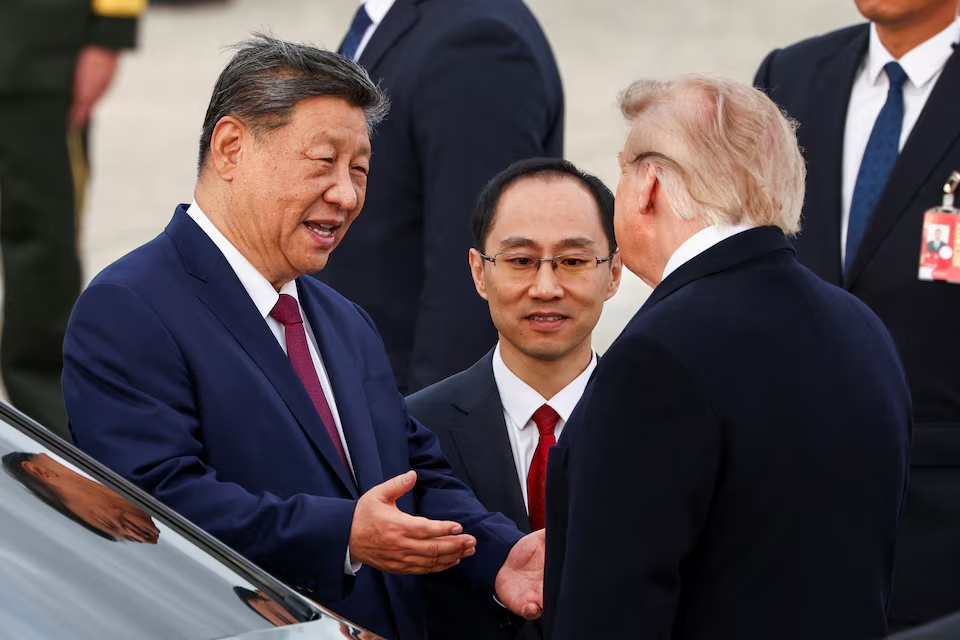

Chinese President Xi Jinping warned U.S. President Donald Trump that disagreements over Taiwan could push relations between the world’s two largest economies toward conflict, even as both leaders signaled progress in trade negotiations during a high-stakes summit in Beijing.
The remarks came during a lengthy closed-door meeting on Thursday at the Great Hall of the People, where the two leaders sought to stabilize ties strained by trade disputes, military tensions and the ongoing conflict involving Iran in the Middle East.
While both sides publicly emphasized cooperation and economic progress, the issue of Taiwan once again emerged as the most sensitive flashpoint in the relationship between Washington and Beijing.
Taiwan Issue Dominates Behind Closed Doors
According to China’s foreign ministry, Xi told Trump that Taiwan remains the most important and dangerous issue facing bilateral relations. Beijing views the self-governed island as part of Chinese territory and has repeatedly warned against foreign support for Taipei.
Xi reportedly cautioned that mishandling the Taiwan question could drive the two nations into a “dangerous situation” and potentially even direct conflict.
The White House summary of the talks did not mention Taiwan directly, focusing instead on trade, energy security and regional stability. However, U.S. Secretary of State Marco Rubio later confirmed that the issue had been discussed during the meeting.
“The Chinese always raise it on their side,” Rubio said in an interview with NBC News. “We make clear our position and move on to other topics.”
Washington continues to maintain its long-standing policy of supporting Taiwan’s self-defense capabilities despite lacking formal diplomatic relations with the island. A proposed U.S. arms package worth billions of dollars for Taiwan remains under consideration, a move China strongly opposes.
Taiwanese officials responded cautiously to the summit developments, stating that Beijing’s growing military pressure around the island remains the true threat to regional peace and stability.
Trade Talks Show Signs of Progress
Despite the geopolitical tensions, both governments described recent economic discussions as constructive.
Xi told Trump that trade negotiators from both countries had reached “balanced and positive outcomes” during preparatory talks held in South Korea earlier this week. The negotiations are aimed at preserving a fragile trade truce established during previous meetings between the two leaders.
That earlier agreement temporarily halted the escalation of tariffs between the United States and China and prevented further disruption to global supply chains, particularly involving rare earth minerals and advanced technology exports.
U.S. Treasury Secretary Scott Bessent, who participated in the economic talks, said discussions were progressing toward creating longer-term frameworks for bilateral investment and trade cooperation.
American officials also expect China to announce major purchases of U.S.-made Boeing aircraft, agricultural products and energy exports as part of broader efforts to reduce the long-standing U.S. trade deficit with China — an issue Trump has repeatedly criticized.
Trump Seeks Economic Wins Amid Political Pressure
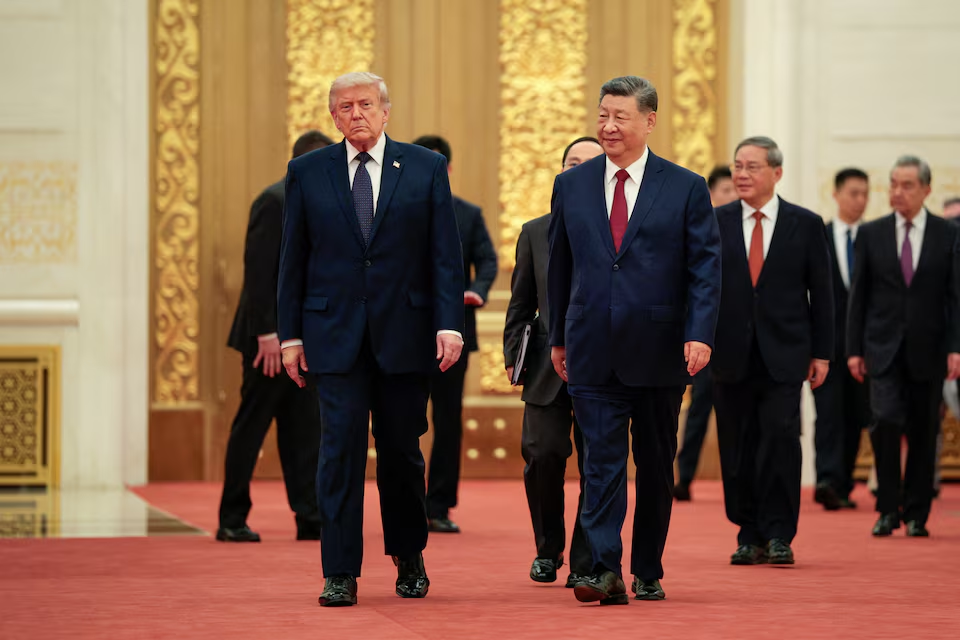
The summit carries significant political importance for Trump, whose approval ratings have come under pressure due to rising inflation, high fuel costs and the ongoing conflict involving Iran.
With congressional midterm elections approaching, the administration is eager to showcase economic progress and stabilize markets affected by global uncertainty.
Speaking briefly before the talks began, Trump described the gathering as potentially “the biggest summit ever,” highlighting the importance of the relationship between Washington and Beijing.
The U.S. president arrived in China accompanied by several prominent business leaders, including Elon Musk and Jensen Huang, reflecting the strong commercial interests tied to the visit.
Technology and semiconductor policy remain key sticking points in negotiations. China continues to push for eased U.S. restrictions on advanced chip exports and semiconductor manufacturing equipment, while Washington remains cautious about transferring sensitive technologies.
Reuters recently reported that the United States had approved several Chinese companies to purchase Nvidia’s powerful H200 artificial intelligence chips, although no shipments have yet been completed.
Middle East Crisis Adds New Urgency
Another major focus of the summit is the growing instability in the Middle East following the Iran conflict and the disruption of shipping through the Strait of Hormuz.
The waterway, which normally carries around one-fifth of global oil and natural gas supplies, has become a critical point of concern for both nations as global energy markets remain volatile.
Trump is reportedly hoping China will use its influence with Tehran to encourage negotiations and help de-escalate the conflict.
However, analysts say Beijing is unlikely to place significant pressure on Iran, which China views as an important strategic partner and counterweight to U.S. influence in the region.
Rubio acknowledged that resolving the crisis is also in China’s economic interest, noting that Chinese shipping and exports have been affected by the instability in Gulf waters.
Iranian media reported Thursday that arrangements had been made allowing some Chinese ships to pass safely through the region, offering a possible sign of limited diplomatic coordination.
Symbolism and State Diplomacy on Display
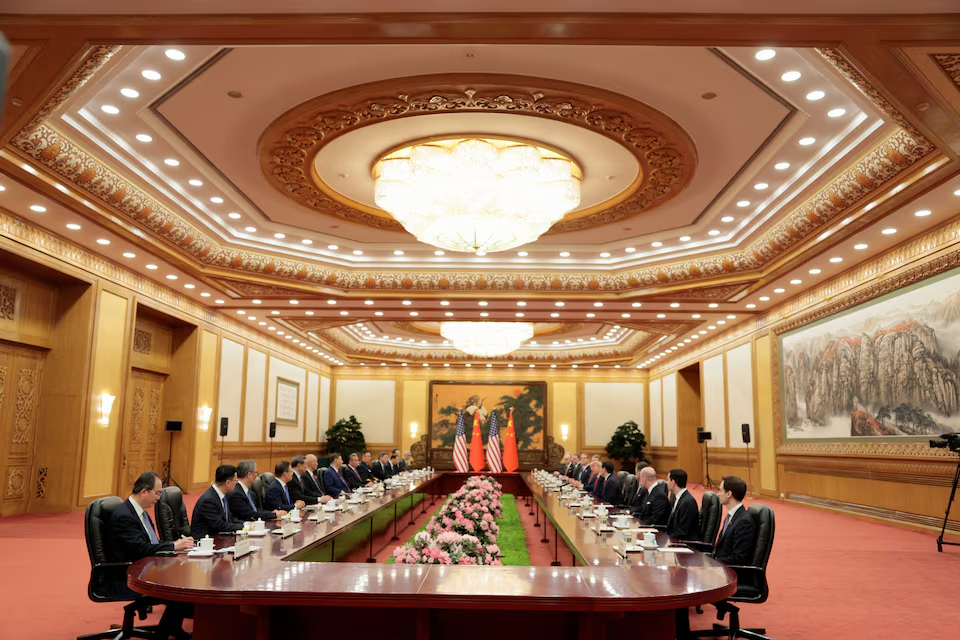
Beyond policy discussions, the summit was carefully staged to project stability and cooperation.
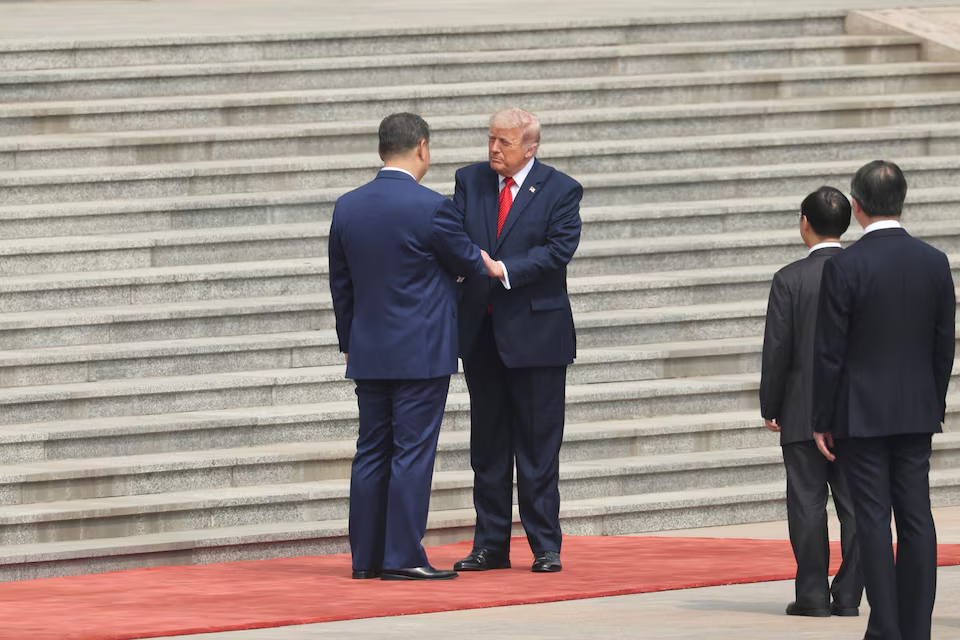
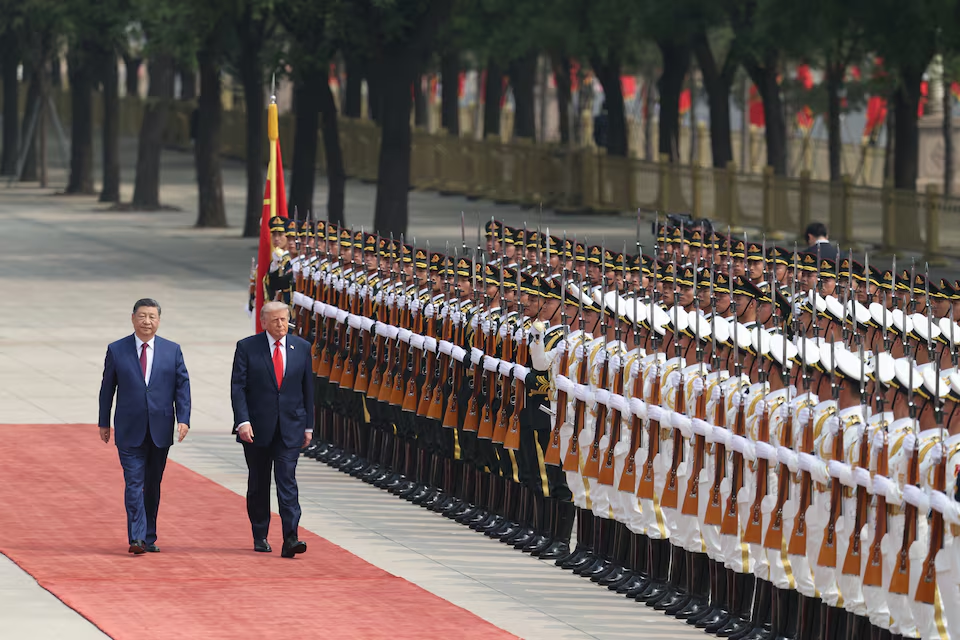
Trump was welcomed with an elaborate ceremony featuring military honors, children waving Chinese and American flags and cultural performances in central Beijing.
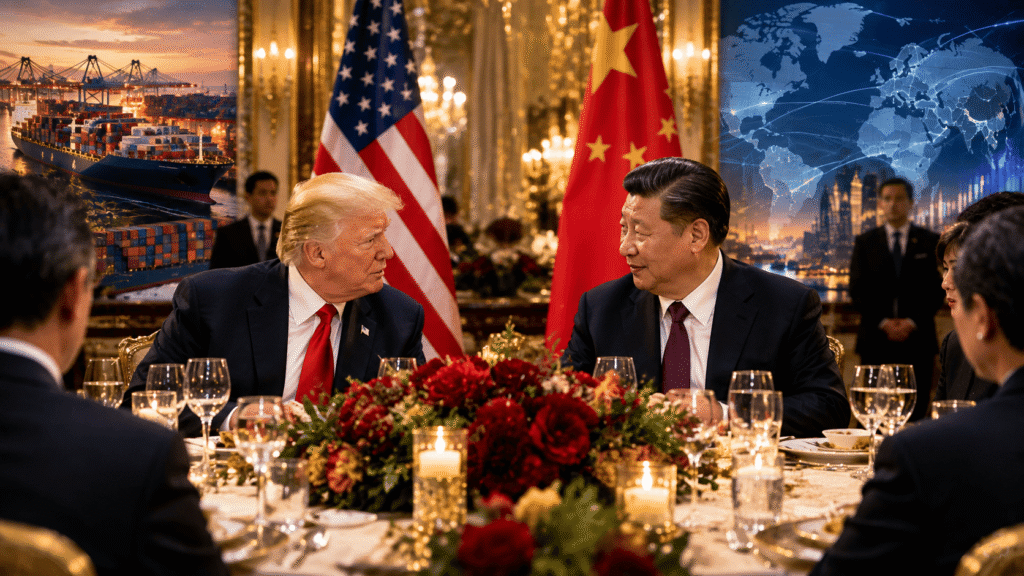
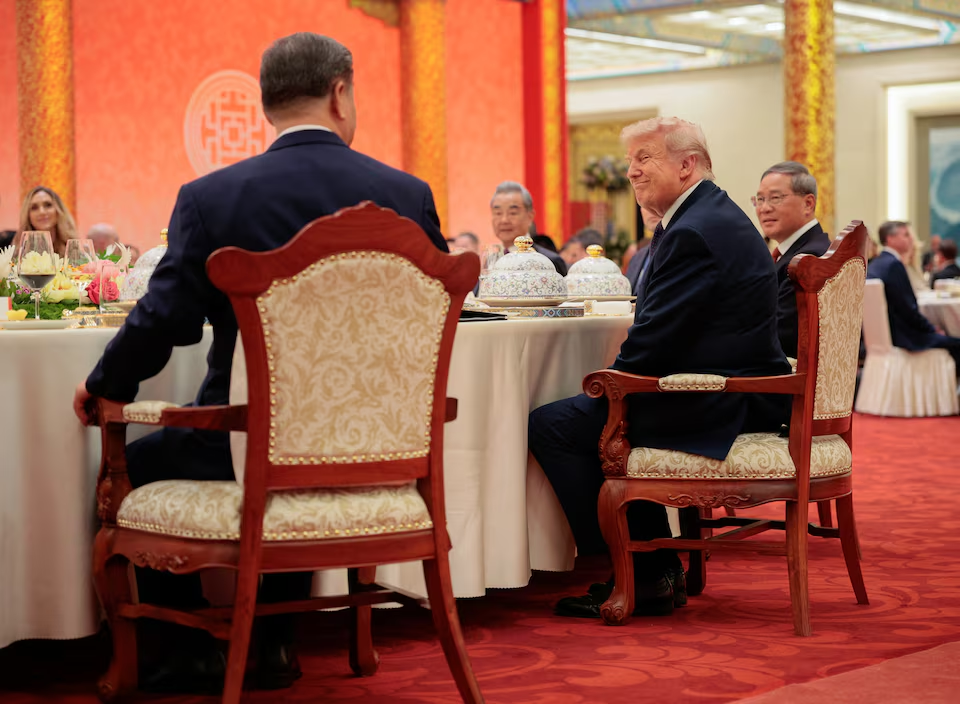
Later in the evening, Xi hosted a lavish state banquet attended by senior government officials and major business executives. Guests were served a 10-course meal featuring lobster soup, Beijing roast duck and tiramisu.
During the dinner, Xi described the U.S.-China relationship as “the most important bilateral relationship in the world.”
“We must make it work and never mess it up,” the Chinese leader told attendees.
The two leaders are expected to hold additional private meetings and a working lunch before Trump departs Beijing.
Invitation to Washington Signals Continuing Engagement
In a sign that both sides remain committed to ongoing dialogue despite their differences, Trump formally invited Xi to visit Washington later this year.
The proposed White House visit, scheduled for September 24, would mark Xi’s first official trip to the U.S. since Trump returned to office for a second term.
Although major disagreements remain unresolved — particularly over Taiwan, technology policy and global security — the summit suggests both governments are seeking to prevent competition from spiraling into direct confrontation.
Still, with tensions over Taiwan intensifying and global instability rising, analysts warn that relations between the United States and China remain fragile, even amid renewed diplomatic engagement.