
President Donald Trump removed the last three sitting members of the Election Assistance Commission on Thursday, leaving the federal body that supports election administration across the country without any commissioners just months before the midterm elections. The White House confirmed the move after Reuters first reported it.
The four-member commission is designed to split evenly between the two parties. All four seats are now empty. The lone Republican appointee resigned, while the two Democratic appointees were fired through an email from the White House Presidential Personnel Office, according to one person familiar with the matter and two others briefed on the decision. A fourth commissioner had already left the post in April.
The termination email sent to the commissioners and reviewed by Reuters read: “On behalf of President Donald J. Trump, I am writing to inform you that your position as Commissioner of the Election Assistance Commission is terminated, effective immediately. Thank you for your service.”
A White House official defended the firings in a statement, pointing to a recent Supreme Court ruling that expanded the president’s authority to remove members of independent agencies. “The President, and head of the Executive Branch, reserves the right to remove individuals that may not be totally aligned with the important task of securing America’s elections and ensuring every legal vote is counted,” the official said. The official added that the administration has been coordinating with other agencies and local partners to guard against election fraud and to build up infrastructure ahead of the midterms.
The commission, created by Congress through the 2002 Help America Vote Act, functions as a clearinghouse for information on how elections are run. It accredits labs that test voting equipment, certifies voting systems used by states, and maintains the national mail voter registration form required under the 1993 National Voter Registration Act.
The three ousted commissioners, Thomas Hicks, Benjamin Hovland and Christy McCormick, were each confirmed unanimously by the Senate. Under the 2002 law, the president can name replacements, but the White House has not said when or how it plans to refill the commission.
Pressure on mail voting and 2020 claims
The firings follow months of pressure from Trump and administration officials to tighten vote-by-mail rules before the midterms, along with continued efforts to revisit the outcome of the 2020 election, which Trump lost to Democrat Joe Biden. Trump has repeated unproven claims throughout his second term that the 2020 race was rigged against him.
Election administration has traditionally been left to individual states, which set their own rules for registration, mail ballots and polling procedures. Trump has pushed for a larger federal role in that process as Republicans and Democrats prepare for the November midterms.
Senator Mark Warner, a Virginia Democrat, criticized the firings in a social media post Thursday, saying the move “should concern every American, regardless of party.” He called the removal of every remaining commissioner months before the midterms “an extraordinary step that demands an immediate explanation from the administration and raises profound concerns about political interference in the institutions that support our elections.”
Legal basis for the firings
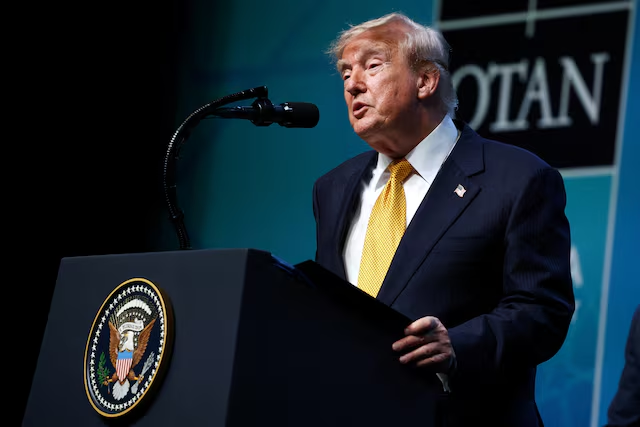
The administration’s justification traces back to a Supreme Court decision that gave the president wider latitude to remove officials at independent agencies, a ruling the White House cited directly in defending Thursday’s terminations. Commissioners at agencies like the EAC were historically seen as insulated from removal by ordinary political disagreement, given the requirement that the panel split evenly between the parties. That structure was meant to keep election administration support out of partisan hands.
With the commission now empty, its day-to-day functions, including certifying voting systems and accrediting testing labs ahead of the midterms, fall into question. The agency’s website describes its role as a resource for state and local election officials rather than a body that runs elections directly, but the certification and accreditation work touches equipment used across much of the country.
It remains unclear whether Trump will move quickly to name four new commissioners or leave the seats vacant heading into the midterms. Senate confirmation would be required for any replacements, a process that can take months even when the White House prioritizes it.
The firings add to a string of moves by the Trump administration affecting independent federal bodies since the Supreme Court ruling on removal power. Officials at other agencies have faced similar terminations, part of a broader effort by the administration to bring agencies historically shielded from direct presidential control more closely under White House direction.
Democrats have raised concerns that emptying the commission just before a major election cycle could slow down certification of new voting equipment or leave state officials without federal guidance during a period when several states are considering changes to their voting procedures. Republicans have generally supported the administration’s push for stricter election security measures, including tighter mail-ballot verification.
The EAC’s remaining staff, separate from the commissioners themselves, continue to operate the agency day to day, but major decisions such as certifying new voting systems typically require sign-off from the commission. Without confirmed commissioners in place, that process could stall unless the White House moves quickly to nominate and the Senate moves quickly to confirm replacements.
Hicks, Hovland and McCormick had each served on the commission for multiple years and were seen as experienced hands on election administration policy, according to people familiar with the commission’s work. Their unanimous Senate confirmations reflected the bipartisan structure Congress built into the agency when it was created in 2002 in response to the disputed 2000 presidential election.
The commission was one of several reforms that emerged from that period, alongside changes to voting equipment standards and provisional ballot rules, aimed at rebuilding public confidence in how U.S. elections are run and counted.