

The government of Ghana has welcomed the landmark apology issued by Pope Leo XIV over the Catholic Church’s historical involvement in slavery, describing the statement as an act of “moral courage” and an important contribution to global efforts toward truth, justice, and historical accountability.
The apology, published on Monday as part of the Pope’s first major teaching document since assuming the papacy, marks the strongest acknowledgment yet by a pontiff regarding the Church’s role in legitimising slavery and delaying its condemnation for centuries.
For Ghana — one of the principal departure points during the transatlantic slave trade — the statement carries profound historical and emotional significance.
Officials in Accra said the recognition of the painful legacy of slavery represented an important step in ongoing international conversations surrounding reconciliation, reparations, and the enduring consequences of colonial exploitation.
Pope Leo Issues Strongest Vatican Apology on Slavery
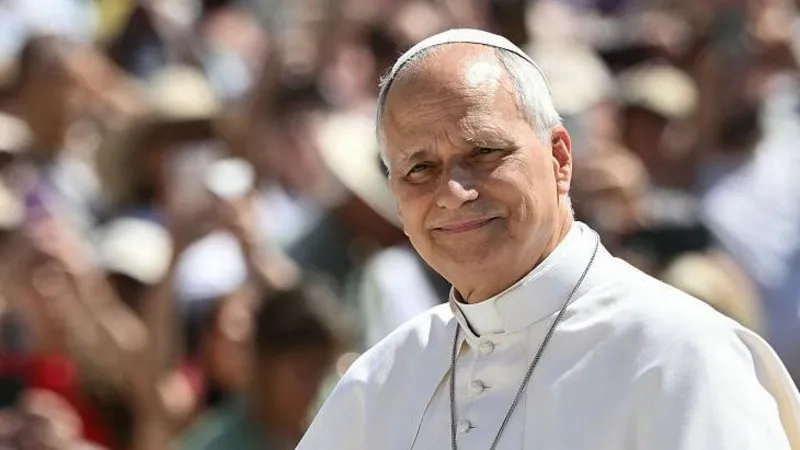
In the encyclical titled Magnifica Humanitas (“Magnificent Humanity”), Pope Leo offered a formal apology on behalf of the Catholic Church, openly acknowledging its historical failures and moral complicity.
The pontiff wrote that it was impossible to reflect on slavery without feeling “deep sorrow” for the suffering, humiliation, and injustice endured by millions of people over generations.
He further acknowledged that Church authorities at various moments in history had not only failed to oppose slavery but had also legitimised systems of subjugation, including the enslavement of non-Christians.
The Pope admitted that ecclesiastical institutions themselves owned slaves during parts of the Middle Ages — a reality he described as “a wound in Christian memory.”
The statement represents one of the clearest admissions yet from the Vatican regarding the Church’s historical involvement in slavery and comes amid growing global calls for institutions to confront their colonial pasts.
Ghana’s Central Role in the Transatlantic Slave Trade
Ghana occupies a unique place in the history of slavery.
Between the 16th and 19th centuries, the territory then known as the Gold Coast became one of the major hubs of the transatlantic slave trade, where millions of Africans were captured, detained, and transported to the Americas and the Caribbean.
Historians estimate that between 12 and 15 million Africans were forcibly shipped across the Atlantic during the slave trade era, with nearly two million people dying during the brutal journey known as the Middle Passage.
Several coastal forts and castles in Ghana — including sites such as Cape Coast Castle and Elmina Castle — remain powerful symbols of that history.
These sites once served as detention centres where enslaved Africans were held in harsh conditions before being transported overseas.
Today, they stand as memorials and educational landmarks visited by descendants of enslaved people and global leaders seeking to understand the human cost of slavery.
Ghana Leads International Push for Reparations
Ghana has increasingly positioned itself at the forefront of international calls for reparations and formal recognition of the legacy of slavery.
Earlier this year, the country played a leading role in securing a landmark resolution at the United Nations recognising the enslavement of Africans as the “gravest crime against humanity.”
The initiative, backed by the African Union and championed by John Mahama, aims to establish pathways for healing, reparative justice, and acknowledgement of the lasting social and economic impacts of slavery.
The resolution also highlights the enduring effects of slavery and colonialism, including systemic inequality, racial discrimination, and economic disparities that continue to affect African and diaspora communities.
Government officials in Ghana said Pope Leo’s apology aligns with these broader efforts and adds momentum to the international conversation.
According to Ghanaian authorities, genuine reconciliation requires institutions to openly acknowledge historical injustices before meaningful progress can occur.
Pope’s Africa Visit Added Weight to Message
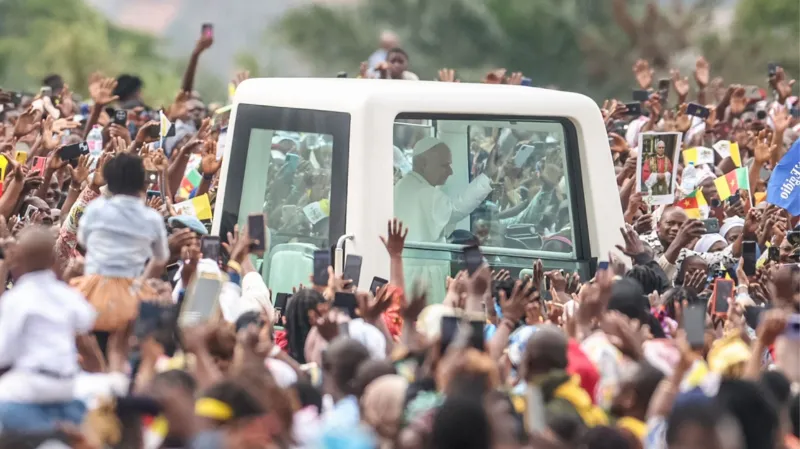
The apology comes only months after Pope Leo completed his first visit to Africa as pontiff.
In April, he toured four African nations — Algeria, Cameroon, Angola, and Equatorial Guinea.
During the trip, the Pope made several strong remarks on exploitation and inequality, criticising foreign interests that profit from Africa’s resources while local populations continue to face poverty and underdevelopment.
Observers say those comments, combined with his slavery apology, indicate a papacy prepared to engage directly with historical injustices and contemporary global inequalities.
The Catholic Church has millions of followers across Africa, making the continent increasingly influential within global Catholicism.
Human Rights Groups Call for Further Action
While the apology has been broadly welcomed, rights organisations say symbolic recognition alone is insufficient.
Human Rights Watch praised the Pope’s statement as an important milestone but argued that apologies must be followed by practical measures aimed at reparative justice.
The organisation urged religious institutions, governments, and corporations that benefited from slavery to engage more seriously with their historical responsibilities.
Advocates argue that reparations should include educational investments, cultural preservation initiatives, historical research, and economic support for affected communities.
The debate over reparations has gained momentum globally, particularly as former colonial powers face increasing scrutiny over their historical roles in slavery and empire-building.
Ghana to Host Major Conference on Reparations
Ghana is expected to continue pushing the issue onto the global agenda.
The country is preparing to host an international conference next month aimed at discussing the implementation of the recent UN resolution and outlining practical next steps for reparative justice efforts.
The gathering is expected to bring together policymakers, historians, civil society groups, and representatives from Africa and the diaspora.
For many in Ghana, Pope Leo’s apology represents more than a symbolic gesture.
It is being viewed as part of a broader global reckoning with history — one that seeks not only to acknowledge past suffering but also to address its continuing consequences.
As conversations around slavery, colonialism, and reparations intensify worldwide, Ghana’s response signals its determination to remain at the centre of efforts to transform historical recognition into meaningful action.