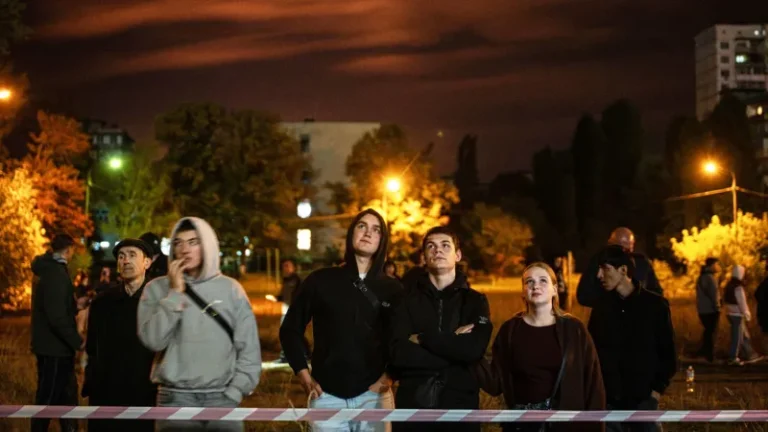

President Volodymyr Zelenskiy’s decision to remove Defence Minister Mykhailo Fedorov after just six months in the post triggered rare wartime protests across Ukrainian cities on Thursday, underscoring how divisive the move has proven among a public that had largely rallied behind him.
Fedorov, a 35-year-old reformer known for his tech-focused approach to government, is the only minister to have served in every one of Zelenskiy’s cabinets since the president’s election in 2019. Parliament was expected to vote Thursday on Interior Minister Ihor Klymenko as his replacement. It remains unclear whether Fedorov will be offered another government role.
Supporters credit Fedorov with helping shift battlefield momentum toward Ukraine this year, pointing to his push to expand drone purchases and a move that cut off Russian military units from Starlink internet access. But his efforts to restructure the defence ministry and armed forces put him at odds with Ukraine’s top military commander, Oleksandr Syrskyi, and he never delivered on promises to fix long-standing problems with military conscription. Zelenskiy did not offer a specific explanation for the dismissal but told reporters he wants to see “greater unity” between the defence ministry and military leadership.
From marketing specialist to cabinet minister
Fedorov was born in Vasylivka, a town in southern Ukraine now under Russian occupation, and grew up in nearby Zaporizhzhia, a city that faces near-daily Russian bombing and drone strikes. He worked as a young marketing specialist before Zelenskiy, then a television personality, recruited him to run the social media campaign behind his landslide election victory in April 2019.
At age 28, Fedorov was named minister for digital transformation, a newly created position in Zelenskiy’s first cabinet that gave him room to pursue technology-driven changes to government services. His ministry built Diia, a smartphone app whose name means “action” in Ukrainian. The app, marketed as putting “the state in a smartphone,” lets Ukrainians handle government tasks such as registering vehicles or filing for marriage and divorce without visiting a government office.
A public appeal that brought Starlink to Ukraine
When Russia launched its full-scale invasion in 2022, Fedorov posted a public appeal to SpaceX founder Elon Musk asking him to activate Starlink satellite internet service over Ukraine. Musk did so almost immediately. Ukraine’s military now relies on tens of thousands of Starlink terminals, which commanders have described as central to how they coordinate on the battlefield. In February, Fedorov worked with Starlink to block Russian forces from accessing the service without authorization.
He also became an early advocate for building what he called an “army of drones,” a technology that later became a dominant factor in the war. His ministry created a points-based system that rewarded Ukrainian soldiers for video-verified strikes on Russian troops and equipment, letting them earn credits toward weapons such as drones. The program also generated a large dataset on battlefield activity, which Fedorov described as leverage Ukraine could use when negotiating for additional military support from its allies.
A defence ministry overhaul that fell short
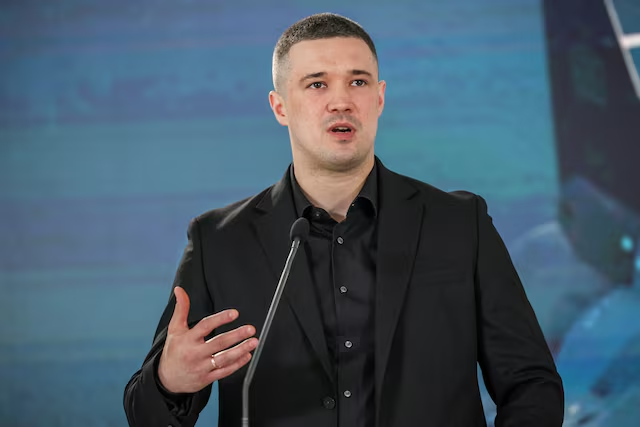
Zelenskiy promoted Fedorov to defence minister in January 2026, and he pledged to bring the same data-driven approach that built Diia to a ministry that had faced repeated corruption and mismanagement scandals throughout the war. He laid out a plan for winning the war that included inflicting 50,000 Russian casualties per month, neutralizing Russian aerial attacks, and damaging Russia’s economy to the point of forcing a resolution.
He did not follow through on proposed changes to Ukraine’s conscription system, an issue that has generated public frustration for years over who serves and for how long. Fedorov did announce a restructuring of service contracts across Ukraine’s roughly one million-person armed forces, along with plans to raise pay, particularly for infantry troops. But soldiers already serving said the changes favored new recruits over those who had been fighting since early in the war. People who volunteered in the war’s opening months still have limited options to leave service, aside from serious injury.
Protests reflect divided views on his removal
The demonstrations that broke out Thursday mark an unusual moment in wartime Ukraine, where public protest has been rare given the demands of the conflict and general wartime unity around the government. Fedorov’s supporters view his dismissal as a loss for a ministry that badly needed the kind of institutional reform he was attempting, and see his record on drones and Starlink as evidence he understood the technological demands of modern warfare better than many of his predecessors.
Others inside the defence establishment saw his approach differently. His tensions with Syrskyi point to a broader disagreement over how much civilian leadership should push into decisions traditionally left to military commanders, a friction that has surfaced periodically throughout the war as Zelenskiy has tried to balance civilian oversight with operational authority on the battlefield.
Klymenko, if confirmed by parliament, would bring a different background to the post. As interior minister, he has overseen domestic security and law enforcement rather than the drone procurement and digital systems that defined Fedorov’s tenure. His appointment would represent a shift away from the technology-first approach Fedorov championed and toward a minister with deeper ties to Ukraine’s security services.
Zelenskiy’s call for “greater unity” between the ministry and military leadership suggests the change is meant to smooth over the friction between Fedorov and Syrskyi, even if it comes at the cost of losing a minister whose public profile and battlefield initiatives had made him one of the more visible figures in the government outside the president himself.
Whether Fedorov’s removal proves to be the end of his role in Ukrainian government or simply a pause remains an open question. His history of loyalty to Zelenskiy since 2019, combined with the public backing evident in Thursday’s protests, leaves open the possibility that he could resurface in another capacity as the war continues and the government looks for ways to manage both battlefield demands and public expectations heading into another difficult winter.