
Venezuela is facing one of the deadliest natural disasters in its modern history after two powerful earthquakes tore through the country, killing more than 900 people, injuring thousands, and leaving tens of thousands unaccounted for.
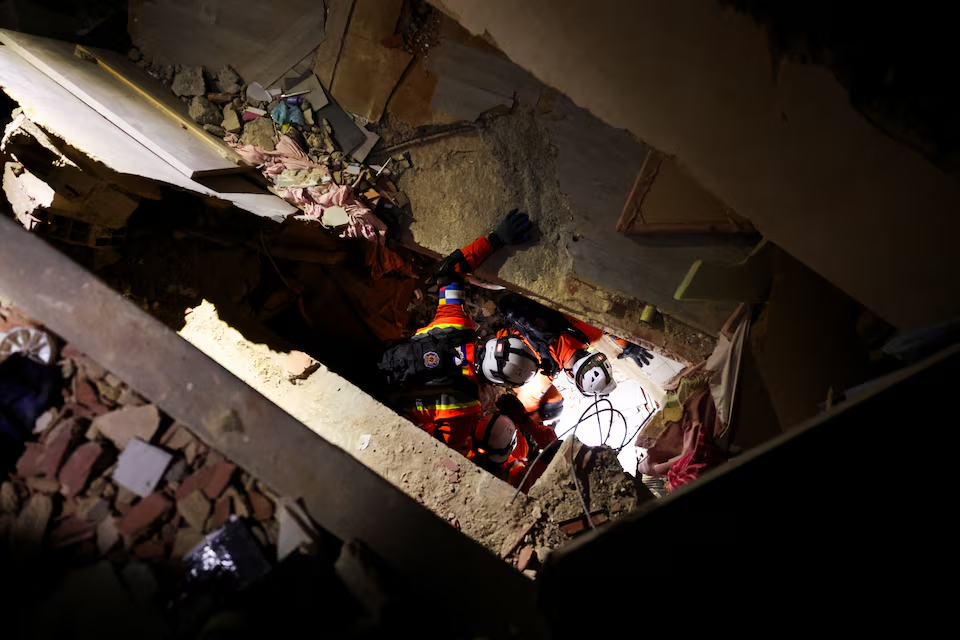
The twin earthquakes, registering 7.2 and 7.5 in magnitude, hit western areas near Caracas on Wednesday evening. The destruction spread across the capital and into neighboring coastal communities. Rescue crews and volunteers worked through Friday, searching for survivors trapped beneath collapsed buildings.
Government officials confirmed at least 920 deaths, with 3,360 people injured, ranging from minor cuts to life-threatening trauma. Authorities reported 172 people still trapped under rubble and more than 50,000 unaccounted for.
The earthquakes now rank among Latin America’s most destructive in decades, and they have pushed Venezuela into a full-scale humanitarian emergency.
Fresh Tremor Deepens Fears
Rescue efforts hit another setback Friday afternoon when a magnitude 4.9 aftershock struck near Caracas and the city of Maracay.
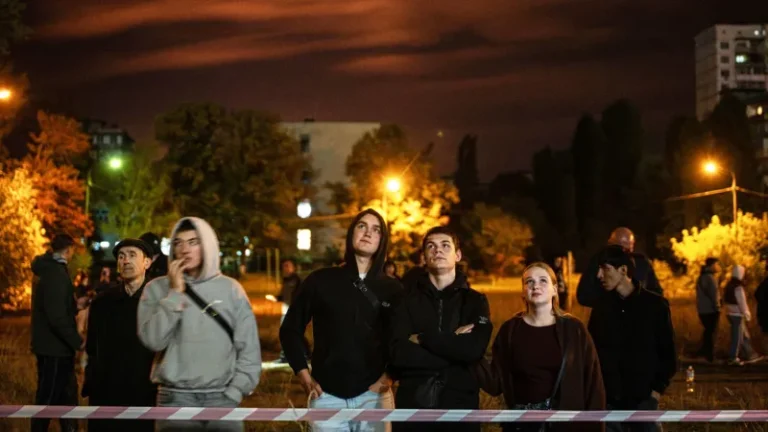
The tremor rattled survivors who had already spent two nights sleeping outdoors, too afraid that damaged buildings might collapse to go back inside.
Seismologists warned that aftershocks could continue for days, even weeks, adding risk for both survivors and rescue crews still working through the wreckage.
Communities Dig Through Rubble With Bare Hands
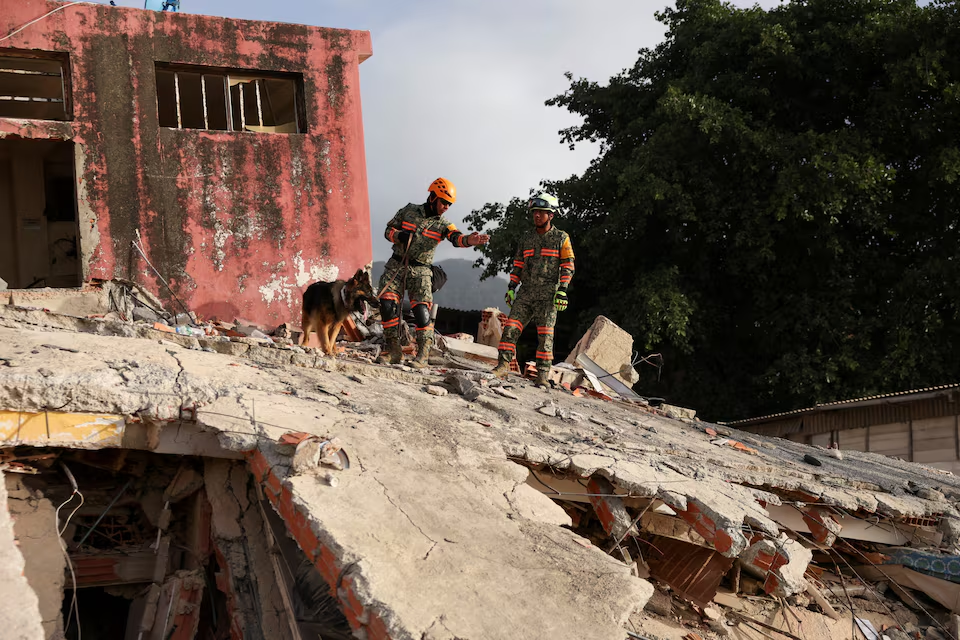
In some of the hardest-hit areas, particularly in La Guaira state, anger has grown over what residents call a slow and uneven government response.
With heavy machinery scarce, families and volunteers have turned to shovels and their own hands to search for the missing.
Jennifer Palacios, 25, said her six-year-old son and five relatives remain trapped beneath the wreckage of the Hugo Chavez residential complex in La Guaira.
“It has been the community that has managed to save people alive,” she said. “We need cranes and equipment. There are still many people trapped.”
Similar scenes have played out across the region, with relatives gathered outside collapsed buildings, waiting for any word that rescuers have reached their loved ones.
Entire Neighborhoods Reduced to Rubble
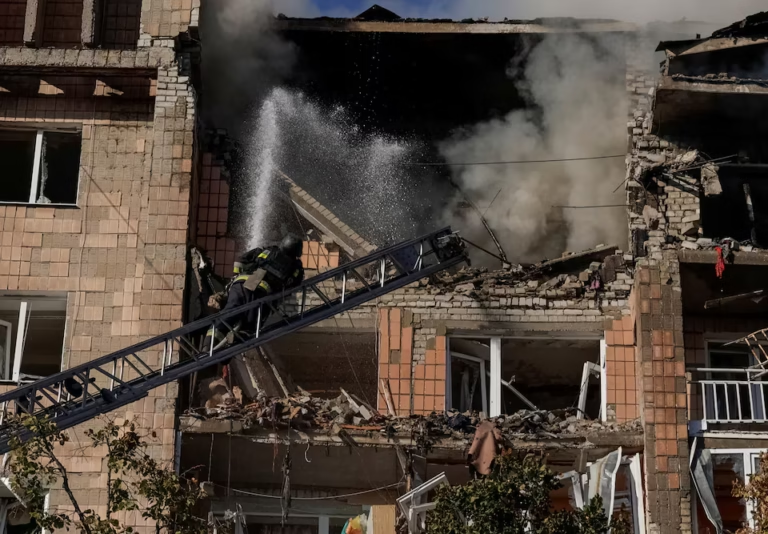
Reuters journalists who traveled through the affected areas described widespread devastation. Major highways cracked apart or gave way to landslides. Apartment buildings and businesses now sit as piles of concrete and twisted steel.
Rescue teams have spray-painted some damaged structures with identification marks to organize their search efforts.
In coastal towns like Caraballeda and Catia la Mar, entire neighborhoods have become disaster zones.
Lawyer Ricardo Trias spent Friday trying to get a death certificate for his godson, whose body was pulled from a collapsed building.
“We want them to release the body,” he said. “No forensic authority has come.”
The absence of official support in some areas has fueled public frustration and raised doubts about the government’s ability to handle a crisis of this scale.
Government Restricts Access to Disaster Zones
As thousands of volunteers headed toward La Guaira carrying food, medicine, and water, Venezuelan authorities announced new restrictions on movement into the area.
Officials said overcrowded roads were slowing rescue operations and ruled that only registered emergency teams could enter the area after nightfall.
The decision has split public opinion. Some say the restrictions help coordinate rescue work, while others argue they’re blocking aid that people desperately need.
Political Challenges for Interim President Delcy Rodriguez
The disaster has become a defining moment for interim President Delcy Rodriguez, who took power after the political upheaval that removed former leader Nicolas Maduro earlier this year.
Rodriguez has tried to position herself as a leader focused on national reconciliation and reform, but the scale of the disaster, paired with public anger over the response, could shape how Venezuelans see her leadership going forward.
She has promised a large-scale relief operation despite the criticism and has appealed for international help.
A recent United Nations assessment put the direct economic damage from the earthquakes at roughly $6.7 billion, a heavy blow for a country already worn down by years of economic decline and political instability.
International Aid Begins to Arrive
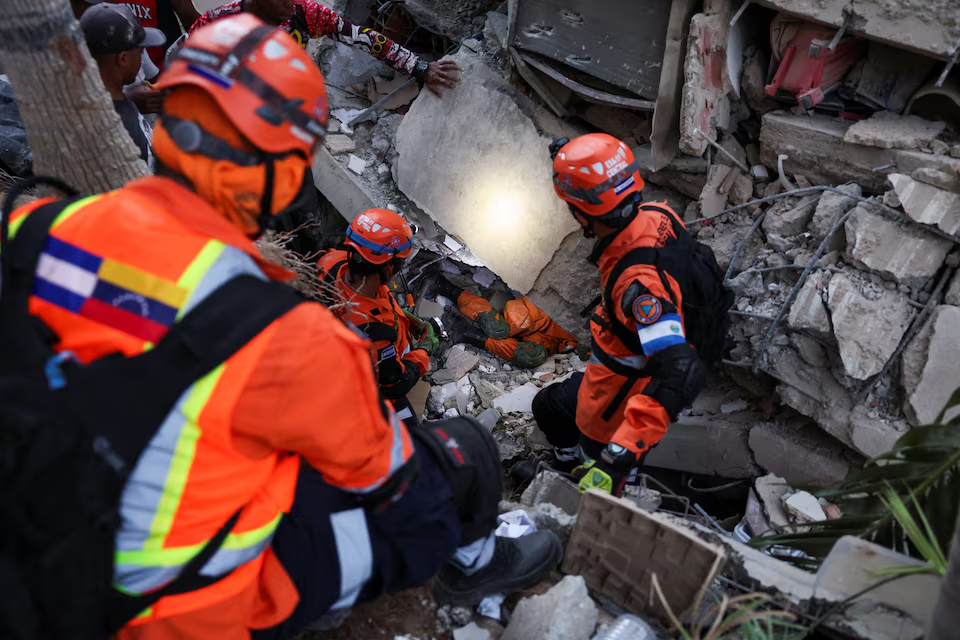
Countries around the world have started mobilizing support for Venezuela.
Foreign rescue teams began arriving late Thursday and kept arriving throughout Friday.
Rodriguez said she spoke by phone with U.S. President Donald Trump and Secretary of State Marco Rubio about humanitarian assistance.
The United States announced a $150 million emergency aid package and eased certain sanctions to speed up relief efforts. The U.S. military has sent ships, aircraft, and helicopters to support rescue work and move supplies.
El Salvador sent a search-and-rescue team equipped with drones, heat-detection gear, and search dogs. In one operation, Salvadoran rescuers detected signs of life from a 15-year-old girl trapped on the ninth floor of a collapsed building, along with her pet. Rescue crews are still working to reach her.
The United Nations has coordinated additional international support and warned that addressing the disaster will require what officials called a “massive collective effort.”
Oil Sector Escapes Major Damage
Venezuela’s oil industry, the backbone of its economy, appears to have largely avoided damage despite the widespread destruction elsewhere.
Oil Minister Paula Henao said production facilities remain operational and fuel supplies will continue without interruption.
Executives and industry workers reported that pipelines, refineries, and export terminals came through without significant harm, a crucial outcome for a government that depends on energy exports for revenue and foreign currency.
Millions Could Be Affected
The International Organization for Migration estimates that nearly seven million people could be directly or indirectly affected by the disaster.
Thousands have lost their homes, and many communities still lack reliable access to electricity, water, or medical care.
The United Nations has started distributing emergency shelters, food, and medical equipment, but officials warn the crisis could deepen if aid doesn’t reach remote areas soon.
The U.S. Geological Survey has warned that the death toll could eventually top 10,000, which would make this one of the deadliest earthquakes in Latin American history.
A Nation Facing Another Historic Tragedy
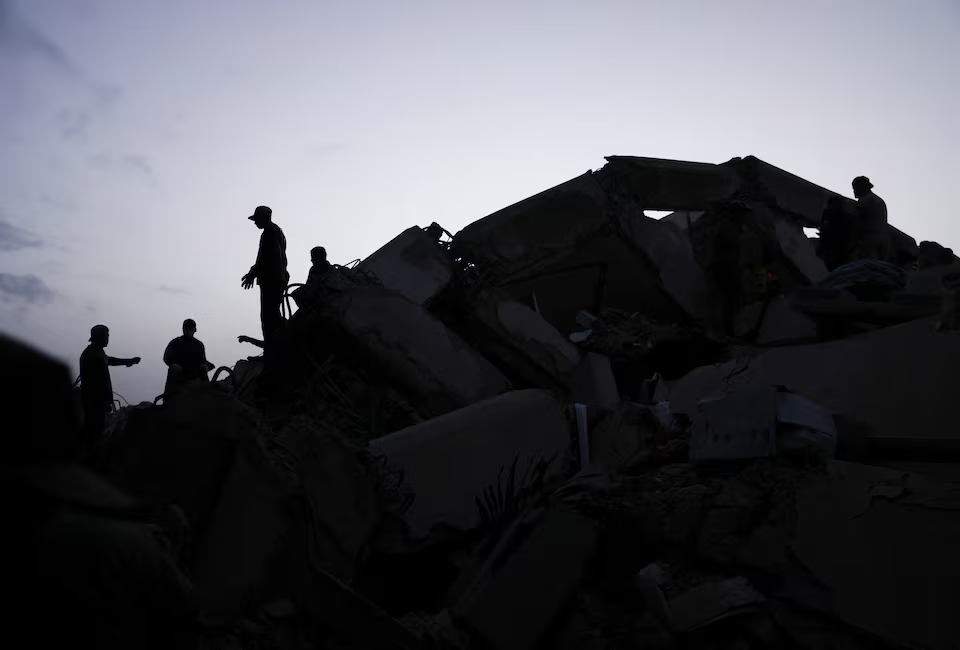
For many Venezuelans, the disaster has reopened wounds from past national crises.
Already strained by years of economic hardship, political instability, and mass migration, the country now must rebuild entire communities while caring for thousands of survivors. Rescue workers keep digging through the rubble, and families keep waiting for news, as Venezuela faces one of the hardest stretches in its recent history.