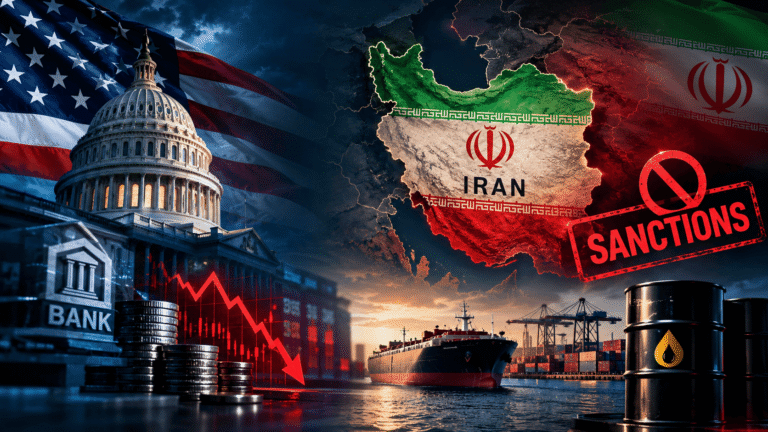

The Strait of Hormuz remains “under Iran’s control and management,” the newly appointed head of Iran’s Basij paramilitary unit said Thursday, directly contradicting a statement a day earlier from U.S. President Donald Trump that the United States had “total control” of the strategic waterway.
The dueling claims highlight how contested the narrow shipping channel remains, months after fighting first broke out between the United States, Israel and Iran, and underscore how far apart Washington and Tehran remain on the question of who actually holds sway over one of the world’s most vital energy corridors.
Hossein Taeb said the United States had attempted to undermine what he called the Islamic Republic’s regional popularity by launching another war in the Strait of Hormuz, but had been defeated again despite claiming Iran possessed neither an air force nor a navy.
“Today you see that the Strait of Hormuz is under the management and control of the Islamic Republic,” Taeb said, according to the semi-official Fars news agency. He added that Iran continues to operate in the strait with complete security, framing the situation as a demonstration of Tehran’s resilience against a much larger military power.
Taeb’s comments come as he settles into his new post atop the Basij, the volunteer paramilitary force affiliated with Iran’s Islamic Revolutionary Guard Corps that has played a central role in both domestic security operations and, more recently, the country’s posture toward Gulf shipping lanes.
A vital corridor for global energy
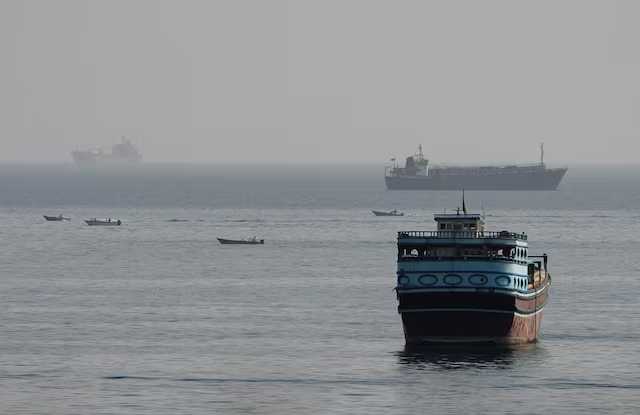
The Strait of Hormuz sits between Iran and Oman, connecting the Persian Gulf to the Gulf of Oman and, beyond that, the open waters of the Arabian Sea. At its narrowest point, the shipping channel is only a few dozen miles wide, making it one of the most consequential chokepoints in global trade. Tankers carrying crude oil, refined products and liquefied natural gas from Saudi Arabia, the United Arab Emirates, Kuwait, Qatar and Iran itself have historically relied on the strait as the only sea route out of the Gulf.
That dependence is why any disruption to traffic through the strait tends to ripple quickly through global energy markets, and why control of the waterway has become such a central point of dispute in the current conflict.
War disrupted global oil shipping route
The conflict began on February 28 with joint U.S.-Israeli strikes on Iran. In response, Tehran effectively closed the Strait of Hormuz, a waterway through which roughly one-fifth of the world’s oil and liquefied natural gas had previously moved before the fighting started.
The closure marked one of the most significant disruptions to global energy shipping in years, forcing producers and buyers across the Gulf to reroute or halt shipments through the corridor. The United States then imposed a naval blockade on Iranian shipping and ports, while stating it would protect freedom of navigation for vessels traveling to and from ports outside Iran, positioning its own naval presence as a counterweight to Tehran’s closure of the strait.
The competing military postures, Iran restricting the waterway while the U.S. Navy sought to guarantee passage for non-Iranian shipping, have effectively turned the strait into a contested zone where both sides claim authority but neither fully controls the flow of traffic.
Ceasefire collapsed after weeks
In June, the United States and Iran reached an interim agreement establishing a permanent ceasefire and calling for a swift return to freedom of navigation throughout the Gulf. The deal was seen at the time as a potential turning point that could restore normal shipping through the strait and ease pressure on global oil markets.
That agreement broke down several weeks later after Iran resumed limited attacks on vessels it said were operating in violation of the deal’s terms. Tehran maintained that the vessels it targeted were sailing in ways inconsistent with the arrangements laid out in the interim agreement, though it did not elaborate further on the specific violations it alleged.
The United States responded by restarting strikes on Iran’s southern provinces, saying the strikes were intended to degrade Tehran’s capacity to target vessels in the Gulf. The renewed fighting effectively erased the brief window of de-escalation the June agreement had created, returning the conflict to the state of open hostility that has now stretched on for months.
Iran ties reopening to U.S. compliance
Separately on Thursday, senior military political official Rasoul Sanaei-Rad said Iran would not reopen the strait until the other side fulfilled its obligations under the interim agreement. He said the waterway’s reopening was not something the United States could achieve on its own, according to Fars news, a position that suggests Tehran views the strait’s status as leverage in any future negotiations rather than a matter it is prepared to concede unilaterally.
Sanaei-Rad also warned that Iran would respond with greater force in any future conflict. “In a possible future war, we will stand more firmly and more offensively,” he said, a comment that signals Tehran does not view the current standoff as settled and is preparing for the possibility of renewed large-scale fighting.
Competing narratives, unresolved conflict
The competing claims from Washington and Tehran over control of the strait underscore the fragility of the ceasefire and the unresolved tensions that continue to threaten one of the world’s most critical shipping corridors. Trump’s assertion of “total control” and Taeb’s counterclaim that the strait remains under Iranian management reflect not just a dispute over facts on the water, but a broader struggle over which side can credibly claim the upper hand in a conflict that has already disrupted global energy flows once and could do so again.
With the interim agreement in tatters and both sides trading strikes in recent weeks, the path back to a durable ceasefire remains unclear. Iran’s insistence that it will not reopen the strait until the United States meets its own commitments suggests any resolution will require further negotiation rather than a unilateral declaration from either side. In the meantime, tankers, insurers and energy markets are left navigating a waterway whose control is claimed by both combatants but guaranteed by neither.