Clicxpost

World News

Flydubai Co-Pilot Accused of Trying to Crash Jet Bound for Israel

Smit Machchhar

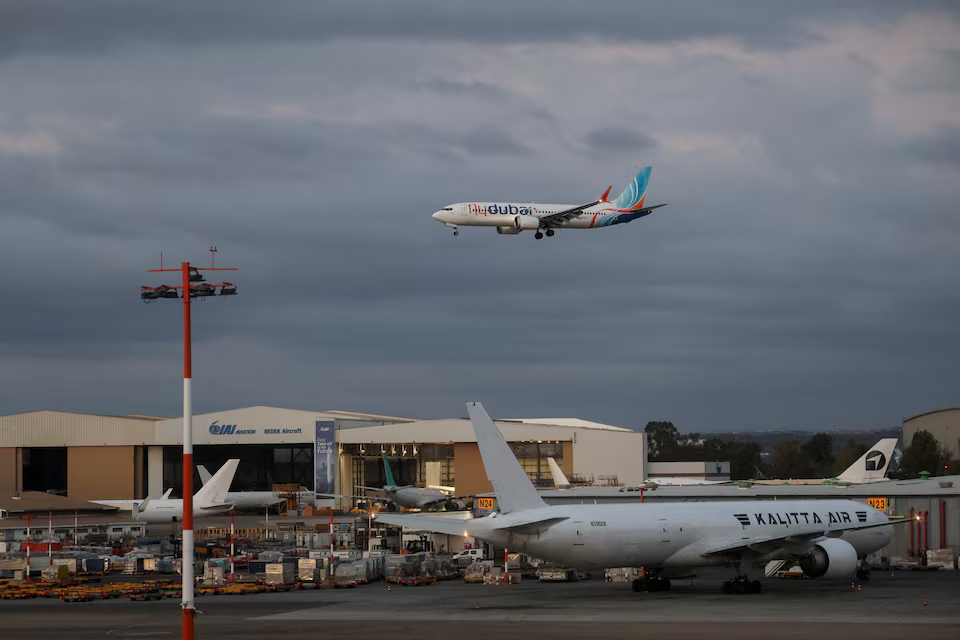
Questions remained on Thursday about the motives and background of a co-pilot who stabbed the captain of a passenger jet bound for Israel. Israeli officials say it was an apparent attempt to crash the plane, which had more than 170 people on board. Flydubai flight FZ1073 was flying from Dubai to Tel Aviv on Wednesday when the attack happened. The wounded captain managed to unlock the cockpit door, passengers subdued the attacker, and a reserve crew on board landed the plane in Saudi Arabia.

What Happened on Flight FZ1073

The flight dropped nearly 14,000 feet in less than 30 seconds while over Saudi Arabia. Passengers and crew then managed to subdue the attacker and land the aircraft at Tabuk airport.

Tabuk airport said both pilots were taken to hospital with injuries. Flydubai said the underlying reasons for the event remained unknown and warned against “premature speculation.” The airline confirmed an altercation in the flight deck and sent two replacement aircraft to Tabuk for the passengers and crew. Passengers were later flown back to Israel.

One of the men who helped overpower the attacker, Yaniv Hayun, described running to the cockpit as the plane nosedived. “We pulled the assailant out, I pulled him out,” he told reporters on his return to Israel on Wednesday. “After I pulled him out we took control of the plane, I pulled up the yoke (steering control of the plane), I straightened the plane out a bit.”

What Israeli Officials Says

Israeli Defense Minister Israel Katz said on Wednesday that Israel’s preliminary information indicated the co-pilot aimed to crash the plane. He described him as a terrorist. Prime Minister Benjamin Netanyahu used softer words and called it only “a serious security incident.”

Netanyahu said in a Fox News interview that the attacker was being investigated in Saudi Arabia and that he believed he would be taken to the United Arab Emirates. “We’ll be following and possibly also participating in this investigation,” he said.

Asked about Iran, Netanyahu said it was too early to tell. “We’ll get to the root of this attacker, whether he had accomplices, whether Iran was behind it,” he said. “I think we’ll find out very soon.” Israel has made no official suggestion of Iranian involvement.

The motive remains unestablished. Investigators have not said publicly whether the aim was to crash the plane or to take hostages.

Who Is Investigating

The UAE has opened investigations to establish the circumstances and motives. The UAE state news agency said they would seek to determine “whether the incident was linked to any terrorist activity or purpose, or involved prior planning or direction.”

UAE judicial authorities have jurisdiction because the aircraft is registered in the UAE and flies under its flag. The statement said UAE law applies to crimes committed on board even if they occur outside the country’s territory. Saudi Arabia has issued no statements on its own investigation.

Questions About the Co-Pilot

An Israeli official identified the attacker on Wednesday as an Omani national. Omani authorities have not commented on the report.

Israel Hayom reported that the co-pilot had worked for Flydubai for about nine months. Multiple Israeli agencies are examining how he was cleared to fly an Israel-bound service, what security checks came before his hiring and whether aviation-security arrangements were followed. His name has not been released.

The Captain

Netanyahu and Indian Prime Minister Narendra Modi have called the captain, Indian national Smit Machchhar, a hero. Netanyahu said Machchhar had apparently been stabbed or hit with an axe by the other pilot and had bled heavily. India’s ambassador to the UAE met Machchhar’s family and briefed him on the captain’s health and recovery, the Indian consulate in the UAE said.

Israel has also praised the passengers who subdued the attacker.

A Tense Backdrop

The incident raised security fears in Israel weeks before an election. It is the first since the Hamas-led attacks of October 7, 2023, and security features heavily in the campaign.

The United States and Israel launched strikes on Iran in February in a conflict that quickly spread to the Gulf and to Lebanon. Israel has been fighting Iran-backed Hezbollah there. That context is why Netanyahu was asked about Iran and why officials in several countries are treating the case carefully.

What Happens Next

Several questions are open. Authorities have not published a motive. They have not said whether he acted alone, or why he is thought to have tried to crash the aircraft. Accounts of exactly what happened in the cockpit differ, including which weapon was used.

The UAE inquiry will test whether the incident had a link to terrorist activity or to planning or direction by others. Saudi Arabia and Israel are running their own investigations. Netanyahu said on Thursday that answers could come “very soon,” but no official timetable has been given.
RECOMMENDED
World News

Trump, Xi and Putin Sign “Peace Declaration” at Unprecedented Three-Way Summit in Shenzhen

By George Mensah 7 min read

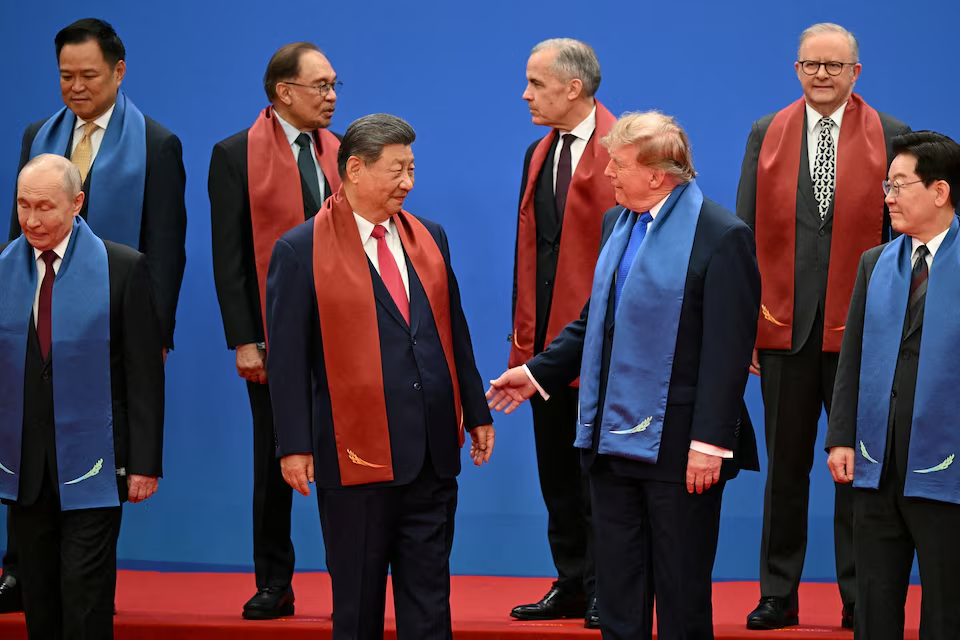
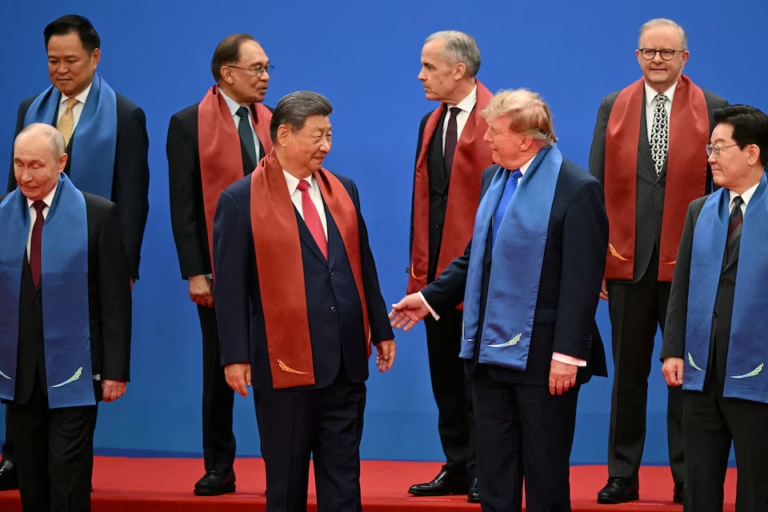
SHENZHEN, China, Nov 19, 2026: The presidents of the United States, China and Russia met together for the first time on Thursday and agreed on a “peace declaration.” In it they restated that a nuclear war should never be fought, according to statements from Beijing and Moscow.

The three-way meeting took place on the sidelines of the Asia-Pacific Economic Cooperation (APEC) summit in the southern Chinese city. It ended a three-day Asian tour by U.S. President Donald Trump. The trip delivered little in concrete results, despite his repeated claims that he was making history and brokering peace. It also gave U.S. allies fresh reason to ask how close Trump has grown to Russian President Vladimir Putin, whose country is still at war with Ukraine.

Chinese state news agency Xinhua and the Kremlin both published the text of the declaration. Trump boarded his flight home after the meeting without making any public comment.

What the declaration says

Beyond the line on nuclear war, the three leaders committed to several other goals:

  • Reforming the United Nations. The statement pledges to push for changes to the world body, though it gives no detail on what those changes would be.
  • Boosting refined fuel supplies. The leaders said they would work to increase supplies of refined petroleum products to all countries.
  • Protecting official immunity. They pledged to uphold the immunity that state officials enjoy before international courts.

That last point drew the most attention from analysts, because of Putin’s legal position. The International Criminal Court in The Hague has issued arrest warrants for him and five other Russian officials. Putin and Maria Lvova-Belova, Russia’s children’s commissioner, are accused of unlawfully deporting and transferring Ukrainian children. The remaining warrants concern alleged war crimes and crimes against humanity during Russia’s full-scale invasion of Ukraine. Moscow rejects all of the accusations.

Jonathan Eyal, international director at the London-based think tank RUSI, said the challenge to international norms and courts was the most revealing part of the text. In his view it reflects a world in which major powers set the rules while smaller states bear the consequences.

Eyal also assessed who gained most. Putin, he said, came away with added credibility and a way out of pariah status. Trump, in his words, received a photo opportunity he had no need for.

A meeting in a lakeside villa

The leaders sat around a round table at the Kylin Villa, a retreat set among wooded hills beside a lake. The venue has hosted sensitive diplomacy before. Past visitors include the late North Korean leader Kim Jong-il, Xi’s father Xi Zhongxun, and envoys of the Dalai Lama.

Before reporters were ushered out, all three called the occasion historic. Trump told his counterparts the group was making history, and argued that peace has never been achieved by turning down chances to talk. Earlier in the day he held separate meetings with Xi and Putin and described both men as friends.

Putin’s diplomatic win

China hosts the APEC summit

For Putin, the sit-down was a clear diplomatic success. Russia’s economy is only about a tenth the size of China’s, and sanctions have shut most Russian businesses out of trade with the West. Appearing as an equal alongside the American and Chinese presidents was therefore of real value to Moscow.

The timing was awkward for the Kremlin on the battlefield. Putin arrived just after a setback in the war with Ukraine, in which a key bridge linking Crimea to Russia was crippled. He said the three countries share many interests in settling regional conflicts, and he named the war in Ukraine explicitly.

Xi did not mention Ukraine directly. He instead offered a general principle: when major powers live in harmony the world is at peace, and when they clash it falls into turmoil.

The summit also ended only hours before a separate gathering in Berlin. Ukraine and the leaders of its main European allies were due to meet Trump’s envoys Steve Witkoff and Jared Kushner there, a reminder of how divided Western and Russian positions on the war remain.

Deep differences remain

Despite the show of unity, the three countries disagree sharply on Ukraine, Iran, nuclear weapons and trade. Those gaps cast doubt on whether the declaration can produce anything lasting. The meeting has also unsettled smaller countries, which worry that the three giants could settle matters among themselves while ignoring everyone else’s interests.

Pageantry in Shenzhen

Trump had made his own reception a talking point before the trilateral took place. In a Fox News interview he dwelt on the ceremony that greeted him in China, which contrasted with the quieter welcomes given to other leaders, Putin among them.

Xi personally met Trump at the airport. It was the first time he has done so for any visiting leader since becoming president, and it returned a gesture Trump made at Joint Base Andrews in September, when the two men last met. The two leaders also shared a brief embrace.

Trump called Xi one of China’s great presidents and noted that he had never gone to an airport to greet anyone before. He described the gesture as a win for both countries. He also praised the crowds, the children, the soldiers and the overall spectacle.

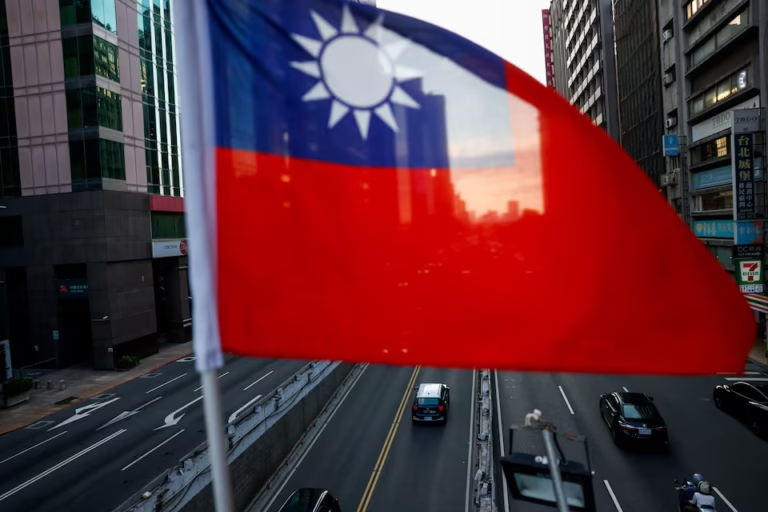
Japanese Prime Minister Sanae Takaichi had a very different experience. She arrived with no official welcoming ceremony and appeared isolated through much of the summit. Tokyo’s relations with Beijing have been strained since 2025, when she said Japan might use its military if a Chinese move against Taiwan also endangered Japanese territory. Takaichi said this week that Japan’s position on Taiwan has not changed since 1972.

Taiwan also featured in the Trump–Xi talks. Xi told his American counterpart that Washington must “do the right thing” if it wants to avoid serious damage to the relationship.

Nuclear arms: a hard sell

China hosts the APEC summit

Trump had insisted that nuclear arms control be a central topic. That was a difficult ask, because China has repeatedly refused to join arms-control negotiations with the United States and Russia. Beijing’s usual argument is that its arsenal is far smaller than those of the other two, which hold the vast majority of the world’s nuclear warheads.

At the start of the meeting, Trump acknowledged the difficulty, saying that giving up such weapons is not easy. The declaration they ultimately produced reaffirms the principle that nuclear war must be avoided. As described in the Chinese and Russian readouts, it does not appear to include any binding limits or a framework for talks.

Trade tensions in the background

The summit also took place against a mixed backdrop in U.S.–China economic relations. Trump and Xi met after the two countries extended their trade truce earlier this month. But new friction has emerged over reports that Nvidia chips are being diverted to China via Southeast Asia. Those reports raise doubts about how well U.S. export controls are working and about whether China will keep access to advanced technology.

Why it matters

The Shenzhen declaration is mostly symbolic. It sets out broad principles without enforcement mechanisms, and the three signatories disagree on most of the issues that drive global tension. The agreement on nuclear restraint repeats a position that has been stated before, and the pledge to protect state officials’ immunity in international courts will be read by many as a direct response to the warrants against Putin.

What the meeting does change is the optics. Putin appeared at the same table as the leaders of the world’s two largest economies, a few hours after a military setback. Xi showed that Beijing can host the American and Russian presidents together. Trump, who has made personal diplomacy the centerpiece of his foreign policy, got the image of a historic summit, though not a deal on Ukraine, Iran or arms control.

For U.S. allies in Europe and Asia, the main question is what comes next. The Berlin meeting on Ukraine, scheduled for the same day, will test whether Washington’s engagement with Moscow and Beijing translates into anything for Kyiv. For smaller states, the concern is simpler: that major powers are increasingly willing to settle global questions among themselves.

World News

Trump Lands in Manila Amid Protests, Days Before Quad Meeting and Talks With Xi and Putin

By George Mensah 7 min read

US President Donald Trump arrives in the Philippines on Tuesday, November 17, 2026, for the closing days of a Southeast Asian summit, with protesters already in the streets of Manila and the first Quad leaders’ meeting in two years waiting on the schedule. His flight leaves behind a Republican midterm defeat at home and carries him toward a Chinese-hosted forum where a three-way meeting with Xi Jinping and Vladimir Putin is under discussion.

The Quad brings together the United States, Japan, Australia and India. It last gathered two years ago, and it will be Trump’s first meeting with the group’s leaders. His predecessor Joe Biden treated it as a signature foreign policy initiative.

A trip with three stops and little room for error

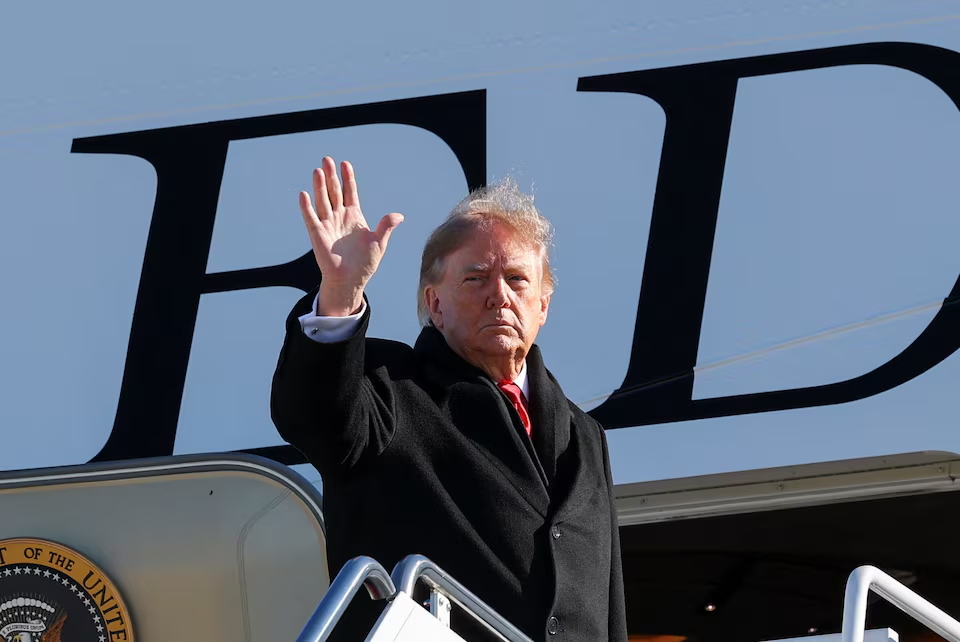
US President Donald Trump departs for his trip to the Philippines and China from the White House

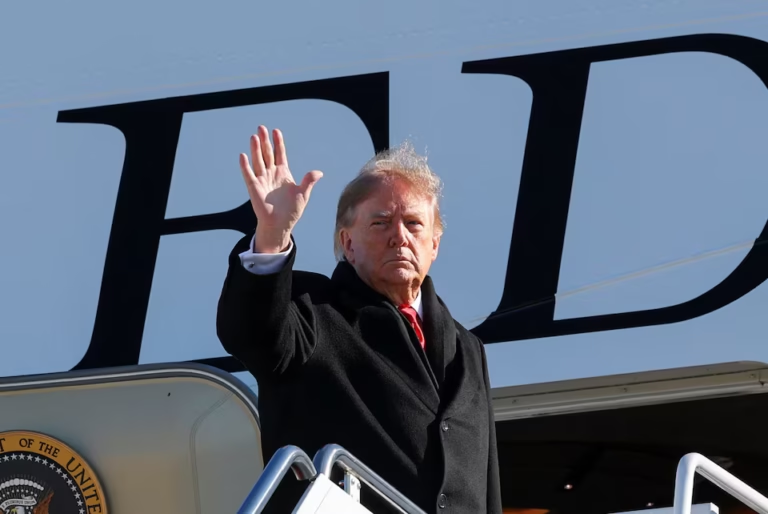
Trump boarded Air Force One at Joint Base Andrews, Maryland, on Monday, November 16. After Manila he is due at the Asia-Pacific Economic Cooperation forum in Shenzhen, China, hosted by Xi. The Manila stop sits at the tail end of the Association of Southeast Asian Nations (ASEAN) summit, so Trump will see the region’s leaders in a compressed window rather than across several days of talks.

Two developments at home and abroad complicate the itinerary. Republicans lost the midterm elections, and spy allegations have surfaced that could strain the fragile trade-war truce between Washington and Beijing. Trump heads into the Shenzhen talks after an election loss, with a trade pause that could break if the espionage claims escalate.

Protests in Manila before he lands

Demonstrations in Manila have run for days. Protesters have burned effigies of the president, called for an end to the Middle East war, and demanded that the Philippines scrap Pax Silica, a US-led initiative to secure supply chains for semiconductors, artificial intelligence and rare earth elements.

Pax Silica has become the local flashpoint. Washington plans a critical technology hub at New Clark City, north of Manila, on land that was once part of a US military reservation including Clark Air Base. The Philippines took that land back in 1991. Supporters of the plan say it would bring about 200,000 jobs and up to $70 billion in investment. President Ferdinand Marcos Jr. said on August 14 that Manila’s involvement is economic and “purely practical.”

Analysts describe the hub as a defense against Chinese influence, and Xi launched a rival World Artificial Intelligence Cooperation Organization in July 2026. Opponents read it differently. Teddy Casino, who leads the nationalist group Bayan, says the hub would let US military personnel into the country and compromise Philippine sovereignty. Bayan marched in Manila on August 13. Senator Raffy Tulfo has filed a resolution to investigate the project’s economic, environmental, social and security effects, including its impact on indigenous peoples’ land.

The Philippines is a US defence ally, which makes the timing awkward for both governments. Trump meets Marcos on Wednesday, and the protests give Marcos a domestic audience that is watching how closely he stands to Washington.

Why the Quad meeting carries weight for Beijing

Protest during the first day of the 49th ASEAN Summit in Manila

The Quad meeting comes just before APEC, and Xi has previously objected to the group as an effort to encircle China. Quad members say it is not directed against any one country.

Kurt Campbell, a former US Deputy Secretary of State, credited Secretary of State Marco Rubio with the timing and with reconvening the group. Campbell, co-founder of The Asia Group, said the Quad had lost ambition under Trump. He described the Quad meeting as a signal sent before the trilateral talks.

“Part of what he (Rubio) is thinking is that this is probably the best possible signal if you’re going to go into a trilateral meeting,” Campbell said, referring to Thursday’s US-China-Russia talks.

He also pointed to Japan. “The linchpin of everything that we do in Asia is the US-Japan relationship, and a perception that this is not at the top of the president’s mind would concern me,” Campbell said.

The White House framed the Quad in different terms. Spokesperson Olivia Wales said on Friday that under Trump’s leadership the Quad had shown it is “a partnership of action, tackling the region’s toughest challenges and driving opportunities to ensure a free and open Indo-Pacific.”

A Japanese foreign ministry official said last week that Quad leaders were expected to try to show unity. Maritime security, export restrictions, diversification of critical-minerals supply chains and artificial intelligence are among the possible topics.

Those topics overlap with the trade dispute Trump will carry into Shenzhen. Export restrictions and mineral supply chains are the same levers Washington and Beijing have used against each other, so any Quad language on them will be read in Shenzhen as a message, whatever the communiqué intends.

The Shenzhen meeting with Xi and Putin

The trilateral meeting is reportedly pencilled in for November 18 and 19 on the sidelines of APEC. China has not confirmed it. Foreign Ministry spokesperson Mao Ning said Beijing is “in communication with relevant parties.” Kremlin spokesman Dmitry Peskov said work is underway to coordinate it and that he hopes it will be finalized in the coming days. Trump has said he is open to three-way talks focused on nuclear weapons.

Beijing’s position is cooler than Moscow’s. China’s Foreign Ministry has rejected joining trilateral nuclear disarmament negotiations at this stage. German President Frank-Walter Steinmeier said Xi told him the meeting would not discuss Ukraine, and that Europeans must take part in any such talks. Analysts quoted by Al Jazeera expect few concrete results. Inderjeet Parmar argued that Trump wants a high-profile encounter to present himself as a dealmaker after the midterms, and warned that a three-way format breaks from the post-1945 habit of consulting allies before engaging Moscow or Beijing.

Campbell’s warning about Japan reflects the same concern. Tokyo is one of the four Quad capitals, and its foreign ministry is already setting expectations for the agenda. If Trump gives the meeting less attention than the Shenzhen talks, Japan and the other members will notice. That last point explains why Campbell’s comment about Japan carries weight. Allies in Tokyo, Canberra and New Delhi will read the order of the week closely. A Quad meeting that comes first, followed by talks with Xi and Putin, tells them something about priorities, and the Manila stage is where Trump can reassure them or fail to.

ASEAN wants both Washington and Beijing

Chinese Premier Li Qiang spoke at the ASEAN summit on Monday. He praised what he called “truly extraordinary” economic achievements of China and ASEAN in the face of global trade restrictions. He pledged Beijing’s commitment to free trade and said the sides need to “stand united, ward off interference, and work together.”

China is ASEAN’s biggest trading partner and a major source of investment. The bloc has 11 members and a combined GDP of more than $3.9 trillion. Its largest economies still want to deepen ties with the United States, despite the trade and diplomatic uncertainty of the Trump administration.

That position explains the choreography in Manila. On Tuesday, before Trump’s late afternoon arrival, ASEAN leaders meet counterparts from Japan, South Korea, China and India ahead of the annual East Asia Summit. Trump will skip the East Asia Summit. He will instead join a US-ASEAN “Special Summit” and meet Marcos on Wednesday. Skipping the larger gathering means Li’s message gets the main stage, while Trump speaks to ASEAN on a separate track.

Thailand and the trade question

Trump is also expected to hold talks with Thai Prime Minister Anutin Charnvirakul on Tuesday, according to Thai media quoting the commerce minister. A joint statement is planned on negotiations toward a reciprocal trade agreement.

The numbers show why Bangkok wants the deal. The United States is Thailand’s largest export market and took 24% of its total shipments this year. Washington designated Thailand a major non-NATO ally in 2003. Bangkok has a concrete stake in the outcome, because a lower tariff or a quota change affects a quarter of what the country ships abroad. The Thai talks are the clearest test in Manila of whether Trump’s reciprocal trade approach produces signed agreements with Southeast Asian partners or stays at the negotiating stage.

What to watch next

Several dates now matter. The Thai joint statement and the ASEAN sessions come Tuesday. The US-ASEAN Special Summit and Trump’s meeting with Marcos follow Wednesday. The reported Shenzhen trilateral sessions fall on November 18 and 19 and still await Beijing’s confirmation, and the Quad leaders meet just before APEC.

Three questions will decide how the week is remembered. Will the Quad issue a joint statement that mentions export restrictions and critical minerals? Will Marcos defend Pax Silica in front of Trump while protesters stay in the streets? And will China confirm the three-way meeting, or let it lapse?

Campbell’s reading is that Rubio is sequencing the week on purpose: allies first, adversaries second. Whether Xi and Putin see it that way will become clear in Shenzhen.

ADVERTISEMENT
Scroll to Top