Clicxpost

Sex-Trafficking Prosecutions Fall as Trump Administration Diverts Resources to Immigration Enforcement

sex trafficking prosecutions

Federal sex-trafficking prosecutions have stalled over the past six months despite the Trump administration’s repeated claims that fighting the crime remains a top priority, according to Reuters interviews with 25 former prosecutors, current agents and victims’ advocates, along with a review of federal court records.

Staffing shortages, funding cuts, immigration enforcement demands and growing distrust of the government among victims have combined to slow investigations and reduce prosecutions, the review found.

“You can’t say something is a priority and then not provide the resources to make that happen,” said Jacqueline Kelley, a former federal prosecutor in New York who led the prosecution of rapper and actor Sean “Diddy” Combs, who was convicted on two counts of transportation for prostitution.

Federal sex-trafficking charges have dropped to their slowest pace since 2010. The Justice Department charged 73 people through June, about 22% fewer than the average number charged during the first half of the past three years, according to court records.

Related crimes have seen similar declines. The department charged 1,230 people with child pornography violations through June, 3% below the three-year average for the same period. It charged 318 people under the Mann Act, which targets interstate prostitution, an 18% drop from average.

The declines reflect a broader shift in federal law enforcement priorities under President Donald Trump, who has cut agency budgets and directed resources toward deportations. Charges for crimes unrelated to immigration, ranging from tax evasion to drug trafficking, fell 7% through June to about 22,000, court records show.

Attorney general confirmation follows Epstein controversy
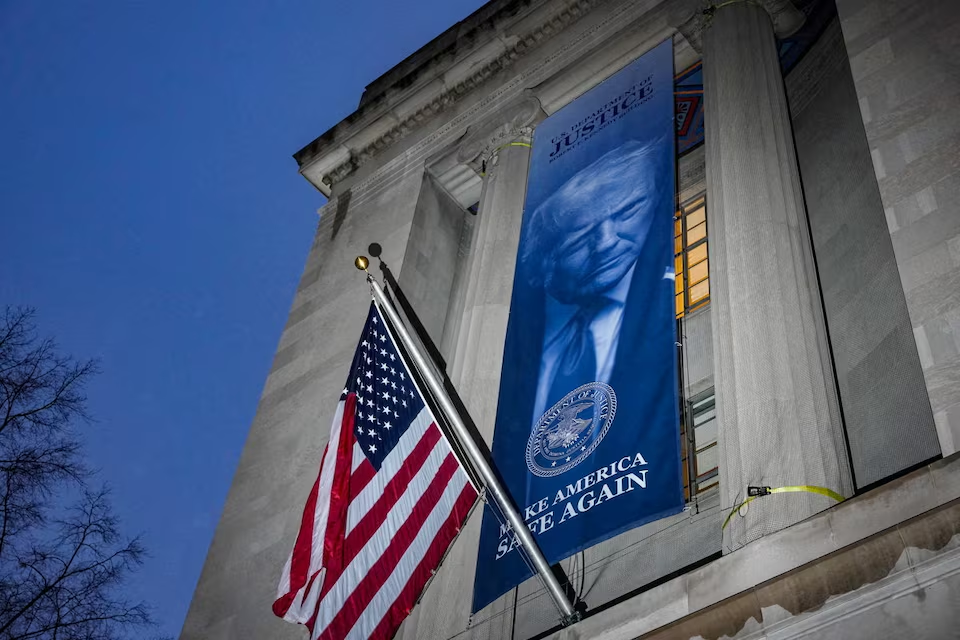
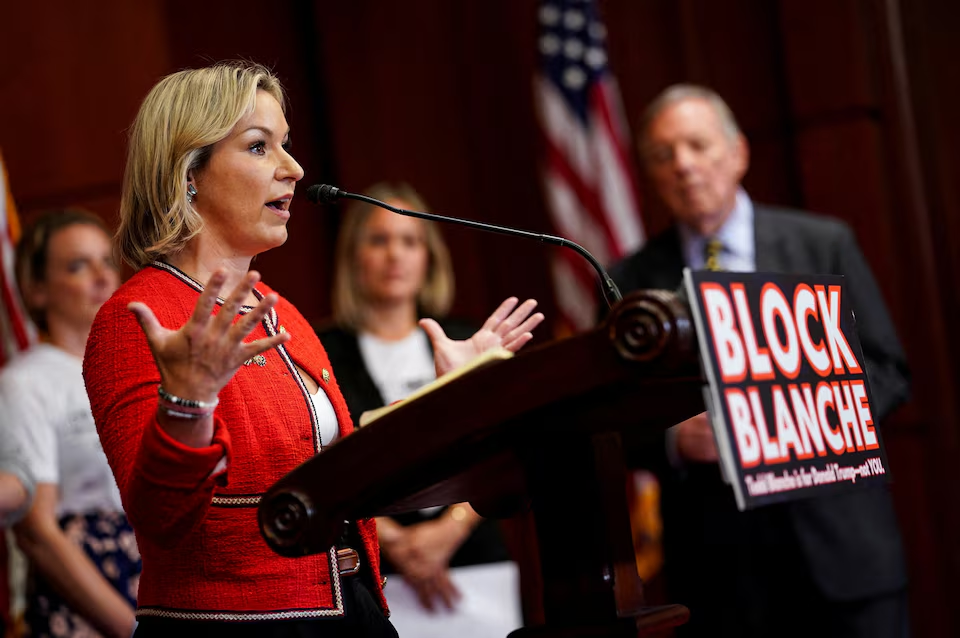
The findings arrive shortly after the Senate confirmed Trump nominee Todd Blanche as Attorney General in a 50-49 vote, with two Republicans breaking from the party. Blanche’s confirmation faced bipartisan criticism over his handling of documents tied to convicted sex offender Jeffrey Epstein and his approval of a transfer to a minimum-security prison for Epstein’s accomplice, Ghislaine Maxwell, shortly after personally interviewing her.

Blanche told Congress that combating human trafficking “remains a Department priority given the gravity of the harm it causes.” The administration also named a new national coordinator for child exploitation and human trafficking, career prosecutor Alessandra Serano.

Serano told Reuters the department remains committed to fighting sex trafficking. She attributed the decline in new prosecutions to prosecutors and investigators spending time on a backlog of ongoing cases rather than opening new ones. Department of Homeland Security spokeswoman Katherine Currie declined to comment on the Reuters review but said her agency remains committed to both immigration and sex-crimes enforcement.

Veteran prosecutors and agents leave their posts
Sex-trafficking cases rank among the most difficult to investigate and prosecute, requiring investigators to untangle patterns of psychological abuse, trace illicit finances and build trust with traumatized victims.

Dozens of experienced sex-trafficking prosecutors have left the Justice Department in recent months, according to seven former prosecutors who worked such cases. For part of last year, the majority of Homeland Security Investigations agents were assigned to immigration duties rather than trafficking cases, according to current agents and prior Reuters reporting.

In some U.S. attorney’s offices, the shortage of prosecutors has become so severe that agents working sex-trafficking cases cannot find anyone to pursue them, agents and former prosecutors said.

Serano said staff turnover is common in these roles because the work “takes a toll on people more than other types of cases.” Former prosecutors who spoke with Reuters said the recent departures exceeded typical attrition. Serano said the department is actively hiring to fill the vacancies.

To assess the department’s enforcement record, Reuters obtained dockets for every publicly filed federal criminal case over the past two decades from Westlaw, a Thomson Reuters legal research service, and used artificial intelligence to help classify some charges. A review of a random sample found the classifications were 98% accurate. The Justice Department said its internal data showed a smaller decline but declined to explain its methodology or provide case numbers, and Reuters could not replicate the department’s findings using a public version of its database.

Court records reviewed by Reuters show sex-trafficking prosecutions have declined gradually over the past decade, a trend that sources partly attributed to the department’s shift toward more time-consuming cases against higher-profile offenders. But under Trump, prosecutors say that work has been further hampered by the focus on immigration enforcement, the loss of experienced staff and cuts to victim-support grants.

One federal agent, speaking on condition of anonymity, said sex trafficking has not been a department priority since Trump took office and launched his mass-deportation campaign. Seven former prosecutors and three agents said that with fewer agents assigned to trafficking cases, many investigations have effectively frozen and new cases are rarely opened.

“The administration is throwing sand in the gears in 10,000 different ways,” said Martina Vandenburg, president of the Human Trafficking Legal Center, which has worked with partner organizations to petition for the release of a cooperating trafficking victim from immigration detention.

One former prosecutor in the southern United States said her office’s trafficking investigations were crippled after several Homeland Security Investigations agents were reassigned to immigration raids. In other jurisdictions, officials said supervisors have had to compete for the small number of agents still available to work trafficking cases.

Reassigning agents, sometimes to new cities, can disrupt fragile relationships with victims and witnesses who often lack stable phones or housing, causing cases to collapse, one federal agent said. In New England, one trafficking survivor’s case stalled after agents told her they had been diverted to immigration enforcement, according to a staffer at a local advocacy organization who worked with the survivor.

The advocate, who spoke on condition of anonymity to protect the survivor’s identity, said such reassignments signal to victims that their safety is not a priority. The survivor was later forced back into sex work and no longer wants to work with federal authorities, the advocate said.

An FBI spokesperson said agents shifted to immigration duties had continued working on other cases, including sex trafficking, and that the transfers did not eliminate their responsibility to investigate such crimes. The spokesperson did not address whether the reassignments contributed to the decline in prosecutions.

Victim support grants delayed as trust erodes

As staffing has thinned, so has the financial support system meant to keep victims stable enough to testify. The Justice Department’s Office of Justice Programs typically distributes about $90 million a year in grants to nonprofit organizations that provide emergency housing, food and mental health counseling to trafficking victims.

Grant recipients told Reuters that some funding has been delayed or frozen as part of the administration’s broader spending cuts. Associate Attorney General Stanley Woodward said in a statement that most grants from last year have been awarded, though he did not provide specific figures, and said the department is reviewing remaining applications to ensure they align with administration priorities.

Alan Smyth, executive director of the Los Angeles-based nonprofit Saving Innocence, said two federal grants totaling $700,000 were delayed for nearly a year. His organization survived the delay, but other groups told Reuters they have had to end programs or stop services entirely because of lost funding.

Federal prosecutors have historically used T-visas, which grant legal immigration status to trafficking victims, as an incentive for victims to cooperate with investigations. The administration approved 354 T-visas in the first six months of the current fiscal year, about half the typical pace over the past decade, according to Department of Homeland Security data. More than 71,000 T-visa applications remain pending.

Two former prosecutors said their U.S. attorney’s offices stopped supporting T-visa applications altogether. Serano said prosecutors and paralegals nationwide continue working with DHS to verify victims’ cooperation, though DHS makes the final decisions on visa applications.

Several immigration attorneys told Reuters that clients actively cooperating in sex-trafficking investigations have been detained by immigration authorities, halting criminal cases. In Michigan, a Chinese woman who had been trafficked in California was detained by ICE despite having a T-visa application pending since 2022, said her attorney, Laura Berger.

“If I can’t guarantee a victim won’t be locked up, how can I ethically tell them to cooperate with federal agents?” Berger said.

The erosion of trust, combined with the loss of staffing, funding and institutional expertise, could have lasting consequences, said Jean Bruggeman, co-executive director of the anti-trafficking organization Freedom Network USA.

“It’s hitting that tipping point where important pillars are starting to fall, which will bring down the entire anti-trafficking structure,” she said. “Rebuilding it could take years.”

RECOMMENDED

UP NEXT

Mecca Joint Defence Agreement

Turkey, Saudi Arabia, Pakistan Detail Military Pact Amid Iran Tensions

Turkey, Saudi Arabia and Pakistan will establish joint political and military coordination bodies, conduct combined military exercises and expand defense industry cooperation under a pact signed between the three nations last week, Turkey’s defense ministry said Thursday. The announcement provides the first detailed roadmap for how the three Sunni Muslim countries, all close U.S. allies, intend to implement the agreement they signed on August 7 amid rising alarm over a regional conflict that has sent Iranian missile fire toward Gulf oil exporters. The pact represents one of the most significant new security arrangements to emerge from the wider instability that has gripped the Middle East since fighting broke out between the United States, Israel and Iran earlier this year. Pact modeled on NATO’s collective defense clause The three nations signed what they called the Mecca Joint Defence Agreement on August 7, stipulating that an armed attack against any one member would be treated as an attack against all three. The provision closely mirrors Article 5 of NATO’s founding treaty, the collective defense clause that obligates alliance members to respond jointly to an attack on any member state. The comparison to NATO’s Article 5 has drawn particular attention given the makeup of the three signatories. Pakistan is a declared nuclear power, while Saudi Arabia remains the world’s largest oil exporter and Turkey fields the second-largest standing army in NATO. A mutual defense commitment binding these three militaries together marks a notable departure from the more informal security cooperation that has traditionally characterized relations among Sunni Muslim-majority states in the region. At a weekly briefing in Ankara, Turkey’s defense ministry said the pact’s central purpose was to place defense and military ties among the three countries on a “more institutional and sustainable” footing going forward, rather than relying on the ad hoc bilateral arrangements that have governed cooperation in the past. New coordination bodies planned According to the ministry, the agreement calls for the creation of strategic political and military mechanisms involving each country’s defense ministers, foreign ministers, and chiefs of general staff or armed forces commanders. Coordination among the three nations will take place “at the highest level,” the ministry said, suggesting the pact is designed to function as a standing forum for regular consultation rather than a one-time declaration of solidarity. The ministry did not specify how frequently these bodies would meet or where they would be headquartered, but described the arrangement as intended to give the three countries a durable structure for managing shared security concerns as the regional situation evolves. Joint exercises to span multiple domains The ministry also outlined plans for joint military exercises spanning land, naval and air forces, along with cooperation on air defense systems and unmanned military technology. The scope of the planned exercises suggests the three militaries intend to build interoperability across a broad range of combat domains rather than limiting cooperation to a single branch of their armed forces. Naval cooperation in particular carries added significance given Saudi Arabia’s exposure to Gulf shipping routes and the broader disruption to regional maritime traffic caused by the ongoing conflict involving Iran. Coordinated air defense planning also reflects the immediate concern driving the pact: the threat of missile and drone strikes that has already reached Gulf oil-exporting states during the current fighting. Defense industry cooperation to expand Beyond joint exercises, the three countries plan to deepen cooperation across their defense industries. The ministry said the goal extends beyond simply supplying military products and systems to one another. “The aim is to provide not only product and system supply, but also joint development and production, technology cooperation, and sustainable maintenance and logistics support,” the ministry said. It added that unmanned and autonomous systems, electronic warfare capabilities and artificial intelligence would be treated as priority areas for cooperation. The emphasis on joint development rather than one-way arms sales points to an ambition among the three countries to build shared defense manufacturing capacity rather than simply relying on purchases from outside powers. Turkey has invested heavily in recent years in domestic drone and defense technology production, an industry that could form the backbone of the pact’s technology-sharing ambitions with Saudi Arabia and Pakistan. Pact open to expansion, Turkey says Turkey, which maintains NATO’s second-largest army, said the agreement with nuclear-armed Pakistan and top global oil exporter Saudi Arabia remains open to additional members, naming Egypt as a potential future candidate. Turkish officials stressed the pact is not intended to replace any of the countries’ existing alliances or defense commitments, an apparent effort to reassure Washington and other Western partners that the arrangement is additive rather than a realignment away from established security relationships. The openness to expansion, particularly the mention of Egypt, signals that the three founding members may see the pact as the foundation for a broader Sunni Muslim security bloc rather than a fixed trilateral arrangement. Egypt, like Turkey, Saudi Arabia and Pakistan, maintains close security ties with the United States while also navigating its own relationship with Iran and other regional powers. Turkey also joins Red Sea shipping talks Separately, the defense ministry said Turkey is participating in meetings in Jeddah aimed at building an international coalition to protect shipping in the Red Sea from attacks linked to Yemen’s Houthi movement. The talks come as regional powers work to shore up maritime security across multiple Middle East shipping corridors amid the broader escalation involving Iran. The Jeddah talks run parallel to the trilateral defense pact and reflect a wider pattern of regional states moving to coordinate security responses as instability spreads across multiple fronts, from the Gulf to the Red Sea. Saudi Arabia, which has led the push for an international coalition to protect Red Sea shipping, has positioned itself at the center of both initiatives, underscoring the kingdom’s efforts to shape the region’s evolving security architecture as the fallout from the Iran conflict continues to spread.

Read More »
Strait of Hormuz control

Iran Claims Control of Strait of Hormuz, Contradicting Trump’s Assertion

The Strait of Hormuz remains “under Iran’s control and management,” the newly appointed head of Iran’s Basij paramilitary unit said Thursday, directly contradicting a statement a day earlier from U.S. President Donald Trump that the United States had “total control” of the strategic waterway. The dueling claims highlight how contested the narrow shipping channel remains, months after fighting first broke out between the United States, Israel and Iran, and underscore how far apart Washington and Tehran remain on the question of who actually holds sway over one of the world’s most vital energy corridors. Hossein Taeb said the United States had attempted to undermine what he called the Islamic Republic’s regional popularity by launching another war in the Strait of Hormuz, but had been defeated again despite claiming Iran possessed neither an air force nor a navy. “Today you see that the Strait of Hormuz is under the management and control of the Islamic Republic,” Taeb said, according to the semi-official Fars news agency. He added that Iran continues to operate in the strait with complete security, framing the situation as a demonstration of Tehran’s resilience against a much larger military power. Taeb’s comments come as he settles into his new post atop the Basij, the volunteer paramilitary force affiliated with Iran’s Islamic Revolutionary Guard Corps that has played a central role in both domestic security operations and, more recently, the country’s posture toward Gulf shipping lanes. A vital corridor for global energy The Strait of Hormuz sits between Iran and Oman, connecting the Persian Gulf to the Gulf of Oman and, beyond that, the open waters of the Arabian Sea. At its narrowest point, the shipping channel is only a few dozen miles wide, making it one of the most consequential chokepoints in global trade. Tankers carrying crude oil, refined products and liquefied natural gas from Saudi Arabia, the United Arab Emirates, Kuwait, Qatar and Iran itself have historically relied on the strait as the only sea route out of the Gulf. That dependence is why any disruption to traffic through the strait tends to ripple quickly through global energy markets, and why control of the waterway has become such a central point of dispute in the current conflict. War disrupted global oil shipping route The conflict began on February 28 with joint U.S.-Israeli strikes on Iran. In response, Tehran effectively closed the Strait of Hormuz, a waterway through which roughly one-fifth of the world’s oil and liquefied natural gas had previously moved before the fighting started. The closure marked one of the most significant disruptions to global energy shipping in years, forcing producers and buyers across the Gulf to reroute or halt shipments through the corridor. The United States then imposed a naval blockade on Iranian shipping and ports, while stating it would protect freedom of navigation for vessels traveling to and from ports outside Iran, positioning its own naval presence as a counterweight to Tehran’s closure of the strait. The competing military postures, Iran restricting the waterway while the U.S. Navy sought to guarantee passage for non-Iranian shipping, have effectively turned the strait into a contested zone where both sides claim authority but neither fully controls the flow of traffic. Ceasefire collapsed after weeks In June, the United States and Iran reached an interim agreement establishing a permanent ceasefire and calling for a swift return to freedom of navigation throughout the Gulf. The deal was seen at the time as a potential turning point that could restore normal shipping through the strait and ease pressure on global oil markets. That agreement broke down several weeks later after Iran resumed limited attacks on vessels it said were operating in violation of the deal’s terms. Tehran maintained that the vessels it targeted were sailing in ways inconsistent with the arrangements laid out in the interim agreement, though it did not elaborate further on the specific violations it alleged. The United States responded by restarting strikes on Iran’s southern provinces, saying the strikes were intended to degrade Tehran’s capacity to target vessels in the Gulf. The renewed fighting effectively erased the brief window of de-escalation the June agreement had created, returning the conflict to the state of open hostility that has now stretched on for months. Iran ties reopening to U.S. compliance Separately on Thursday, senior military political official Rasoul Sanaei-Rad said Iran would not reopen the strait until the other side fulfilled its obligations under the interim agreement. He said the waterway’s reopening was not something the United States could achieve on its own, according to Fars news, a position that suggests Tehran views the strait’s status as leverage in any future negotiations rather than a matter it is prepared to concede unilaterally. Sanaei-Rad also warned that Iran would respond with greater force in any future conflict. “In a possible future war, we will stand more firmly and more offensively,” he said, a comment that signals Tehran does not view the current standoff as settled and is preparing for the possibility of renewed large-scale fighting. Competing narratives, unresolved conflict The competing claims from Washington and Tehran over control of the strait underscore the fragility of the ceasefire and the unresolved tensions that continue to threaten one of the world’s most critical shipping corridors. Trump’s assertion of “total control” and Taeb’s counterclaim that the strait remains under Iranian management reflect not just a dispute over facts on the water, but a broader struggle over which side can credibly claim the upper hand in a conflict that has already disrupted global energy flows once and could do so again. With the interim agreement in tatters and both sides trading strikes in recent weeks, the path back to a durable ceasefire remains unclear. Iran’s insistence that it will not reopen the strait until the United States meets its own commitments suggests any resolution will require further negotiation rather than a unilateral declaration from either side. In the meantime, tankers, insurers and energy markets are left navigating a waterway whose control is claimed by both combatants but guaranteed by neither.

Read More »
Karoline Leavitt resignation

Karoline Leavitt to Step Down as White House Press Secretary at Month’s End

White House press secretary Karoline Leavitt will leave her position at the end of August, President Donald Trump announced Wednesday, removing one of his most trusted advisers from the West Wing just months before November’s midterm elections. Leavitt will transition into a role as an outside communications adviser and party operative, working to shape the future direction of Trump’s “Make America Great Again” movement, according to statements from both Leavitt and Trump. In a social media post, Leavitt, 28, said she plans to spend more time with her young children. She gave birth to her second child, a daughter, in May and recently returned from maternity leave. Trump praised Leavitt in a social media post, calling her “one of the best White House Press Secretaries in the History of the Office.” He credited her with “fighting for Justice, Liberty, and Freedom” since 2018, including during his 2024 reelection campaign. Leavitt described her tenure at the White House as “the honor and adventure of a lifetime.” Youngest press secretary in history Leavitt joined Trump’s 2024 campaign and served as transition spokeswoman before he named her White House press secretary, making her the youngest person to hold the position. Harrison Fields, Trump’s former principal deputy press secretary, said Leavitt understood how to communicate with both the president and the public. “Few could or will ever compare to Karoline,” Fields said. “She’s someone who not only spoke Trump fluently, she knew how to feed the media beast in a cunning, audacious, and successful way that, most importantly, played to her audience: the president.” Over her year and a half in the role, Leavitt worked alongside White House communications director Steven Cheung to reshape the administration’s approach to the press corps, a shift that drew praise from some Trump allies and criticism from press freedom advocates. A new approach to media access Under Leavitt, the Trump administration began selecting which journalists receive access to the president, moving away from the longstanding system managed by the independent White House Correspondents Association. That system traditionally relied on a rotating pool of journalists chosen by the industry group to ensure consistent media access and allow outlets to relay the president’s activities to reporters unable to attend smaller events. As part of the shift, the press office created a new “new media” seat in the briefing room, giving podcasts, newsletters and emerging digital outlets a more prominent role in covering the presidency. Some press advocates welcomed the change as an acknowledgment of a shifting media landscape. Others said it gave the administration a tool to reward outlets it viewed as sympathetic to its coverage. Departure follows report on decoy plane Leavitt’s exit comes as the administration faces scrutiny following a Washington Post report this week that Trump used a plane carrying Cabinet officials, staff and journalists as a decoy while departing a NATO summit in Turkey in July. According to the report, the Secret Service secretly moved Trump from one aircraft to another inside the back of a catering truck as he faced a potential assassination threat from Iran. Journalists and staff aboard the original plane were unaware of the president’s actual movements at the time, a significant break from past protocol. Leavitt’s departure leaves Trump without a key spokesperson heading into a critical midterm election cycle, as Republicans work to defend their congressional majorities in November.

Read More »
Microsoft China business

Microsoft Quietly Retreats From China After Weighing Full Exit in 2023

Microsoft has shut at least 15 branch offices and joint ventures in China over the past five years, corporate filings show, as the company pursues what five people familiar with the matter described as a strategy of gradual retreat from the world’s second-largest economy. The technology giant considered leaving the Chinese market entirely in 2023, according to one of the sources, after some executives concluded the geopolitical risk outweighed the economic return. Microsoft currently has no plans to exit, the source stressed. China generated just 1.5% of Microsoft’s global revenue in 2024, the company said. The internal deliberations, which have not been previously reported, reflect a broader unraveling of trust between Washington and Beijing that has reshaped how American tech firms operate in China. Since 2017, Chinese authorities have pushed government agencies and state-linked firms toward domestic software, which officials consider more secure and which has grown increasingly competitive with Windows and Office. At the same time, U.S. export controls on advanced technology have limited Microsoft’s ability to expand its artificial intelligence and cloud computing operations inside China. Microsoft is not alone in reassessing its China exposure. Apple intends to manufacture most iPhones sold in the United States in India by the end of 2026. Tesla chief executive Elon Musk last month denied reports that his company was considering splitting off its China business. Why Microsoft stayed Microsoft ultimately chose to remain in China because it had built a profitable niche serving Chinese companies that need Western technology to run their overseas operations, according to three people familiar with the matter. TikTok owner ByteDance is among the clients relying on Microsoft’s services for that purpose. The company also views its China presence as essential to recruiting from the country’s deep pool of engineering talent, two of the sources said. Alain Crozier, who led Microsoft’s China operations until 2021, said the company has cultivated one of the deepest government relationships of any American tech firm. “Because of the geopolitics … some days it’s a little bit harder, but we never had a crisis,” Crozier said. A Microsoft spokesperson did not directly address questions about the company’s internal deliberations but said Microsoft operates within a regulatory environment that applies to every international supplier and remains committed to the Chinese market. The company said the current state of its China business reflects market competition, regulatory pressure and broader technological trends. ByteDance did not respond to requests for comment. A relationship dating to the 1990s Microsoft’s ties to Chinese leadership stretch back more than three decades. Co-founder Bill Gates made the first of many visits to China in 1994, when he met President Jiang Zemin, who reportedly urged him to study Chinese history. Over the following years, Microsoft co-invested in government-backed startup incubators and complied with censorship rules that Google, now part of Alphabet, refused to accept when it scaled back its China operations in 2010. That decision by Google drew praise from democracy activists but criticism from Bill Gates and then-Microsoft chief executive Steve Ballmer, who argued the search giant was overreacting to censorship and cyberattack concerns. By the mid-2010s, China had grown wary of Western technology following revelations that U.S. companies had assisted American intelligence agencies in surveillance operations. That suspicion posed a particular challenge for Microsoft, since most of China’s largest companies are state-owned or maintain close government ties. Microsoft’s answer was Windows 10 China Government Edition, a product whose release chief executive Satya Nadella personally negotiated with Chinese finance ministry officials, according to a person familiar with the talks. Several government agencies adopted the software, but it never achieved the broader traction Microsoft had hoped for, Crozier said. Around the time of that 2017 announcement, Beijing introduced procurement guidelines requiring government purchases to meet “safe and reliable” standards. No foreign operating system, including Windows, has been deemed compliant with those rules, Microsoft said. Non-compliance does not amount to an outright ban, but it subjects Chinese technology administrators using foreign software to added scrutiny, including extra security checks and approval requirements, said Paul Triolo, a Washington-based China tech policy analyst at DGA-Albright Stonebridge Group. A review of six Chinese government procurement guides published between December 2023 and May 2026 found that five did not recommend Microsoft products. The sixth listed Windows 10 China Government Edition but noted its use was subject to unspecified “additional management requirements.” China’s tech and finance ministries did not respond to questions about the impact of these regulations on Microsoft. A second wind in the private sector American businesses in China, long frustrated by an uneven regulatory playing field, have grown more cautious as U.S.-China relations have soured. Just 52% of respondents to the American Chamber of Commerce in China’s most recent business climate survey named China a top global investment priority, down from 62% in 2019. While Microsoft’s push to become Beijing’s preferred technology vendor stalled, the company found new momentum with private companies. Firms such as ByteDance and fast-fashion retailer Shein depend on Microsoft’s Azure cloud platform to manage data in ways that satisfy foreign regulatory requirements, according to two company sources. Microsoft also gives Chinese enterprise clients exclusive access through Azure to Western AI models from providers such as OpenAI, which do not otherwise serve the Chinese market. By the mid-2020s, helping Chinese companies expand internationally had become Microsoft’s largest China-linked business line, according to three sources, though two cautioned that overall sales remain modest compared with the company’s global operations. Analysts have questioned the durability of that AI-driven business, since it depends on third-party suppliers like OpenAI and faces competition from cheaper domestic Chinese AI models such as Kimi. OpenAI and Shein did not respond to requests for comment. Losing the talent battle Microsoft has played a central role in developing China’s technology workforce since the 1990s, hiring commercially focused engineers and establishing Microsoft Research China to work on advanced technologies. Alumni of that lab now hold senior positions at Chinese AI firms SenseTime and DeepSeek. Recent political pressure has made it harder for Microsoft to hold onto that talent. U.S. export controls on chips and AI models have cut off Microsoft’s China-based engineers from cutting-edge technology. Microsoft president Brad Smith told U.S. lawmakers in 2023 that the company does not conduct research on quantum computing or other sensitive technologies in China. Microsoft weighed closing the research lab entirely but instead chose to relocate some of its top researchers, according to two people familiar with the decision. Since U.S. AI export restrictions took hold, the lab, now called Microsoft Research Asia, has opened new outposts in Vancouver, Singapore and Tokyo. Convincing engineers to leave China altogether has proven difficult. In 2024, Microsoft offered relocation packages to 1,000 top engineers, moving them to the United States or three other Western countries. Only about a third accepted, according to the sources. Microsoft confirmed it made relocation offers that year but declined to provide further details. Most of the engineers who turned down relocation instead moved to Chinese universities or domestic tech companies, where they can continue high-level research while staying close to family, the two sources said. Microsoft has faced talent poaching from domestic rivals before. The company’s attrition rate in China hovered around 17% in the mid-2010s, Crozier said, before Microsoft brought it below 10% by expanding new business lines, including its work with ByteDance, and offering staff opportunities to work abroad. “There is up and down in terms of the number of people and maybe some of the things that were developed over there,” Crozier said. “But we never change one inch of the fact that we will bring technology into China … for China, for Chinese companies.”

Read More »
Strait of Hormuz Iran Oman deal

Iran says Strait of Hormuz deal with Oman nears final stage, reopening still tied to U.S. conditions

Iran said Sunday that an accord with Oman to establish new shipping lanes via the Strait of Hormuz was in its final stages, but Tehran reiterated the strait will not reopen until the US meets a separate set of requirements it has laid out. Iran’s Foreign Minister Abbas Araqchi claimed the country is close to finalizing a deal with Oman, which is across the Strait from Iran. Reopening of the waterway is not only dependant on the shipping-lane deal, he told Iran’s Mehr news agency, a position he had also expressed a day earlier. A U.S. official said Friday a deal between Iran and Oman was close and may soon reopen the strait. A waterway shut since February The Strait of Hormuz had transported one-fifth of the world’s oil and liquefied natural gas supplies before Iran sealed it down in retaliation for strikes by the U.S. and Israel. In late February, the United States launched air strikes on Iran on the grounds that they would prevent Tehran from getting nuclear weapons or threatening the area with missiles or proxy forces. A ceasefire between the US and Iran was put in place in June. But Washington reimposed a ban on Iranian commerce in the Gulf in July. Tehran said that blockade was a violation of the truce, which had already broken down by then. “The agreement which is being finalized with Oman will specify the shipping lines to be used after the strait is reopened,” Iranian Deputy Foreign Minister Abbas Araqchi told Mehr. It does not establish a date for reopening on its own. That decision is still related to a separate list of requests Iran has made of Washington. Iran’s demands are not just about shipping lanes The reopening of the strait partly relies on U.S. reimbursement to Iran for what Araqchi called extensive attacks. Iran’s top national security body secretary Mohammad Baqer Zolqadr gave a longer list of conditions, including an end to U.S. threats against Iran, a stop to aggression against Iran and its allies in Lebanon, Palestinian territories, Yemen and Iraq, the lifting of the blockade and sanctions and the release of frozen Iranian assets. Iran and the U.S. are not currently engaged in direct discussions, and Araqchi said Tehran will not initiate such talks as Washington maintains what it deems a breach of the interim agreement agreed in June. Messages were being transferred between the two governments thru intermediaries, he said, but did not name which countries or officials were passing them. Washington would lift its embargo of Iranian ports when an agreement is announced that restores commercial shipping without hurdles, a U.S. official told Reuters, on condition of anonymity. Any efforts by the U.S. would be tied to steps by Iran, a sequencing that reflects the dispute over verification that has stymied other recent agreements in the region, the official said. Earlier sources told Reuters the evolving deal appeared bound to give Tehran control of ships going into the Gulf thru the strait, a set-up shipping companies have cautioned would be tough to implement. It’s unclear how that control would function alongside the new lanes Iran and Oman are completing, or how it would align with the U.S. conditions for ending the blockade. The United Arab Emirates said on Saturday Iran had assaulted a ship linked to its state oil business. Iran has not publicly commented on the claim as of Sunday. Houthi attacks deepen the regional picture Iran’s behavior in the Strait of Hormuz has been mirrored by a surge in attacks from the Houthis, the Tehran-aligned organization headquartered in Yemen, who have attacked shipping at another choke point between the Red Sea and the Gulf of Aden. Last month the Houthis imposed a naval blockade on Saudi Arabia in the Red Sea, which they described as retaliation for what they described as a Saudi embargo on Yemen. Saudi Arabia has disputed the claim and continues to support Yemen’s internationally recognized government. The Houthis stated Sunday they hit Saudi Aramco’s Jazan refinery. The strike was carried out via drone, the group’s military spokesman Yahya Saree claimed on X. A fire broke out at the refinery but was doused and no casualties were recorded, Saudi Arabia’s oil ministry said. Authorities were still dealing with the aftermath on Sunday and did not provide a cause for the fire, albeit the Houthi allegation points to the drone strike Saree reported. The Jazan refinery is located in southwest Saudi Arabia and processes 400,000 barrels of crude oil per day. The Houthis have already targeted Aramco operations there and in Yanbu on the Red Sea. The organization also launched strikes on the Red Sea port of Mocha, three sources in the Yemen-based administration in Aden told Reuters. A new defense accord in the background The Sunday incident came two days after Saudi Arabia signed a defense pact with Turkey and Pakistan, both mostly Sunni Muslim governments, in what Riyadh said was a response to escalating instability linked to the US-Israeli war on Shi’ite-led Iran. The new coalition does not target Iran or any other specific country, Turkey’s Foreign Minister Hakan Fidan said. Rather, he described it as a basic commitment among the three nations to support each other’s security, with the actual scope, method and extent of support to be hammered out in later talks should an assault occur. It is unclear whether Pakistan or Turkey would join any Saudi reaction to the Jazan attack or any additional Houthi attacks. Neither country mentioned Sunday’s incident precisely in a statement. Together, the developments suggest an area in which a number of fronts – the discussions over the Strait of Hormuz, the blockade in the Red Sea and the new Saudi defense deal – are on different but linked tracks. Iran’s position toward the U.S. remains conditional on demands much beyond the shipping-lane agreement with Oman. Its proxies in Yemen continue to assault Gulf energy facilities, even as Gulf states strive to codify new security arrangements among themselves. How those tracks connect and in particular whether progress on the Oman deal affects the speed or intensity of Houthi attacks is an open subject that neither Tehran nor Riyadh has publicly addressed.

Read More »
Netanyahu Gaza plan rejection

Netanyahu rejects Trump’s 15-point Gaza offer, Troops must stay until Hamas disarms

Israeli Prime Minister Benjamin Netanyahu on Sunday dismissed US President Donald Trump’s 15-point plan for Gaza, telling his cabinet that Israeli forces would remain in the enclave until Hamas surrendered its weapons. Netanyahu’s declaration puts him at odds with a framework that the White House has treated as its signature achievement on the war, and it comes at a period when the Israeli prime minister has little political room to maneuver.“Israel rejects the 15-point document. Netanyahu said at the cabinet meeting: “We will not make any withdrawal until Hamas is truly disarmed and we will continue to prevent threats against our forces and our citizens,” he continued. A row over sequence, not substance Both parties say they want to disarm Hamas. They’re different in the order of operations, and that difference has held up the plan for months now. The Board of Peace, the supervisory body established under Trump’s framework, said last month it had secured a commitment for the “complete disarmament” of Hamas and other armed factions in Gaza. Hamas said it would only turn up heavy weaponry if Israel stopped “all forms of aggression” and pulled its forces out of the land. Netanyahu’s cabinet remarks closed that door from the other end. Disarmament comes first,” he said, “and Israeli disengagement only once it is done, not before. Neither side has progressed since the disarmament agreement was announced last month, meaning the plan has been basically sitting in the same place for weeks despite the Board of Peace’s claim a deal had been struck. Israel has continued to target Gaza since the first ceasefire took effect last October, undercutting Hamas’s narrative that the current time is one in which Israeli aggression has ended. The paradox is why the two sides can’t agree on who goes first, more so than any single quote from either side. Hamas will be able to point to ongoing bombing to argue that Israel’s violence has not ceased. But Israel may point to Hamas’s complete arsenal as evidence that disarmament has not begun. Both statements are technically true in a narrow sense . And that is precisely why the framework has not moved forward . Trump’s proposal, and what’s left of it The Board of Peace would oversee the implementation of the 15-point plan released by Trump in September last year calling for Hamas’s disarmament, an Israeli troop withdrawal and rehabilitation of Gaza. The proposal was offered as a complete way out of the war, addressing not just the immediate question of weaponry and army locations but also the longer-term reconstruction of the area. When Hamas claimed last month it had agreed to a disarmament plan, Trump termed it “a monumental step toward lasting peace and security.” Netanyahu’s refusal on Sunday makes that story a lot more complicated. A plan Washington presented as acceptable is, according to Israel’s own prime minister, not something Israel currently plans to honor on the terms proposed. “It could not be some fictitious disarmament,” Netanyahu stated, without indicating what kind of verification he would consider real. He did not describe what, if any, process would persuade Israel that Hamas had in fact disarmed, rather than merely declared so. \”Discussions are in progress with U.S. officials,\” he said. “They have ideas, some of them are acceptable to us and some are not, and we know how to stand our ground on these issues,” he said, a comment that reads as much as a warning to his own coalition as to Washington. Netanyahu drew a public line between acceptable and unacceptable U.S. proposals, suggesting he’s open to negotiating details but not the current paper. That distinction leaves room for a modified framework without forcing Netanyahu to outright retract Sunday’s statement. Coalition arithmetic before an election Netanyahu’s comments are not unrelated to that coalition strain. National Security Minister Itamar Ben Gvir, whose faction is part of Netanyahu’s governing majority, said the proposal is “not acceptable” and wants a cabinet vote to withdraw Israel’s involvement in the framework entirely. Netanyahu has limited room for maneuver with concessions his far right partners could exploit to bring down the government, a threat Ben Gvir and allies have made before, with elections looming soon. In that light, Sunday’s denial looks less like a negotiation position aimed at Hamas, and more like a warning intended at Jerusalem. Netanyahu has not relented, it says, as coalition braces for vote Ben Gvir may still force For a Prime Minister heading into an election, the electoral cost of looking like he is making concessions to Hamas is likely to outweigh the diplomatic cost of publicly rejecting a US-brokered plan, at least in the short term. That assessment helps explain Netanyahu’s decision to lay out Israel’s stance so bluntly during a cabinet meeting rather than via quieter channels with US officials. Next steps Netanyahu did not specify how long Israel would wait or what would happen if Hamas does not disarm on Israel’s terms. He also did not say whether continuous Israeli strikes in Gaza, already at variance with Hamas’s demand that “all forms of aggression” halt first, will continue while the two parties remain apart on sequencing. The cabinet meeting ended with no vote on what to do next. Ben Gvir is still waiting for a vote to cancel the Gaza plan and Netanyahu will have to answer that one way or another, either maintaining the framework he just partially rejected or moving further toward the coalition partners pushing him to abandon it all together. But nearly a year after Trump unveiled the idea, the core question of who disarms first and who withdraws first remains exactly where it was: unsolved. Israel and Hamas have not agreed to a roadmap proposed by the Board of Peace. Israeli military are still in Gaza. Hamas has not given up its weapons. And with Israeli elections looming, the political incentives for Netanyahu are to stand firm, rather than reach a deal that could be used against him by his own coalition members. What comes next probably has less to do with the talks Netanyahu detailed with US officials than with the internal politics of his own government. If Ben Gvir manages to force a vote in the cabinet, Netanyahu might end up legally putting a stop to Israel’s involvement in a plan he has already rejected in content. If that vote is not held the current stand-off between Israel and Hamas – disarmament first by Israel, withdrawal first by Hamas – is likely to continue with neither side being forced to budge.

Read More »
Fraud Ledger White House

White House Launches “Fraud Ledger” Tracking Vance’s Anti-Fraud Task Force Wins

The White House rolled out a new website Thursday called “The Fraud Ledger,” a public tracker for the fraud crackdown work led by Vice President JD Vance’s task force. The site describes its purpose in stark terms. “President Donald J. Trump and Vice President JD Vance are waging war on the fraudsters and scammers who have looted hardworking Americans for far too long,” the page reads. It invites visitors to follow “every action, every takedown, and every dollar recovered as part of the unrelenting effort.” According to figures posted on the site, the administration has uncovered nearly $230 billion in fraud and stopped $56 billion in fraudulent payments before they went out. A TASK FORCE TAKES SHAPE Vance convened the White House Task Force on Eliminating Fraud for the first time in March. The panel has since grown into a recurring forum where administration officials and lawmakers review cases and coordinate enforcement efforts across federal programs. White House spokesperson Olivia Wales framed the new website as an extension of that work in a post on the social platform X on Thursday. “President Trump and Vice President Vance are waging an all-out war on fraud, shutting down billions of dollars in taxpayer theft,” Wales wrote. She said Democrats “have refused to stop this epidemic of fraud,” and argued that the administration’s approach protects the programs fraud schemes target. “The Trump Administration is holding these criminals accountable and ensuring key federal programs remain viable for the Americans they were meant to support,” she added. Vance held the task force’s most recent session on Wednesday, gathering Republican members of Congress for a roundtable discussion at the White House. The vice president used the meeting to lay out his framing of fraud as a crime with two sets of victims. “Fraud is really a dual victim crime,” Vance told the group. He said the first victim is the American taxpayer footing the bill for stolen funds, and the second is the population of people who actually need the programs being defrauded, since fraud drains resources meant to reach them. Vance did not soften his language when describing the scale of the problem. “This is despicable behavior, and it’s something that we’ve allowed to go on for too long in the United States of America,” he said. A CALL FOR CONGRESS TO ACT Beyond the enforcement actions themselves, Vance used Wednesday’s meeting to press lawmakers to lock in the task force’s work through legislation. He argued that without formal codification, anti-fraud measures put in place by the administration could prove temporary, subject to reversal by a future White House or agency leadership. He also pointed out the partisan makeup of the room. “I see only Republicans surrounding us today,” Vance said. He noted that the task force had found cooperation outside Washington despite the room’s makeup on Wednesday. “We really have been able to work in some cases with Democratic governors and Democratic attorneys general on the anti-fraud task force, and we would love, I’m not necessarily holding my breath, but we would love to work with Democrats in Washington to codify some of the anti-fraud actions that we’ve taken and to take it to the next level,” he said. That distinction, between state-level cooperation and a lack of it in Washington, ran through much of Vance’s remarks. State officials from both parties have signed on to specific fraud investigations tied to their jurisdictions, according to Vance, even as national Democratic lawmakers have stayed out of the task force’s federal proceedings. WHAT THE LEDGER SHOWS The Fraud Ledger presents the administration’s enforcement totals in a running format, updated as the task force closes cases and recovers funds. The site’s stated dollar figures, nearly $230 billion in fraud uncovered and $56 billion in payments halted, cover the task force’s activity since Vance’s March launch meeting through the current update. The administration has not published a detailed case-by-case breakdown of how those totals were calculated, and the website’s framing leans heavily on cumulative numbers rather than itemized enforcement actions. That approach makes the ledger useful as a headline tracker of the task force’s stated impact, though it leaves specific verification of individual cases to whatever documentation the administration releases separately. The task force’s work touches federal programs across multiple agencies, spanning benefit payments, procurement contracts and other areas where fraud investigators have historically found exposure. Vance’s dual victim framing, taxpayers on one side and program beneficiaries on the other, has become the administration’s standard language for describing why it considers fraud enforcement a priority separate from routine government oversight. Wednesday’s roundtable adds to a pattern of recurring task force meetings since March, each drawing a mix of administration officials and members of Congress. Vance has used these sessions both to review enforcement progress and to build a case for the legislative follow-through he raised again this week. Whether that push gains traction with Democrats in Congress remains an open question. Vance’s own comments Wednesday suggested he does not expect quick bipartisan movement in Washington, even while pointing to cooperation at the state level as evidence that anti-fraud work can cross party lines outside the capital. For now, The Fraud Ledger stands as the administration’s public-facing summary of that broader effort, giving the task force a standing record it can point to as the initiative continues into its next phase.

Read More »
Cernavoda nuclear plant

Romania Sinks Rock-Loaded Barges Into Danube to Save Nuclear Reactor From Drought Shutdown

Romanian authorities sank four rock-laden barges into the Danube River on Thursday, racing to redirect water toward the Cernavoda nuclear plant before falling river levels force a second reactor offline. The military blasted rock from the riverbed near the Danube’s Bala Canal earlier in the week using explosives, then loaded the debris onto four barges. Crews lowered the barges into the river to form an underwater barrier, one meant to push water into the main channel and send it downstream toward Cernavoda. Cernavoda’s director, Romeo Urjan, told local news channel Digi24 on Thursday that the river had dropped about two centimeters, or roughly 0.7 inches, between Wednesday and Thursday alone. Without the barges, he said, the plant’s second reactor would likely need to shut down within five to six days. “If the installed barges bring surplus water… instead of five to six days, we will talk about nine to 10 days of operation from today onward,” Urjan said. He added that any benefit from the submerged barges would take roughly a day to reach the plant, which sits about 60 kilometers, or 37 miles, downstream from the barrier site. Cernavoda normally supplies about 20% of Romania’s electricity when both of its reactors run at full capacity. The plant draws river water to cool those reactors, which makes it directly exposed to the Danube’s falling levels. One reactor already shut down last week after an extended heatwave and thin rainfall pushed the river to record lows across the region. A RIVER RUNNING THIN The Danube’s flow in Romania has dropped to 1,400 cubic meters per second this week, its lowest point in decades and less than a third of the volume typical for early August. The shortfall stems from a combination of extreme heat and a prolonged dry stretch that has gripped the wider Danube basin, cutting into both hydropower generation and the cooling capacity nuclear plants depend on. Authorities have added other emergency steps since the first reactor went offline, including dredging sections of the riverbed to keep water moving toward the plant. Acting Prime Minister Ilie Bolojan declared a nationwide state of alert in the energy sector on July 31, and he renewed his appeal to households and local governments on Thursday, asking them to cut electricity use voluntarily during peak evening hours. Bolojan said the barge operation would likely continue through Friday. Speaking after a government meeting, he said the goal of the work carried out so far is to maintain enough flow toward Cernavoda so the second reactor can keep running “at maximum capacity,” even as forecasts point to continued low levels on the Danube. He also acknowledged the risk facing the country if the plant goes fully offline. Romania’s ability to cover any shortfall would depend partly on importing power from neighboring countries during peak evening demand, Bolojan said, a plan complicated by the fact that several of those countries are managing their own drought-driven shutdowns at the same time. A REGIONAL PROBLEM Romania is not alone in facing this strain. In Hungary, the Danube’s record-low levels have pushed the country’s only nuclear plant close to a full shutdown for the first time in decades, a milestone that would have been unthinkable in a normal water year. Moldova, which depends heavily on imported electricity, including supplies from Romania, has already asked residents to cut consumption during peak hours as it watches the situation upstream. The overlap points to a wider vulnerability across the Danube basin, where multiple countries rely on the same river for both drinking water and power generation. When flow drops this far below seasonal norms, the effects move downstream quickly, touching plants and grids well beyond the point where the drought first hit hardest. Cernavoda’s situation illustrates how tightly nuclear generation in the region is tied to river conditions. Reactors need a steady, sufficient volume of cooling water to operate safely, and when that volume falls too far, operators have little choice but to reduce output or shut down entirely, regardless of demand. That constraint puts engineering crews like the ones working the Bala Canal barrier in a race against a clock set by the weather rather than by mechanical failure. The barge maneuver itself reflects an improvised, short-term fix rather than a structural solution. Urjan’s own estimate, that the barrier might buy Cernavoda four extra days of operation, underscores how narrow the margin has become. Even with the barrier in place, the plant remains dependent on rainfall patterns and temperatures that Romanian authorities cannot control. Bolojan’s government now faces a two-part challenge: keeping the barrier and dredging operations effective long enough to matter, and managing public electricity demand so that any reduction in Cernavoda’s output does not translate into blackouts during the hottest and highest-demand hours of the day. The appeal to households to voluntarily cut evening usage is aimed directly at that second piece, buying operational headroom on the grid side while engineers work the river. Whether the barge barrier holds up through Friday and beyond will determine how much additional time Cernavoda’s second reactor gets before facing the same fate as the first. Urjan’s numbers suggest the difference amounts to a matter of days, not weeks, which leaves Romanian officials watching river gauges as closely as they watch the plant’s reactor readings. For neighboring Hungary and Moldova, Romania’s response offers an early look at what a prolonged Danube drought could force other governments to attempt as their own water levels keep falling through the rest of the summer.

Read More »
White House ballroom

Court Halts Trump’s $400M White House Ballroom, Says President Can’t Rebuild It Alone

Federal appeals judges in Washington told the Trump administration on Friday to halt above-ground construction of a $400 million ballroom rising on the site of the demolished White House East Wing, a ruling that hands the president one of his sharpest legal defeats yet over his authority to alter federal property. The U.S. Court of Appeals for the District of Columbia Circuit split 2-1 in backing a lower court order that froze the project. Circuit Judges Patricia Millett and Brad Garcia wrote the majority opinion, stating that “each President is a temporary tenant, not the owner, of the White House,” and that no occupant of the office can remake the building without Congress signing off. The case began last year when the National Trust for Historic Preservation filed suit after crews tore down the East Wing and started work on a 90,000-square-foot addition, roughly 8,360 square meters, without asking lawmakers for approval. The majority wrote that “whether or not a massive ballroom should be constructed is for Congress to decide and is not a matter for Executive self-help.” Judges gave the administration a 14-day window before the order takes effect, time meant to let the White House seek emergency relief from the Supreme Court. Trump said he intends to do exactly that. Writing on Truth Social hours after the ruling, Trump called the decision “horrendous” and accused the panel of acting on political grounds. He argued the outcome puts him, his staff and White House visitors at greater risk, describing the ballroom as a “military center” rather than a banquet hall. “This unjust decision must be overturned by the Supreme Court in its entirety,” he wrote, adding that the design folds in bomb shelters, medical facilities and defenses against drones and missiles, features he described as “all tied together as one big, expensive, and very complex unit.” Brent Leggs, president of the National Trust, welcomed the ruling in a statement, calling it “a great day for our country and for the American people’s right to voice their opinions about the historic places they cherish, including the White House.” A LONGER FIGHT OVER ONE BUILDING Friday’s ruling is the latest turn in a dispute that started with U.S. District Judge Richard Leon, appointed to the bench by former President George W. Bush. Leon twice blocked construction above ground on the East Wing site while permitting underground work to proceed, a split ruling that neither side fully accepted. Trump’s legal team appealed, setting up Friday’s decision from the three-judge appellate panel. The ballroom sits alongside other Trump-era changes to buildings and monuments across central Washington. A judge ruled separately in recent weeks that Trump’s name was added illegally to the exterior of the Kennedy Center and ordered it taken down, a decision that added to a pattern of court pushback against changes made to federal landmarks without the usual legislative sign-off. The administration has defended the ballroom as a functional necessity, saying the White House needs a venue for large formal events and additional security infrastructure. Justice Department attorney Yaakov Roth told the appellate judges during arguments on June 5 that courts have no business second-guessing a privately funded construction project. He said the National Trust was pressing an “architectural preference” that should not override the government’s stated security concerns, arguing that evidence showed the old East Wing left the president and others exposed. The majority rejected that framing. National security claims “are not an automatic get-out-of-law-free card,” the opinion said. Millett and Garcia went further in their written ruling, stating that “the bold assertion that the Executive can act with utter lawlessness, destroying treasured national landmarks and harming the interests of individuals, and that no court can stop it flouts our constitutional order.” The two judges in the majority were both appointed by Democratic presidents. Circuit Judge Neomi Rao, appointed by Trump during his first term, dissented. She wrote that the trial court’s injunction “is beyond the proper province of the federal courts” and argued construction should have been allowed to continue while the case played out. “The district court seized supervision of construction at the White House, and my colleagues affirm this judicial overreach,” Rao wrote. The judges in the majority were careful to note that their order does not shut the door on a ballroom permanently. It only pauses work above ground while the underlying lawsuit continues, and until the administration secures the congressional approval the court says the project requires. COST QUESTIONS PERSIST Money has followed the project since planning began. The price tag has roughly doubled from initial estimates, a jump Trump addressed directly in a Truth Social post in May. He said the increase reflected a building that is “approximately twice the size, and a far higher quality, than the original proposal,” and promised the finished structure “will be magnificent, safe, and secure.” Court filings and public statements have not settled how the administration plans to fund the difference between the original estimate and the current $400 million figure, and neither the National Trust nor the Justice Department addressed that gap directly in Friday’s proceedings. The dispute over cost sits alongside the legal question of authority, giving Congress a second avenue to weigh in if lawmakers choose to hold hearings on the funding source once the appeal process runs its course. For now, the practical effect of Friday’s order is narrow but immediate. Crews working above ground on the East Wing site must stop within the 14-day window unless the Supreme Court intervenes first. Underground work, which Judge Leon’s earlier rulings already allowed to continue, is not addressed by the new appellate order and can proceed unless a future ruling says otherwise. Both sides are now watching the Supreme Court’s calendar. Trump’s legal team is expected to file for emergency relief before the two-week clock runs out, seeking to keep builders on site while the broader legal fight over presidential authority to remake the White House works its way through the courts.

Read More »
Ceuta migrant crossing deaths

How Israel and the European far right tried to exploit Ceuta

Thousands of people attempted to cross from Morocco into the Spanish enclave of Ceuta in recent days, and the crossing left dozens dead. What began as a humanitarian tragedy shifted almost immediately into a different kind of story, one dominated by political narratives rather than the deaths themselves. Within hours of the crossings, social media filled with warnings of an “Islamic invasion.” The hashtag #StopIslam spread quickly across far-right networks. Politicians who have campaigned against immigration for years pointed to the events in Ceuta as evidence that Europe faces a civilizational challenge rather than a border management problem. Calls for stricter border enforcement followed, and Italy announced it would reintroduce border checks with Spain. Investigators had not yet established the full circumstances of the crossings. Many of those who died had not yet been identified. Even so, prominent politicians, commentators and online campaigners had already settled on an interpretation of what happened. Who benefits from the narrative That speed of interpretation raises a straightforward question: who benefited from how Ceuta was framed in its immediate aftermath. Europe’s nationalist parties gained fresh material to support existing warnings about migration and Islam. Anti-Muslim campaigners found another opportunity to present Muslim communities as an internal security threat. The events also fed into a broader argument advanced by the Israeli government and echoed by its political allies across Europe, one that links Muslim immigration, criticism of Israel and concerns about anti-Semitism together as a single interconnected issue. That argument has grown more prominent since the war in Gaza began. As public criticism of Israel’s military campaign has intensified across Europe, Israeli officials have argued that shifting European attitudes stem less from the scale of destruction in Gaza and more from demographic change and the expanding political influence of Muslim communities. Israeli Prime Minister Benjamin Netanyahu has advanced this position in public remarks, describing Israel and Europe as partners facing a shared threat from radical Islam, mass migration and what he calls a broader challenge to Western civilization. In that framing, Israel is not only defending itself but defending Europe as well. Political consequences This framing carries significant political weight. It moves the conversation away from Israel’s conduct in Gaza and toward the identity of the people criticizing that conduct. Opposition to Israeli policy stops being treated primarily as a response to humanitarian catastrophe, occupation or violations of international law, and instead gets framed as a byproduct of demographic change and Muslim political influence. Political leaders including Viktor Orban, Geert Wilders and Marine Le Pen have adopted this narrative, combining strong support for Israel with hardline anti-immigration platforms. In Britain, figures such as Tommy Robinson have made a similar argument, presenting Israel as the front line in a wider civilizational struggle against Islam. Support for Israel has increasingly become tied to a broader political project built around opposition to immigration, multiculturalism and Islam. The overlap between these movements is notable. For segments of Europe’s nationalist right, backing Israel offers a way to present themselves as defenders of Jewish communities while pursuing policies targeting Muslim minorities and migrants. For Israel’s current government, these same movements provide consistent diplomatic support and reinforce a narrative connecting criticism of Israel to broader public anxiety about migration and security. The two sets of political interests differ, but they reinforce each other in practice. Security framing spreads The effects extend beyond electoral politics. Across Europe, discussions about Palestine increasingly get filtered through the language of security. Demonstrations against the war in Gaza are sometimes treated less as political dissent and more as potential public order concerns. Muslim organizations get evaluated through a counter-extremism lens. Campaigns for Palestinian rights are, in some cases, presented not as movements rooted in human rights or international law but as vehicles for imported anti-Semitism. None of this diminishes anti-Semitism as a real and persistent form of racism that requires ongoing attention wherever it appears. But there is a meaningful distinction between combating anti-Semitism and expanding its definition to include criticism of Israeli government policy. When that line blurs, legitimate political debate narrows, and a tool meant to identify genuine anti-Semitism risks losing effectiveness through overuse. Viewed through this lens, Ceuta represents more than a migration story. The speed with which politicians, commentators and activists converged on the same interpretation suggests the political framework for understanding such events was already in place before Ceuta happened. Whether that convergence was coordinated or emerged independently across separate political movements, the practical effect is the same. Fear of migration fuels hostility toward Muslim communities. That hostility makes solidarity with Palestinians appear suspect by association. Once support for Palestinian rights gets recast as a security concern rather than a political or humanitarian position, scrutiny of Israel’s actions becomes easier to dismiss. A question of legitimacy The stakes go beyond border policy. The underlying question concerns legitimacy: whose voices count as credible, whose suffering gets acknowledged, and which political causes are treated as legitimate. If solidarity with Palestinians can be attributed to demographic change rather than a response to conditions in Gaza, attention shifts away from the actions of governments and toward the identities of the people raising concerns. Ceuta should have been remembered as a humanitarian tragedy first. Instead, it became another episode in Europe’s ongoing culture wars, with the deaths of those attempting the crossing receiving less sustained attention than the political narratives built around the event. When humanitarian disasters get understood primarily through the political narratives they can support rather than the lives lost, the underlying facts risk becoming secondary to political usefulness. Fear stops functioning as a reaction to specific events and starts operating as a standing political framework.

Read More »
Scroll to Top