Clicxpost

Trump Advisers Push to Contain Iran Conflict Until After Midterms

Trump Iran war midterms

Senior aides to President Donald Trump are working to prevent the Iran war from escalating before November’s midterm elections, according to four people familiar with internal discussions. The strategy is already under pressure after the U.S. and Iran traded fresh strikes overnight.

White House officials plan to reassess more aggressive military options after the November 3 vote, the sources said. They spoke on condition of anonymity to describe internal deliberations. A full return to large-scale conflict remains uncertain. The U.S. military said its most recent strikes were retaliation for attacks on American forces and maritime traffic in the region.

For now, the administration wants to lean on economic pressure rather than military force, hoping sanctions can secure concessions that months of strikes have not. “We are keeping the pressure on Iran,” one White House official said. “But November is a priority.”

Political Calculations Behind the Pause

Containing the conflict until the midterms would keep an unpopular war out of the headlines while Republicans defend narrow majorities in the House and Senate, three White House officials among the sources said. A late-August Reuters/Ipsos poll found only 31% of Americans approve of the war, against 63% who disapprove. Voters have singled out high gas prices as a particular frustration.

A slower pace would also give the military time to rebuild depleted munitions stockpiles, the sources said.

But the plan is getting harder to hold. The conflict is quieter than it was in the spring or during a summer flare-up, yet both sides have exchanged strikes in recent days. Analysts expect Iran’s leadership, which has faced little internal unrest despite months of disrupting shipping through the Strait of Hormuz, to keep hitting U.S. and allied Gulf targets periodically, including military bases, vessels and energy infrastructure. That puts pressure on Washington to respond, raising the risk of a cycle that pulls both countries back into full-scale fighting regardless of the administration’s intentions.

Over the weekend, the U.S. struck rocket launchers on Iran’s Larak Island. Iran responded by firing missiles toward Jordan and the United Arab Emirates. On Tuesday, the U.S. hit additional targets near the Strait of Hormuz in the largest exchange since July, killing Iranian military personnel and civilians.

Barbara Leaf, who served as the State Department’s top Middle East official under President Joe Biden, said Iran has reason to keep disrupting the fragile status quo. “The regime has every incentive to disrupt the ‘calm,’ which is no real calm, after all, since the administration’s explicit aim is to increase economic pressure massively on Iran,” she said.

Trump’s Own Unpredictability

Trump’s approval rating has dropped from 40% to 33% since the war began, according to Reuters/Ipsos polling. Sources said he currently opposes escalation but has a track record of shifting positions quickly.

On Tuesday, Trump threatened a harder response if Iran retaliates for the latest U.S. strikes. “If the failed Nation of Iran retaliates for this very justified attack, they will be hit again at a much harder and higher level, but it will not be the biggest attack of them all, that is waiting in the wings,” he wrote on Truth Social.

Logistics Catching Up With Strategy

Trump has said publicly that the midterms are not shaping his Iran strategy. But seven months into the war, his administration is increasingly boxed in by both logistics and politics. “The timetable has changed,” one senior White House official said. Another put it more bluntly: “The calendar is driving Iran.”

Reuters reported in August that the military had used nearly all of its stock of certain precision missiles. The Washington Post reported Sunday that the service chiefs of the Army, Navy and Air Force warned Defense Secretary Pete Hegseth in writing that continuing the war at its current pace was unsustainable and would weaken military readiness elsewhere. The Pentagon disputed any shortfall, saying the military has “everything it needs to execute” its mission.

White House spokeswoman Olivia Wales defended the administration’s record. “President Trump has destroyed Iran’s military capabilities and is crippling what’s left of its abysmal economy with the most powerful naval blockade in world history and crushing sanctions,” she said. “The President will continue to advance America’s interests at home and abroad and will never allow Iran to have a nuclear weapon.”

Gulf allies, some of whom initially pushed for a harder line against Iran, urged the White House to de-escalate after a round of attacks in late July, regional diplomats said. Vice President JD Vance and Secretary of State Marco Rubio are among the senior aides who support keeping the conflict relatively quiet through November, two White House officials said.

Sanctions Strategy Faces Its Own Limits
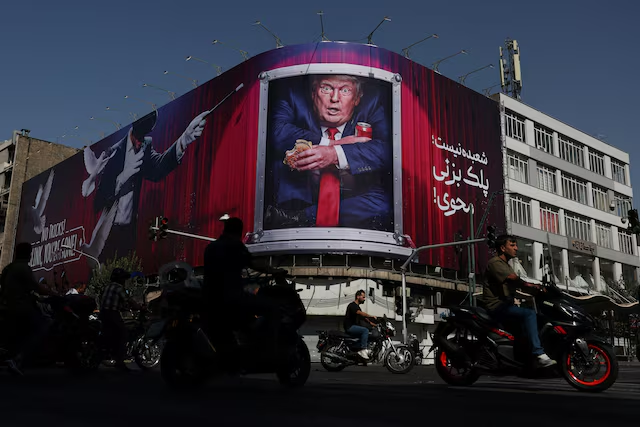
In recent weeks, the administration has leaned harder into economic isolation, threatening steep sanctions against countries that trade with Iran while maintaining its naval blockade of the Strait of Hormuz. But officials and analysts say the approach has limits. Iran has operated under layers of U.S. and international sanctions for decades without those measures forcing a change in leadership behavior.

Treasury Secretary Scott Bessent said Sunday that the pressure campaign itself could push Iran toward military retaliation, meaning the economic strategy risks fueling the same escalation it is meant to avoid. Major economies including China have declined to join the U.S. isolation effort, raising doubts about how much impact the sanctions will ultimately have.

Alex Plitsas, a senior fellow at the Atlantic Council, said the sanctions are designed to compound pressure from the blockade and push Iran back to negotiations, an option the administration now views as preferable to further strikes. “Iran is concerned about it, but China has already indicated that it’s not willing to play ball, which calls into question how effective it will be,” he said.

RECOMMENDED

UP NEXT

Germany accuses Russia drone attack

Germany Formally Accuses Russia of Orchestrating Drone Attack at Leipzig Airport

Germany has formally accused Russia of orchestrating a drone attack at Leipzig-Halle Airport, one of Europe’s busiest cargo and logistics hubs. The incident took place on August 4, when authorities discovered a drone loaded with explosives near a cargo plane operated by Antonov Airlines, a Ukrainian carrier. German investigators say the drone contained technological components matching those used by Russian forces in the war in Ukraine, a finding that anchors Berlin’s formal accusation against Moscow. Officials Point Directly at Russian State Involvement Interior Minister Alexander Dobrindt said police investigations, operational patterns, and intelligence assessments together point to Russian responsibility. He said the individuals who physically carried out the attack were low-level operatives, but that they acted on behalf of Russian state entities rather than independently. Moscow has rejected the accusation outright. Russian officials called the German claims absurd and warned of diplomatic consequences if Berlin continues pursuing the matter publicly. Germany Responds With Diplomatic Measures Germany has already taken retaliatory steps. Authorities closed a Russian consulate in Bonn and shut down the Russian House cultural center in Berlin, both moves aimed squarely at Moscow’s diplomatic and cultural presence in the country. The response has drawn support from NATO and several European governments. Poland, Italy, the United Kingdom, Sweden, and the Czech Republic have all expressed solidarity with Germany since the accusation became public. European Commission President Ursula von der Leyen said she plans to discuss the incident directly with NATO Secretary General Mark Rutte, signaling that the alliance is treating the episode as more than a bilateral dispute between Berlin and Moscow. Part of a Broader Pattern, Germany Says German officials describe the Leipzig attack as one piece of a wider Russian campaign designed to intimidate NATO member states. Berlin has gone further, accusing Moscow of trying to weaken political support for Ukraine at a critical point in the war. Ukraine’s ambassador to Germany, Oleksii Makeyev, welcomed Berlin’s response and stressed the value of close cooperation between the two countries on security matters tied to the war. The accusation lands alongside a separate warning from Ukrainian President Volodymyr Zelensky, who has told airlines that Russian airspace is becoming increasingly dangerous as Ukraine escalates its own drone campaign inside Russia. Russian President Vladimir Putin responded to that warning by accusing Ukraine of state terrorism, a charge that mirrors the language now being exchanged between Moscow and Berlin over the Leipzig incident. A Hub for Cargo, Now a Security Concern Leipzig-Halle Airport ranks among Europe’s most important logistics centers, handling significant volumes of air freight traffic each year. Its role as a hub for cargo operations, including flights connected to the war effort in Ukraine, makes it a sensitive target. The presence of an explosive-laden drone near an Antonov Airlines cargo plane specifically ties the incident to the aviation infrastructure supporting Ukraine’s wartime logistics, a link German officials have not downplayed in their public statements. Germany’s decision to name Russia directly, rather than describe the attack in vaguer terms, marks a shift toward more assertive public attribution of hybrid threats linked to Moscow. With NATO allies voicing support and von der Leyen preparing to raise the matter with the alliance’s leadership, the Leipzig incident looks likely to feature in broader discussions about how European governments respond to sabotage and infiltration attempts tied to the war in Ukraine. For now, the diplomatic fallout remains centered on Germany’s closures of Russian facilities in Bonn and Berlin. Whether further measures follow will depend on how Moscow responds to the accusation and on findings from ongoing German investigations into who directed the operation and how it was planned.

Read More »
Egypt bus crash killed

At Least 22 Killed in Bus Crash on Egypt’s Red Sea Coast

At least 22 people have died and 28 others were injured after a bus crashed on a coastal road in eastern Egypt, the country’s health ministry confirmed. The accident occurred Wednesday morning on the route connecting the Red Sea towns of Dahab and Nuweiba in the South Sinai governorate. Egyptian and Jordanian media reported that as many as 10 of those killed were Jordanian nationals. The health ministry has not released a full breakdown of victims by nationality, and it remains unclear exactly how many people were aboard the bus when the crash occurred. Cause Still Under Investigation Authorities have not yet determined what caused the crash. No further details have been released about the vehicle, the driver, or the conditions on the road at the time of the accident. The stretch of highway between Dahab and Nuweiba runs along Egypt’s South Sinai coastline, a region known for its beaches, diving sites, and steady flow of international tourists. Both towns draw visitors from across the world, and the road between them is regularly used by tour buses and private vehicles moving between coastal destinations. Injured Spread Across Three Hospitals In its statement, the Egyptian health ministry said the 28 injured were being treated across three separate hospitals. No additional information has been provided on the severity of their injuries or their current condition. Emergency crews responded to the crash site on Wednesday morning, though the health ministry’s statement did not detail the response effort or how long it took to transport victims to medical facilities. A Pattern of Road Fatalities in Egypt Wednesday’s crash adds to a long-running pattern of deadly road accidents across Egypt. The country recorded nearly 6,000 traffic-related deaths in 2025, according to official figures cited by authorities. Road safety advocates and officials have repeatedly pointed to reckless driving and inadequate road maintenance as the primary drivers behind the country’s high accident rate. Egypt’s road network includes long stretches of highway connecting major cities and tourist regions, some of which see heavy traffic from both commercial vehicles and long-distance buses carrying tourists to coastal destinations. The combination of high speeds, aging infrastructure in some areas, and inconsistent enforcement of traffic regulations has been cited as a recurring factor in past accidents. Recent History of Similar Incidents Wednesday’s crash is not an isolated case. Last month, 18 people were killed and 30 more were injured when two lorries collided in the northeastern Ismailia governorate. That accident, like Wednesday’s bus crash, drew attention to the broader safety concerns tied to Egypt’s roads. Both incidents illustrate a recurring pattern: high casualty counts from single accidents, often involving commercial or passenger vehicles carrying large numbers of people at once. When a bus or truck accident occurs, the scale of casualties tends to be far higher than in accidents involving smaller vehicles, simply because of the number of passengers on board at any given time. A Region Frequented by International Visitors The South Sinai governorate, where Wednesday’s crash occurred, is one of Egypt’s most visited tourist regions. Dahab and Nuweiba are both established as coastal towns with strong reputations among divers, backpackers, and travelers seeking a quieter alternative to larger Red Sea resort areas like Sharm el-Sheikh. The road connecting the two towns is a common route for both tourists and local residents. Given the presence of Jordanian nationals among those confirmed killed, the crash is likely to draw attention from Jordanian authorities and diplomatic channels in the coming days, though no official response from either government had accompanied the initial reports. Egyptian authorities have not indicated when an investigation into the cause of the crash will be completed, or whether findings will be made public once the inquiry concludes. The health ministry’s current focus remains on treating the 28 injured across the three hospitals now caring for them. The crash is likely to renew scrutiny of road conditions and bus safety standards along Egypt’s tourist corridors, particularly given the volume of travelers who rely on coastal roads like the one between Dahab and Nuweiba each year. With nearly 6,000 traffic deaths recorded across the country in 2025 alone, Wednesday’s crash underscores a road safety challenge that has persisted despite periodic government attention following high-casualty incidents. For now, official information remains limited to the confirmed death toll, the number of injured, and the general location of the crash, with further details expected as Egyptian authorities continue their investigation into what caused the accident on the Dahab-Nuweiba road.

Read More »
Kennedy Center Blue sculpture removed

Kennedy Center Removes “Blue” Sculpture as Trump’s Washington Makeover Continues

A crane lifted the 24-foot sculpture “Blue” off the Kennedy Center grounds on Wednesday, the latest step in a broader effort to remake Washington’s public spaces under President Donald Trump. The sculpture, built from rectangular blue aluminum blocks, had stood near a section of the center’s facade currently covered by a tarp, where Trump allies are fighting in court to keep his name displayed. The Kennedy Center itself was established by an act of Congress to honor President John F. Kennedy. A Decade of Presence Ends Artist Joel Shapiro created “Blue” to resemble a stick figure in motion, arms stretched outward and one leg kicked up as if mid-leap. The piece had stood since 2019 on a grassy stretch between the Kennedy Center’s main building and The Reach, a separate venue used for arts education programming. The Kennedy Center confirmed the removal in a statement, describing artwork deinstallations as routine. A spokesperson thanked the artist directly. “We are deeply grateful to Joel Shapiro for the years Blue has spent animating our campus and connecting visitors to his vision,” the spokesperson said. Part of a Larger Building Plan The sculpture’s removal fits into a much larger set of construction plans Trump is pursuing across the capital. Those include a new White House ballroom, which Trump has described as a national security priority, and a proposed 250-foot arch. In a court filing last week, administration lawyers went further, arguing that the Kennedy Center could eventually require demolition if major repairs are not made. Trump’s involvement with the Kennedy Center has intensified since he returned to office in 2025. He replaced its leadership, altered its programming, and installed a new board that has since closed the building for renovations. A Legal Fight Over the Center’s Name The changes have not gone unchallenged. A U.S. district court judge ruled in May that Trump’s name be taken off the Kennedy Center’s facade. The board, now controlled by Trump appointees, responded on August 13 by voting to restore his name to the building, this time under a new formal title: “The John F. Kennedy Center for the Performing Arts Restored and Renovated by President Donald J. Trump.” That vote has set the stage for a direct conflict with the judge’s earlier order, with both sides now positioned for further legal battles over what the building will be called and who has the authority to decide. For now, the physical changes are visible from the outside. Where Shapiro’s soaring blue figure once stood, the grounds sit empty, another marker of how quickly the center’s public face is shifting under its new leadership.

Read More »
Tiger Woods plea deal

Tiger Woods Reaches Plea Deal, Avoids Jail Time Over Rollover Crash

Tiger Woods will lose his driver’s license for five years after entering a plea deal Wednesday in his impaired-driving case, a resolution that lets the 15-time major champion avoid jail. The 50-year-old attended a change-of-plea hearing at Martin County Courthouse in Florida, where he entered a no-contest motion on all charges and was adjudicated guilty. Woods had initially pleaded not guilty after his March 27 rollover crash near his Jupiter Island home. The plea deal drops the more serious charge of driving under the influence. Two Suspensions, Running Together Judge Darren Steele ordered two five-year license suspensions to run concurrently, one tied to a reckless driving charge and one to a careless driving citation. He was direct with Woods about the terms. “There are no exceptions. If you were to drive for any reason at all, you would go immediately back to jail,” Steele told him. Woods also received roughly $1,500 in fines as part of the deal. He has 30 days to appeal the ruling. A Courthouse Appearance With Vanessa Trump Woods arrived at the Martin County Courthouse in the front passenger seat of a black SUV, dressed in a dark suit and tie. He did not answer questions from reporters as he walked in and out of the building alongside his girlfriend, Vanessa Trump, the ex-wife of Donald Trump Jr. It was his first in-person court appearance since the crash. Prosecutors Cite Toxicology Gaps State Attorney Thomas Bakkedahl told reporters after the hearing that he was comfortable with the outcome. He explained that proving impairment was difficult given Woods’ documented tolerance to hydrocodone, built up over multiple back and knee surgeries. “Both toxicologists reviewing the information and evidence provided to them were of the opinion that there was insufficient proof,” Bakkedahl said. “I don’t make the facts; I accept them as they are brought to me of his impairment.” Bakkedahl, who had faced criticism over concerns that Woods might receive favorable treatment because of his fame, used the moment to send a pointed message to the golfer. “If I can send any message to Mr. Woods, it’s simply this: of all the people in the world who should not get behind the wheel of a car, it’s the gentleman who is one of the most recognizable faces on the planet,” he said. “Somebody will see him, whether it’s in Georgia or Nevada or New York or where have you. He’s not to drive a car.” Details From the March Crash Woods told authorities at the time of the crash that he had been looking at his phone and didn’t notice a truck ahead of him had slowed down. No one was injured when his Land Rover rolled over on a two-lane road near his home. A probable cause affidavit stated that officers found two hydrocodone pills in Woods’ pocket and observed him to be lethargic and slow, with profuse sweating and eyes that were bloodshot, glassy, and dilated. Steele later granted Woods permission to travel outside the United States for treatment in a controlled setting. In a statement at the time, Woods said he was stepping away from public life to focus on his health. The case continued to develop over the following months. In May, the judge approved a prosecution request to subpoena Woods’ prescription drug records covering the period from the start of 2026 through the day of the crash. In July, Steele granted a similar request allowing prosecutors to obtain hospital records tied to Woods’ medical treatment after the rollover. A Career Defined by Records Woods has not competed in an official event since the 2024 British Open. He holds 15 major championships, trailing only Jack Nicklaus, who has 18. He also shares the record for most PGA Tour wins, 82, with Sam Snead. He spent a record 683 weeks ranked world number one and remains the only golfer to have held all four major titles simultaneously, a feat known as the “Tiger Slam.” Wednesday’s plea deal closes the legal chapter of a case that drew national attention both for Woods’ stature in the sport and for the questions it raised about how his fame might shape the outcome. With the DUI charge dropped and a five-year license suspension now in place, Woods faces a lengthy stretch without the ability to drive, a restriction the judge made clear carries no exceptions.

Read More »
Zelensky Warns Airlines

Zelensky Warns Airlines: Russian Sky Is Becoming “Completely Dangerous”

Ukrainian President Volodymyr Zelensky has told airlines still flying over Russia to prepare for a sharp escalation in drone strikes, warning that the airspace is turning into a hazard zone for civilian flights. Ukraine has formally notified the United Nations aviation body of the danger, a move that puts pressure on carriers from Turkey, China and the Gulf who continue to use Russian routes. Zelensky delivered the warning in his nightly video address on Tuesday. He named airlines, insurers, and operators still relying on Russian airports directly. “We want to warn every airline that uses Russian airspace, every insurer, everyone who still uses key Russian airports: the Russian sky is becoming completely dangerous,” he said. President Vladimir Putin responded within hours, calling the statement a “declaration of state terrorism.” Speaking to reporters at the Shanghai Co-operation Organisation summit in Kyrgyzstan, he added: “They are asking us to resume negotiations… but you don’t negotiate with terrorists.” A Warning Aimed at Specific Cities Zelensky was careful to separate his warning from any intent to target passenger planes. “Ukraine does not threaten civilian aviation as such, not a single civilian aircraft,” he said, adding that Kyiv wants to avoid the loss of innocent lives. But he made clear the scale of Ukraine’s drone campaign will make Russian skies unpredictable regardless of intent. “There will simply be drones in Russia’s skies on a scale that has to be taken into account,” he said. He singled out flights into major cities, particularly St Petersburg and Moscow, where Russia’s busiest airports sit. Foreign Minister Andrii Sybiha followed up with a formal notice. Writing on X, he confirmed Ukraine had told the International Civil Aviation Organization that Russian airspace is no longer safe for civilian flights. “We want to prevent unintended incidents,” he said. He added a blunt line summarizing Kyiv’s strategy: “The war is returning home to Russia.” Airlines Still Flying, for Now Despite the warning, flight tracking data from FlightRadar24 showed dozens of aircraft crossing Russian airspace on Wednesday afternoon, including planes arriving at and departing from Moscow’s main airports. Qatar Airways, which flies into Moscow and crosses Russia en route to the US west coast, said it continues to assess conditions rather than suspend routes. The carrier said its flight planning is “guided by rigorous and continuous monitoring of airspace security, safety assessments, and geopolitical developments.” FlyDubai, the Emirati state-owned carrier, gave a similar response. It said it would “closely monitor the evolving situation in the region and adjust our flight schedules and routings as necessary.” Most major Western airlines stopped flying over Russia after the country’s full-scale invasion of Ukraine began in February 2022. Carriers from China, Turkey and Gulf states kept flying the routes, drawn by the time and fuel savings on journeys between Asia and Europe. Ukraine, for its part, has kept its own airspace closed to civilian aircraft throughout the war. Months of Airport Disruption Ukraine’s drone campaign has already caused repeated chaos at Russian airports. Moscow has been hit hardest: at times, all four of the city’s major airports have had to halt arrivals and departures simultaneously. More cancellations were reported on Wednesday. Ukraine does not need to strike an airport directly to ground flights. Russia runs an air defense protocol known as “Kovyor,” meaning carpet, which automatically suspends flights in any area where a drone is detected. Beyond airports, Ukraine has struck energy facilities deep inside Russian territory and hit storage depots belonging to Wildberries and Ozon, the country’s two largest online retailers. Aviation risk advisory firm Osprey Flight Solutions told clients in an alert that most Ukrainian drone and missile strikes are likely to stay within 300 kilometers of the border. But the firm expects near-daily attacks farther into Russian territory to continue through the year. “There is also a realistic possibility that the frequency of Ukrainian strikes will continue to increase in the short term deep inside Russian territory,” the alert stated. It flagged a separate danger for aviation: “It is assessed that miscalculation and/or misidentification is likely in areas related to the Ukraine conflict.” Fighting Intensifies on Both Sides Putin’s remarks came as Russian forces kept up their own offensive. Strikes killed 12 people in Ukraine on Tuesday, and further attacks hit Odesa, Sumy and Kyiv on Wednesday. Russia’s military has said it is preparing what it called “massive” strikes on Ukrainian power stations. Kyiv and the surrounding region have now been attacked for seven consecutive days. Zelensky’s warning fits a pattern he has repeated in recent weeks. He said a few weeks ago that Russia was striking Ukraine daily and that Ukraine’s military had “begun the process of bringing the war back to Russia.” Over the weekend, he repeated that Russia needed to feel the conflict “returning to where it came from.” Putin acknowledged that Ukrainian strikes have damaged infrastructure inside Russia. He claimed the damage was limited, saying “only 10%” of the country’s oil refineries still need repair. A History of Aviation Disasters Over Conflict Zones The dangers of flying near active war zones are well documented. In 2014, months after fighting broke out between Russian-backed separatists and Ukrainian forces in eastern Ukraine, a Russian-made missile shot down a passenger plane over the region, killing all 298 people on board. Last year, the UN’s aviation agency formally ruled that Russia bore responsibility for that downing, Malaysia Airlines Flight MH17, which crashed in July 2014. The Kremlin has consistently denied any responsibility for the disaster. A more recent incident underscores the same risk. In 2024, Putin apologized to the president of Azerbaijan after a commercial airliner was shot down in Russian airspace, killing 38 people. He described it as a “tragic incident” that occurred while Russian air defense systems were responding to Ukrainian drones. What Comes Next With Ukraine now formally on record with the UN’s aviation body, airlines using Russian airspace face a harder choice: keep flying routes that save time and fuel, or reroute around a war zone that both sides say is intensifying. For now, most carriers outside the West are choosing to keep monitoring rather than divert, but Zelensky’s warning signals that Ukraine intends to make that choice increasingly difficult to sustain.

Read More »
iran-us-relations

Iran-US Relations: A Complete Guide to the Ceasefire, Nuclear Standoff, and Ongoing Tensions

Iran-US relations have entered one of the most volatile and closely watched phases since the 1979 revolution. What began as a slow-burning standoff over Iran’s nuclear program erupted into open conflict in February 2026, and in the months since, the relationship between Washington and Tehran has swung between fragile ceasefires, renewed strikes, stalled negotiations, and economic warfare. For anyone trying to make sense of where US and Iran relations stand today — and where they might be headed — the picture can feel fragmented, with new headlines emerging almost daily about strikes, sanctions, or diplomatic signals. This guide brings the full picture together in one place. Rather than treating each headline as an isolated story, we walk through the history that shaped the current standoff, the 2026 war and ceasefire, the state of nuclear negotiations and inspections, the Strait of Hormuz flashpoint, the sanctions regime, Iran’s military posture, and the diplomatic track (or lack of one) connecting the two countries. Throughout, you’ll find links to deeper, regularly updated articles on each specific development. A Brief History of Iran-US Relations To understand today’s Iran-US tensions, it helps to see how the relationship evolved over seven decades — from close allies to open adversaries. From Allies to Adversaries (1953–1979). The US and Iran were strategic partners through much of the Cold War, with Washington backing the Shah of Iran as a bulwark against Soviet influence in the region. That alliance collapsed with the 1979 Islamic Revolution, which replaced the monarchy with an Islamic Republic openly hostile to US influence in the Middle East.The Hostage Crisis and Decades of Estrangement (1979–2015). The 444-day US embassy hostage crisis severed diplomatic relations between the two countries entirely — ties that have never been restored. For the next three decades, the relationship was defined by sanctions, proxy conflicts, and periodic crises, including tensions over Iran’s nuclear program that intensified through the 2000s and 2010s. The Nuclear Deal Era (2015–2024). In 2015, Iran and world powers — including the US — signed the Joint Comprehensive Plan of Action (JCPOA), trading sanctions relief for strict limits on Iran’s nuclear activities. The US withdrew from the deal in 2018 and reimposed sanctions under a “maximum pressure” campaign. Iran gradually resumed higher levels of uranium enrichment in response, and indirect nuclear negotiations through 2022–2024 repeatedly stalled. The Road to 2026. By late 2025, the US had built up its largest Middle East military presence since the 2003 Iraq invasion while simultaneously pursuing nuclear talks with Tehran. When Iran declined to fully halt uranium enrichment, diplomacy broke down — setting the stage for direct military conflict in early 2026. The 2026 Iran-US War and Ceasefire The February 2026 strikes. On February 28, 2026, the United States and Israel launched joint airstrikes on Iran, targeting nuclear and military infrastructure. The strikes killed Iran’s Supreme Leader Ali Khamenei and senior military commanders, triggering a wave of Iranian missile and drone retaliation against Israel, US assets in the region, and Gulf states seen as aiding the US military. Iran’s regime consolidated quickly under new hardline leadership, and the conflict caused significant destruction and casualties on both sides before either party moved toward a truce. The April 2026 ceasefire. After weeks of fighting, Pakistan brokered a two-week ceasefire between the US and Iran on April 7–8, 2026. President Trump linked the pause to Iran reopening the Strait of Hormuz, and Iran signaled conditional acceptance contingent on attacks stopping. A senior US delegation, led by Vice President JD Vance, met Iranian counterparts in Islamabad on April 11–12 — the highest-level direct US-Iran diplomatic engagement since 1979. Nuclear issues remained the key sticking point, and President Trump later extended the ceasefire indefinitely rather than letting it lapse. Renewed US strikes on Iran. The truce proved fragile. In early May 2026, the US launched “Project Freedom,” a naval effort to guarantee safe commercial shipping through the Strait of Hormuz. Iran responded with what appeared to be its first post-ceasefire attacks, striking targets in the UAE. On May 7, 2026, the US carried out further airstrikes on military sites in southern Iran and Tehran after Iranian forces targeted US warships — underscoring how quickly the ceasefire could unravel even after it took effect. Where the ceasefire stands now. By June 14, 2026, the US and Iran reached a Pakistan-mediated interim deal — often referred to as the June memorandum of understanding (MOU) — that addressed reopening the Strait of Hormuz, a halt to Israel-Hezbollah fighting in Lebanon, and a 60-day cessation of hostilities. Both sides have repeatedly accused each other of violating its terms. As recently as September 1, 2026, US Central Command confirmed strikes on Islamic Revolutionary Guard Corps (IRGC) targets in response to attacks on US forces and shipping near the Strait — a clear sign that, months after the original truce, the ceasefire remains partial and unstable rather than a genuine end to hostilities. Why the ceasefire keeps breaking down. Three unresolved disputes keep pulling the two sides back toward conflict: Iran’s nuclear program (specifically whether Tehran will accept “zero enrichment”), free and toll-free passage through the Strait of Hormuz, and the pace and scope of sanctions relief. Until these are resolved, expect the pattern of partial de-escalation followed by renewed strikes to continue. (For a continuously updated timeline, see our dedicated Iran-US ceasefire updates article.) Iran-US Nuclear Talks and Negotiations Nuclear negotiations sit at the center of the broader US-Iran relationship — nearly every other flashpoint, from sanctions to military posture, is tied to progress or failure on this track. What the US wants. Washington’s central demand has been “zero enrichment” — a complete halt to Iranian uranium enrichment activity, not merely a cap as under the 2015 deal. The US has also prioritized reopening the Strait of Hormuz to unrestricted, toll-free shipping and has signaled it will not make direct state investments in Iran, restricting any released funds to food and medicine purchases. What Iran wants. Tehran has pushed for sanctions relief, security guarantees against further strikes, and recognition of its right to maintain a ballistic missile arsenal “in relative proportion” to neighboring Gulf states. Iran’s post-Khamenei leadership has shown internal division: Iran’s new supreme leader has voiced a different view than elected President Masoud Pezeshkian on the terms of the June memorandum, though the president reportedly secured assurances that the interests of Iran’s regional allied groups would be protected. The June 2026 memorandum of understanding. The MOU signed in June 2026 was the most substantive diplomatic document to emerge from the conflict, addressing the Strait of Hormuz, a Lebanon ceasefire, and a temporary halt to hostilities. Gulf Cooperation Council states welcomed the reopening of Hormuz but pushed back, arguing that lasting regional peace requires addressing the “full spectrum” of Iranian threats, including its missile program, drone capabilities, and support for armed proxy groups. Where talks stand now. Since the June MOU, formal US-Iran negotiations aimed at ending the conflict have largely stalled. The US has continued layering on new economic sanctions rather than advancing a comprehensive settlement, and by mid-2026 there were, by several accounts, no active talks focused on a durable end to hostilities — only sporadic, indirect exchanges through mediators. (See our dedicated article on US-Iran negotiations for the latest on when — or whether — talks might resume.) Iran Nuclear Inspections and the IAEA Separate from the political negotiations, the International Atomic Energy Agency (IAEA) has been trying — with limited success — to verify what remains of Iran’s nuclear program after the strikes.What the IAEA can and cannot verify. Iran resumed IAEA inspections at nuclear sites that were not damaged in the conflict, including the Bushehr power plant, where inspectors conducted a design information verification in June 2026. However, Iran has not provided access to any of the facilities directly hit by US and Israeli strikes, nor has it delivered updated nuclear material accountancy reports for those sites. As of the IAEA’s most recent reporting, the agency had inspected only a fraction of Iran’s unaffected declared facilities and none of the affected ones. Bombed facilities Iran has blocked inspectors from. Iran’s nuclear chief has stated explicitly that IAEA inspectors will not be permitted to visit nuclear sites bombed by the US and Israel — a position reaffirmed as recently as late August 2026. Iran has also declined to clarify the status of a previously undisclosed enrichment facility at Isfahan, which it says was struck during the conflict; the IAEA cannot confirm the facility’s current condition or location. Why uranium stockpile verification matters. Both Iran and the IAEA maintain that Tehran has not resumed enrichment since the war, but without access to the affected sites, inspectors cannot independently verify the location or status of Iran’s pre-war enriched uranium stockpile. That uncertainty is one of the most consequential open questions in the entire Iran-US relationship, since any diplomatic settlement will likely hinge on the ability to verifiably account for that material. (Full details in our Iran nuclear inspections deep-dive.) The Strait of Hormuz — Chokepoint of the Conflict Why it matters. Roughly a fifth of the world’s oil supply transits the Strait of Hormuz, making it one of the most economically consequential flashpoints in the entire Iran-US standoff — any disruption ripples immediately through global energy markets. Blockades and incidents. During the 2026 war, Iranian forces targeted oil infrastructure and commercial shipping in and around the strait, and IRGC vessels have repeatedly challenged commercial and US-flagged tankers transiting the waterway. Iran has closed or restricted the strait more than once since the initial ceasefire, including in response to renewed Israel-Hezbollah fighting in Lebanon. US naval operations to keep it open. In May 2026, the US launched “Project Freedom” to help commercial vessels transit the strait safely, temporarily pausing the effort at the request of Pakistan and other mediating parties as talks progressed. The strait’s reopening — and keeping it open on a toll-free basis — has remained one of the US’s clearest, most consistently stated priorities throughout negotiations. Impact on oil markets. Continued instability around Hormuz has kept oil prices elevated and contributed to broader market jitters, with rising energy costs cited alongside bond-market pressure as a drag on US and global equities through the second half of 2026. (For live updates, see our Strait of Hormuz updates article.) Iran Sanctions and Economic Pressure Sanctions since 2026. The US Treasury has continued expanding sanctions throughout 2026, including a late-February round targeting more than 30 individuals, entities, and vessels connected to Iran’s oil shipping network. Congress has also considered legislation that would further expand sanctions authority over Iranian petroleum and petrochemical exports. Iran oil sanctions and the shadow fleet. Iran has continued exporting oil despite sanctions pressure, with China remaining the primary destination for the bulk of those exports. Reporting indicates Iranian oil exports through the Strait of Hormuz exceeded roughly 2 million barrels a day even during active fighting, underscoring the limits of sanctions enforcement against a determined “shadow fleet” of tankers operating outside conventional shipping channels. Sanctions relief as a bargaining chip. Any comprehensive settlement will almost certainly require the US to offer sanctions relief in exchange for verifiable nuclear restrictions — mirroring the basic trade-off of the original 2015 nuclear deal, though on considerably harsher terms given the post-war context. Economic fallout inside Iran. The war and subsequent sanctions triggered a sharp collapse in Iran’s currency, fueling protests that began in late December 2025 and spread nationwide through January 2026 — met, according to Iranian health officials, with a violent government crackdown. (Full sanctions history and current designations in our Iran sanctions and Iran oil sanctions articles.) Iran’s Military Developments Missile and drone capabilities after the war. Despite significant losses in the February 2026 strikes, Iran retained enough missile and drone capacity to strike Israel, US assets, and Gulf states repeatedly throughout the year, including attacks that reportedly caused substantial damage in at least one Iranian city, according to independent post-strike assessments. Regional proxies and allied militias. Iran’s network of regional partners remains a central feature of its military posture. Yemen’s Houthi movement, which had reached a separate ceasefire with the US over Red Sea shipping attacks in 2025, opened a new front by launching missiles and drones toward Israel in March 2026 — illustrating how the conflict has drawn in Iran-aligned groups well beyond its own borders. Leadership after Khamenei. The killing of Ali Khamenei in the opening strikes forced a rapid leadership transition, with the regime consolidating around a new hardline supreme leader. That transition has introduced fresh uncertainty into Iran’s decision-making, with reports of friction between the new supreme leadership and Iran’s elected president over how far to go in nuclear and diplomatic concessions. (More in our Iran military developments article.) Iran-US Diplomatic Relations No formal ties since 1980. Despite everything above, it’s worth restating the baseline: the US and Iran have had no formal diplomatic relations since the 1979–1980 hostage crisis. Every negotiation, ceasefire, and agreement between the two governments happens without embassies, ambassadors, or direct standing communication channels. Backchannel and third-party mediation. Pakistan has emerged as the dominant mediator of the 2026 conflict, brokering both the April ceasefire and the June memorandum. Oman and Qatar, which have historically hosted indirect US-Iran talks, along with Egypt’s diplomatic engagement on the IAEA track, continue to play supporting roles. Gulf states’ role. The Gulf Cooperation Council has positioned itself as a stakeholder in any lasting settlement, insisting that a durable peace must also address Iran’s missile program, drone arsenal, and support for regional militias — not just the nuclear file. What comes next. Three broad scenarios remain on the table: continued low-grade escalation punctuated by periodic strikes (the pattern seen through most of 2026), a prolonged stalemate in which neither side pursues full-scale war nor a comprehensive deal, or a genuine diplomatic breakthrough that finally resolves the nuclear, Hormuz, and sanctions disputes together. Given the repeated collapse of ceasefire terms since April, most analysts see the stalemate-with-flare-ups scenario as the most likely near-term path. (See our Iran-US diplomatic relations article for ongoing analysis.) Timeline: Key Events in Iran-US Relations (2025–2026) Date Event Sept 2025 New sanctions imposed on Iran; Iran’s currency crisis deepens Dec 28, 2025 Protests break out across Iran amid economic collapse Jan 8, 2026 Iranian security forces crack down on protests Feb 25, 2026 US Treasury sanctions 30+ individuals/entities tied to Iran’s oil network Feb 28, 2026 US and Israel strike Iran; Supreme Leader Ali Khamenei killed March 2026 Houthi forces join the conflict, striking Israel April 7–8, 2026 Pakistan brokers two-week US-Iran ceasefire April 11–12, 2026 Highest-level direct US-Iran talks since 1979 held in Islamabad April 21, 2026 Trump extends the ceasefire indefinitely May 3–7, 2026 “Project Freedom” launched; Iran strikes UAE; US conducts new airstrikes on Iran June 14, 2026 US-Iran interim MOU signed, addressing Hormuz and Lebanon June 2026 IAEA conducts limited inspections at unaffected sites (e.g., Bushehr) Aug 27, 2026 Iran confirms it will not allow IAEA access to bombed nuclear sites Sept 1, 2026 US CENTCOM strikes IRGC targets after attacks on US forces/shipping (This table should be updated monthly to preserve accuracy and support featured-snippet eligibility.)

Read More »
Airlink stadium flypast

South African airline defends low-altitude aerial stunt over packed stadium

A South African airline has pushed back against criticism of a daring flypast that sent two of its aircraft skimming close to the top of a packed rugby stadium in Cape Town. The jets streaked over DHL Stadium on Saturday, where more than 50,000 fans had gathered to watch South Africa face New Zealand. Smoke flares shot into the sky as the planes roared past just before kickoff. Reaction Splits Between Awe and Alarm Footage of the manoeuvre spread quickly online, drawing sharply divided reactions. Some viewers called the stunt reckless given the density of the crowd below. Others praised the precision and skill needed to execute it. Airlink, the airline behind the flypast, insisted the display was far from improvised. The carrier said it worked closely with aviation authorities to plan every detail in advance. “Planning. Precision. Performance,” the airline wrote in a social media post accompanying the footage. Airline Details the Safety Measures Behind the Stunt In a more detailed statement carried on a South African government news site, Airlink described the experience level of the crews involved. “The two aircraft were flown by highly experienced crew, with each comprised of three senior captains operating in the roles of commander, co-pilot and safety/technical officer,” the airline said. The company added that both flights stayed within “approved and rehearsed safety altitude and speed limits” set specifically for the flypast. Flight tracking website Flightradar24 offered its own read on the numbers. Based on its analysis, the site said the lead aircraft passed within roughly 50 feet, or about 15 metres, of the stadium’s highest point. National Pride Outweighs Safety Concerns for Many Despite the risk raised by critics, of two aircraft flying low over a stadium filled with tens of thousands of people, many South Africans responded with pride rather than alarm. Sports Minister Gayton McKenzie framed the flypast as proof of national aviation talent. “It’s a well known fact that we have the best pilots in the world, that was spectacular,” he wrote on X. That sense of pride reflects a broader pattern: low-altitude flybys have become something of a tradition ahead of major rugby matches in South Africa, timed to heighten the atmosphere before kickoff. A Tradition Rooted in 1995 The most famous precedent dates back three decades. A South African Airways jet flew low over Johannesburg’s Ellis Park stadium before the 1995 Rugby World Cup final, a match South Africa won against New Zealand. That game carries deep symbolic weight in South African history. It was immortalised in the Hollywood film “Invictus,” which depicted Nelson Mandela, the country’s first Black president, wearing the jersey of the national rugby team. The gesture mattered because the Springboks jersey had long been associated with the apartheid government. For decades, the national side had excluded players who were not white, making Mandela’s decision to wear it a powerful signal of reconciliation. Weekend Flypast Echoes That Legacy Saturday’s stunt over DHL Stadium drew on that same tradition of pairing rugby’s biggest moments with displays of aviation skill, even as it reignited debate over how much risk is acceptable for spectacle. Airlink’s defense centered on process: experienced crews, government coordination, and rehearsed limits on altitude and speed. Critics, meanwhile, focused on outcome, questioning whether any margin of error is appropriate when a packed stadium sits directly below. For now, the airline shows no sign of stepping back from the practice. Its statement framed the flypast not as a one-off risk but as a demonstration of exactly the planning and precision it says defined the event. What Comes Next Aviation authorities have not indicated any investigation is underway, and Airlink has not said whether similar flypasts are planned for future matches. But with South Africa’s rugby calendar featuring more high-profile fixtures against rivals like New Zealand, the debate over how low is too low seems likely to resurface the next time smoke flares and jet engines announce kickoff.

Read More »
Lake America Trump

Trump Pushes Apple to Rename Lake Ontario “Lake America” After Google Makes the Switch

U.S. President Donald Trump has personally asked Apple to rename Lake Ontario as “Lake America” on its Maps platform, according to Interior Secretary Doug Burgum, extending a renaming fight that has already strained relations with Canada. Burgum told Fox News on Monday that “the president has reached out to Apple directly,” adding, “I’m sure we may be seeing that change coming up soon.” Google already made the change for its U.S.-based users over the weekend. Canadian users still see the lake, which sits on the border between the province of Ontario and the state of New York, labeled as Lake Ontario. The BBC has contacted Apple for comment. An Executive Order Sparked the Dispute Trump signed the order on Thursday, directing that Lake Ontario be renamed Lake America. The move came after trade negotiations between the United States and Canada broke down. The order instructs Burgum to “take all appropriate actions” to carry out the change, including updating the Geographic Names Information System, the federal government’s official map database. Google confirmed in a statement Saturday that its maps will show the Lake America name to U.S. users to comply with that federal database. Canadian users will continue seeing Lake Ontario. Everywhere else in the world, the platform will display both names together: Lake Ontario (Lake America). Canadian Utilities Caught in the Crossfire The switch has triggered pushback across Ontario, where several public agencies briefly displayed the new name without intending to. Hydro One, a Toronto-based utility, apologized on Sunday after its map began showing “Lake America.” The company said in a post on X that the label appeared because of a third-party mapping service it relies on. “We are working with our vendor to correct the issue as quickly as possible and restore the proper geographic reference,” Hydro One said. “We regret the error and apologise for any confusion it has caused.” Maps used by Hydro Ottawa and the Liquor Board of Ontario also briefly showed the Lake America label. Not Every Map Provider Is Following Along MapQuest, the American web mapping service that launched in 1996, announced it has no plans to change the name. “We’re not changing it,” the company said in a short Facebook post on Friday. MapQuest went further, rolling out a tool that lets users rename the lake to anything they like and share their creations online. The stance appears to have resonated in Canada: by Monday morning, MapQuest had climbed to the top of the free-app charts on the Canadian Apple App Store. Ontario Pushes Back With a Lakeside Sign Ontario Premier Doug Ford installed a large sign along the lakeshore on Saturday reading “Lake Ontario Now and Always,” written in both English and French, Canada’s two official languages. Ford dismissed the renaming effort during an interview with American TV host George Stephanopoulos on Sunday. “No one’s going to call it Lake of America,” Ford said. “It’s been Lake Ontario for hundreds of years. It’s going to continue being Lake Ontario.” A Name Rooted in Indigenous History The renaming push touches a naming history that predates both countries in their current form. Four of the five Great Lakes, Ontario, Huron, Michigan and Erie, trace their names to Indigenous words. That history has added weight to Canadian objections, with critics framing the proposed change as an erasure of longstanding regional identity rather than a simple branding update. Part of a Wider Trade Standoff The lake-naming dispute has unfolded against the backdrop of a broader trade war between the two countries. Trade talks between Washington and Ottawa collapsed last week, and the renaming order followed shortly after. Canadian officials have treated the mapping changes as symbolic of a rockier relationship between the two governments, one that has already produced friction over tariffs and cross-border commerce. What Happens Next Whether Apple follows Google’s lead remains unclear. Burgum’s comments suggest the White House expects the company to fall in line soon, but Apple has not publicly responded to Trump’s outreach or confirmed any changes to its Maps platform. The split among map providers, Google complying, MapQuest refusing, leaves U.S. and Canadian users seeing different names depending on which app they open. That inconsistency is likely to persist until either more companies adopt the federal naming change or the underlying trade dispute between Washington and Ottawa is resolved. For now, Ford’s lakeside sign and MapQuest’s rebellion suggest the renaming effort faces real resistance north of the border, even as it moves ahead unchallenged within official U.S. government systems.

Read More »
Nepal flood disaster

Nepal Races to Free Hundreds Trapped in Flooded Hydropower Tunnels as Death Toll Tops 900

Nepal’s rescue teams pushed deeper into blocked hydropower tunnels on Monday, working alongside Chinese and Indian experts to reach hundreds of workers still believed trapped nearly a week after a catastrophic Himalayan flood. The disaster struck last Wednesday, when a wall of ice, rock, mud and debris tore through valley towns and villages in Nepal and crossed into neighboring China. The flood has killed more than 900 people, and almost 5,000 remain missing. Officials believe a glacier collapse triggered the collapse. Rescuers Turn to Controlled Blasts Nepali officials said the immediate priority is reaching 933 workers trapped at 11 hydropower projects, many of them inside roughly half a dozen tunnels, in the hard-hit districts of Rasuwa and Nuwakot. Video and photos released by rescue teams showed excavators clearing mud and rock under floodlights through the night, while soldiers used torches to search a large pit dug in hopes of reaching one blocked tunnel. The Nepali army said search teams are using controlled blasts, excavators and searchlights to clear water and debris and reach anyone still trapped. Crews recovered three bodies after entering two tunnels, while other sections remain buried and are still being searched, the army said. “A large amount of debris has been deposited and that is posing us a big challenge to open the tunnels,” Nepali army spokesperson Raja Ram Basnet said. “Our main focus is on opening the tunnels.” Death Toll Climbs Past 900 Nepali authorities confirmed 903 deaths on Monday, with 4,247 people still missing, a figure that includes the 933 workers unaccounted for at hydropower sites. Across the border in China’s Gyirong County, authorities reported 16 deaths and 546 people missing. Nepal’s foreign ministry said roughly 590 foreign nationals from 39 countries remain missing. More than 10,000 people have been pulled from the flood zone so far, including 323 foreign nationals, the ministry added. The Red Cross estimates the disaster has affected more than 90,000 people. China has tied the flooding to the broader effects of climate change. A Booming Industry Built on Mountain Tunnels Nepal has seen a surge in hydropower development since the early 2000s, as the country has worked to harness its Himalayan rivers to ease chronic power shortages at home and expand electricity sales to India. Building that industry in Nepal’s terrain requires tunnels. Developers rely on them to channel river water through steep mountainsides, using the sharp drop in elevation between Himalayan rivers and powerhouses below to generate electricity. Those same tunnels are now where hundreds of workers remain trapped. Prime Minister Balendra Shah called the flood an “unprecedented and devastating natural disaster” and said officials still cannot compile a full damage assessment. China Reports Its Own Missing Beijing said 261 foreign nationals from 23 countries remain unaccounted for in Tibet, near a major border crossing with Nepal. Chinese foreign ministry spokesperson Guo Jiakun said Monday that nearly 100 Chinese citizens have not been reachable on the Nepalese side of the border. State broadcaster CCTV reported that a Chinese cabinet meeting called for an all-out search effort, along with transparent public information, risk assessment and stronger emergency management systems going forward. New Lakes and Unstable Glaciers Threaten Fresh Flooding Nepal has said it does not need outside help for general search and rescue work, but it has turned to India and China for specialized tunnel rescue expertise. Rescue efforts have been suspended multiple times due to bad weather, and officials remain concerned about a lake that formed across the Nepal-China border after the disaster. That lake has already begun overflowing into Nepal’s river system, raising fears of renewed flooding. CCTV reported Monday that glaciers surrounding an impact crater near last week’s collapse site remain at risk of further collapse. Drone footage showed landslide deposits along both riverbanks, raising the possibility of additional collapses and the formation of new lakes. State media said last week’s flood was caused by glacier instability linked to long-term global warming. Nepal Says Data-Sharing With China Has Fallen Short Two Nepali officials told Reuters that China had not shared substantial information on glacier risks and water levels since a meeting earlier this year meant to strengthen cooperation between the two countries. The officials said they worry the lack of shared data could weaken disaster preparedness going forward. China’s foreign ministry said Beijing has continuously supplied Nepal with meteorological and hydrological data and will keep supporting Nepal’s disaster relief work while safeguarding what it called the two countries’ shared interests. What Comes Next With thousands still missing and unstable glaciers looming over the disaster zone, Nepal’s rescue operation faces a narrowing window. Crews are racing to reach the hydropower tunnels before weather or new flooding forces another pause, even as questions grow over whether both governments shared enough warning to limit the damage in the first place.

Read More »
Trump Iran strikes

Trump Vows Harder Strikes on Iran After Overnight Missile Exchange Near Jordan

U.S. President Donald Trump warned on Monday that Washington would strike Iran again after the first exchange of fire in a month, pulling a war that had settled into an economic standoff back toward the edge of open combat. Iran fired missiles overnight at two U.S. air bases in Jordan. Tehran launched the barrage after American forces hit Iranian launchers on Larak Island, a strike Washington said targeted equipment used to fire sea mines into the Strait of Hormuz. Overnight Strikes Follow U.S. Attack on Larak Island The exchange began on Sunday, when U.S. forces struck two Iranian launchers on Larak Island. A U.S. official said Islamic Revolutionary Guard Corps troops had been observed preparing to launch rockets carrying sea mines into the strait. Iran’s Tasnim news agency reported that three people died in the U.S. strike. The state-affiliated outlet Nournews identified two of them as members of the Revolutionary Guards Navy. Larak sits near Bandar Abbas, a strategically vital Iranian port. The Strait of Hormuz normally carries a fifth of the world’s crude oil and gas shipments, but it has been effectively closed since the war began. U.S. Central Command described its action as “limited, precise” and said it targeted minelaying forces that posed an “imminent threat” in the strait. It offered no further details. Iranian state television carried a Revolutionary Guards claim that a supertanker caught fire and stopped after being hit by two naval mines in the strait’s southern waters. The U.S. military denied that account. Trump Threatens a Harder Response Trump told Fox News he intends to escalate. “We’re going to hit them hard,” he said, according to the network. “There will be a response.” A senior Iranian source told Reuters the overnight fighting, the first since late July, amounted to a “limited and contained confrontation.” The source warned Tehran would answer forcefully if attacked again. Trump also said U.S. air defenses intercepted every Iranian missile capable of causing damage, and that fresh American sanctions were already inflicting serious harm on Iran’s economy, according to Fox News. Fake Videos Add Confusion to the Standoff Trump posted two videos on social media showing explosions engulfing Iran’s main oil export terminal on Kharg Island, writing, “Kharg island being blown to smithereens!!!” The footage was generated by artificial intelligence. No such attack occurred. Iran dismissed the post as “laughable.” Vice President JD Vance told reporters that Trump “likes to switch it up on social media a little bit” and was “sending a message” rather than describing real events. Washington has largely avoided striking Iran’s major oil and gas infrastructure directly. Iran has warned that any such attack would draw devastating retaliation against Gulf neighbors allied with the United States. Economic Pressure Keeps Building The war Trump launched alongside Israel six months ago has mostly turned into an economic standoff since late July, with each side wagering that rival shipping blockades in the Gulf will eventually force the other to back down. U.S. Treasury Secretary Scott Bessent said Monday that Iran’s latest attacks reflect the toll of new secondary sanctions targeting countries that buy Iranian oil. Speaking to reporters at a G20 finance ministers meeting in North Carolina, Bessent said, “They’re in shock at the state of their economy. I would think that they are lashing out kinetically because they are losing economically.” Bessent told Reuters on Sunday that Washington plans to roll out additional secondary sanctions weekly, starting with measures aimed at banks that handle Iranian transactions. A Fragile Push for Talks Iranian President Masoud Pezeshkian struck a softer tone on Monday during a regional security meeting in Kyrgyzstan. He told Indian Prime Minister Narendra Modi that Tehran still wants a negotiated end to the conflict. “We believe that continuing the war is in no one’s interest, neither ours, nor the region’s, nor humanity’s,” Pezeshkian said, according to Iran’s semi-official Tasnim news agency. The diplomatic opening comes after months of failed attempts to end the fighting. Trump halted his intensive bombing campaign, which he called “Operation Epic Fury,” in April through a ceasefire. The two sides agreed in June on an interim framework meant to lead toward broader talks, but that arrangement collapsed, triggering fresh clashes and two weeks of renewed U.S. bombing in July. For the past month, Washington has bet that a blockade of Iranian ports would inflict enough economic pain to force Tehran into compliance. Iran has held firm that the Strait of Hormuz remains closed and will reopen only on its own terms. The senior Iranian source told Reuters that conditions in the strait will “become worse” for any vessel that violates the passage rules Tehran has set. What Comes Next Trump has not achieved the goals he set when the war began: dismantling Iran’s nuclear program, limiting its capacity to strike regional rivals, and creating conditions that could push Iranians to challenge their clerical leadership. With new sanctions arriving weekly and both sides signaling readiness to strike again, the coming days will test whether Monday’s exchange stays contained or marks a return to sustained combat in the Gulf.

Read More »
Scroll to Top