Clicxpost

Politics

Army Review Shows National Guard Troops Were Pushed Into a California Immigration Raid With No Plan

National Guard Troops

National Guard soldiers under federal control were pulled into a chaotic immigration raid in Southern California on short notice and with little guidance, according to an internal Army document obtained exclusively by MS NOW. The after-action review, written by U.S. Northern Command, also shows the Department of Homeland Security gave the soldiers duties that legal experts say may have broken a law that largely bars the military from domestic law enforcement.

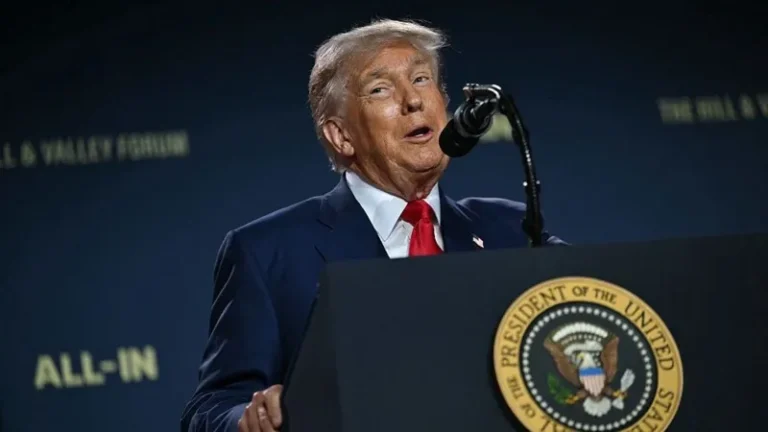
The operation took place July 10, 2025, at a cannabis farm in Camarillo, about 50 miles northwest of Los Angeles. The military’s role has not been reported before. It comes to light less than a month before the midterm elections, while President Donald Trump continues to refuse to rule out invoking the Insurrection Act to deploy troops.

The National Immigration Law Center obtained the document through the Freedom of Information Act. The center opposes Trump’s immigration enforcement policies. Ben Farley, its special counsel, said the review fits a pattern.

“This is yet more evidence of the willingness of the Trump administration to blow the hinges off the constraints of what the military can do domestically,” Farley said.

What the Army’s own review says

The report records the Army’s concerns about putting armed troops into volatile situations with hostile civilians and little direction on the limits of their authority. Experts who reviewed it for MS NOW said it strongly suggests soldiers from the National Guard’s 49th Military Police Brigade helped take custody of immigrant detainees and moved them from the farm to a nearby naval base.

The document also indicates the military’s actions were largely improvised, with little planning or coordination between the Defense Department and DHS. In one of several passages on the subject, it says: “A mission of this scale should have been planned out with DoD for support to work through those potential issues and have a better plan in place for transporting detainees.”

The review carries no time stamp. It indicates it was written on or shortly after July 19, 2025.

Northern Command denies its units moved detainees

A U.S. Northern Command spokesperson denied that troops took part in detaining or transporting anyone.

“Personnel did not conduct arrests, searches, seizures, detention, or detainee transportation during this operation, and no military vehicles were used to transport detainees,” the spokesperson said. “Federal law enforcement personnel retained responsibility for law enforcement and custody functions.”

Northern Command did not answer follow-up questions about the apparent conflict between that statement and its own review. The review says DHS agents had no clear plan for moving detainees. It says military personnel on the scene were told the Defense Department had authorized Guard troops to transport detainees in military vehicles. It says hundreds of detainees were taken to Naval Base Ventura County. It does not state who drove them or whose vehicles carried them.

DHS did not respond to questions about the roles of troops and federal agents. It referred all questions on the subject to the Defense Department.

A raid that came after weeks of protests

The Camarillo raid took place amid broad immigration sweeps by Immigration and Customs Enforcement and Border Patrol agents in Los Angeles and surrounding areas. Those sweeps set off protests that lasted weeks. In a presidential memorandum, Trump called the protests “a form of rebellion against the authority of the Government of the United States.” Over the objections of Gov. Gavin Newsom, he federalized 2,000 National Guard troops and ordered them to protect federal agents and property.

Thousands of federal law enforcement and military personnel arrived in the Los Angeles area from outside the region. The troops who responded to Camarillo belonged to the 49th Military Police Brigade, headquartered in Fairfield, near San Francisco.

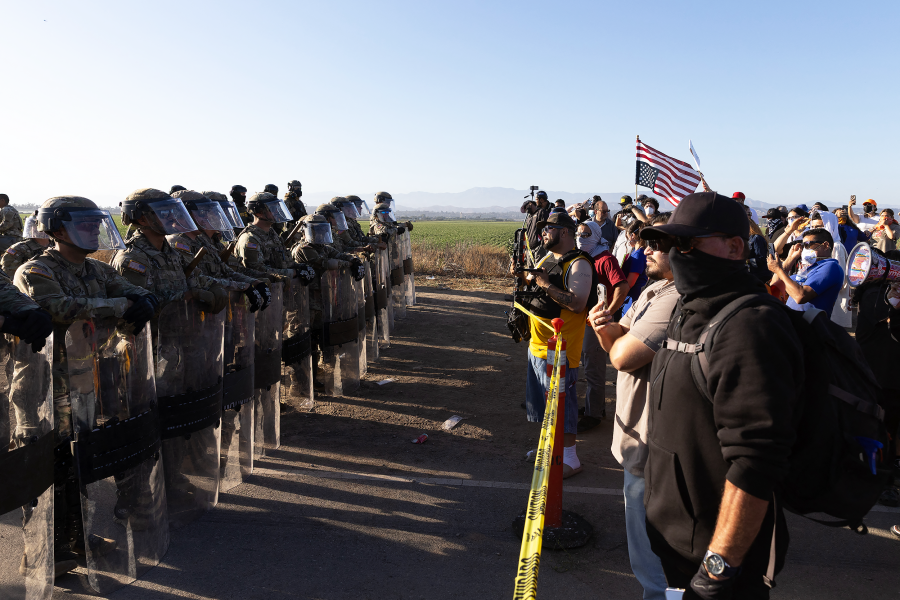
The raid drew attention at the time for its scale and disorder. About 500 ICE and Border Patrol personnel detained at least 361 people on immigration counts over several hours. One immigrant died after falling from a roof while trying to flee. Hundreds of protesters blocked government vehicles and threw rocks and other objects at federal agents. Four U.S. citizens were charged with assaulting or resisting officers.

Reporters, photographers and court records described Guard troops helping set up a security perimeter around the farm. The Army review shows the more than 200 soldiers on the scene did far more than that.

Troops arrived without a briefing or routes

Border Patrol first asked the Guard for support, canceled the request two days before the raid, then asked for military help again after the operation had started, the review states.

That timing left units with almost nothing to work from. The document says it resulted “in units responding without an in-brief and no information on staging, routes, ingress, egress, and supporting medical facilities.”

The federal agents running the operation, it says, “were not tracking the plan or did not have a plan when it came to moving detainees.” The lead federal agent then told military personnel the Defense Department had issued approval for Guard “personnel to transport detainees in military vehicles.”

Sorting that out on the ground took time. “That information had to be deconflicted on the ground, taking additional time to get the detainees transported out of the area,” the document reads. “Ingress and egress routes were not identified, leading to vehicles being blocked in” by protesters’ vehicles.

The naval base was not ready either. “Naval Police did not have the capability to receive us at the same time as the arrival of the Federal Agents, resulting in unnecessary moves and confusion,” the document reads.

Soldiers also faced a hostile crowd. “During the operation, our freedom of movement was hindered by civilian vehicles in our formation,” the review states. “This left vehicles vulnerable to protestors who eventually climbed on vehicles and threw items at our Soldiers.”

Daniel Maurer, an associate professor of law at Ohio Northern University and a retired Army lieutenant colonel and judge advocate, called that an unusual experience for troops. “Normally, when the military deploys domestically, it’s for natural disaster relief, and they’re welcomed with open arms,” he said.

What legal experts say about the Posse Comitatus Act

The Posse Comitatus Act, a law from the late 19th century, prohibits using the armed forces for domestic law enforcement. Independent experts consulted by MS NOW said the document puts the Guard troops in a legally shaky position.

Chris Mirasola, an assistant professor at the University of Houston Law Center and a former Defense Department attorney, said the duties described in the review fall within the law’s reach.

“Detention and traffic management would both count as execution of the laws in the terms of the Posse Comitatus Act,” Mirasola said. “Those are usually very straightforward examples of a violation.”

The experts did not say the document alone proves a violation. They noted that courts have rarely tested the law. The review does not say whether federal agents rode in the vehicles that carried detainees. If they did, Mirasola said, the government could argue the agents, not the troops, technically had custody.

Maurer said that even with agents aboard, the more relevant question is which agency took the lead in planning and carrying out that part of the operation.

“The issue is, what are those federal agents doing?” Maurer said. “Are they acting like a brain for the operation, or more like the muscle for the operation?” If the military dominated that part of the operation, he said, “that’s concerning,” and it “approaches unlawfulness, because it has the military executing the law to some extent.”

Farley went further. He said the review leads him to conclude the Guard clearly violated the act.

“Having the military take custody, physical control, of people in this country is a shocking development,” Farley said. “There is a reason we don’t see the military doing this: There’s a 250-year history of people in this country being very, very opposed to and fearful of the military doing exactly this sort of thing.”

A federal judge has already ruled on the deployment

In September 2025, a federal judge ruled in a lawsuit filed by California that the Trump administration violated the Posse Comitatus Act when it deployed National Guard troops alongside immigration agents in Southern California. The ruling discussed the Camarillo raid in detail.

That decision did not consider any evidence that troops physically took custody of detainees and transported them. It covered only what was public at the time: troops had set up security perimeters and controlled traffic.

The administration appealed to the 9th U.S. Circuit Court of Appeals. The case stalled after the federalized troops returned to California’s control.

Questions about training and planning

The experts also pointed to the lack of planning the review describes. Mirasola raised the question of who ends up doing the work when DHS hands off enforcement tasks.

“It should concern all of us if we have DHS offloading law enforcement functions onto, most likely, incredibly young military personnel who don’t necessarily have any training in handling these kinds of interactions with protesters, with the public, and with detainees,” Mirasola said.

What comes next

No domestic deployment of military personnel alongside federal law enforcement has matched the scale and public visibility of the 2025 California operations. A deployment during similar immigration raids in Chicago was much smaller. Courts blocked other efforts to use Guard troops against protests, including in Portland.

Trump has repeatedly threatened to invoke the Insurrection Act and use troops against domestic unrest. Advocates and experts say that makes the Camarillo episode matter beyond one raid. In their view, it lowers the legal and institutional barriers to using the military in domestic conflicts, and it set a precedent for using troops to help round up immigrants.

“That’s not what the military does,” Maurer said.

Several questions remain open. Northern Command’s denial conflicts with its own after-action review, and the agency has not explained the gap. DHS has pointed to the Defense Department for answers about who did what. The review does not say who drove the detainees. The appeal over the September 2025 ruling has not moved since the troops left federal control.

RECOMMENDED
Politics

Trump’s deportation push forces dozens of LGBT migrants onto hostile terrain

By George Mensah 6 min read

The United States has deported at least 40 LGBT migrants who had won legal protection from persecution to African countries that criminalise same-sex relations or have been described by the State Department as hostile to LGBT people, according to a Reuters investigation. The cases date from the Trump administration’s expanded use of third-country deportations this year.

One of them is Abdou Latifou, a gay man from Togo. In June, US officials put him on a deportation plane to Sierra Leone, where gay men can be sentenced to life in prison under colonial-era laws. A US immigration judge had ruled in November that it was not safe to send him home.

A mob attack, then a court win

Two years ago, a mob assaulted Latifou and threatened to kill him after he was seen kissing the man he loved, according to his asylum application. He fled Togo and sought refuge in the United States.

When the immigration judge ruled in his favour last November, he felt he had reached safety. ‘I told myself, “From this day on, I’m entering a world where I’m free to live as myself,”‘ he said.

The judge granted him a lesser form of protection than asylum. It barred the government from deporting him to Togo but allowed his removal to other countries.

Sent to Sierra Leone, then back to Togo

Latifou, a gay Togolese man, sits on a beach overlooking the Atlantic Ocean in Abidjan

After he landed in Sierra Leone, Latifou was held for two weeks in a hotel under police surveillance. Guards then put him on a flight back to Togo. He arrived with a few items of clothing and $100.

He went to his village to see his mother. A relative soon warned him that he was not safe, and helped him cross the border into Benin. He continued to Ivory Coast, where he now lives with a friend and works as a security guard.

Same-sex relations are legal in Ivory Coast, but Ivorian activists have reported rising homophobic violence. Latifou avoids the Togolese community ‘so I don’t get recognized.’

What Reuters found across 40 cases

A gay Mauritanian man walks through a neighbourhood in Matam

Reuters tracked all 40 people, who come from across Africa and from Iraq, Jamaica and Russia. Reporters interviewed a dozen deportees and immigration lawyers and reviewed hundreds of pages of legal documents.

Sixteen remain in the countries they were deported to, and some are still detained. Sixteen others, like Latifou, were sent back to their home countries against their will. Nine are in hiding in third locations. One Ghanaian man is no longer in contact with his lawyers or relatives, they said.

The 40 cases involve deportations to three countries that explicitly criminalise same-sex sexual acts: Sierra Leone, Cameroon and Eswatini. Three others have no such laws, but the State Department has documented abuses of LGBT people there, including ‘corrective rape’ and conversion therapy. They are the Central African Republic, Equatorial Guinea and the Democratic Republic of Congo. Government spokespeople for all six countries did not respond to requests for comment.

More than half of the 40, including Latifou, were not eligible for asylum because they had not applied in countries they passed through before entering the US illegally. That rule came from Biden-era restrictions, which a federal court vacated in May.

Bridget Crawford, director of law and policy at the LGBT advocacy group Immigration Equality, said the US has repeatedly granted asylum to LGBT people from these countries. Her group has helped 12 Cameroonians and one person from Congo win asylum in recent years.

Where they ended up

Latifou, a gay Togolese man, walks along a beach in Abidjan

Many deportees told Reuters they wound up wherever someone would take them in.

A bisexual Ghanaian woman was deported to Cameroon in January and stayed for seven months. She could not speak French, the main local language, and feared for her safety in Ghana. She moved in with a relative in northern Nigeria, where penalties for same-sex sexual acts can include lashes or death by stoning. Most days she does not leave the house, she said.

A gay man from Ghana was deported to Sierra Leone and then forcibly repatriated. He has spent four months hiding in the forests of neighbouring Togo and lives on small sums his mother sends him. Most nights he sleeps on a blanket on the ground. When it rains, he shelters in an abandoned, half-finished house.

A 44-year-old Mauritanian man had lived in the US for more than a decade when ICE detained him in January and flew him to Eswatini, a small southern African kingdom he had never heard of. He spent a month and a half in a mosquito-infested prison with no hot water, he said. He eventually agreed to be flown back to Mauritania and slipped across the border into Senegal, where the government recently doubled the maximum penalty for same-sex sexual acts.

He is now staying with relatives in a remote town and trying to find out whether any countries in Europe or Asia would accept him. ‘My life just got turned upside down,’ he said.

A tactic that was rare before 2025

Third-country deportations were uncommon before Donald Trump’s second term. Since he returned to office and began a broad immigration crackdown, ICE and Border Patrol have deported more than 40,000 people to countries that are not their own, according to preliminary government data shared with Reuters. That is far above earlier estimates from advocates. About 900 people were sent to African countries.

Trump’s administration has made deals with impoverished foreign governments to take them.

Courts and the government’s response

In a February order in a case challenging the policy, US District Judge Brian Murphy addressed the risk to gay people. He called the government’s claim that those targeted had not explicitly asked not to be deported to repressive third countries an ‘absurdity.’

‘No person could reasonably be expected to make detailed, prophylactic claims about every country on Earth to which she might have a valid claim against removal,’ he wrote.

The Supreme Court has now put a hold on Murphy’s ruling, which lets the administration continue third-country deportations. The court will hear arguments in December.

Claire Trickler-McNulty, a former senior US immigration official, said sending people ‘to a third country where they face the very persecution we recognized makes a mockery of our protection systems.’

Chandler Rebel, a spokesman for the Department of Homeland Security, which oversees ICE, said in a statement that the agency ‘does not enforce the law on the basis of sexual orientation, that would be illegal.’ He added: ‘Third country removals are an essential public safety tool.’

On people who leave ICE custody, Rebel said: ‘When an individual is no longer in ICE custody then ICE will no longer be responsible for them.’

What happens next

The Supreme Court’s December hearing will decide whether the policy continues in its current form. Until then, the government can keep removing people to third countries, and the 40 documented cases show what that has meant for LGBT migrants who had won protection in US courts.

Politics

Ohio Town Bans Data Centers It Doesn’t Have, and the Fight Reshapes the Midterms

By George Mensah 6 min read

No company has announced any plan to build a data center in Defiance, Ohio, a city of 17,000 people surrounded by soybean fields in the state’s northwest corner. Residents are moving to ban one anyway. On November 3, voters there will decide a ballot measure that would prohibit all but the smallest data center projects, after the county’s economic development office confirmed it had fielded inquiries from tech companies. City officials have already imposed a six-month moratorium on new project approvals.

Defiance is one front in a fight now playing out across Ohio and much of the country, where anxiety about AI infrastructure has turned data center construction from a routine economic development pitch into a live issue in the 2026 midterms.

A $2 billion number changed the debate

Residents in Defiance already worried about what data centers would do to farmland, electricity demand and water supply. Those worries hardened this summer when state tax records showed Ohio had given up more than $2 billion in sales-tax revenue through data-center incentives across 2024 and 2025, with Amazon and Meta among the companies benefiting.

A Bowling Green State University poll taken August 31 found 71 percent of Ohioans would support a temporary ban on new data center construction. That is not a narrow plurality. It is close to three in four residents of a state that has spent a decade courting this exact industry.

Becca Rupp, who founded Citizens for Responsible Development in Defiance, put the sentiment plainly. Most people feel preyed upon by big business, she said.

Governor Mike DeWine, a Republican, has suspended new applications for data-center tax exemptions while lawmakers work on reforms. Those lawmakers left for summer recess without acting, so the incentive program sits frozen and undefined heading into an election where it has become a talking point on its own.

Democrats find an opening in rural Ohio

Big tech fast-tracking new off-grid power plants, leaving communities in the dark about their pollution

For Democrats, who have struggled for a decade to win rural votes in the Trump-era Midwest, the data-center backlash has opened a rare line of attack in exactly the territory they need.

Representative Marcy Kaptur is running for reelection in a newly redrawn district that now includes Defiance and other conservative rural counties, in what she has called one of the hardest races of her four-decade career. She has built television ads around data centers, accusing Republican opponent Derek Merrin of backing the tax breaks residents now resent.

Politicians are letting these companies pass their enormous energy and utility costs onto Ohio ratepayers, Kaptur said in a statement, then handing them billions in tax breaks on top of it. FirstEnergy data backs part of her argument: residential electricity bills in Defiance rose 10 to 15 percent in June compared with a year earlier.

Merrin has not responded to requests for comment on the ads. In a Facebook post last week, he wrote that Kaptur was blaming him for a tax break enacted before he was elected to the Ohio legislature.

The Senate race turns on the same issue

State of the Union address at the U.S. Capitol in Washington D.C.

The same fight is shaping Ohio’s Senate race between Republican incumbent Jon Husted and Democrat Sherrod Brown, who is trying to reclaim the seat he lost in 2024. Recent polling shows Brown ahead, and Republican groups responded by spending $14 million on Ohio advertising in a single week.

Brown has called Husted “data centers’ best friend” and criticized him for promoting the tax incentives now under fire. Ohioans, not Jon Husted and his billionaire friends, should decide whether data centers get built in their community, Brown’s campaign said.

Husted’s campaign points to legislation he has sponsored that would require data-center operators to pay for the electricity generation and transmission capacity their facilities need. Spokesperson Amy Natoce argued Brown had three decades in Congress to address the issue and did nothing, then started caring the moment an election arrived.

From zoning disputes to a governor’s race

Lyn Cox, who leads the advocacy group Conserve Ohio from rural Waterville Township about 40 miles from Defiance, said the tax-subsidy disclosure turned a series of scattered local zoning fights into a statewide issue overnight. She called it a huge turning point, one that has pushed candidates in both parties to develop actual policy positions instead of vague talking points.

That pressure has reached the governor’s race. Republican Vivek Ramaswamy, who previously supported attracting tech investment to Ohio, released a proposal that would eliminate local property-tax abatements for data centers, redirect the revenue into homeowner rebates, and require developers to cover any increase in residential electricity costs their projects cause.

His Democratic opponent, Amy Acton, wants to restrict the tax incentives, require developers to fund their own power infrastructure, and mandate union labor standards on construction. Both candidates have also called for limits on building data centers on productive farmland.

Cox is not impressed by either platform. They’re just words, she said. Both sides came up with a policy because they’re starting to understand this is a sleeper issue.

Conserve Ohio is now pursuing a 2027 state constitutional amendment that would ban construction of any data center using more than 25 megawatts of power, while backing similar local ballot measures around the state. The group is also pushing state officials to disclose how much revenue local governments have given up through their own separate tax agreements with data-center operators, numbers that remain unpublished.

What the companies say

Amazon says it has invested close to $40 billion in Ohio since 2015. Meta points to more than $2.3 billion in state investment since 2018. Both companies argue their facilities generate tax revenue, jobs and broader economic activity in the communities where they operate.

For Rupp, the argument has moved past any single project. The real question, she said, is whether elected officials will defend the public interest against big tech at all. She called it a breakdown between what government was supposed to do for small America and what it has failed to do, and said data centers now sit at the center of that failure.

What happens next

Three dates will show whether this backlash has staying power beyond one election cycle.

November 3 is the first test. If Defiance voters approve a ban on a data center that does not exist yet, expect similar preemptive measures to appear on ballots in other Ohio counties next cycle, and expect other states watching AI infrastructure expansion to take notice.

The Senate and gubernatorial races are the second test, and the clearest read on whether this issue moves votes rather than headlines. A Brown win in a state Trump carried twice would tell national Democrats that utility bills and tax giveaways, not just AI abstractly, are the frame that works in rural districts.

The third is legislative. Ohio lawmakers left the DeWine moratorium in place without passing reform before recess. Whatever they do when they return, whether that is capping incentives, mandating developer-funded infrastructure, or letting the freeze lapse, will set the template other state legislatures either copy or avoid as this fight spreads.

ADVERTISEMENT
Scroll to Top