Clicxpost

World News

France Orders Local Curfews as Riots, Looting and 2,400 Arrests Shake Macron’s Government

France curfews

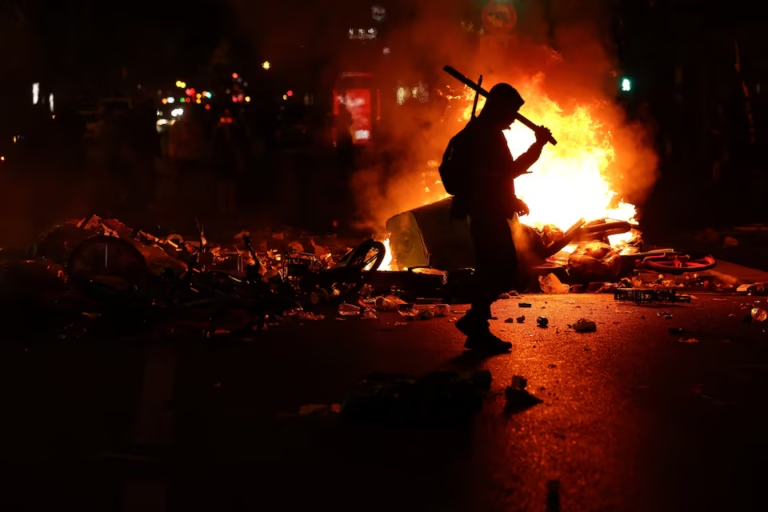
France’s central government asked some local authorities on Monday to impose curfews, as it came under pressure over security failures after a weekend of riots and looting that grew out of nationwide anti-government protests.

Prime Minister Sebastien Lecornu ruled out a blanket curfew in Paris but did not rule out a state of emergency. He said partial, localised curfews were the more appropriate step for now, and he gave no details on where they would apply or when.

The violence follows weeks of student demonstrations. It has shaken France six months before its next presidential election, and it has put a weak economy and surging national debt back at the center of the political fight.

A Prime Minister Promises Order

“My determination to restore order is absolute,” Lecornu told reporters on Monday.

Local officials did not wait for Paris to act. Ariel Weil, the Socialist mayor of central Paris, told BFM TV he favoured a curfew. Marseille went further on its own and banned gatherings and demonstrations. Since Lecornu chose localised measures over one national order, rules can differ from one city to the next.

The unions are not backing down. French unions called for a new round of strikes and rallies on November 5, which means the dispute will outlast the weekend’s clashes.

Minister Blames the Far Left

Lecornu pointed at far-left groups for what he described as some of the worst unrest France has seen in years. “There is, after all, a far-left movement that wants to cause” serious unrest in the country in the run-up to the presidential election, he said, adding, “we can’t put it any more strongly.”

The challenge came quickly. Jean-Luc Melenchon, the hard-left presidential candidate, urged him on X to provide evidence. “Otherwise, he should apologise, keep quiet and stop fanning the flames of unrest,” he wrote.

The exchange shows how fast the riots turned into campaign material. With the election six months away, every claim about who started the violence now carries a political price.

Almost 3,000 Shops Hit

The Federation of Trade and Retail said almost 3,000 shops were affected over the weekend. The group said the retail sector “once again” finds itself “on the front line, at a time when it is already weakened by a succession of crises.”

It described the damage in human terms. “Behind every ransacked shop are business owners, employees and families who have seen years of work and effort wiped out in a matter of hours,” the federation said. It asked the government for social security and tax relief for affected businesses.

Lecornu said the government would provide furlough measures from Tuesday. He did not say how many workers or businesses would qualify.

In Marseille, Gerard Nouchi, who manages two clothing stores, stood in front of a boarded-up shopfront and said there were not enough police to stop the looters. “They trashed everything, broke things, insulted us,” Nouchi said. “It was like a real tornado.”

The government also moved against the resale of stolen goods. Junior Digital Minister Anne Le Hénanff wrote on X that online platforms selling looted items were ordered to take down the announcements and to cooperate in prosecuting resellers.

Arrests, Injuries and One Death

The Interior Ministry reported that some 2,400 people were arrested. One protester died of a cardiac arrest on Saturday. Nearly 1,000 officers were injured.

Those numbers describe a weekend in which police were outnumbered at the worst moments. Interior Minister Laurent Nunez told France Inter radio that France deployed 60,000 police and other security forces on Saturday. He acknowledged that the deployment was not enough to control violent crowds.

The scale is easier to grasp in proportion. Nearly 1,000 injured officers would equal about one for every 60 of those 60,000 deployed, if all of them were hurt on Saturday. The 2,400 arrests come close to the number of shops reported affected, almost 3,000, though the reports do not say how the two figures connect.

Mayors Warn Cities Were “Left Without Protection”

The mayors of Paris, Marseille and Lyon, all from the centre-left, wrote a joint op-ed in the newspaper Liberation. They said they were used to demonstrations and protests.

“But on Saturday … for the first time, we had the feeling that whole sections of our cities had been left without protection,” they wrote.

Coming from three city halls that handle street protests regularly, the statement puts the security question squarely in front of the government. The criticism is aimed at the protection of city streets.

Macron Rejects His Interior Minister’s Resignation

Pressure on the government grew after Macron’s office said on Monday that the president had turned down Nunez’s offer to resign. Macron told him instead to end the barricades and the looting, and to be open about what Macron called “intelligence and foresight failings.”

The phrase is a public admission from the president’s office that intelligence and planning fell short before Saturday arrived. Nunez stays in his post and now carries both the response and the transparency Macron asked for.

Nunez said Tuesday evening’s Champions League match between Paris Saint-Germain and Barcelona would go ahead as planned.

Markets Stay Calm, With a Warning Attached

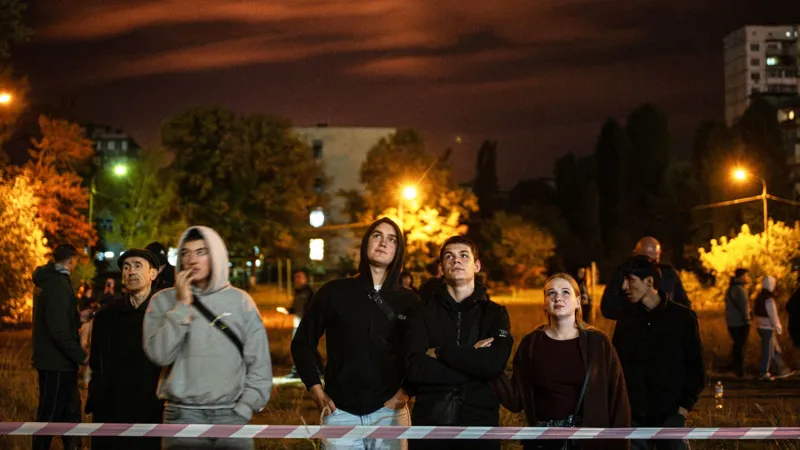
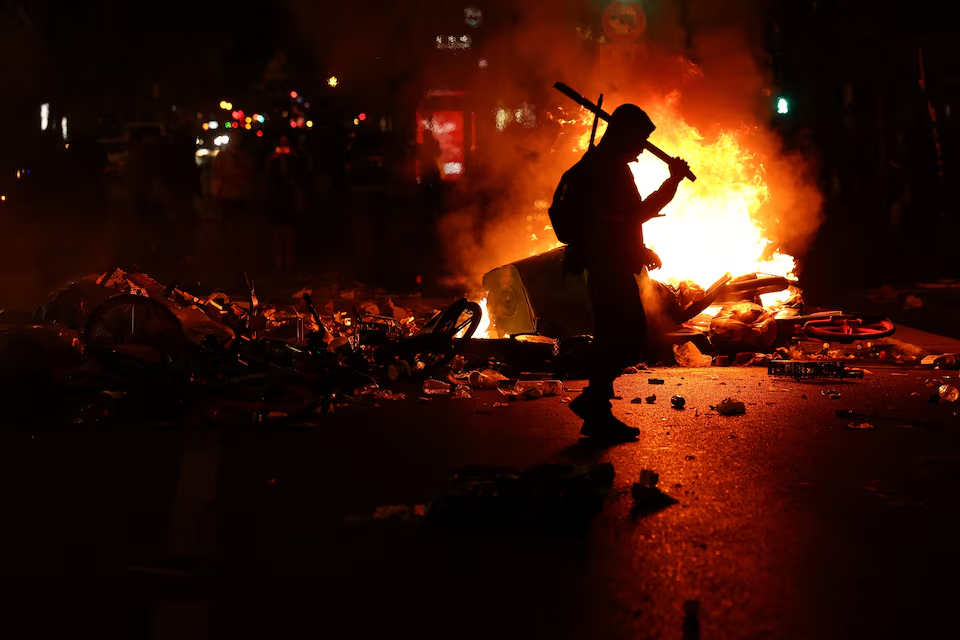
Aftermath of clashes during a national day of protests against the cost of living and rising fuel prices, in Paris

French assets underperformed broader European markets on Monday. The moves were more contained than at some other moments of recent political friction.

Investors have a reason to keep watching. Tensions inside Macron’s fragile government over the apparent security shortcomings come while the government needs to pass a budget bill to rein in its finances. A government that spends its political energy on riots has less to spend on a budget vote, and that could further unsettle investors.

The Grievances Behind the Protests

The reported causes are not new, and several of them overlap. Protesters pointed to declining and dysfunctional public services, the cost of living and rising fuel prices. The government, for its part, faces a weak economy and surging debt, and it needs a budget bill to rein in its finances. Those pressures pull in opposite directions: citizens want more spending on services and lower prices, while the budget calls for restraint.

School Holidays Start, Blockades Continue

Interministerial Crisis Meeting chaired by France's President Emmanuel Macron at the Elysee Presidential Palace

The start of school holidays on Monday may bring some relief. Students were still staging gatherings and blockades in some places on Monday, including at the Louvre gallery and at Sciences Po university in central Paris.

At the weekend, hundreds of thousands of people took to the streets. Many of them said they were protesting declining and dysfunctional public services. The photographs from Paris carried a more specific label, describing a national day of demonstrations against the cost of living and rising fuel prices.

Luxury Boutiques and Fan Stores Damaged

On Monday, most shops at the Place Vendome in Paris, home to luxury hotels and boutiques, were shuttered and surrounded by security guards. The front door of a Dior boutique was smashed. Windows at other luxury brand stores in central Paris, including Rolex, Louis Vuitton, Ralph Lauren and Gucci, were damaged.

Marseille’s losses were closer to the street. Ligue 1 club Olympique de Marseille said its official store on the city’s historic main avenue had been looted. In central France, a town hall was torched.

Other European Countries Saw Protests Too

Cost-of-living concerns also drove weekend protests in other European countries, including Italy, Belgium and Albania. European governments have advised citizens travelling to France to avoid large crowds and to take care.

If you are planning a trip to France this week, that means staying away from demonstrations and from city centres where gatherings are banned, as Marseille has done. Check local announcements for curfews before you go out in the evening, since the rules may differ by city.

Macron Leaves for the Gulf

As France cleaned its streets, Macron arrived in Kuwait for a Gulf trip aimed at securing additional petrol and diesel supplies to bring down pump prices. Rising fuel prices were one of the grievances that sent people into the streets, so the trip speaks to the same anger, though it also means the president is abroad while his government deals with the aftermath.

What to Watch Next

Several dates and decisions will show whether the unrest fades or returns. Lecornu has not ruled out a state of emergency, and he has not said which areas will get curfews. Furlough measures begin Tuesday. The PSG and Barcelona match is set for Tuesday evening. Unions have set November 5 for another round of strikes and rallies. Melenchon’s demand that Lecornu back up his far-left claim or apologise also remains open.

For now, a country six months from choosing a president has 2,400 people in custody, thousands of damaged shops, a government under pressure over what it called intelligence failings, and a calendar full of dates on which the protests could start again.
RECOMMENDED
World News

Ukraine Says SpaceX Speed Cap Is Grounding Drone Missions as Russian Missiles Hit Kyiv Without Warning

By George Mensah 7 min read

SpaceX capped the speed of some Starlink military terminals at 100mph (160km/h) overnight into Wednesday, October 14, without warning Ukraine, and the cap has already forced Ukrainian units to cancel drone missions, according to Serhiy Beskrestnov, an adviser to President Volodymyr Zelensky. The restriction arrived on the same night Russia fired 39 missiles and 128 drones at Ukraine, leaving at least 600,000 people without electricity and killing three in Kyiv.

What Ukraine says SpaceX changed

Beskrestnov posted on Telegram on Wednesday that SpaceX had “implemented overnight a speed limit on Starlink terminals,” and that the change had already caused “the disruption of a number of missions.” Ukraine’s defence forces, he said, received no notice. He added that the timing “cannot be a coincidence and is related to the current political situation.” He did not say what he meant by that, and SpaceX has not commented.

The terminals affected are military-grade Starshield units mounted on moving platforms such as drones and vehicles, according to Euromaidan Press and Tom’s Hardware. A terminal that goes above 160km/h loses its connection, Ukrainian defence ministry sources told the BBC. The ministry is investigating the “root cause.”

The practical result is that a drone has to stay slow to stay connected. Ukraine’s 7th Rapid Reaction Corps told Reuters that connections on its Huliaipole front dropped for 10 to 20 seconds at 110 to 120km/h. One unmanned systems unit cancelled missions that day. The corps said that “slower targets become more vulnerable to being hit by the enemy,” and that mid-range strike drones, which need to reach high speed fast, cannot be launched or used as intended on an unstable link.

Ukrainian defence ministry sources told the BBC the limit also degrades front-line logistics, reconnaissance and signal relaying. Serhii Sternenko, a former adviser to Ukraine’s defence minister, wrote that military reports showed the limit tightening later in the day, with connections dropping at 60 to 70km/h. That figure comes from a single account and has not been confirmed by Ukraine’s military or by SpaceX.

Interceptors are the weak point

A photo of Tetiana in her kitchen, wearing a coat

Beskrestnov wrote a second post stressing that Starlink is the most effective tool Ukraine has for guiding interceptor drones against Russia’s newly developed jet-propelled drones. Euromaidan Press describes them as jet-powered Shahed variants, so the interceptors chasing them need to fly fast. A terminal that drops its link at 160km/h cannot do that job.

Starlink also carries the video and telemetry that let a pilot steer a drone to its target in real time. Ukrainian units use it for strikes on Russian logistics in occupied areas of the south and east, and for air defence at home.

Not the first restriction, but the first without notice

Reuters Ukrainian soldiers set up Starlink satellite internet system near the front line in the eastern Donetsk region. File photo

SpaceX has limited Starlink in Ukraine before. In late January 2026, it began restricting service at Kyiv’s request, after Russian forces started mounting terminals on their own strike drones. On January 27, a Russian drone hit a passenger train in Kharkiv region, and Beskrestnov, then an adviser to the defence minister, suggested it might have been controlled through Starlink. In early February, Ukraine introduced a whitelist that lets only registered terminals operate.

Beskrestnov described those measures as temporary and an emergency response. The difference this time is who decided. The earlier limits were Ukraine’s request. This one, Ukrainian officials say, was not.

Musk has also acted on his own before. In February, his decision to deny Russian forces access to Starlink blunted Moscow’s advance in Ukraine and caused confusion among Russian commanders. On X on Saturday, Musk wrote that “Zelensky has gone too far,” according to Tom’s Hardware.

Sternenko suggested SpaceX acted at the request of the Trump administration, though he gave no evidence, and nothing in the reporting confirms it. Poland’s foreign minister, Radosław Sikorski, asked Musk on X whether he was “playing politics with your products again,” and added: “As your European customers, we are watching you.”

Strikes on the same night

The speed cap landed in the middle of one of the heaviest attacks of the week. Ukraine’s air force said Russia launched 39 ballistic and cruise missiles and 128 drones overnight. It shot down four of the missiles and 115 of the drones. Zelensky said “critical” energy infrastructure was hit in Kyiv and its surrounding region, and in Kharkiv in the north-east. Local officials reported three people killed in Kyiv. Russia said its strikes hit communications and energy facilities used by Ukraine’s military.

Later on Wednesday, at least six people died in a Russian drone strike on a warehouse in Lutsk, in the north-west, local officials said.

It was the second night in a row Kyiv was hit. Over those two nights, missiles struck the capital before air raid sirens sounded. Ukraine relies on US satellite systems to track Russian missiles and issue alerts, and the missing warnings point to a gap in that data. The source reporting does not say what caused the gap. Zelensky has said the US threatened to restrict intelligence sharing if he did not accept Trump’s energy ceasefire. Trump denied on Tuesday that Washington was withholding intelligence.

Russia’s defence ministry said it shot down 902 Ukrainian drones overnight over several Russian regions, including Moscow and Crimea. Starlink does not work inside Russia, Reuters noted, and Ukrainian drones that hit Russia’s oil industry use other communication methods, so the speed cap affects the front line more than long-range strikes.

A residential block with no warning

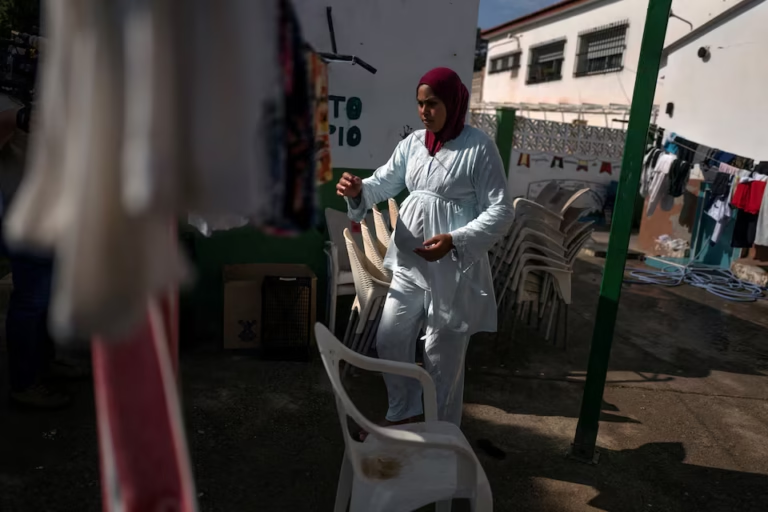
Tetiana Storozhyk, 54, was in her kitchen on Tuesday night when a missile hit her apartment block. The blast threw her into the hallway. The sirens sounded at the moment of impact, so she had no time to leave.

“It all happened in a fraction of a second. In that moment I lost everything,” she told the BBC. She said Ukraine needs weapons to protect its people, “but from the other side we need peace.”

Her building is one example of what happens when air defence works without good data. Interceptors cannot fire at a target nobody has told them about, and residents cannot reach shelter if the siren comes late.

The energy ceasefire that was not observed

On Sunday, October 11, Trump wrote on Truth Social: “Effective immediately, there is an ENERGY CEASEFIRE in the War between Russia and Ukraine. Both parties have agreed. Do not break it!” Zelensky said he learned about the truce from media reports. He has since repeated that Ukraine is ready to stop striking Russian oil refineries and other energy sites if Moscow does the same, and that Kyiv would sign guarantees if Washington needs them. “If Russia doesn’t agree to energy ceasefire, we will respond,” he said.

Russia has not signalled agreement. Foreign Minister Sergey Lavrov said Ukraine does not deserve the “respite” a ceasefire would bring, and argued that Europe would use any truce to “pump [Ukraine] with new weapons.” French President Emmanuel Macron said on Monday he had seen no sign of Russia honouring the truce in the previous 48 hours. Zelensky had earlier proposed a 60-day ceasefire to allow presidential elections, and Russia rejected it. Kremlin spokesman Dmitry Peskov said Moscow wants a long-term peace deal.

Canada’s prime minister, Mark Carney, has also objected to a separate US “diesel deal” with Russia that would release 300,000 tonnes of fuel, his office said, because it works against the efforts of Ukraine and its allies.

What comes next

Zelensky was due to meet UK Prime Minister Andy Burnham at Downing Street on Wednesday to discuss speeding up air defence deliveries. Those talks now cover two problems: the interceptors Ukraine needs more of, and the satellite link that lets them fly.

Three things are open. SpaceX has not said whether the cap is permanent or a technical change, and Ukraine’s defence ministry has not finished its investigation. Washington has not said whether it had any part in the decision. And the energy truce exists only in a social media post, while the strikes continue on both sides.

Ukrainian developers are working on a fallback. The defence technology company Stetman is building a domestic satellite communications system called UASAT-NANO, to reduce reliance on SpaceX, Tom’s Hardware reported. No date has been given for when it could replace Starshield on the front line.

Russia launched its full-scale invasion in 2022 and controls about 20% of Ukrainian territory. For units on the Huliaipole front, the immediate question is smaller: whether a drone can fly at the speed the mission requires and still hear from its pilot.

Sources

World News

Russia Strikes Six Energy Targets in Ukraine Days After Trump Announces Energy Ceasefire

By George Mensah 5 min read

Russia hit at least six energy targets during a night and morning of deadly airstrikes across Ukraine, President Volodymyr Zelenskiy said on Monday, October 12. He said the attacks showed Moscow has no interest in the energy ceasefire that US President Donald Trump announced over the weekend. Kharkiv, Ukraine’s second-largest city, was among the places hit.

Trump said on the weekend that Ukraine and Russia had agreed not to hit each other’s energy systems. The announcement caught Kyiv and its European allies off guard. Neither warring side had confirmed it, and Russian strikes continued on Monday.

Zelenskiy: “Terrorist air attacks” will continue

Zelenskiy posted his assessment on X. “It is increasingly evident that Russia is unwilling to accept an energy ceasefire proposed by the United States and intends to continue its terrorist air attacks against our people and communities,” he wrote.

He tied the timing to Russian revenue. “This is what happens when Russia sees the prospect of higher revenues for its war machine,” he said.

Speaking by video link to a conference in Poland earlier in the day, Zelenskiy named two of the targets: a gas facility and a petrol station. Russian drones hit both.

Kharkiv: a body under the debris

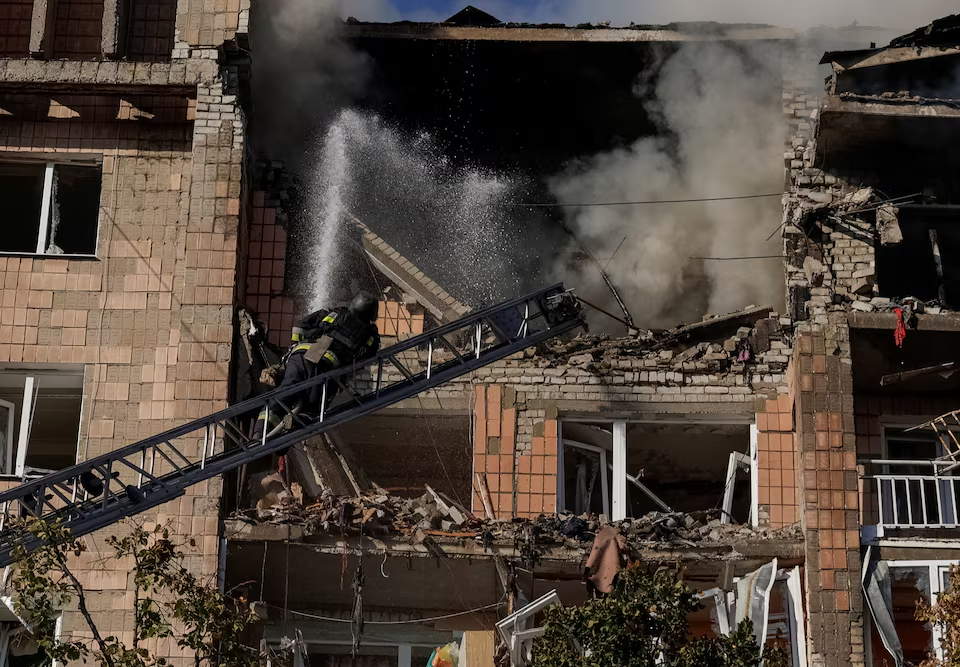
Overnight attacks killed at least three people in Kharkiv. Further strikes in the morning hit residential buildings and wounded at least 22 more people, municipal officials said. Reuters photographed a firefighter at an apartment building damaged by a Russian drone. In the dark, rescue workers searched through wreckage under floodlights. The body of a civilian in jeans and white sneakers lay beneath the debris.

Resident Nataliia Minka had just reached a shelter when a missile hit close by. She and her child watched what they believed was a missile strike on a nearby power station. “Ten minutes had passed since they promised they wouldn’t target energy facilities,” she said.

She described what she saw afterward. “It’s so hard to describe how a child was lying there, already covered up, and the father was running around her, crying and screaming,” Minka said. “It’s so terrifying. It’s impossible to get through something like this.”

In the western city of Ivano-Frankivsk, at least three people were reported killed on Sunday.

A grid campaign two weeks old

Russia began its latest campaign against Ukraine’s power grid two weeks ago. Kyiv has had hours-long power cuts every day since. The outages have reached the capital’s water and sewage systems, and twice stopped its underground trains without warning.

The campaign continues a pattern. Russia has attacked Ukrainian cities for more than four and a half years, including repeated efforts to knock out power and heat in successive winters. Kyiv has answered in recent months with long-range strikes on Russian oil refineries and logistics.

Moscow’s mixed message

Zelenskiy said Ukraine carried out no attacks on Russian refineries overnight. He said Kyiv is willing to agree to an energy ceasefire, but only if Russia keeps to it.

He also raised elections, which are suspended during wartime. Ukraine could hold them, he said, if Moscow agreed to a full ceasefire for 60 days.

Russia gave two answers. Kremlin spokesman Dmitry Peskov said talks on a possible energy ceasefire are continuing and that more information would come in due course. He rejected the 60-day truce. “In the Kremlin, both President (Vladimir) Putin and officials at other levels have repeatedly stated that we do not want a ceasefire,” Peskov said. “We want long-term peace and are prepared to do everything possible to achieve it.”

The two statements sit awkwardly together. Peskov confirmed talks on an energy ceasefire in one breath and said Russia does not want a ceasefire in the next. The strikes on six energy sites came in between.

Oil prices and US politics

Trump is under pressure over high energy prices with US midterm elections next month. Diesel has reached record prices in the United States since he launched his military campaign against Iran. He has increasingly blamed Kyiv’s attacks on Russian refineries for the rise in fuel costs. On Saturday he said Zelenskiy had “better damn well stop” attacking them.

A person familiar with the situation said Washington has threatened to cut off intelligence sharing with Ukraine and supplies of weapons. The United States no longer provides weapons to Kyiv directly but allows European countries to buy them on its behalf, so a cutoff would hit the purchases Europeans make for Ukraine.

Trump announced the ceasefire days after unveiling a deal to buy diesel from Russia. Zelenskiy has criticised that deal as a reversal of years of Western policy aimed at isolating Russia’s economy. Trump has also called on Ukrainians to unseat Zelenskiy in an election. Reuters described the exchange as unusually severe in a relationship that has been strained since Trump returned to power in 2025.

This was the second time within a few weeks that Trump declared an energy ceasefire without confirmation from both sides.

Europe adds 1,569 names to its sanctions list

Ukraine’s European allies voiced scepticism on Monday about any such agreement and spoke strongly in support of Kyiv. EU foreign ministers added 1,569 individuals and businesses to the sanctions list, described as the largest single package since Russia’s full-scale invasion in 2022.

German Chancellor Friedrich Merz said Moscow “will only negotiate seriously under pressure, which is why we are sticking to our sanctions against Russia.” He added: “Following Moscow’s ruthless attacks on Ukraine’s civilian energy infrastructure, we must actually tighten them further.”

What to watch

Three things will show where the energy talks stand. The first is whether Moscow gives the “further information” Peskov promised. The second is whether Washington follows through on the reported threat to cut intelligence and weapons purchases. The third is whether Russia’s grid attacks continue in Kyiv, where the power cuts have run daily for two weeks.

Zelenskiy has set his condition: Ukraine will stop hitting Russian refineries when Russia stops hitting Ukrainian power. Russia’s strikes on Monday were the answer so far.

Sources

  • Volodymyr Zelenskiy, post on X and remarks by video link to a conference in Poland, October 12, 2026
  • Dmitry Peskov, Kremlin spokesman, October 12, 2026
  • Friedrich Merz, German Chancellor, October 12, 2026
  • Kharkiv municipal officials; Nataliia Minka, Kharkiv resident
  • Reuters reporting from Kharkiv, Brussels and Washington
ADVERTISEMENT
Scroll to Top