
A medical doctor who recently returned to France after volunteering in a humanitarian mission in the Democratic Republic of Congo has tested positive for Ebola, according to France’s health ministry. The case marks the first confirmed Ebola infection in France connected to the current outbreak in Central Africa.
Health officials confirmed that the patient is currently being treated in isolation at a specialised medical facility. Authorities have also launched immediate contact tracing efforts to identify and monitor individuals who may have been exposed during travel or after the patient’s arrival in France.
In a statement, the French health ministry said that while the development is serious, the overall risk to the wider public remains low due to swift containment measures and the nature of Ebola transmission, which requires direct contact with infected bodily fluids.
Immediate Response: Isolation and Contact Tracing
French Health Minister Stéphanie Rist confirmed that public health teams acted quickly after the diagnosis was confirmed. Five passengers who were seated near the infected doctor on the return flight from Africa have already been identified and placed under medical observation as a precautionary measure.
Authorities are now working closely with airlines, airports, and international health agencies to reconstruct the patient’s movements and assess any additional exposure risks.
France’s public health system has activated emergency protocols typically used for high-risk infectious diseases. These include monitoring of close contacts, medical screening, and quarantine measures where necessary.
Officials emphasized that there is currently no evidence of community transmission within France.
WHO Assures Public: “No Need for Panic”
The World Health Organization (WHO) moved quickly to reassure the public following the confirmation of the case. WHO Director-General Dr. Tedros Adhanom Ghebreyesus said there is no reason for alarm in Europe or other regions outside Africa.
Speaking at a press briefing, he noted that Ebola cases detected outside Africa over the past five decades remain extremely rare, with fewer than 30 recorded instances globally.
“This means the risk to the rest of the world is low,” Tedros said. “Countries in Europe, including France, should not overreact. The situation is being closely monitored and contained.”
Health experts say that while Ebola is highly dangerous, its transmission requires close physical contact with infected individuals or contaminated materials, making widespread international spread less likely when proper controls are in place.
The Outbreak in Congo: A Deadly Strain Spreading
The Ebola outbreak in the Democratic Republic of Congo is linked to the Bundibugyo strain, a rare variant of the virus. According to the World Health Organization, the outbreak has already infected more than 1,000 people and caused at least 267 deaths, making it one of the most significant early-stage Ebola outbreaks recorded in recent years.
Health officials believe the virus may have been circulating for several months before it was officially declared on May 15. Early cases were reported in urban areas, which raised concerns about faster transmission due to higher population density and mobility.
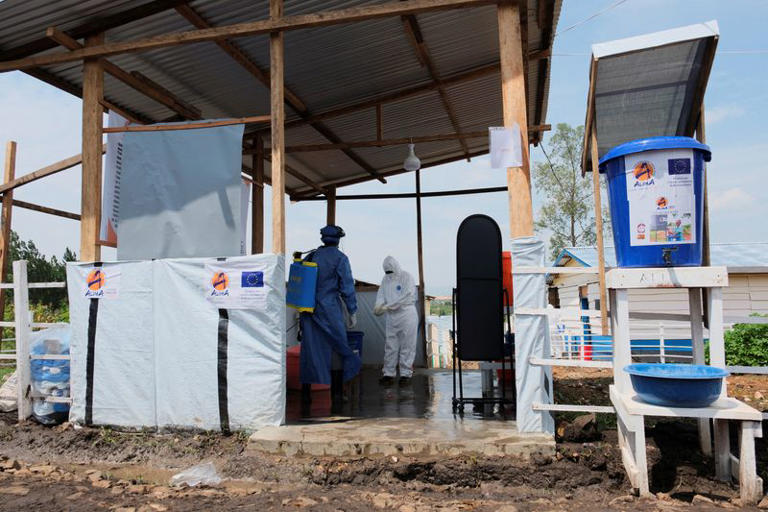
Since then, infections have been identified in at least three overcrowded displacement camps, where conditions such as limited sanitation and close living quarters increase the risk of spread.
Challenges in Containing the Virus
Public health experts warn that controlling the outbreak in Congo remains difficult due to several factors, including population displacement, limited healthcare infrastructure in remote areas, and delays in early detection.
Ebola outbreaks are typically managed through rapid isolation of cases, vaccination campaigns, and community engagement to reduce transmission. However, logistical challenges in conflict-affected regions can hinder these efforts.
The Bundibugyo strain, while less common than other Ebola variants, still carries a high fatality rate and requires strict infection control procedures.
International health agencies, including WHO and Médecins Sans Frontières (MSF), are currently supporting local authorities with treatment centres, surveillance systems, and vaccination drives where possible.
Ebola Outside Africa: Rare but Serious Cases
Ebola outbreaks are primarily concentrated in Central and West Africa, with occasional exportation of cases to other continents through travel. However, such instances are extremely rare.
The two largest Ebola epidemics in history occurred between 2014 and 2016 in Guinea, Sierra Leone, and Liberia, and later in the Democratic Republic of Congo in 2018. Both outbreaks prompted large-scale international responses and accelerated vaccine development.
In Europe, isolated cases have occasionally been reported among healthcare workers or aid workers returning from outbreak zones. Most of these cases have been successfully contained without further transmission.
Recently, a U.S. citizen who was treated for Ebola in Germany was discharged after recovering fully, following weeks of intensive care and monitoring.
How Ebola Spreads and Why Containment Is Possible
Ebola is transmitted through direct contact with the bodily fluids of an infected person, including blood, saliva, vomit, or other secretions. It is not an airborne virus, which significantly reduces its ability to spread in general populations compared to respiratory illnesses.
Symptoms typically include fever, severe fatigue, vomiting, diarrhoea, and in advanced cases, internal and external bleeding.
Modern treatment has improved survival rates significantly when patients receive early medical care. Experimental vaccines and therapies have also played a key role in reducing fatalities in recent outbreaks.
Because of these factors, health experts stress that early detection and isolation are critical in preventing wider spread.
France Strengthens Monitoring Systems
Following the confirmed case, French health authorities have strengthened surveillance at hospitals and entry points, particularly for travellers arriving from high-risk regions.
Hospitals across the country have been alerted to monitor patients presenting symptoms consistent with Ebola, especially those with recent travel history to Central Africa.
Airline protocols for infectious disease response have also been reviewed, ensuring that cabin crew and medical responders are prepared to manage potential exposure cases.
Officials say the response demonstrates the importance of global coordination in managing infectious diseases, particularly as international travel increases the risk of cross-border transmission.
Conclusion: Containment Efforts Underway
While the confirmation of Ebola in France has triggered heightened alert, health authorities and global experts emphasize that the situation remains under control. Swift isolation measures, contact tracing, and international cooperation are already in motion to prevent further spread.
At the same time, the outbreak in Congo continues to pose a serious challenge, particularly in densely populated and resource-limited regions.
For now, officials stress that vigilance, rather than panic, is the appropriate response as both France and global health agencies work together to contain the virus and support affected communities.