
Health authorities in Africa have confirmed a new outbreak of the Ebola virus in the eastern Democratic Republic of Congo (DRC), raising fears that the disease could spread further across the region amid ongoing insecurity and heavy population movement.
The Africa Centres for Disease Control and Prevention (Africa CDC) announced Friday that hundreds of suspected infections have already been recorded in the northeastern province of Ituri, an area bordering Uganda and South Sudan. Officials say the outbreak presents a major public health challenge due to conflict, displacement and limited access to healthcare services.
Hundreds of Suspected Cases Reported
According to Africa CDC, at least 246 suspected Ebola cases have been identified so far, including 65 reported deaths. Laboratory testing conducted in the Congolese capital, Kinshasa, confirmed several infections linked to the outbreak.
Health officials said 13 out of 20 tested samples returned positive results, while four deaths were confirmed among the laboratory-verified cases.
The outbreak is centered in Ituri province, a mineral-rich region known for extensive gold mining operations that attract thousands of workers and traders every day. Authorities warn that the constant movement of people between mining communities, border towns and neighboring countries could accelerate transmission if containment efforts are delayed.
Conflict Complicates Response Efforts
Containment measures are being complicated by years of violence and instability in eastern Congo. Armed groups and local militias continue to operate across parts of Ituri, making some communities difficult or dangerous for medical teams to reach.
Public health workers face enormous logistical challenges, including damaged infrastructure, limited transport networks and insecurity that restricts access to remote villages where infections may be spreading undetected.
Residents in affected areas fear the outbreak could quickly spiral out of control if the virus reaches densely populated urban centers.
“With insecurity and overcrowding, an epidemic like this could become extremely serious,” said Anne-Marie Dive, a resident of Bunia, the capital city of Ituri province.
Local authorities are urging residents to avoid physical contact with infected individuals and to immediately report symptoms such as fever, bleeding, vomiting and severe weakness.
A Country Familiar With Ebola
The Democratic Republic of Congo has battled multiple Ebola outbreaks over the past several decades and remains one of the countries most affected by the deadly virus.
The most devastating outbreak in the nation’s history occurred between 2018 and 2020, when nearly 2,300 people died in eastern Congo despite major international intervention efforts.
More recently, another outbreak in central Congo was declared over in December after killing at least 34 people.
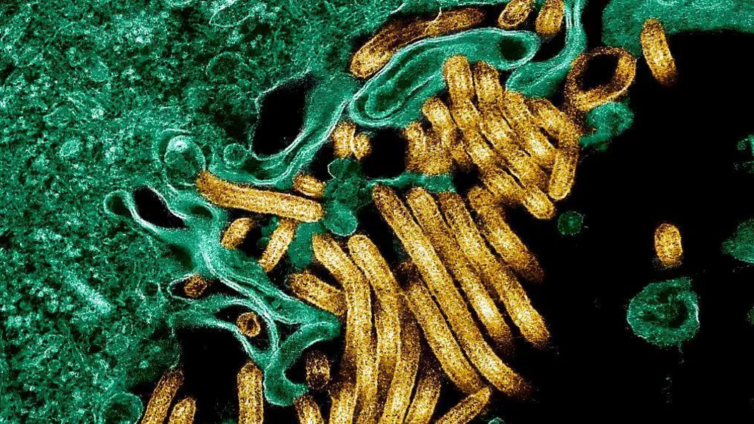
Ebola was first identified in 1976 near the Ebola River in what is now the DRC. Scientists believe the virus originally spread from infected animals, particularly bats, before being transmitted among humans through direct contact with bodily fluids.
The disease can cause severe internal bleeding, organ failure and death, with fatality rates varying depending on the outbreak and access to medical care.
Regional Concerns Grow
Health experts across Africa are closely monitoring the latest outbreak because of Ituri’s strategic location near international borders. Uganda and South Sudan have previously dealt with Ebola-related scares linked to cross-border movement from Congo.
Africa CDC warned that regional coordination will be essential to prevent wider transmission. Surveillance teams, isolation centers and emergency response measures are now being strengthened in neighboring countries.
Despite advancements in vaccines and treatment methods in recent years, Ebola remains one of the continent’s deadliest infectious diseases. Experts estimate the virus has killed roughly 15,000 people across Africa over the past five decades.
Race Against Time
Medical teams are now working to trace contacts, isolate suspected cases and deploy vaccines where possible. However, experts caution that the success of the response will depend heavily on security conditions and public cooperation.
International aid agencies are also expected to support Congo’s health authorities as they attempt to contain the outbreak before it escalates into another large-scale regional emergency.
With memories of previous Ebola crises still fresh, officials say rapid intervention will be critical in preventing further loss of life in one of Africa’s most vulnerable regions.