
The U.S. Supreme Court on Tuesday delivered a procedural victory to President Donald Trump’s administration in a closely watched legal battle involving immigration judges and federal restrictions on public comments about immigration policy.
The ruling centered on a challenge brought by immigration judges who argued that government rules limiting what they can publicly say about immigration issues violate constitutional free speech protections. However, the Supreme Court did not decide whether the policy itself is constitutional, instead focusing on procedural questions surrounding how the case reached the courts.
The decision keeps alive the broader legal dispute while handing the administration a short-term win.
Supreme Court Avoids Ruling on Free Speech Question
At the heart of the case is a policy introduced in 2017 during Trump’s first term that requires immigration judges to seek approval before making certain public statements connected to their official work.
The policy applies to speaking engagements or appearances where judges are invited because of their government positions, expected to discuss agency matters, or appear to represent immigration authorities.
Critics argue the restrictions amount to government censorship and prevent judges from speaking openly about immigration courts and the broader immigration system.
Yet rather than deciding whether the policy violates the First Amendment, the Supreme Court issued an unsigned ruling focused strictly on legal procedure.
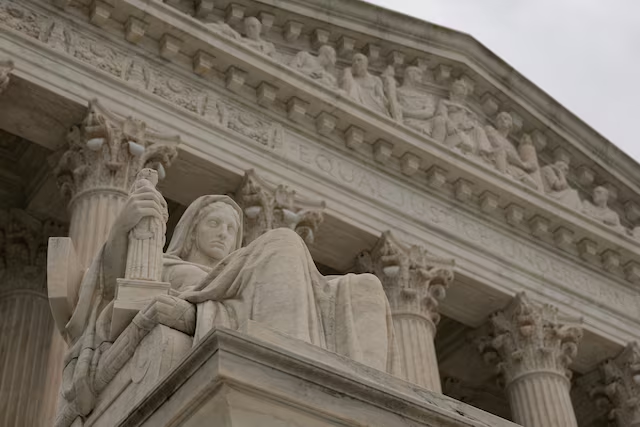
The justices overturned a lower court decision and returned the matter to the U.S. Court of Appeals for the Fourth Circuit for additional proceedings.
Importantly, the ruling leaves the possibility open for the immigration judges’ association to continue pursuing its challenge.
Immigration Judges Challenge Trump-Era Policy
The legal action was filed in 2020 by the National Association of Immigration Judges, which sought to block the speech restrictions.
The group argued that requiring prior approval before judges can speak publicly creates unconstitutional limits on free expression protected under the First Amendment.
Immigration judges occupy a unique role within the federal system. Although they oversee immigration hearings and make decisions affecting deportation, asylum and immigration status, they are employees of the Executive Office for Immigration Review (EOIR), which falls under the U.S. Department of Justice.
Supporters of the lawsuit argued that judges possess valuable insight into immigration court operations and public policy discussions.
Alex Abdo, an attorney representing the association through the Knight First Amendment Institute, criticized the Supreme Court’s decision.
He argued that requiring employees to navigate lengthy administrative processes before challenging speech restrictions risks allowing potentially unconstitutional policies to remain in place for years.
Abdo also emphasized that immigration judges provide critical perspectives on how government systems function.
Lower Court Raised Questions About Agency Independence
Before reaching the Supreme Court, the case took an unusual turn.
A federal judge in Virginia dismissed the challenge in 2023, ruling that disputes involving federal workers should first move through administrative channels established under the Civil Service Reform Act of 1978.
Under that system, employee complaints are generally reviewed by agencies such as the Office of Special Counsel and the Merit Systems Protection Board.
However, the Fourth Circuit Court of Appeals later revived the dispute.
The appeals court questioned whether immigration judges could receive fair hearings through those channels after Trump removed several leaders from independent oversight agencies.
Judges on the panel suggested the dismissals might have weakened the independence Congress originally intended those institutions to maintain.
The Fourth Circuit ordered further fact-finding, prompting the administration to appeal to the Supreme Court.
Supreme Court Cites “Party-Presentation” Principle
In reversing the Fourth Circuit, the Supreme Court said the appeals court relied on an argument that the immigration judges themselves had not raised.
The justices pointed to what is known as the “party-presentation principle,” a legal doctrine stating that courts should generally decide cases based on arguments brought forward by the parties involved rather than introducing new issues independently.
Because the Fourth Circuit focused on agency independence concerns not advanced by the judges’ association, the Supreme Court found the lower court had gone beyond its proper role.
As a result, the case now returns to the appellate court.
Legal experts say this means the broader constitutional challenge remains unresolved.
Broader Debate Over Independent Agencies
The ruling arrives amid larger legal battles over presidential authority and independent federal agencies.
Trump has repeatedly removed officials from agencies traditionally insulated from direct White House control, arguing that presidents should have wider authority over executive branch personnel.
Those actions have sparked multiple lawsuits.
The Supreme Court is already considering another major case addressing whether protections limiting a president’s ability to dismiss agency leaders are constitutional.
That decision is expected later this year and could reshape the balance between presidential power and independent oversight bodies.
The immigration judges’ case therefore intersects with wider debates about executive authority, civil service protections and institutional independence.
Immigration Cases Continue to Reach Supreme Court
The ruling also comes during an active period for immigration-related litigation.
Since returning to office, Trump’s administration has brought several immigration disputes before the Supreme Court.
Recent emergency decisions have allowed the administration to move forward with policies involving deportations to third countries and changes to temporary immigration protections.
Additional major cases remain pending.
The court is expected to rule on challenges involving birthright citizenship policies as well as efforts to revoke temporary legal protections affecting hundreds of thousands of migrants, including Haitian and Syrian nationals.
Those decisions could significantly influence U.S. immigration policy.
What Happens
The Supreme Court’s ruling does not end the dispute over immigration judges’ speech rights.
Instead, it resets the legal process and sends the case back for further review.
The central question — whether requiring immigration judges to seek approval before public remarks violates free speech protections — remains unanswered.
For now, the policy introduced during Trump’s first administration stays in effect.
But legal observers expect the fight over public speech, judicial independence and executive authority to continue as immigration remains one of the most contested issues in American politics.