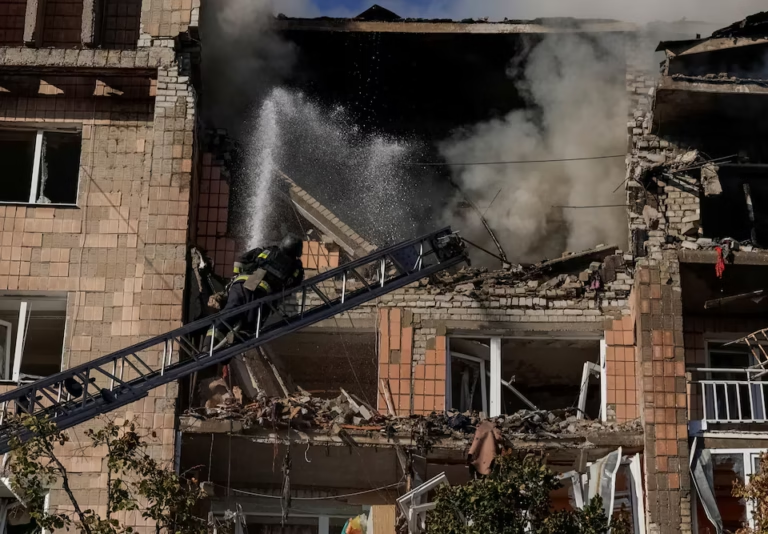

Ukraine’s capital came under one of the most intense attacks of the war overnight as Russia unleashed a massive wave of drones and missiles targeting Kyiv and surrounding regions, marking one of the largest aerial assaults since the conflict began more than four years ago.
Ukrainian officials said the overnight barrage killed at least four people and left more than 80 others injured after hundreds of drones and dozens of missiles struck multiple locations across the capital and nearby cities.
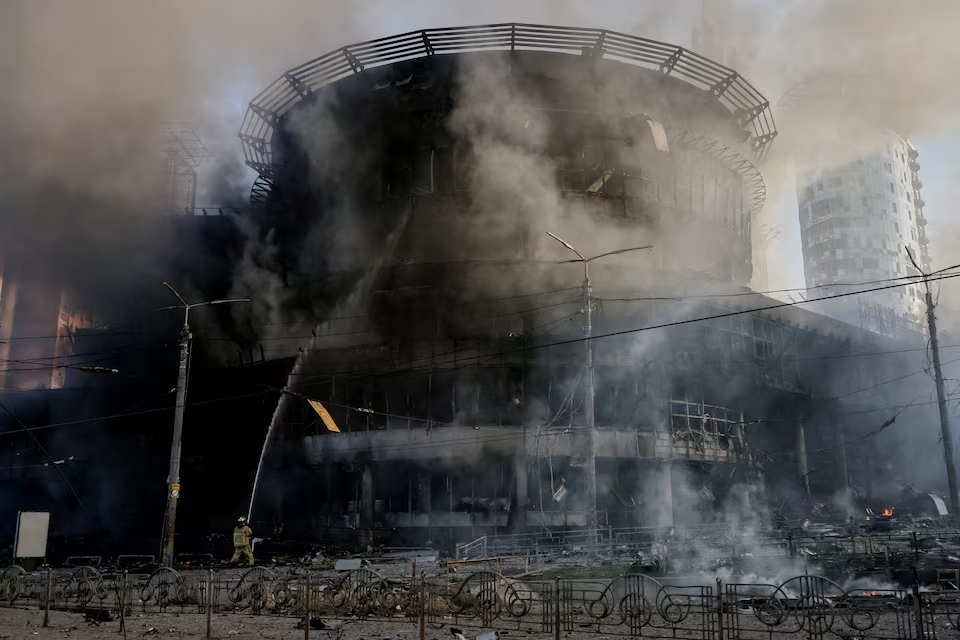
The attack lasted for hours, triggering explosions across Kyiv, sending residents into underground shelters and causing widespread destruction to homes, schools and public infrastructure.
Authorities also reported that Russia launched an Oreshnik hypersonic missile near the capital — only the third known deployment of the advanced weapon during the war.
Kyiv Mayor Vitali Klitschko described the night as one of the most difficult periods the city has faced in recent months.
“It was a terrible night for Kyiv,” he said while visiting one of the damaged sites, adding that emergency crews were battling fires and clearing debris as medical teams treated victims.
Oreshnik Missile Raises New Security Concerns
The reported use of the Oreshnik missile immediately drew international attention because of the weapon’s capabilities and rarity on the battlefield.
The Oreshnik is considered one of Russia’s most advanced missile systems. Military analysts say it has a range stretching thousands of kilometers and is capable of carrying conventional or nuclear payloads.
Russia has used the missile only twice previously since launching its full-scale invasion of Ukraine in February 2022.
Unlike earlier strikes that reportedly targeted larger urban centers, Ukrainian President Volodymyr Zelenskyy said this latest launch struck near Bila Tserkva, a city of around 200,000 residents located roughly 64 kilometers south of Kyiv.
The deployment signals an escalation in both the scale and complexity of Russia’s aerial campaign.
Russian President Vladimir Putin has previously claimed the missile travels at speeds exceeding ten times the speed of sound, making interception extremely difficult.
Hundreds of Drones and Missiles Launched Overnight
Ukraine’s Air Force reported that Russia launched approximately 600 drones and 90 missiles during the coordinated attack.
The scale of the strike overwhelmed air raid systems and forced civilians to seek shelter across multiple districts.
Explosions began shortly after 1 a.m. local time after Ukrainian military authorities warned that an Oreshnik launch could be imminent.
Residents described hours of continuous detonations across the city.
Many fled to metro stations, which have increasingly served as bomb shelters throughout the conflict.
Nataliia Zvarych, a Kyiv resident who spent the night underground, described the atmosphere inside the shelters as deeply unsettling.
“It was terrifying,” she said. “We stayed there for hours while hearing explosions above us.”
The prolonged assault left parts of the city covered in smoke by sunrise.
Residential Areas and Public Infrastructure Hit
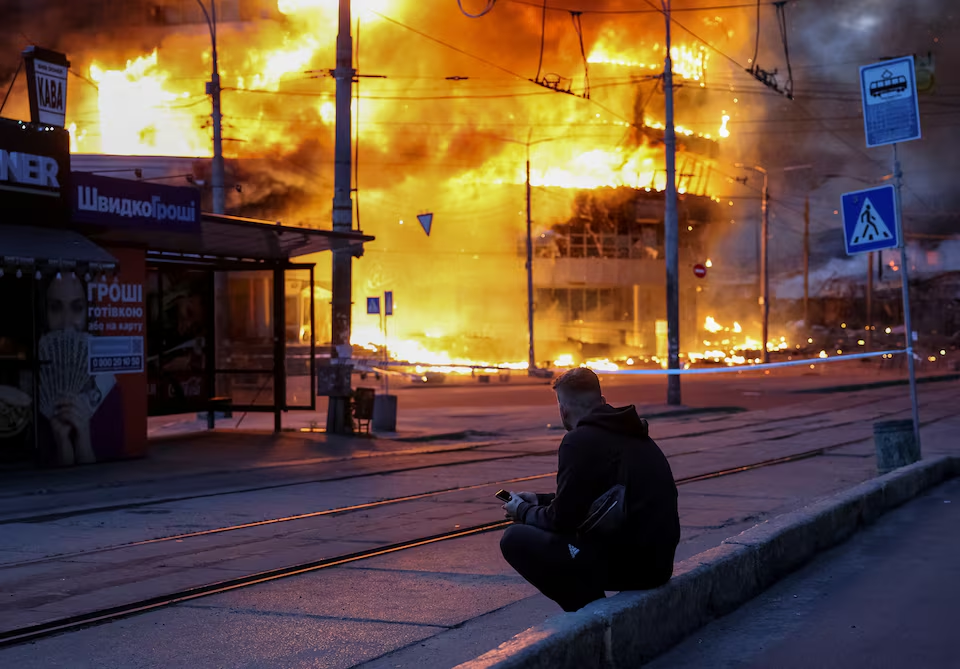
Officials said the bombardment caused extensive damage across Kyiv and neighboring areas.
Among the reported impacts:
- Residential apartment blocks suffered direct hits
- Several schools were damaged
- Windows were blown out at Ukraine’s Foreign Ministry building
- Infrastructure around Kyiv’s Independence Square sustained damage
- Warehouses, offices and retail buildings were affected
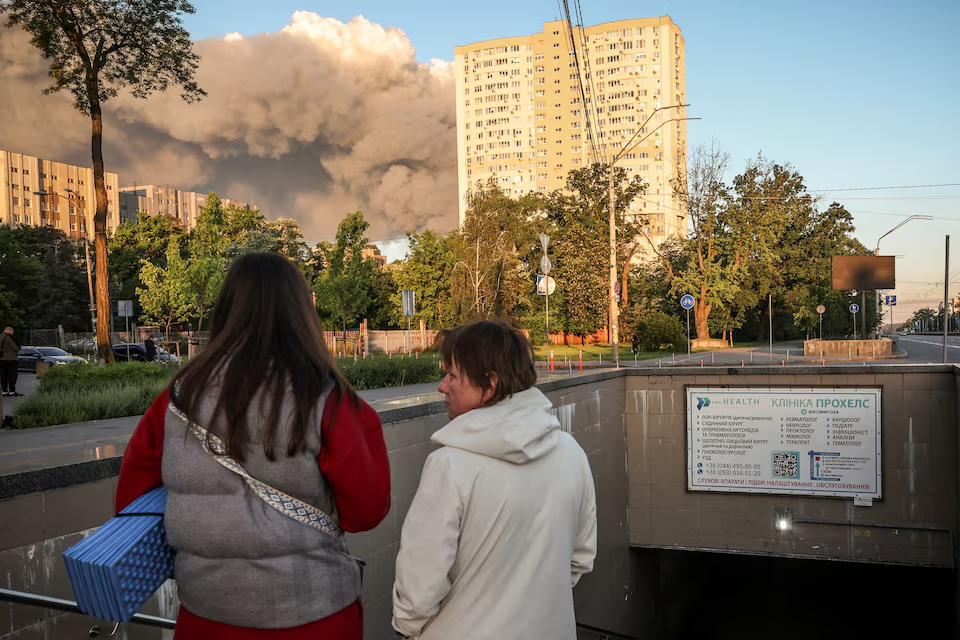
- A metro station entrance suffered structural damage
Images released after the attack showed the front section of a five-story residential building collapsed following an apparent strike.
Emergency workers moved through debris fields searching for survivors while firefighters battled multiple blazes.
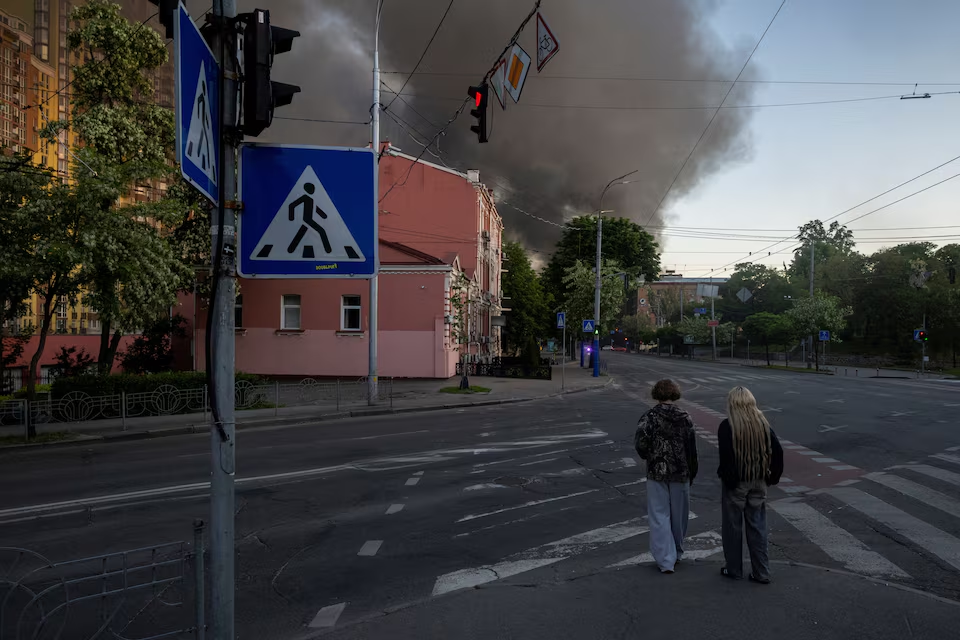
Black smoke drifted over parts of the city for hours after sunrise.
The attacks highlighted the continued vulnerability of civilian infrastructure despite strengthened air defense systems.
Water Facilities Reportedly Targeted Ahead of Summer
President Zelenskyy said Russia also targeted water infrastructure during the assault.
According to Ukrainian officials, Moscow may be attempting to damage water supply systems before peak summer demand increases.
If confirmed, such strikes would raise additional concerns over pressure on civilian services during warmer months.
Ukraine has repeatedly accused Russia of targeting critical infrastructure to disrupt daily life and weaken civilian resilience.
Russia has consistently denied deliberately attacking civilian targets.
Moscow Says Strikes Targeted Military Sites
Russia’s Defense Ministry defended the operation, stating that the attacks focused on military infrastructure rather than civilian areas.
According to Russian state media reports, the strike package included:
- Oreshnik missiles
- Iskander ballistic systems
- Kinzhal hypersonic missiles
- Zircon missiles
Russian authorities said the attacks targeted:
- Military command centers
- Intelligence facilities
- Air bases
- Defense production sites
- Ukrainian armed forces infrastructure
Moscow described the operation as retaliation for Ukrainian strikes on Russian territory.
Ukraine denies intentionally targeting civilians inside Russia.
The competing narratives reflect the broader information war surrounding the conflict, where both sides dispute responsibility for civilian casualties.
Damage Extends Beyond Kyiv
The overnight attack was not limited to the capital.
Officials reported casualties and damage across other regions.
In the broader Kyiv region, local authorities confirmed two deaths and multiple injuries following additional strikes.
Meanwhile, in the central city of Cherkasy, a drone reportedly crashed into a residential building, injuring at least eleven people.
Emergency teams worked throughout Sunday assessing structural damage and evacuating residents.
The attacks once again demonstrated Russia’s ability to strike deep across Ukraine simultaneously.
Intelligence Warnings Preceded the Strike
President Zelenskyy said Ukrainian intelligence had warned in advance that Russia was preparing another Oreshnik attack.
According to Kyiv, the warning was based on intelligence shared between Ukraine and allied partners including the United States and European governments.
The early alert allowed some preparations but did not prevent significant damage.
The incident underscores the increasingly important role of intelligence coordination as Ukraine attempts to anticipate large-scale strikes.
Pressure Mounts for International Response
Following the attack, Zelenskyy renewed calls for stronger international action against Moscow.
“It is important that this does not remain without consequences,” he said.
The Ukrainian leader urged allies in Europe and North America to respond decisively as Russia intensifies long-range missile operations.
The latest assault comes as Ukraine continues seeking additional air defense systems, interceptor missiles and military support from Western partners.
The appearance of another Oreshnik launch could further influence those discussions.
War Enters More Dangerous Phase
More than four years into the conflict, the latest bombardment illustrates how the war continues evolving.
Russia’s increasing use of advanced missile systems alongside large drone swarms reflects a shift toward more complex aerial operations designed to overwhelm defenses.
For Kyiv residents, however, the technological escalation translated into another night spent underground as explosions shook the city.
As rescue crews cleared debris and smoke lingered over the skyline, the attack served as a reminder that despite diplomatic efforts and shifting battlefronts, Ukraine’s capital remains firmly within the reach of Russia’s expanding missile campaign.