
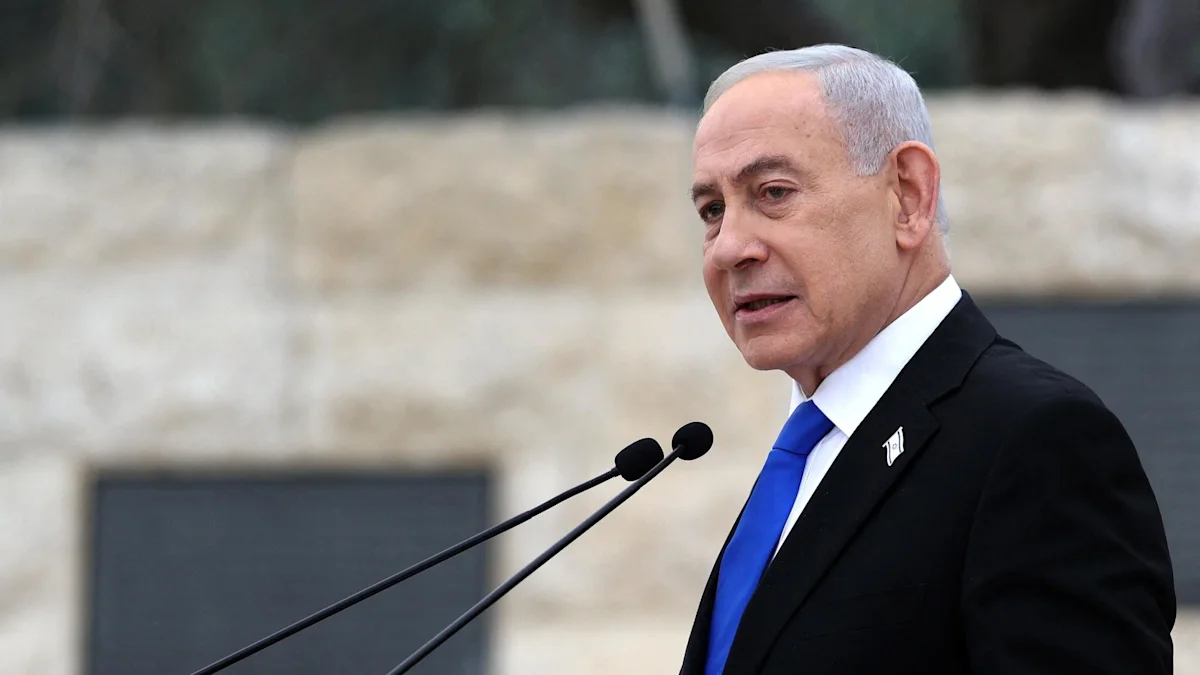
Israeli Prime Minister Benjamin Netanyahu has announced plans to expand Israeli military control over Gaza to 70%, signaling a significant escalation in operations despite an ongoing ceasefire agreement brokered by the United States last year.
Speaking at a public conference on Thursday, Netanyahu said the Israel Defense Forces (IDF) had already increased its territorial control inside the Gaza Strip from 50% to 60%, and that he had instructed military commanders to continue advancing further.
“We are currently squeezing Hamas; we now control 60% of the territory of the Strip,” Netanyahu told attendees. “We were at 50, we moved to 60. My directive is to move to 70.”
After briefly pausing as someone in the crowd shouted “100,” Netanyahu responded: “Let’s go step by step. First of all, 70. Let’s start with that. We’re pressing them from all sides, we’ll deal with the remnants.”
The remarks have intensified concerns about the future of the fragile ceasefire agreement between Israel and Hamas, which was reached in October 2025 under mediation efforts led by U.S. President Donald Trump.
Ceasefire Under Growing Strain

The ceasefire agreement was intended to halt months of intense fighting, facilitate hostage negotiations, and create conditions for a broader political settlement in Gaza. Under the deal, Israeli forces agreed to withdraw to designated positions along a demarcation boundary referred to as the “yellow line.”
However, Netanyahu’s latest comments suggest Israel’s military footprint in Gaza has expanded beyond those original arrangements.
Israeli officials argue that continued military operations are necessary to weaken Hamas and prevent future attacks against Israel. Hamas, meanwhile, accuses Israel of violating the ceasefire terms by maintaining strikes and expanding ground operations.
The deadlock has complicated indirect negotiations aimed at advancing a broader peace proposal backed by Washington and regional mediators.
Diplomatic sources familiar with the talks say disagreements over Hamas disarmament, Israeli troop withdrawals, and the future governance of Gaza remain major obstacles to a lasting settlement.
Rising Death Toll in Gaza
Despite the ceasefire technically remaining in place, violence has continued across the enclave.
According to Gaza’s Hamas-run health ministry, at least 738 Palestinians have been killed since the agreement came into effect in October. The United Nations has previously said the ministry’s casualty figures have generally proven reliable during past conflicts.
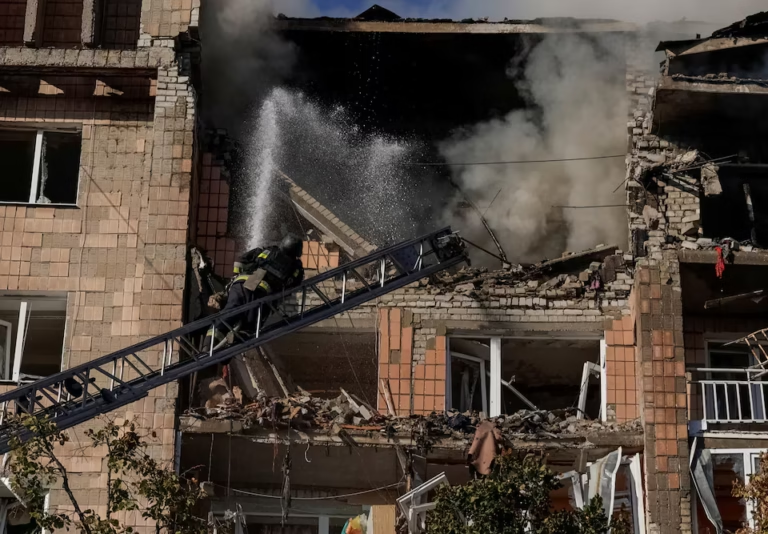
Airstrikes, artillery shelling, and clashes have continued in multiple parts of the territory, particularly in central and northern Gaza, where residents report worsening humanitarian conditions.
Hospitals in the enclave remain under severe pressure, with shortages of fuel, medicine, and medical equipment continuing to hamper emergency response efforts.
Humanitarian agencies have repeatedly warned that civilians are paying the highest price as military operations continue amid stalled diplomacy.
Netanyahu Signals Long-Term Military Pressure
Netanyahu’s comments reflect Israel’s increasingly hardline position toward Hamas following the October 7, 2023 attacks that triggered the war.
The Israeli government has consistently maintained that Hamas must be dismantled both militarily and politically before any permanent resolution can be reached.
On Wednesday, Israeli Defence Minister Israel Katz reinforced that position in a statement posted on X, formerly Twitter.
“We pledged to eliminate everyone who led the October 7 massacre,” Katz wrote. “We pledged that Hamas will not rule Gaza civilly or militarily.”
Israeli officials say military pressure is intended to force Hamas into concessions during negotiations while also reducing the group’s operational capabilities.
However, critics argue that expanding military control risks prolonging the conflict and further destabilizing the region.
Humanitarian Crisis Deepens
The ongoing conflict has displaced hundreds of thousands of Palestinians, many of whom are living in overcrowded shelters, damaged schools, or makeshift camps.
Aid organizations say access to food, clean water, electricity, and healthcare remains critically limited in large parts of Gaza.
International humanitarian groups have repeatedly called for unrestricted aid deliveries and stronger protections for civilians.
The continuation of military operations despite the ceasefire has raised fears among relief agencies that humanitarian conditions could deteriorate further, particularly as infrastructure damage spreads and reconstruction efforts remain stalled.
Residents in Gaza have described growing exhaustion and uncertainty as the conflict drags on with no clear political breakthrough in sight.
International Mediation Efforts Continue
The United States, Egypt, and Qatar have continued efforts to mediate indirect talks between Israel and Hamas in hopes of preserving the ceasefire framework and advancing negotiations on hostage releases and future governance arrangements.
President Trump has repeatedly promoted the ceasefire as a major diplomatic achievement and has urged both sides to move toward a broader peace agreement.
Yet analysts say Netanyahu’s latest remarks could complicate those efforts by deepening mistrust between the parties.
Regional observers also warn that expanding Israeli territorial control may inflame tensions across the Middle East, particularly as instability continues in Lebanon, Syria, and the Red Sea region.
Debate Inside Israel and Abroad
Netanyahu’s strategy continues to divide opinion both domestically and internationally.
Supporters argue that maintaining military pressure is necessary to ensure Israeli security and prevent Hamas from rebuilding its military infrastructure.
Critics, however, say the expansion of operations risks undermining diplomatic opportunities and increasing civilian suffering in Gaza.
Some Israeli opposition figures have questioned whether the government has a clear long-term political strategy beyond military control.
International governments and human rights organizations have also voiced concerns about the humanitarian consequences of prolonged fighting and territorial expansion inside Gaza.
Uncertain Path Forward
As negotiations remain stalled and military operations continue, the future of the ceasefire agreement appears increasingly uncertain.
Netanyahu’s declaration that Israel aims to control 70% of Gaza signals that the conflict may be entering a new phase, one marked by intensified pressure on Hamas and deeper Israeli involvement inside the enclave.
For civilians in Gaza and Israel alike, hopes for a lasting peace remain overshadowed by continued violence, political deadlock, and the growing human cost of a war that has already reshaped the region.