

A special repatriation flight carrying nearly 300 Ghanaian nationals has departed South Africa, marking the first major return movement after rising anti-immigration protests sparked fears among migrant communities across the country.
The flight, which left from Johannesburg’s OR Tambo International Airport, transported 297 Ghanaian citizens back home as part of a wider repatriation effort involving approximately 800 Ghanaians who registered to return.
The operation comes amid growing anxiety following demonstrations in several South African cities calling for tougher action against undocumented migrants, raising concerns over a possible resurgence of xenophobic violence.
Ghanaian authorities said the decision to facilitate the return was driven by the need to protect citizens who increasingly felt unsafe and economically vulnerable.
Families and Workers Among Those Returning
The passengers represented a broad cross-section of Ghana’s migrant community in South Africa, including men, women and children.
Many arrived at the airport in buses during the early hours before boarding procedures began under the supervision of embassy officials and airport staff.
A smaller group was transported separately under police supervision.
Ghana’s High Commissioner to South Africa, Benjamin Quashie, confirmed that 297 citizens boarded the flight.
However, one woman and her two children were unable to travel after documentation issues emerged involving missing birth certificates for the minors.
Officials indicated that embassy teams worked throughout the process to ensure proper registration and verification of passengers.
The repatriation effort forms part of a broader strategy aimed at assisting Ghanaians who no longer feel secure remaining in South Africa.
“We Will Find Peace at Home”
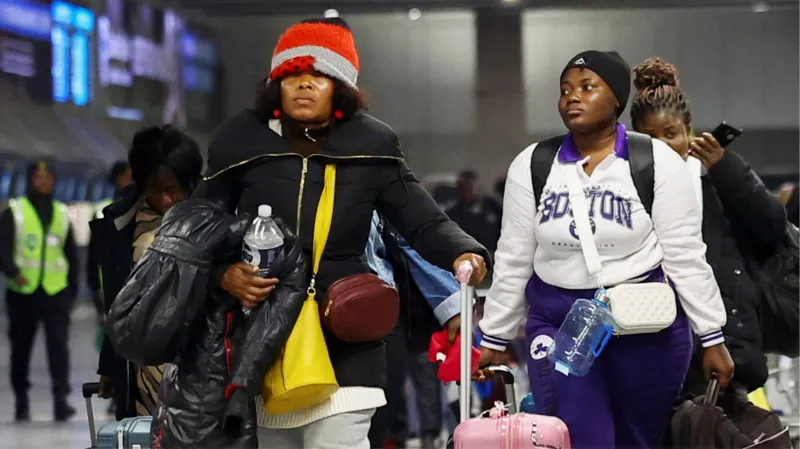
Among those leaving was Rudolph, a Ghanaian entrepreneur who operated a salon in South Africa and had lived in the country for a decade.
Speaking before departure, he said recent events had changed his outlook.
“It’s not comfortable for us to stay here anymore, so we have to go. I think we will find peace at home,” he said.
Rudolph pointed to the spread of anti-immigration protests from Durban into other provinces as a key factor behind his decision.
He expressed fears that tensions could escalate further as protest campaigns intensify.
“The protests started in Durban and moved elsewhere. Something bad could happen,” he said, adding that he had no intention of returning.
His comments reflect broader uncertainty felt by many migrants who have built businesses and families in South Africa over many years.
Anti-Immigration Demonstrations Intensify
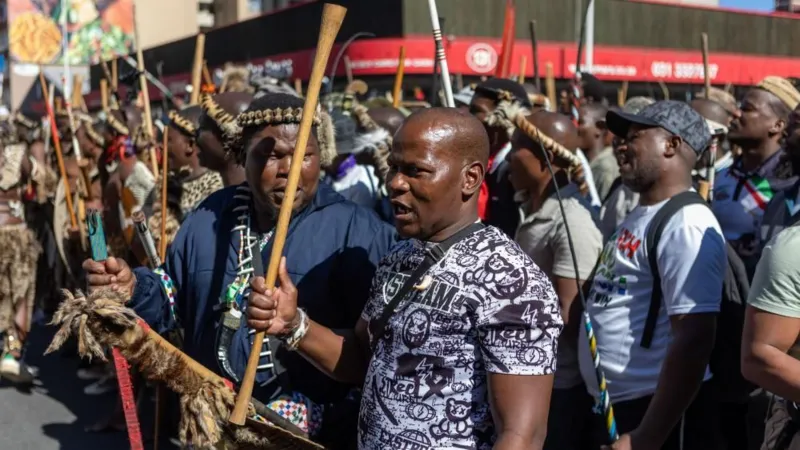
The repatriation follows weeks of demonstrations organized by immigration reform campaign group March and March, a movement advocating stronger immigration controls and action against undocumented migration.
The group argues that illegal immigration is placing pressure on public resources, employment opportunities and social services.
Organizers have reportedly called for undocumented migrants to leave South Africa before a June 30 deadline.
Although protest leaders insist their demonstrations remain peaceful, the rhetoric has alarmed foreign communities and revived painful memories of previous xenophobic violence.
South Africa has experienced several waves of anti-foreigner attacks over the years.
In 2008, xenophobic unrest claimed the lives of more than 60 foreign nationals.
Another outbreak of violence in 2019 left at least a dozen people dead while displacing many others.
The current situation has therefore triggered heightened caution among immigrant populations.
Ghana Moves to Protect Citizens Abroad
Ghanaian officials said the government acted after hearing repeated concerns from citizens who reported feeling unsafe and unwelcome.
High Commissioner Benjamin Quashie said the state had a responsibility to respond.
“The Ghanaian government listened to citizens who believed their lives were in danger and who felt their businesses had stalled and that they were no longer welcome,” he explained.
“It is the duty of every government to ensure the welfare of its people both at home and abroad.”
The diplomat also emphasized that Ghana does not support irregular migration.
He noted that some returnees lacked proper documentation and said their return would help address concerns over undocumented migration.
According to estimates, approximately 25,000 Ghanaians currently live in South Africa.
Reintegration Plan Targets Returning Migrants
Authorities in Ghana say efforts are already underway to support reintegration.
Officials indicated that returning citizens would receive assistance to help them re-establish businesses and livelihoods.
The reintegration initiative aims to reduce economic hardship while encouraging sustainable employment opportunities at home.
Quashie said the government intends to help returnees continue the type of economic activities they pursued in South Africa.
The strategy may include support for entrepreneurship and small business development.
Officials view the initiative not only as humanitarian support but also as a way to reduce future irregular migration.
Political Climate Raises Questions
Some analysts believe the renewed anti-migrant sentiment may be linked to South Africa’s political environment ahead of local elections expected later this year.
Immigration has increasingly become a politically sensitive issue, with parties and activist groups pushing stricter policies.
Observers say economic pressures, unemployment and service delivery challenges have intensified public frustration.
Migrants have increasingly found themselves at the center of these debates.
While authorities acknowledge illegal immigration remains a concern, the South African government has condemned attacks and criminal acts directed at foreigners.
Officials have called for lawful solutions while warning against vigilantism and violence.
Fear Spreads Beyond Ghanaian Community
The sense of insecurity extends beyond Ghanaians.
In recent days, hundreds of migrants from different countries reportedly gathered outside government offices in Durban seeking protection.
Many had initially taken refuge at police facilities before being relocated.
Among them were asylum seekers and refugees worried about threats linked to anti-immigration campaigns.
Some migrants said they feared violence if tensions escalated toward the June deadline.
A Congolese migrant speaking to local media said many were simply seeking safety.
“We are asking for protection,” she reportedly said, adding that foreign nationals had repeatedly been warned they would not be safe after June.
Uncertain Future for Migrant Communities
The departure of nearly 300 Ghanaians highlights growing anxiety among migrant populations in South Africa as debates over immigration intensify.
For many returnees, the journey home represents both relief and uncertainty.
Some are leaving behind businesses, jobs and years of investment.
Others see it as a necessary step to protect their families.
As authorities in both countries monitor developments, attention now turns to whether tensions ease or continue to escalate in the coming weeks.
For thousands of migrants still living in South Africa, the future remains uncertain as fears over safety and belonging persist.