Clicxpost

World News

China’s LOGINK Shipping Data Platform Goes Dark, Leaving Empty Offices and Unpaid Bills

LOGINK,

China’s LOGINK shipping data platform has lost its foreign partners, dropped out of an international port association and is facing lawsuits over unpaid bills, according to a Reuters investigation based on more than 20 interviews and a review of court filings. A reporter who visited its operations hub in Wenzhou in September found the offices apparently abandoned.

Four years ago, the United States warned that LOGINK would spread across the world and give Beijing a view into the movement of international cargo. The reverse has happened. Shipping carries 80% of world trade, and the platform meant to sit at the centre of its data is now short of money, members and staff.

Empty offices in Wenzhou

Reuters visited the Wenzhou building, on the edge of the city beside a river, in September. The lights were off, the reception area was bare and the computer cabling had been stripped out. Desks and chairs were collecting dust.

Calls and emails to LOGINK went unanswered. China’s transport ministry declined to answer questions. In June, though, it issued a policy document calling for the system to be connected to more domestic data streams.

A large Communist Party slogan still covers a wall next to the empty desks. It announces China’s plans for global supply chains by 2035.

Reuters could not establish why a platform that China’s cabinet had championed as a major project went quiet so abruptly. The timing matches a period of US pressure on allies and organisations that had taken early steps to work with it.

What LOGINK was built to do

LOGINK’s formal name is the National Transportation and Logistics Public Information Platform. It began about 20 years ago as a project of the Zhejiang provincial government. The aim was to pull data from ports, trucks and vendors into one searchable system and improve how cargo moves.

Policymakers in Beijing backed it and soon moved control to the transport ministry. Expanding abroad became a priority.

In 2010, China signed a cargo data-sharing deal with the Japanese and South Korean governments that linked LOGINK to their national logistics platforms. A few years later it signed an agreement with a Hong Kong-based logistics platform. A press release from the Chinese side said the deal would give it access to ‘more than 90% of global ship tracking data.’

A 2015 transport ministry presentation to a United Nations commission described LOGINK as a ‘one-stop portal connected with global logistics information systems.’ By the late 2010s it was exploring ties with European ports.

Why Washington objected

US officials and security analysts feared that Beijing could use LOGINK to collect non-public details on traded goods, volumes and prices. They said that information could help Chinese firms undercut Western rivals.

Some also worried that the platform could track sensitive military shipments, including US arms deliveries to Ukraine and Taiwan, many of which travel through commercial freight networks.

LOGINK has never publicly said what data it collects or how much. In a 2024 submission to the US Trade Representative’s Office, LOGINK official Li Zhao said the platform lacked ‘the capacity to collect sensitive commercial information or to continuously monitor global cargo movements.’

US policymakers began pushing back in public in 2022. In April of that year, LOGINK joined an international data-sharing project that links the operators of digital platforms handling cargo and customs information at ports. A US congressional commission report said that move would double LOGINK’s cooperation with international ports.

A few months later, a group of Republican lawmakers wrote an open letter urging then-President Joe Biden to act. Marco Rubio, now Secretary of State under President Donald Trump, was among the signers. They warned that unchecked growth could let the Chinese Communist Party ‘gain a stranglehold on the arteries of global trade.’

In late 2023, then-Representative Michelle Steel asked the International Port Community Systems Association (IPCSA), which led the data-sharing project, to cut its ties with LOGINK at once. Around the same time, Congress passed a law that bars the Pentagon from contracting with LOGINK-connected entities and tells officials to discourage allies and partners from using the platform.

Officials in Seoul and Tokyo told Reuters that the data shared with LOGINK was narrower than some in Washington feared. South Korea’s Ministry of Oceans and Fisheries and Japan’s transport ministry said they provided only vessel arrival and departure times and details of cargo loading and unloading, not what the cargo contained.

Partners fall away

Building where LOGINK's operations hub is based, in Wenzhou

LOGINK’s membership in the IPCSA ended in 2024 after it stopped paying dues, according to a person familiar with the matter. Its website went dark around the same time. The latest copy on the Wayback Machine archive dates from June 2024.

IPCSA General Manager Inga Morton confirmed that LOGINK is no longer a member. She said the international data-sharing project is ‘on hold and inactive.’

The trilateral service with South Korea and Japan, LOGINK’s main international initiative, has also stopped. Participants from the three countries met regularly after it launched. China then cancelled a March 2024 event, citing ‘internal circumstances,’ according to South Korea’s oceans ministry. No meetings have taken place since.

Japan’s access to LOGINK data later ended without notice. A transport ministry official told Reuters in August that Tokyo lost access more than a year earlier and has been unable to reach its Chinese counterparts.

European efforts went nowhere. Ana Rita Rosa, a spokesperson for the authority that runs Sines, Portugal’s largest port, said a 2017 memorandum of understanding with LOGINK to explore data-sharing produced no notable results.

Portbase, the digital system behind Europe’s largest port at Rotterdam, said a 2019 memorandum never moved past exploratory talks. A person familiar with the matter said Dutch government questions about the relationship in early 2022 contributed to Portbase’s decision not to pursue it.

Rosa and Portbase declined to say whether US diplomatic pressure played a part. The Dutch foreign ministry also declined to comment.

Court claims and a possible eviction

LOGINK's operations hub in Wenzhou

At home, LOGINK is facing legal trouble. The commercial entity behind the Wenzhou hub has faced at least 39 court claims since January 2024, totalling about $1.3 million, according to filings on Qichacha, a corporate data provider. Some of the complaints are listed as labour disputes. Others appear to involve unpaid utilities.

A local subsidiary of China Mobile sued LOGINK in October 2025 over a ‘contract dispute over service provision.’ A court later ordered LOGINK to pay the telecoms company, though the filings do not show whether it did.

LOGINK may also be facing eviction. In May, a judge heard a ‘property lease dispute’ brought against it by the state-backed developer that runs the industrial park where it is based, the records show. China Mobile and the developer did not respond to requests for comment.

Washington’s view

A cargo ship carrying containers moves through the waters at Yantian port in Shenzhen, Guangdong

Randall Schriver, chair of the US congressional commission that published a 2022 report on LOGINK, said the US helped cause the reversal by ‘naming and shaming’ those who used the system. He said the platform’s decline will be welcomed in Washington.

A US State Department spokesperson gave no details of its diplomatic work to limit LOGINK’s use. The spokesperson said Washington would not allow a Beijing-controlled platform to ‘gain a chokehold over global maritime data.’

‘We have prohibited its use across our own government and critical port infrastructure, and we urge allies and industry to take this threat with the same seriousness,’ the spokesperson added.

What happens next

LOGINK’s overseas network has shrunk to almost nothing, but its domestic plans have not been dropped. The transport ministry’s June policy document shows Beijing still wants it linked to more Chinese data sources.

The open questions are who pays for it and whether the Wenzhou hub survives its lease dispute. China’s transport ministry and LOGINK have not answered. Court records and any future filings will show whether the platform can pay its debts.


RECOMMENDED
World News

G7 Releases 100 Million Barrels as Diesel Pain Hits Drivers

By George Mensah 6 min read

The G7 countries said Friday, October 2, that they will draw 100 million barrels of diesel and other fuels from their reserves over four months, with the International Energy Agency coordinating the release. President Donald Trump announced the deal first on social media. A White House official said he reached it through calls with French President Emmanuel Macron on Thursday night and with the G7 leaders on Friday morning.

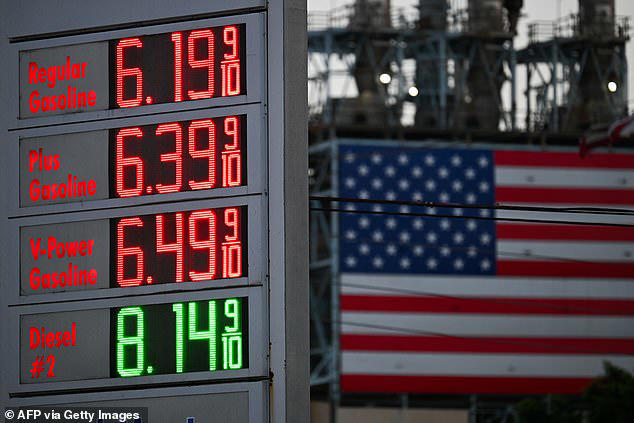
The agreement lands about a month before the November 3 midterm elections. US diesel prices set a record of $6.53 per gallon on September 22, according to AAA, after hostilities in the Strait of Hormuz pushed global oil prices higher.

What Trump and the G7 announced

Trump wrote Friday morning that Europe had agreed to release “a massive amount of their heavily stocked Diesel Oil.” A second post said: “The process will begin immediately.”

The G7 statement came out moments later, after a video conference that Macron chaired. France holds the rotating G7 presidency this year. According to the statement, the release starts immediately and opens with a large diesel release within the first 20 days. Because it is a G7 commitment, it covers the group’s members and partners. It is not limited to European countries.

The Trump administration had been pressing Europe to release its diesel stocks before the call, The National reported. The result is a joint release, announced by Macron, rather than a set of separate national decisions.

The statement also went after Iran. The leaders condemned Iran’s hostile actions and said they harm international trade, energy security and the global economy. They called for the “immediate and full restoration of navigational rights and principles” in the Strait of Hormuz. NPR reported that Macron said G7 members would also coordinate to raise production, bring down tanker insurance costs and get more tankers moving through the strait.

What the numbers show

A release of 100 million barrels over four months averages about 25 million barrels a month. The G7 has not said how much of the total will be diesel rather than crude or other products, and no daily schedule has been published, Newsweek reported. That gap matters because the front-loaded diesel portion is the part drivers and truckers will feel first.

The starting point is thin. Al Jazeera reported that US diesel inventories fell to a record low of 107.9 million barrels as of September 11. The record price on September 22 came eleven days later.

There is also a precedent. In March, the IEA’s 32 member countries agreed to release about 400 million barrels, the largest release in the agency’s history. Reuters reported at the time that this was more than double the 182.7 million barrels released after Russia invaded Ukraine in 2022. Euronews reported that IEA members held more than 1.2 billion barrels of public emergency oil stocks in March, before that release. Friday’s 100 million barrels equals about 8 percent of that figure and a quarter of the March volume, and diesel still set a price record six months after that release.

What drivers and truckers are paying

The record diesel price hurt truckers and raised delivery costs. Gasoline has eased only slightly. As of Friday, the national average for a gallon of regular is $4.40, about 10 cents lower than last week. It is still 20 cents above last month and roughly $1.20 above this point last year. A driver who fills a 15-gallon tank pays about $18 more per fill-up than a year ago.

Putting more supply on the market could ease global prices. Nobody has published a forecast for when that would reach the pump, or by how much. A trucking company buying diesel by the thousand gallons will watch the AAA diesel number, not the national gasoline average, and that number sits at its all-time high. At $6.53 a gallon, every 1,000 gallons of diesel costs $6,530, and the fuel bill is one of the costs a trucking company passes on in its delivery rates.

The export ban dispute

A Reuters report, based on sources, alleged that US officials threatened a diesel export ban aimed at the European nations that did not release their stockpiles. Other reports said the administration was weighing a ban to keep supply on American shores amid heightened energy insecurity.

The threat would have carried weight. The IEA said the US supplied roughly half of the EU’s diesel imports in August, according to The National. US energy companies pushed back anyway, warning that a ban would drive prices higher.

The accounts of the calls differ. Macron said Trump did not threaten an embargo on US diesel and called the discussion a constructive one. ThePrint, citing a French statement shared by AFP, reported that Macron also spoke overnight with Canadian Prime Minister Mark Carney and stressed that G7 countries share an interest in acting together without export restrictions. The White House official credited Trump’s calls with producing the deal.

The G7 statement also says there will be no diesel export bans among the group’s members, according to ABC News. That pledge answers the concern US energy companies raised. Whatever role the reported threat played, it is now off the table among the seven countries.

Iran, the war and the campaign

Trump has promised repeatedly that gas prices will come down after the midterms. It is unclear whether he wants to escalate or reduce hostilities with Iran, so how long the conflict will weigh on the global economy is also unclear. Recent negotiations with Iranian officials have not produced breakthroughs.

Pressure is building inside his own party. Republicans have increasingly urged him to end the war, which has become a sore subject for GOP candidates on the campaign trail. Lara Trump, the president’s daughter-in-law and a former RNC co-chair, said this week that the war “could cost” Republicans the midterms.

The G7 statement puts shipping through the Strait of Hormuz at the center of the crisis, while Republican candidates want the war over before voters decide. Those two goals do not point to the same action, and Trump has not said which he will pursue.

The Daily Mail asked Trump about her remarks on Thursday. He answered: “Well, it’s possible.”

What comes next

Trump says the release begins immediately, and the G7 statement says the same. If it runs evenly, about three-quarters of the 100 million barrels would be scheduled after Election Day, since the four months stretch into February 2027. The front-loaded diesel in the first 20 days is the part that could land before voters cast ballots. Twenty days from Friday is October 22, twelve days before Election Day. Whether diesel falls from $6.53 by then will be the first public test of the deal.

ThePrint reported that France is also working with the IEA on a broader response, so more announcements could come before the first barrels move. Al Jazeera reported that the G7 will meet again through the IEA in the coming days to discuss additional diesel releases if needed. Three things will show whether the deal works: the diesel share of the 100 million barrels, the AAA diesel price once the first barrels move, and whether any member revives export restrictions.

World News

Flydubai Co-Pilot Accused of Trying to Crash Jet Bound for Israel

By George Mensah 4 min read

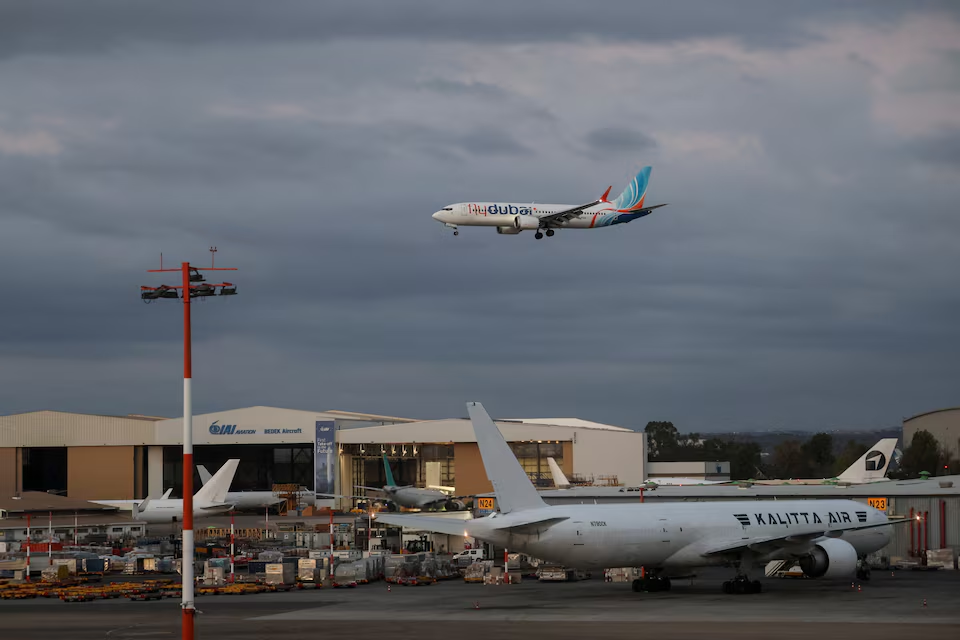
Questions remained on Thursday about the motives and background of a co-pilot who stabbed the captain of a passenger jet bound for Israel. Israeli officials say it was an apparent attempt to crash the plane, which had more than 170 people on board. Flydubai flight FZ1073 was flying from Dubai to Tel Aviv on Wednesday when the attack happened. The wounded captain managed to unlock the cockpit door, passengers subdued the attacker, and a reserve crew on board landed the plane in Saudi Arabia.

What Happened on Flight FZ1073

The flight dropped nearly 14,000 feet in less than 30 seconds while over Saudi Arabia. Passengers and crew then managed to subdue the attacker and land the aircraft at Tabuk airport.

Tabuk airport said both pilots were taken to hospital with injuries. Flydubai said the underlying reasons for the event remained unknown and warned against “premature speculation.” The airline confirmed an altercation in the flight deck and sent two replacement aircraft to Tabuk for the passengers and crew. Passengers were later flown back to Israel.

One of the men who helped overpower the attacker, Yaniv Hayun, described running to the cockpit as the plane nosedived. “We pulled the assailant out, I pulled him out,” he told reporters on his return to Israel on Wednesday. “After I pulled him out we took control of the plane, I pulled up the yoke (steering control of the plane), I straightened the plane out a bit.”

What Israeli Officials Says

Israeli Defense Minister Israel Katz said on Wednesday that Israel’s preliminary information indicated the co-pilot aimed to crash the plane. He described him as a terrorist. Prime Minister Benjamin Netanyahu used softer words and called it only “a serious security incident.”

Netanyahu said in a Fox News interview that the attacker was being investigated in Saudi Arabia and that he believed he would be taken to the United Arab Emirates. “We’ll be following and possibly also participating in this investigation,” he said.

Asked about Iran, Netanyahu said it was too early to tell. “We’ll get to the root of this attacker, whether he had accomplices, whether Iran was behind it,” he said. “I think we’ll find out very soon.” Israel has made no official suggestion of Iranian involvement.

The motive remains unestablished. Investigators have not said publicly whether the aim was to crash the plane or to take hostages.

Who Is Investigating

The UAE has opened investigations to establish the circumstances and motives. The UAE state news agency said they would seek to determine “whether the incident was linked to any terrorist activity or purpose, or involved prior planning or direction.”

UAE judicial authorities have jurisdiction because the aircraft is registered in the UAE and flies under its flag. The statement said UAE law applies to crimes committed on board even if they occur outside the country’s territory. Saudi Arabia has issued no statements on its own investigation.

Questions About the Co-Pilot

An Israeli official identified the attacker on Wednesday as an Omani national. Omani authorities have not commented on the report.

Israel Hayom reported that the co-pilot had worked for Flydubai for about nine months. Multiple Israeli agencies are examining how he was cleared to fly an Israel-bound service, what security checks came before his hiring and whether aviation-security arrangements were followed. His name has not been released.

The Captain

Netanyahu and Indian Prime Minister Narendra Modi have called the captain, Indian national Smit Machchhar, a hero. Netanyahu said Machchhar had apparently been stabbed or hit with an axe by the other pilot and had bled heavily. India’s ambassador to the UAE met Machchhar’s family and briefed him on the captain’s health and recovery, the Indian consulate in the UAE said.

Israel has also praised the passengers who subdued the attacker.

A Tense Backdrop

The incident raised security fears in Israel weeks before an election. It is the first since the Hamas-led attacks of October 7, 2023, and security features heavily in the campaign.

The United States and Israel launched strikes on Iran in February in a conflict that quickly spread to the Gulf and to Lebanon. Israel has been fighting Iran-backed Hezbollah there. That context is why Netanyahu was asked about Iran and why officials in several countries are treating the case carefully.

What Happens Next

Several questions are open. Authorities have not published a motive. They have not said whether he acted alone, or why he is thought to have tried to crash the aircraft. Accounts of exactly what happened in the cockpit differ, including which weapon was used.

The UAE inquiry will test whether the incident had a link to terrorist activity or to planning or direction by others. Saudi Arabia and Israel are running their own investigations. Netanyahu said on Thursday that answers could come “very soon,” but no official timetable has been given.

ADVERTISEMENT
Scroll to Top