


England’s summer heatwaves are pushing fruit growers, cattle farmers and grain producers into a season of shrinking harvests, spoiled crops and tough financial choices, with growers in Kent, Surrey and West Horsley all reporting damage that in some cases has cut yields by nearly half.
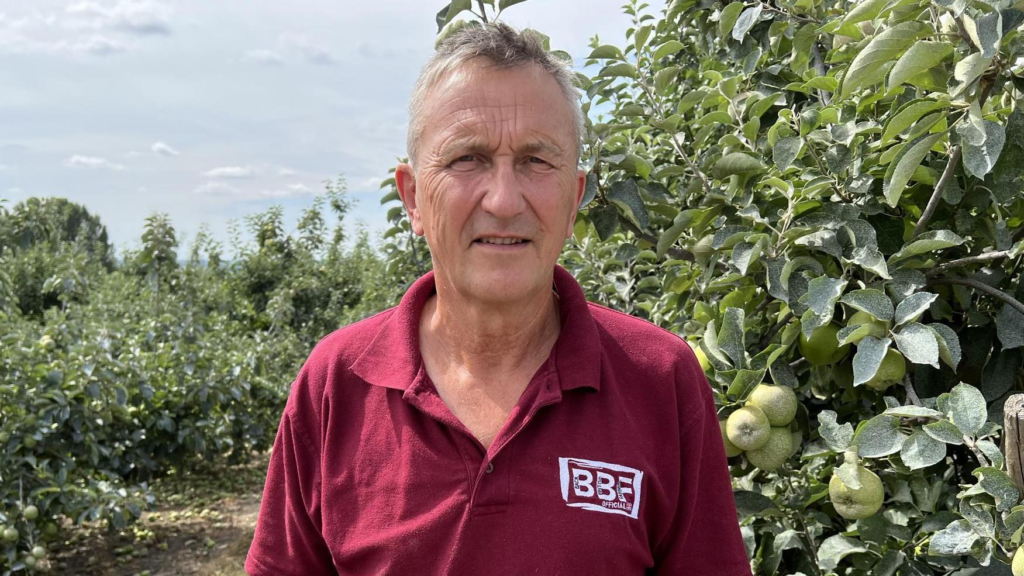
At Amsbury Farm near Maidstone, Kent, Clive Baxter manages roughly 200 acres (81 hectares) of fruit trees. He says the repeated spells of extreme heat this summer have hit nearly every part of his operation. “Everything is suffering now in the heatwaves,” Baxter said.
Bramley apples, a variety long associated with English cooking, are proving especially vulnerable. “Bramley apples are very susceptible to sunburn so we are spraying them with a clay substance that acts like suncream,” Baxter said. He explained that traditional English varieties, including Bramleys and Coxes, were never bred to withstand the kind of sustained heat the region has experienced this year.
The damage becomes severe once temperatures climb past a certain threshold. “Once the temperature gets to 30 degrees and above, if there is no wind, the juice starts to boil in the apples and cooks the fruit,” Baxter said. “When this happens it means the fruit is of no value at all.”
To protect what remains of the crop, Baxter’s team has started thinning the trees, deliberately removing some fruit so the rest has a better chance of surviving. He said the trees themselves are showing signs of strain. “So stressed” is how he described them, adding that the practice, while necessary, means lower yields and smaller apples overall.
Cattle farmers run out of grass
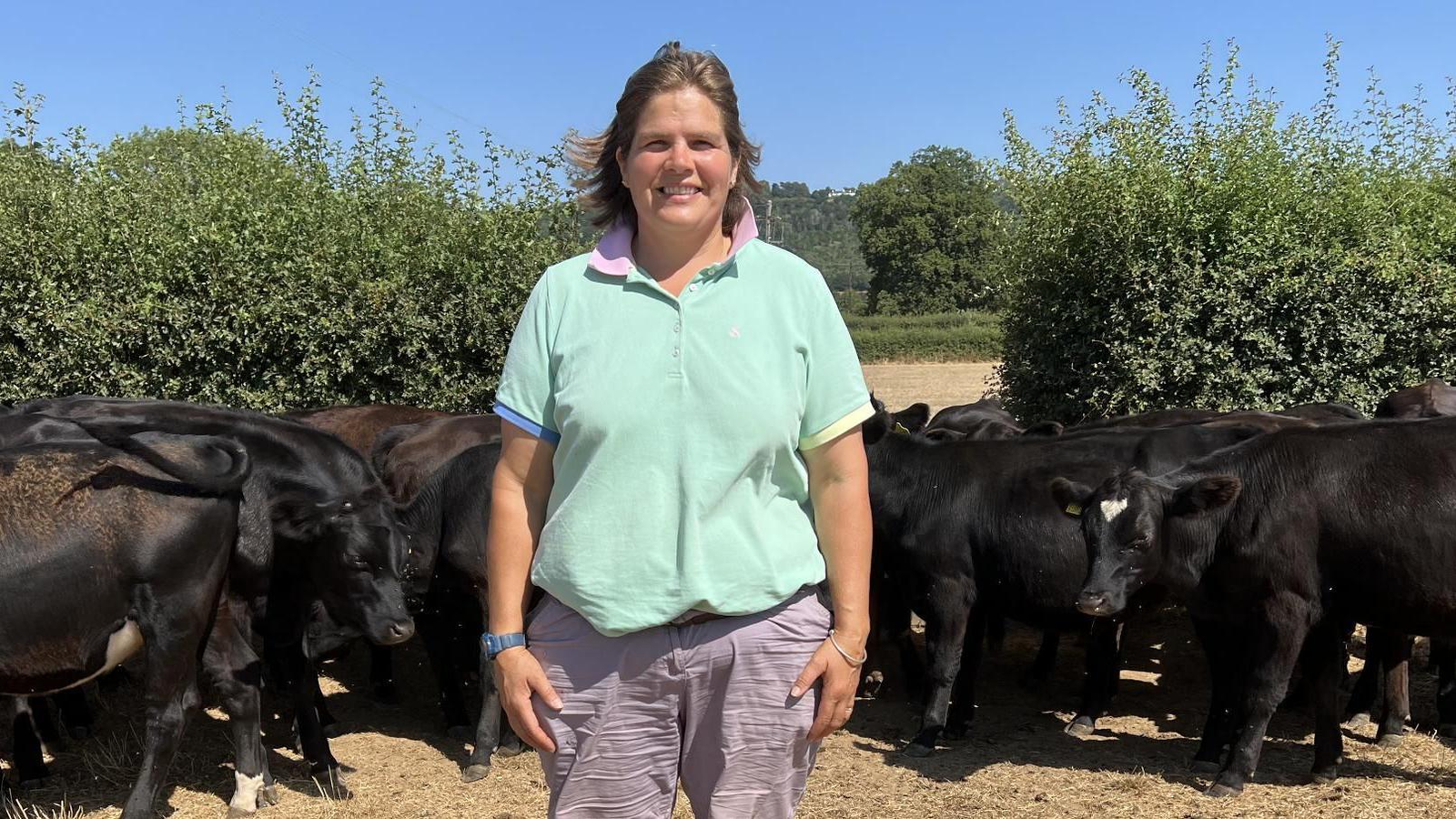
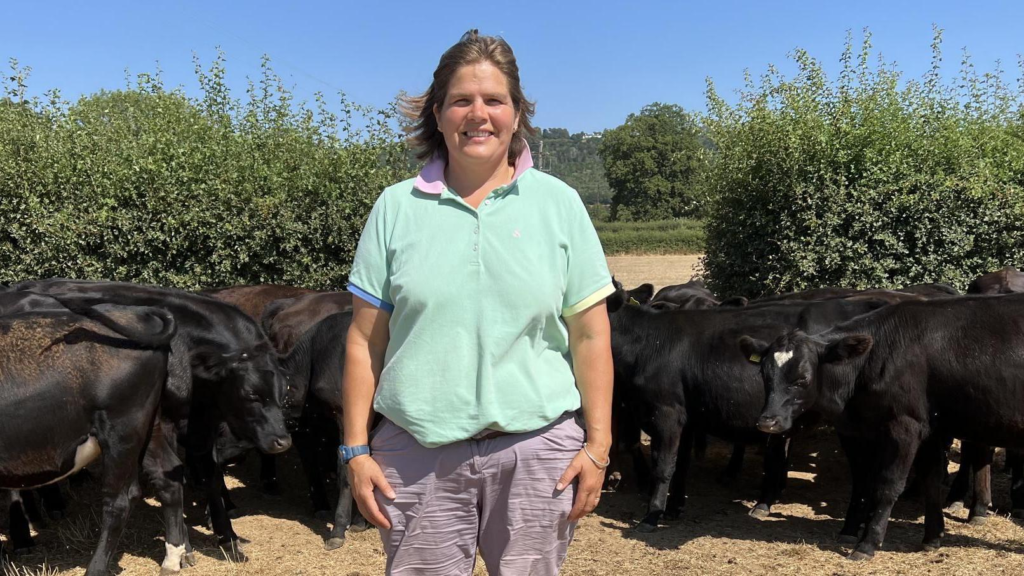
The heat is creating a different kind of pressure eighty miles away in Brockham, Surrey, where Nellie Budd raises 247 cows. For Budd, the central problem this summer has been simple: there is not enough food for the herd to eat.
“We have had 47 days now with no rain,” Budd said. “Grass normally is so resilient, once we cut it for hay or cut it for silage it will come back and we can continue grazing, but, this year, with the heat, there has been no let up.”
With pasture failing to regrow, Budd has started feeding her cattle hay that was meant to carry them through winter, a move that leaves her with a shortfall she will need to make up before the cold months arrive. The shortage is already changing the size of the animals she can bring to market.
“With limited food to eat, the carcasses are just not getting big enough which means they are not going to be the size for what we want because they are beef cattle,” Budd said.
Cutting the size of her herd is not something she is willing to consider, even as costs rise. “We have been putting an overlay in our grasslands to try and help but, this year, with no moisture in the ground, we couldn’t do anything,” she said. Reducing cattle numbers, she added, is not an option, because her family “could not afford to live” if she scaled back.
Budd said she is left hoping conditions change before next year’s growing season begins. “Everything is a gamble for farmers and we just hope weather patterns cause a wetter year next year,” she said.
Grain yields down by a third or more
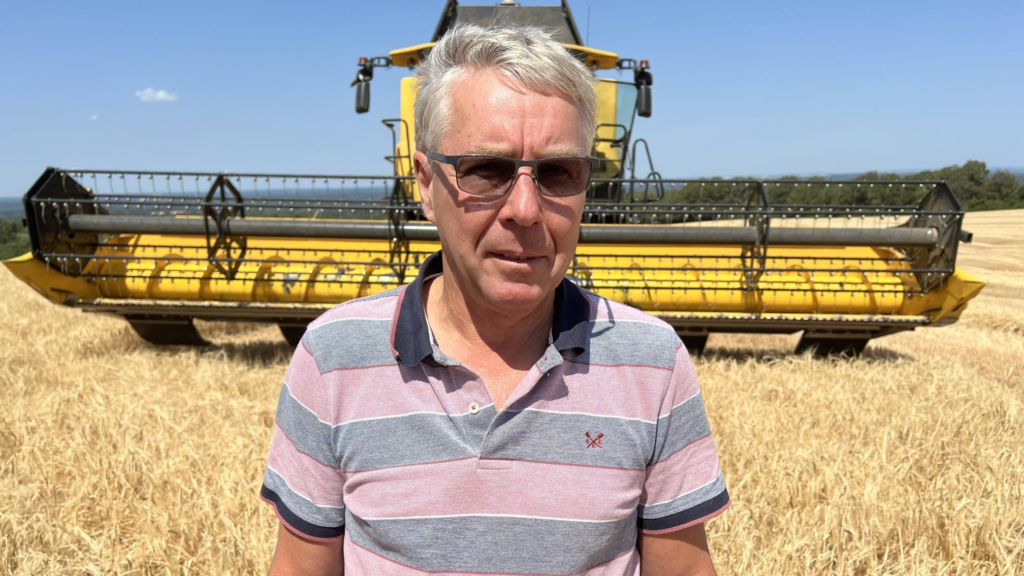
Further west, at Woolgars Farm in West Horsley, arable farmer and contractor Peter Knight is currently harvesting around 2,000 acres (809 hectares), and the numbers coming in are worse than he expected. He traces the trouble back to the first heatwave in May, which struck right as his spring barley, a crop used mainly for brewing beer, needed steady moisture to establish itself.
“Spring barley, which is used for making beer, is planted in March and it has had very little rain on it since then,” Knight said. The timing compounded the damage. “The crops flower in early June but, at that time the heat puts it under stress, which means we immediately know the yield is going to be impacted,” he said.
Knight said the dry spell never really let up through the grain-filling period, the weeks when kernels normally bulk up in size and weight. Without rain during that window, the plants simply could not put on the growth needed for a strong harvest.
He is now watching a pattern repeat itself. “We are very worried because three out of the last five years we have had very similar weather patterns in terms of drought-like conditions and trying to manage our way through that is very difficult,” Knight said.
Unlike some fruit and vegetable operations, arable farms of this scale have few tools to fight back against drought. Knight said irrigating thousands of acres of grain is not realistic given the cost and infrastructure it would require. Instead, he has adjusted his methods where he can. “We are doing our best by trying to sow earlier in the spring and we are doing less cultivations which helps preserve moisture but this year the yield here is reduced by around 30-40% on what we would normally expect,” he said.
Knight said the consequences extend beyond his own farm. If the current weather pattern continues to disrupt arable output across the country, he expects Britain will need to lean more heavily on imported grain to make up the difference.
A season of adjustments across the industry
Baxter’s spraying regimen, Budd’s early dip into winter feed stores, and Knight’s earlier sowing and reduced cultivation all point to the same reality: farmers across different sectors are making real-time changes to how they operate, not waiting for the season to end before responding.
None of the three describe the heat as a one-off. Knight’s reference to three drought-affected years out of the last five suggests a pattern rather than an isolated bad summer, and Budd’s decision to protect her herd size despite the financial strain signals she expects to need that stock again once conditions improve.
For now, the fruit that survives will carry a higher cost of production, the cattle coming to market will run smaller than usual, and the grain harvest at Woolgars Farm will fall well short of a typical year. Whether next year brings the wetter conditions farmers are hoping for remains the open question hanging over the rest of the 2026 growing season.