
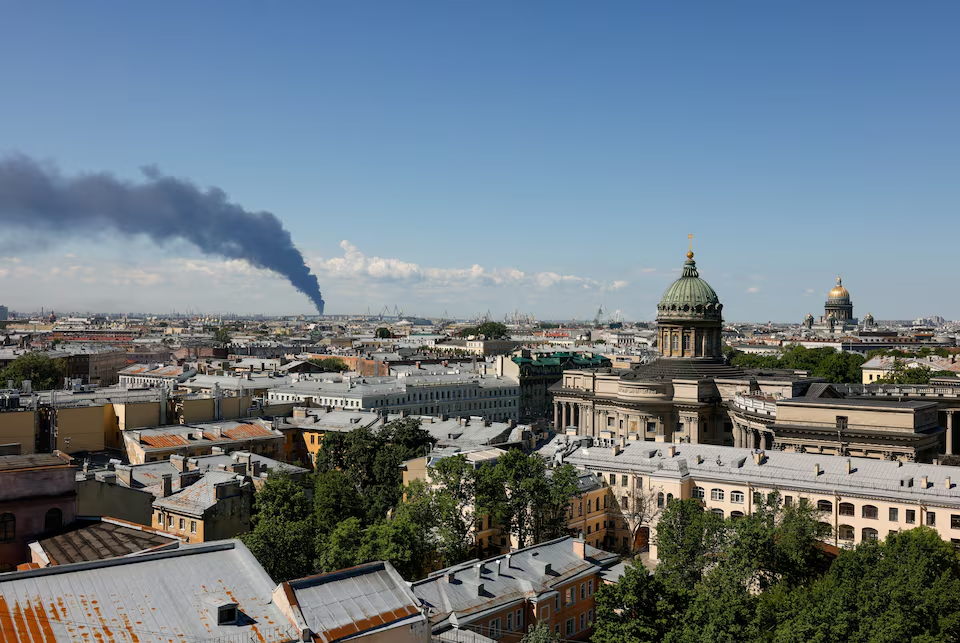
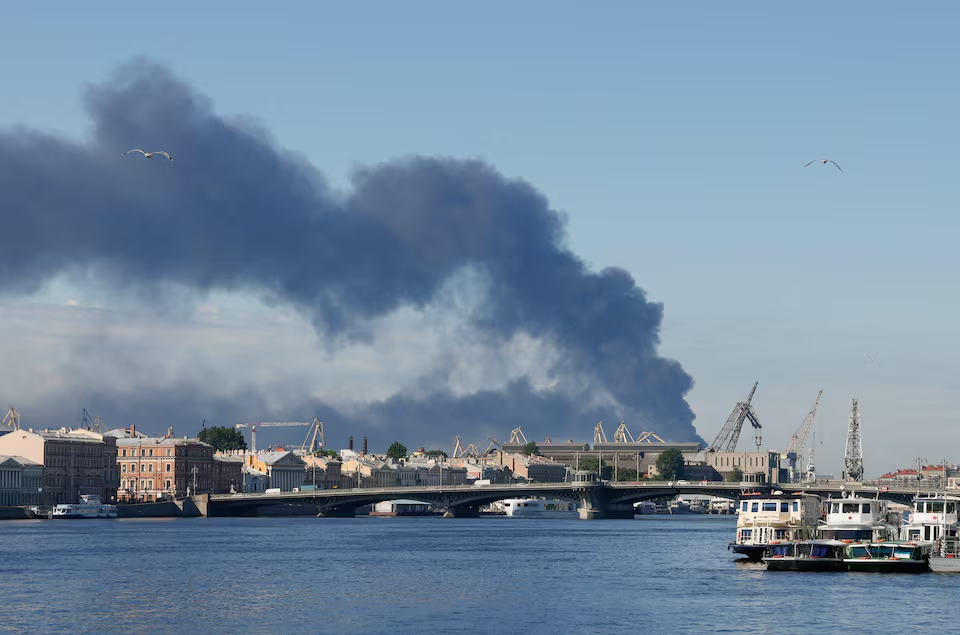
Ukraine launched a significant drone attack on Russia’s second-largest city, St. Petersburg, striking energy and military facilities just hours before the opening of a major international economic forum attended by government officials, business leaders, and foreign investors.
The attack, which targeted an oil terminal and a naval installation linked to Russia’s Baltic Fleet, represents one of the most high-profile strikes on Russian territory in recent months. Analysts say the timing appeared carefully chosen to maximize both strategic and symbolic impact, as the city prepared to host one of President Vladimir Putin’s most important annual events.
The incident highlights the increasingly long-range nature of the conflict, which has entered its fifth year with both Russia and Ukraine intensifying attacks far beyond traditional front lines.
Oil Terminal and Naval Facility Targeted
According to Russian officials, several infrastructure sites in and around St. Petersburg were hit during the overnight drone assault.
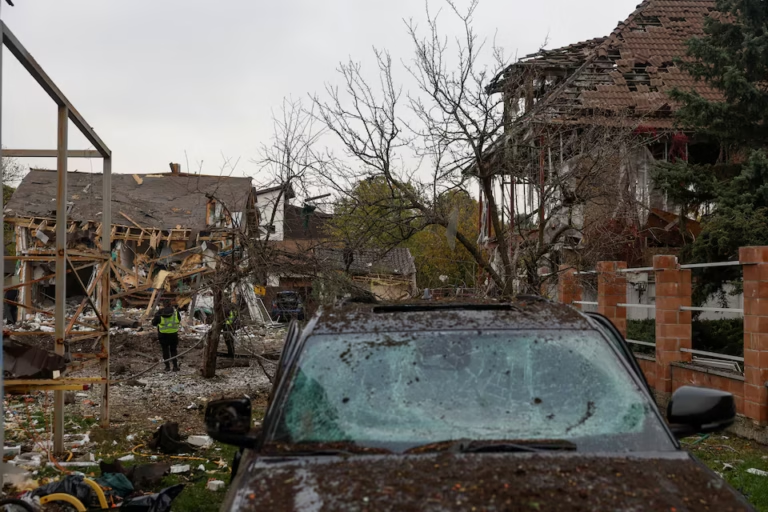
Authorities reported damage to multiple facilities and confirmed that several people sustained injuries, although no fatalities were immediately reported. Emergency services were deployed to affected areas as cleanup and assessment operations began.
Ukrainian officials later confirmed that their forces had targeted a fuel export terminal as well as military infrastructure in Kronstadt, a strategically important island town near St. Petersburg that hosts key naval assets and shipbuilding facilities.
Kronstadt serves as one of the principal bases for Russia’s Baltic Fleet and plays a vital role in naval maintenance and operations. Military analysts note that targeting such facilities demonstrates Ukraine’s continued effort to disrupt Russia’s military logistics and operational capabilities far from the battlefield.
Reports of Damage to Russian Warship
Ukraine also claimed that one of its drones struck a Russian naval vessel undergoing maintenance in dry dock.
Videos released by Ukrainian sources appeared to show a drone hitting a warship identified as the corvette Boiky, a vessel operated by Russia’s Baltic Fleet. Independent verification confirmed the location and type of ship involved, though the full extent of the damage remains unclear.
If confirmed, the strike would represent another example of Ukraine’s growing ability to target Russian military assets deep inside the country.
Over the past two years, Ukrainian forces have increasingly relied on domestically produced drones capable of reaching strategic locations hundreds of kilometers from the front lines, changing the dynamics of the conflict and forcing Russia to strengthen air defenses around critical infrastructure.
Air Defenses Activated Across the Region
Russian authorities said air defense systems were activated throughout the St. Petersburg region during the attack.
Officials reported intercepting dozens of Ukrainian drones overnight, while residents described hearing explosions and anti-aircraft fire across multiple districts.
Videos circulating on social media appeared to show drones flying over parts of the city while smoke rose from impacted areas in the distance. Although some footage could not be independently verified, eyewitness accounts suggested the attack caused significant disruption and alarm among residents.
St. Petersburg, home to more than five million people, has largely been spared from the scale of attacks experienced by regions closer to the Ukrainian border. As a result, the latest strike carried substantial psychological and political significance.
Economic Forum Overshadowed by Security Concerns
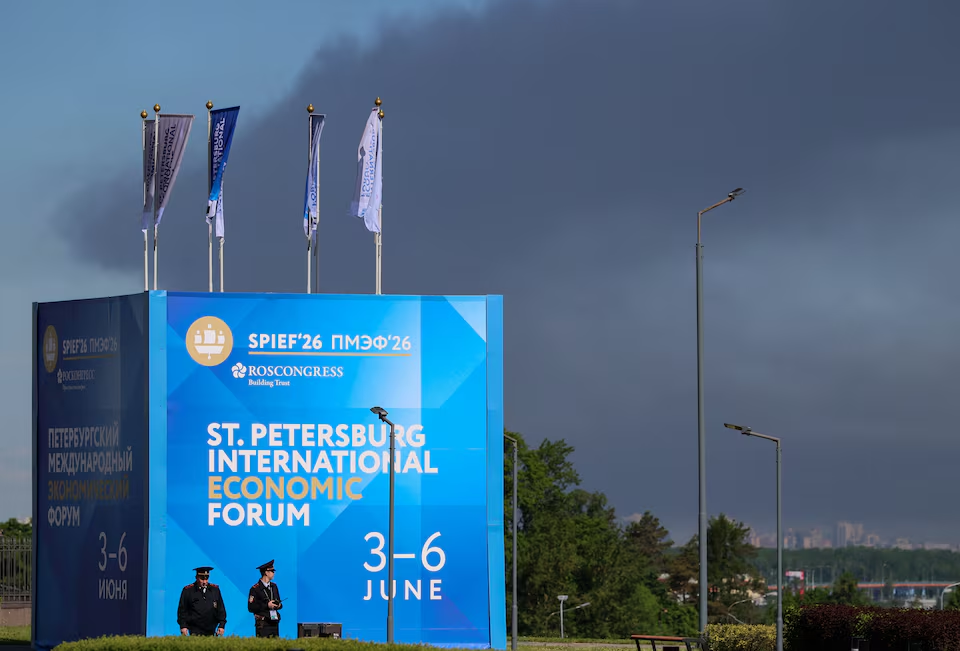
The drone attack occurred just before the opening of Russia’s flagship international economic forum, often described as the country’s answer to the annual World Economic Forum in Davos.
The event serves as a major platform for Russia to attract foreign investment, showcase economic projects, and demonstrate resilience despite Western sanctions and geopolitical tensions.
Hundreds of international delegates, business executives, policymakers, and investors had already arrived in the city when the attack occurred.
Observers noted that the incident risked overshadowing the forum’s economic agenda and shifting attention toward security concerns and the ongoing war.
The economic gathering remains a crucial opportunity for the Kremlin to project stability and maintain business relationships with countries willing to engage with Russia despite international pressure.
High-Profile International Guests Attend
This year’s forum has attracted a diverse group of international attendees, including senior government officials, business leaders, and public figures.
Delegations from the Middle East, Asia, Africa, and Latin America are expected to participate in discussions focused on trade, energy, infrastructure, technology, and investment.
The presence of prominent foreign guests underscores Russia’s efforts to deepen economic ties with non-Western partners as it adapts to a rapidly changing global landscape.
However, the drone strike served as a reminder that security challenges remain a major concern for both investors and political leaders evaluating engagement with Russia.
Airport Operations Disrupted
The attack also affected transportation infrastructure across the region.
Authorities temporarily restricted operations at St. Petersburg’s main airport as a precautionary measure, resulting in delays and cancellations for dozens of flights.
Passengers faced disruptions as airlines adjusted schedules while security assessments were conducted.
Although airport operations were later restored, the temporary shutdown highlighted the broader economic and logistical consequences of drone warfare, which increasingly affects civilian transportation networks and public infrastructure.
Kremlin Promises Continued Response
Following the attack, Russian officials reiterated that Moscow would continue responding to Ukrainian strikes with military action of its own.
The Kremlin has increasingly framed such attacks as justification for broader operations against Ukrainian military and infrastructure targets.
Russian authorities argue that attacks on major cities and strategic facilities require a firm response, while Ukrainian officials maintain that strikes on military and energy assets are legitimate actions in a conflict where Russia continues operations across Ukrainian territory.
This cycle of retaliation has contributed to a steady escalation in long-range warfare, with both sides deploying increasingly sophisticated drones and missile systems.
A New Phase of the Conflict
Military experts believe the attack on St. Petersburg reflects a broader shift in the war, where symbolic and strategic targets play an increasingly important role.
Rather than focusing exclusively on front-line engagements, both Russia and Ukraine are now seeking to influence public perception, economic stability, and political decision-making through strikes on critical infrastructure and high-profile locations.
The timing of the attack—coinciding with one of Russia’s most important international events—illustrates how warfare has expanded beyond traditional military objectives to include political messaging and economic pressure.
As the conflict shows little sign of ending, incidents like the St. Petersburg drone strike underscore the growing reach of modern warfare and the challenges facing both nations as they continue a prolonged and costly confrontation.
With neither side demonstrating a willingness to compromise, the risk of further escalation remains high, leaving regional security and economic stability increasingly uncertain.