Clicxpost

Politics

Police release ransom notes in Savannah Guthrie’s mother’s kidnapping case

Nancy Guthrie kidnapping

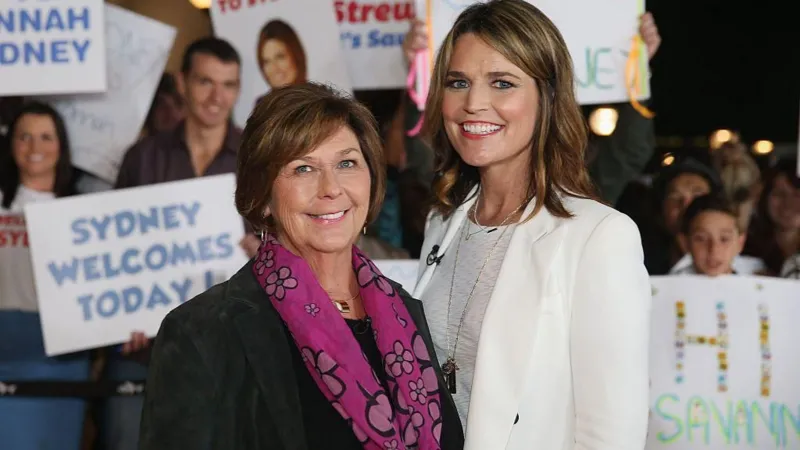
Police in Arizona have released two ransom notes tied to the abduction of Nancy Guthrie, the mother of NBC news presenter Savannah Guthrie, hoping the public can help identify whoever took her from her home near Tucson six months ago.

The Pima County Sheriff’s Office released the notes Friday, asking anyone who might recognize the writer’s language patterns to come forward. Officials said the first note, which demanded millions of dollars in Bitcoin, is treated as apparently credible. A second note claimed Nancy Guthrie died shortly after her abduction, though investigators say they cannot verify her death and continue to treat the case as an active investigation.

“We are desperate,” Savannah Guthrie said Saturday, pleading publicly for information that could help locate her mother or determine what happened to her.

Distinct language patterns could identify the writer

The sheriff’s office said it hopes members of the public will recognize specific phrasing or writing habits in the notes. “A friend, family member, coworker, classmate, or acquaintance may recognise these patterns of expression and possess information that could help identify the individual responsible,” the office said in a statement.

Investigators believe Nancy Guthrie, who was 84 when she was last seen on January 31, was taken against her will from her home. Officials have not disclosed a possible motive and no suspect has been arrested.

Both notes were addressed to Savannah Guthrie and her family and were sent to a local television station in Tucson in the days following Nancy Guthrie’s disappearance, according to the sheriff’s office.

The first note demanded $4 million in Bitcoin
The first note, received on February 2, opened by telling Savannah Guthrie that her mother was “safe but scared” and would be held for ransom. It demanded $4 million in Bitcoin be paid before 5 p.m. on Thursday the 5th, warning that the amount would rise to $6 million if the deadline passed, with a final deadline set for the following Monday at 5 p.m.

The note stated that failure to pay by the final deadline would result in Nancy Guthrie’s death, and warned the family against contacting law enforcement or attempting to negotiate. “You will not be able to contact me from here on out, there will be no negotiation. Do not play games, law enforcement will not be able to help you,” the note read.

Following what investigators believe was a redacted portion of the message, the note ended with specific details about the inside of Nancy Guthrie’s home, including a white smart watch left on the floor near her bed and a destroyed floodlight in the backyard.

Guthrie vanished after being dropped off at home

Nancy Guthrie, who took daily medication, disappeared after relatives dropped her off at her home on the evening of Saturday, January 31. Police became involved after she failed to show up the following morning at a friend’s house, where she had planned to watch a virtual Sunday church service.

Four days after the first message, a second note arrived. It claimed the kidnappers had not fully understood the seriousness of Nancy Guthrie’s physical condition and stated they never intended to harm her.

“She perished shortly after she was taken. We believe it was heart related. She is buried in nature now,” the note read, according to the sheriff’s office. It went on to say the family could not have changed the outcome and expressed what it described as remorse. “We are truly sorry.”

Investigators have not confirmed whether the claims in the second note are accurate, and Nancy Guthrie’s body has not been recovered.

Guthrie has repeatedly pleaded for her mother’s return

After receiving the second note, Savannah Guthrie, one of the most recognizable television anchors in the United States, addressed the kidnappers directly in an Instagram post on February 7. “We received your message and we understand,” she said at the time. “We beg you now to return our mother to us… This is very valuable to us, and we will pay.”

Earlier this week, Guthrie released another video urging the kidnappers to “do the right thing” and disclose her mother’s location. She returned to social media Saturday, sharing a photo of her mother alongside a message describing her family as “desperate” and “begging for help.”

Guthrie said her family remains determined to learn what happened to her mother so they can give her “the dignity of a proper goodbye, a celebration of her remarkable life that she so deserves.” She asked anyone with information, even a suspicion, to come forward, noting that tips can be submitted anonymously and that a reward remains available for information leading to her mother’s recovery.

A tactic with historical precedent

This is not the first time authorities have released a suspect’s writing in hopes of identifying them through language alone. Ted Kaczynski, known as the “Unabomber,” was ultimately identified by his own brother after U.S. newspapers published his manifesto in the 1990s, leading to his arrest.

In this case, investigators had already released images earlier this year showing a masked, armed individual who covered the front door camera at Nancy Guthrie’s home in the period before her disappearance. That image, combined with the newly released notes, represents the most significant public appeal for information since the case began.

What happens next

The Pima County Sheriff’s Office said the investigation remains active and is urging anyone with relevant information to contact authorities. With no suspect identified and Nancy Guthrie’s fate still unconfirmed, investigators are relying heavily on the public’s ability to recognize the writing style captured in the two notes, a strategy that has, in past cases, led directly to an arrest.

RECOMMENDED
Politics

Obama Tells Michigan Crowd Trump Is Running a “Corrupt” Government 10 Days Before Midterms

By George Mensah 7 min read

Barack Obama returned to the campaign trail on Saturday and went after Donald Trump’s presidency on three fronts: corruption, Iran policy and the look of the White House. The former Democratic president spoke at rallies in Cleveland and Detroit, ten days before the November 3 midterm elections that will decide control of a closely divided Congress.

Trump has asked voters to treat the midterms as a vote on him personally. Obama accepted that framing in Michigan and told the crowd to use the election as a check on the Republican president. Trump answered early Sunday on Truth Social, calling Obama a “grossly incompetent President.”

Obama Asks Michigan Voters to Flip a “Circuit Breaker”

In Detroit, Obama campaigned for Abdul El-Sayed, the Democratic nominee for US Senate, and Jocelyn Benson, the Democratic candidate for governor. He described the November 3 vote as a “circuit breaker” that would “at least rein in some of the foolishness” of the Trump presidency.

“We got to flip that circuit breaker, bring some accountability to this government,” Obama said.

Democrats see Obama as one of their strongest draws. He was president from 2009 until Trump took office for his first term in 2017, and he remains one of the most popular figures in the party. Democrats hope his appearance will energize their supporters in a tight Senate race, where El-Sayed faces Republican Mike Rogers, a former US representative.

Obama gave the Michigan crowd what it came for. He repeated the criticisms Democrats make most often about Trump, and he added a charge against Republicans in Congress, saying they have been willing to go along with him.

The Corruption Charge

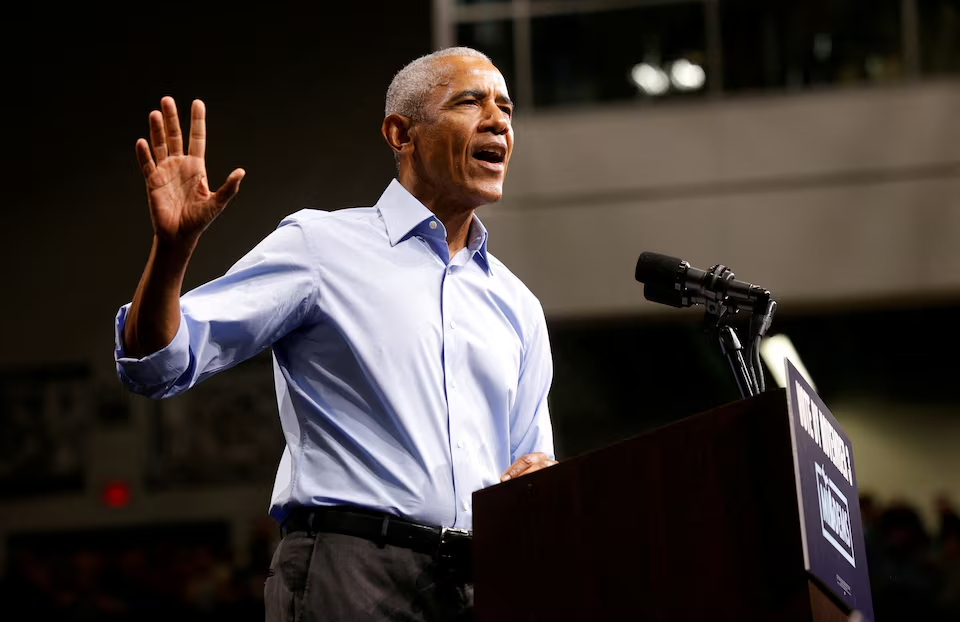
Former US President Barack Obama campaigns with Democratic candidates in Detroit

The sharpest section of the speech dealt with money. Obama said no earlier president has made personal gain so visible while in office.

“We have never seen a president excel in straight-up grifting, on your dime, like this,” Obama said. “Never seen a president so intent on selling favors like this … Now the party seems to stand for corrupt government, or inept government, or no government.”

The White House did not immediately respond to a request for comment on the remarks.

Public opinion gives Obama some room to make this argument. A Reuters/Ipsos poll in August found that 63% of Americans think the president and his family have inappropriately profited from cryptocurrency since he returned to the White House last year. The same poll found that 69% believe his policy decisions are influenced by his private business dealings. Put another way, roughly two of every three respondents already hold the view Obama was selling on Saturday, so he was speaking to an audience that had mostly made up its mind.

That matters for how the argument is likely to be used. A message that a majority already accepts does not need to persuade anyone. Its job in the final ten days is to give Democratic voters a reason to turn out, and Obama is the person Democrats chose to deliver it.

Iran and the Strait of Hormuz

Former US President Barack Obama arrives on stage to campaign for Democratic US Senate nominee Abdul El-Sayed and Democratic gubernatorial candidate Jocelyn Benson in Detroit

Obama also took on the administration’s claims of victory in its war with Iran. He said the conflict has left Iran with more economic power than before, because its threats to attack shipping in the Strait of Hormuz have unsettled oil exporters.

“Iran now has veto power over the Strait of Hormuz, where oil goes through to get to the world,” Obama said.

His point was about outcomes. The administration says it won. Obama’s reply was that a country able to threaten a major oil route, and make exporters nervous by doing so, has gained influence rather than lost it. Voters who judge the war by what they pay for fuel may find that argument easier to follow than one about military objectives.

Trump’s reply on Truth Social went back to Obama’s own record on Iran. He said Obama “paid off Iran with $Billions, and gave them a road to a Nuclear Weapon” through the 2015 Joint Comprehensive Plan of Action, the nuclear accord between Iran and world powers. The United States withdrew from that agreement during Trump’s first term.

So the two men are now arguing about Iran with two different histories. Obama points to the results of the current war. Trump points to the deal he cancelled. Neither answer addresses the other’s main claim, which is usual for a campaign exchange and leaves voters to pick the framing they find more believable.

Hegseth and the White House Renovations

Ohio Midterm Elections

Obama spent part of his speech on what he called misplaced priorities. He said the administration spends its attention on unimportant matters, and he mocked Defense Secretary Pete Hegseth as someone “laser-focused on important matters like the jawline and testosterone levels of our troops.”

He then turned to the White House renovations, which have given the building a gilded look. He ridiculed the result as tacky.

“He’s got the White House looking like Saddam Hussein opened a Cheesecake Factory,” Obama said.

The line is blunt and easy to repeat, and it had a job in the speech. After the serious charges about corruption and the Strait of Hormuz, the jokes about Hegseth and the decor gave the crowd something to laugh at and gave reporters something to quote. Campaign speakers use humor this way when they want a clip to travel beyond the room.

Trump Responds on Truth Social

Trump did not wait long. In a Truth Social post early Sunday, he called Obama a “grossly incompetent President.” He then turned to the Michigan Senate race and described El-Sayed as a “Muslim Brotherhood Jihadist, who hates Jews and Blacks and AMERICANS and TRUMP.”

Reuters reported the post as written. The White House had not commented on Obama’s speech when the report was filed. Trump’s post attacked Obama and the Democratic candidate directly, and it made no reference to the poll numbers on profiting from cryptocurrency or to the Strait of Hormuz.

The Michigan Race and the Wider Contest

Michigan is where the exchange has the most direct effect. El-Sayed faces Rogers in a race described as tight, and a Senate seat in a closely divided Congress can shift control of the chamber. Democrats want Obama’s appearance to raise enthusiasm among supporters who might otherwise sit out a midterm. Republicans, for their part, get a chance to use Obama as a reminder of the Democratic record they want voters to reject, which is the approach Trump took in his reply.

Obama’s stops in Cleveland and Detroit also show how Democrats plan to use him in the closing stretch. He is campaigning for named candidates in specific races, and he is using the same national message in each place: the election is a chance to hold the administration to account. Trump’s own request that voters treat the midterms as a referendum on him makes that message easy to deliver, because the two sides now agree on how the contest should be framed even though they disagree about who deserves to win it.

How Democrats Are Using Obama

The Saturday schedule shows a plan. Obama spent the day in two cities in the Midwest and went from one rally to the next with a single message. Democrats do not need him to introduce new facts. The poll numbers on cryptocurrency and business dealings were already public. What he adds is reach. A former president who remains popular with the party’s voters can fill a hall, get covered by every outlet in the state and make a Senate candidate’s name known to people who have not followed the race.

El-Sayed gets the most direct benefit. A Senate nominee running against a former US representative needs name recognition and a large turnout, and an Obama rally supplies both in one evening. Benson, running for governor on the same Detroit stage, shares that benefit.

The risk runs the other way. Trump’s reply shows how quickly a visit like this can turn into a fight over the Democratic nominee himself. His description of El-Sayed will now be repeated in Michigan alongside Obama’s speech, and the El-Sayed campaign will have to decide how much of its remaining time goes to answering it.

What Comes Next

Voters in Michigan and across the country will decide on November 3. Between now and then, expect both parties to keep spending their most recognizable figures on the final week and a half. Obama has shown he will take on Trump directly and by name. Trump has shown he will answer within hours and in personal terms.

The poll figures above, 63% on cryptocurrency profits and 69% on business influence over policy, come from an August Reuters/Ipsos survey and have not been updated in this report. Whether those views hold through Election Day, and whether they translate into votes in a state like Michigan, will become clear when ballots are counted.

Politics

US Midterms on November 3: What Voters Decide and Who Leads

By George Mensah 8 min read

Americans vote on November 3 in congressional elections that will decide whether Republicans keep control of Washington for the last two years of Donald Trump’s second term. Fewer than four weeks remain, and the polls favor Democrats nationally. Several of the Senate races that decide control are close.

Voters will fill all 435 seats in the House of Representatives and 35 of the 100 seats in the Senate. They will also choose state officials in much of the country, including governors in California, Florida, Georgia and Michigan.

What the midterms are

Congress has two chambers, the House and the Senate, and together they write and pass federal laws that apply across the country. Elections happen every two years. The ones that fall in the middle of a president’s four-year term are called midterms.

Trump is not on the ballot. The result will still be read as a verdict on him, because it will show whether voters want to give him a Congress that backs his plans or one that blocks them.

Who is being elected

Members of the House serve two-year terms, so every seat is up every election. The House is where most bills are introduced and debated.

Senators serve six years, and about a third of the chamber is elected at each midterm. This year’s 35 seats are 33 regular contests and two special elections for the seats vacated by Marco Rubio and J.D. Vance, according to Ballotpedia. The Senate votes on bills passed by the House and approves or rejects presidential nominees.

The state of play in Congress

Republicans run both chambers today, but the margins are thin.

In the House, the BBC reports Republicans hold 218 seats, the minimum needed for a majority, plus one independent who votes with them. Counts of the exact split differ slightly between sources because of vacancies, so the safest summary is that a few seats decide control.

In the Senate, Republicans hold 53 of 100 seats. Democrats need to win 51 to take control. A 50-50 tie would go to the vice president, currently a Republican, who casts the deciding vote. Ballotpedia says that means Democrats need a net gain of four seats.

Democrats are defending Georgia and Michigan, two states Trump won in 2024. Republicans are defending Maine, which Kamala Harris won.

What voters care about most

Cost of living comes first. Voters are paying more for fuel, groceries, housing and healthcare, and four in 10 Iowa voters told a Fox News poll in late September that their families are falling behind. About six in 10 in that poll called cost of living extremely important to their Senate vote.

Inflation is still above the level the Federal Reserve targets. The BBC links part of that to the war the United States and Israel started with Iran in February. Democrats say Trump’s tariffs have pushed prices up too.

Silver Bulletin, a polling analysis site, rates Trump’s handling of the economy at a net negative 32 points. On inflation the figure is a net negative 46 points.

Immigration is the other major issue, and it favors Republicans more than the economy does. They say Trump delivered on a 2024 pledge by tightening the border and launching a broad crackdown on illegal immigration. The crackdown has drawn criticism for its tactics. In Iowa, voters who rank immigration first lean toward the Republican candidate.

Artificial intelligence has moved up the list in recent weeks. Senior figures in both parties say the technology needs regulation. Trump has rejected the idea of laws to control its development, which puts him at odds with lawmakers in his own party. In the Fox News Iowa poll, 27% of voters called AI extremely important.

What the polls show

Trump began his second term with an approval rating just above 50%, according to Silver Bulletin. In early October it was about 37%, and more than 60% of Americans disapproved. An NBC News average put the figures at 39% approve and 59% disapprove in late September.

On the generic congressional ballot, which asks voters which party they will support without naming candidates, NBC’s average of likely voters showed Democrats ahead 52% to 43%. Independent voters lean Democratic by about 16 points, down from roughly 20 points in spring.

History points the same direction. Voters often turn against the president’s party at midterms.

National numbers do not decide individual seats, though. Most districts and states lean heavily toward one party, and the fight is concentrated in a small number. The BBC’s US partner CBS News has identified ten Senate races and 42 House races to watch. The Senate list includes Iowa and New Hampshire. The House list includes seats in Arizona and Ohio.

The Iowa test

Iowa shows how much the national mood has changed. Trump won the state with nearly 56% of the vote in 2024, and Iowa has not sent a Democrat to the Senate in 18 years, since Tom Harkin won his final term.

The Fox News poll, conducted September 24 to 28, found Democrat Josh Turek ahead of Republican Ashley Hinson, 49% to 47% among likely voters. That gap sits inside the poll’s margin of error of three points. Among all registered voters, Turek led 50% to 46%, and that result has not moved since June.

Turek is a state representative. Hinson is a member of the US House and won the Republican nomination with Trump’s endorsement. Voters rate Turek more favorably, 48% to 40%. Hinson’s numbers are 42% favorable and 50% unfavorable.

Fifty-two percent of voters in the poll said Hinson is too close to Trump. Forty-three percent said Turek is too liberal. Trump’s approval in Iowa stands at 42%, with 57% disapproving.

A Republican pollster on the survey still sees an opening for Hinson. “Recent history and the state’s partisan makeup suggest Hinson can pull this out,” said Daron Shaw, who worked on the poll with a Democratic firm. The same poll has Democrat Rob Sand leading Republican Zach Lahn for governor, 53% to 44%.

The numbers that decide control

Count the seats and the math is tight for both sides.

In the Senate, Republicans can lose at most two seats and still hold the majority, because a 50-50 split goes to the Republican vice president. Democrats need a net gain of four. Ballotpedia notes that eight senators, four from each party, are not seeking re-election, which leaves several seats without an incumbent on the ballot.

In the House, Ballotpedia says Democrats need a net gain of only three seats, and Republicans can lose no more than two. The same page counts 14 Democratic-held districts that Trump won in 2024 and nine Republican-held districts that Harris won. Those 23 seats sit in territory that backed the other party’s presidential candidate two years ago, and they are where a national swing turns into a change of control.

The Iowa poll gives a closer look at how a swing happens. Turek holds 96% of Democrats, while Hinson holds 87% of Republicans. Turek leads among independents by about two to one, and 10% of Republicans say they will vote for him. Voters backing Turek are also more firmly committed: 88% say their choice is settled, compared with 77% of Hinson’s supporters. A small gap in loyalty in a state this evenly split can decide the race.

Not every poll points the same way, and Iowa’s result will depend on turnout. The same Fox poll found Iowans split almost evenly on which party should control the Senate, 49% for Democrats and 48% for Republicans.

The fight over district maps

The House picture is harder to read this year because both parties redrew congressional districts in the middle of the decade, which is unusual. Normally maps change once every ten years, after the census.

Republicans moved first. Texas adopted a new map in 2025 that Republicans hoped would gain them up to five seats, according to the Associated Press. Missouri and North Carolina each drew maps aimed at one more Republican seat, and Ohio’s new map targeted two.

Democrats answered. California voters approved Proposition 50 on November 4, 2025. It replaced the map drawn by the state’s citizens commission with one drawn by Democrats, who hoped to gain up to five seats. Virginia Democrats started the process of amending the state constitution to allow their own redraw.

Lawsuits followed in several states, and the AP’s account is a snapshot from November 2025. Some of the details have probably changed since, so check the latest status of any individual district before relying on it. The broad point holds: the new lines make forecasts for the House less certain.

What a Democratic win would mean for Trump

If Democrats win the House, the Senate or both, Trump will struggle to pass new laws. Bills need approval from both chambers. His domestic agenda could stall, though he has already shown he can use executive power to act without help from Congress.

Control of a chamber also gives Democrats the power to set the agenda on the floor and to run committee investigations. The BBC lists corruption allegations, the new White House ballroom and the tactics of Immigration and Customs Enforcement as possible subjects.

Democrats are also divided on impeachment. Impeachment means Congress brings charges against a president, and it works as a political process, not a criminal one. Some in the party want to pursue it. Others want to avoid it. A Democratic majority would force that argument into the open.

If Republicans hold both chambers, Trump can keep moving his plans forward for the rest of his term. He has asked Republican voters to treat the election as if his name were on the ballot and to vote for him as an endorsement of what he has done.

What comes next for 2028

Trump cannot run for president a third time. Once the results are in, attention will turn to who might become the Republican nominee in 2028 and who might run against that person for the Democrats.

Commentators will also use the results to argue about how voters feel about the country’s direction under Trump. Both parties will claim a mandate, so the margins will matter. A Democratic win by a handful of House seats would read differently from a landslide, and a Republican hold with a smaller majority would read differently from a gain.

Nothing in the polls guarantees any outcome. Midterm turnout is lower than in presidential years, and the voters who show up on November 3 will decide it.

Sources

ADVERTISEMENT
Scroll to Top