
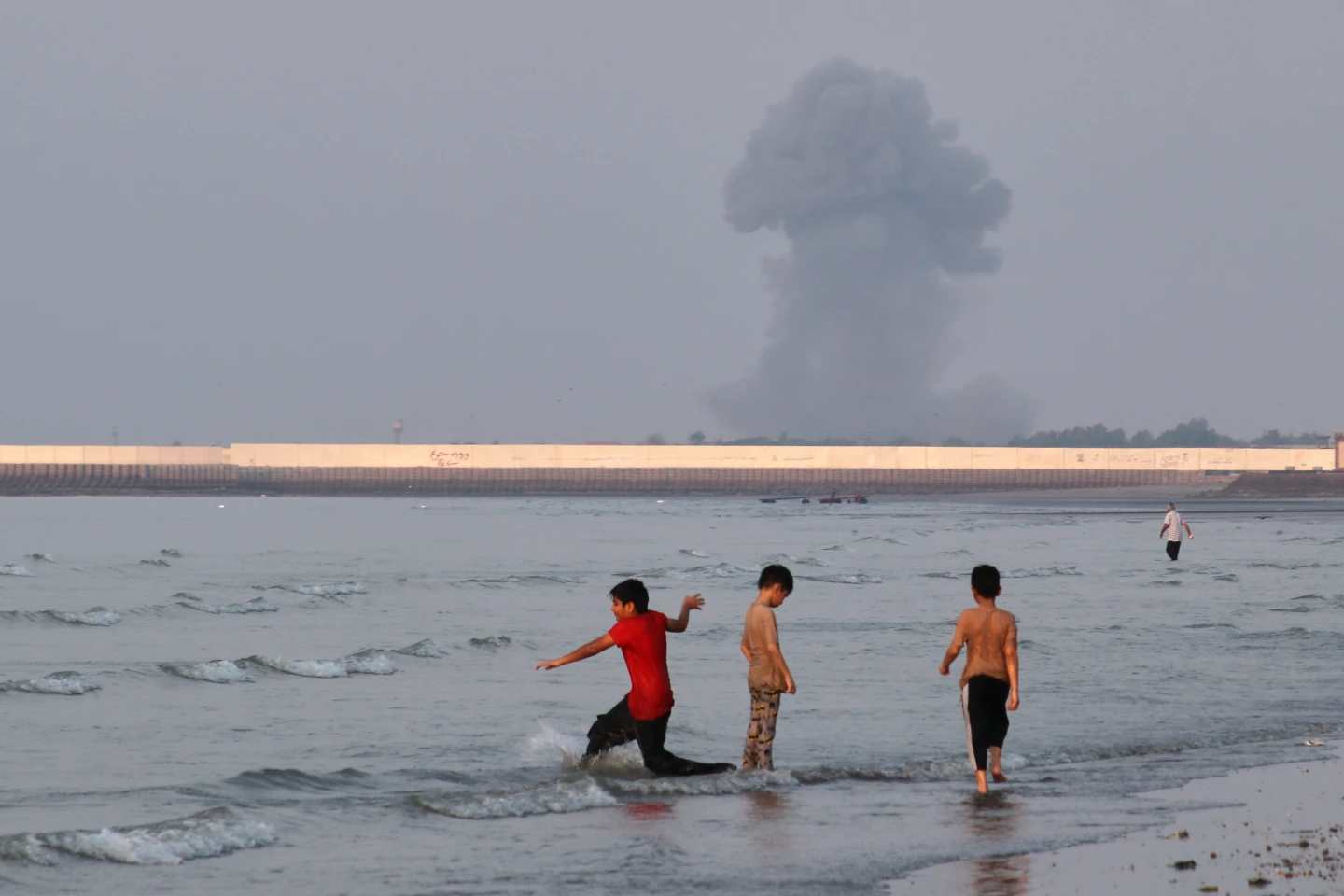
U.S. warplanes and ships pushed the fight with Iran further north on Thursday, striking new targets near Tehran for the first time in this round of combat while American forces also opened fire on a tanker accused of running Washington’s naval blockade. Iran answered before sunrise with missile and drone attacks on U.S. allies across the Gulf and said the damage could grow.
The exchange marks the sharpest escalation since the U.S. and Israel opened the war on Iran on Feb. 28, and it has effectively ended a short-lived interim agreement that had paused the fighting. Iranian officials say U.S. strikes have killed more than 35 people and wounded over 300 in the past several days. The Strait of Hormuz, the narrow waterway that carries a large share of the world’s oil shipments, sits at the center of the latest fighting, with both sides threatening to choke it off entirely.
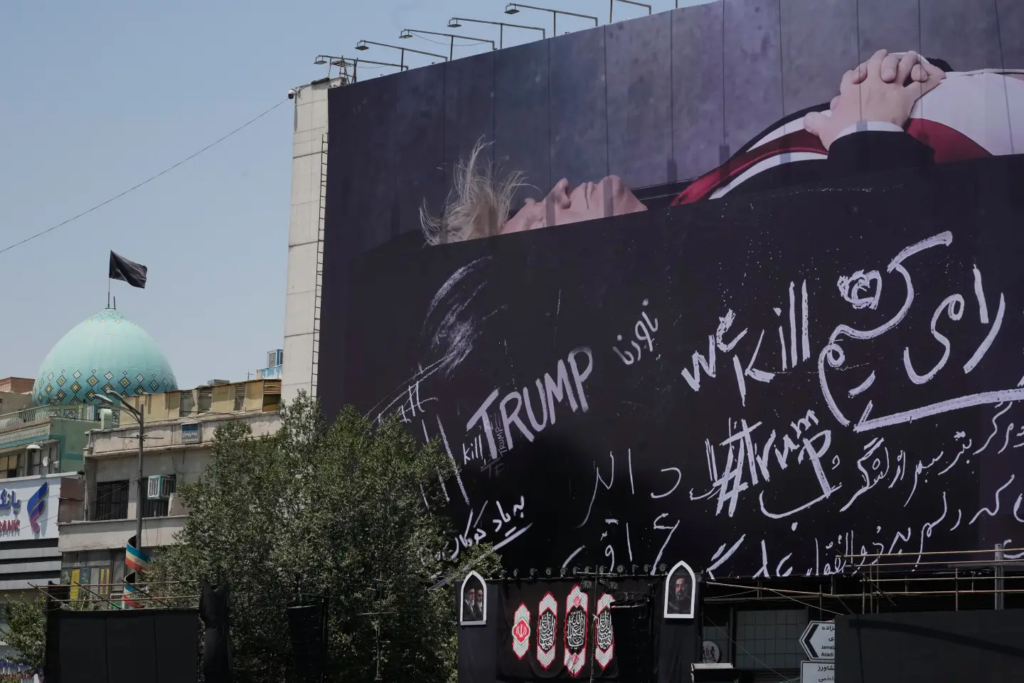
Col. Ebrahim Zolfaghari, a spokesperson for the Iranian military’s Khatam al-Anbiya Central Headquarters, said Thursday that Iran would strike regional infrastructure broadly if President Donald Trump follows through on threats to hit Iranian bridges and power plants. “All the infrastructure in the region will be crushed under the steel blows of the powerful armed forces of the Islamic Republic of Iran,” Zolfaghari said. He added that Iran would not tolerate American interference in the strait, calling it “Iran’s invincible red line.”
New strikes hit closer to Tehran
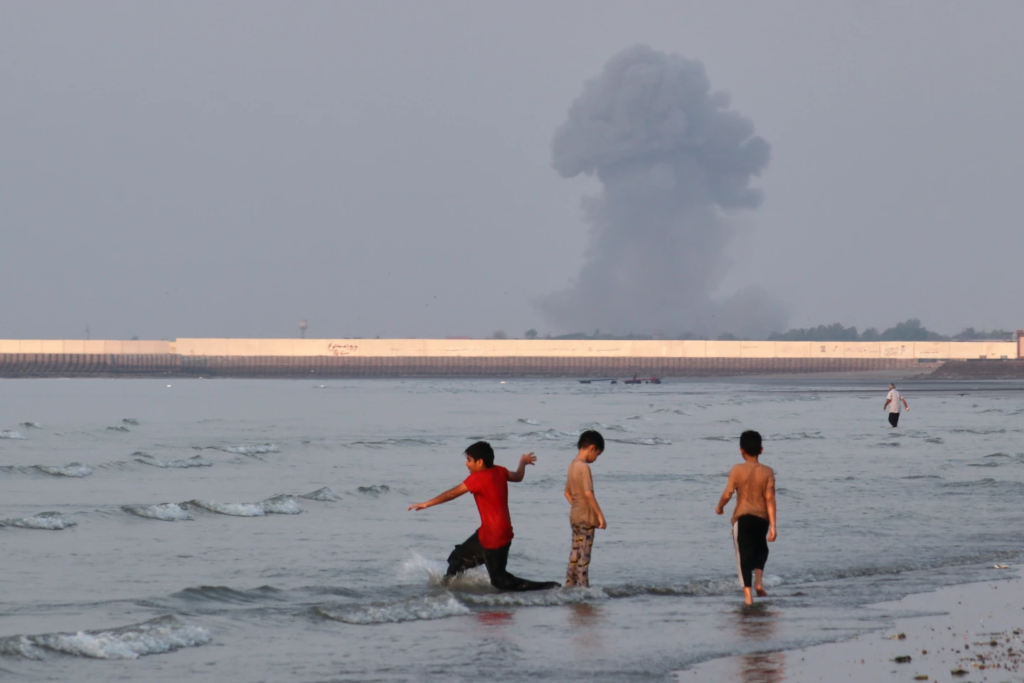
Iranian state media reported U.S. strikes early Thursday around the capital and in Semnan province, where Iran builds ballistic missiles and runs its space program. Additional strikes hit Hamedan, Hormozgan, Khuzestan, Lorestan, Markazi, and Sistan and Baluchistan provinces, according to Iranian outlets.
The U.S. had already resumed daytime strikes on Wednesday, a shift from the mostly nighttime campaign of previous weeks. U.S. Central Command said an attack that day hit Iranian defense and missile sites on Greater Tunb Island, a small but strategically placed island inside the Strait of Hormuz.
The U.S. Navy also opened fire on the Belma, a Curacao-flagged oil tanker headed toward Kharg Island, Iran’s main oil export terminal. According to the U.S. military, the tanker ignored repeated warnings before an American aircraft fired a missile into its smokestack, disabling the vessel without sinking it.
A separate U.S. strike Wednesday hit a barracks used by Iran’s 388th Mechanized Infantry Brigade, an armored unit, in Sistan and Baluchestan province. Iranian state television reported at least 13 missiles struck the site, killing seven people, including both conscripts and career soldiers, and wounding others.
Iran’s response came before dawn Thursday, with missile and drone attacks on Bahrain, Jordan and Kuwait, all of which host U.S. forces. None of the three countries reported immediate casualties or confirmed damage. Kuwaiti authorities said a second wave of incoming fire hit the country Thursday afternoon.
A drone also struck the northern Iraqi city of Irbil overnight, though Iraqi authorities said air defenses intercepted it before it caused damage. Iraqi Prime Minister Ali al-Zaidi condemned the attack while on a visit to Washington, where he said Baghdad would work to disarm armed groups operating outside state control, including several backed by Iran.
Oil prices climb as blockade returns
Iran shut down shipping through the Strait of Hormuz when the war began in February, a move that drove up prices for oil, fertilizer and other goods worldwide and gave Tehran leverage in ceasefire talks. The U.S. now says it wants to reopen the strait by force, but that would likely require a far larger naval presence and possibly tens of thousands of ground troops.
Brent crude, the international benchmark, traded above $85 a barrel Thursday, more than 15% higher than before the war began but still well under the nearly $120 it hit at the conflict’s peak. The increase creates a political problem for Trump and Republicans, who are trying to hold their congressional majority in November’s elections. Washington’s difficulty keeping the strait open led Trump to reinstate the naval blockade on Wednesday.
Trump maintained Wednesday that Iran wants a deal, though he offered no specifics. “They don’t like what we’re doing, and they do want to settle. We’ll find out whether or not we settle with them, or we just finish it off,” he said during remarks at the U.S. Army War College in Pennsylvania.
Diplomatic efforts to slow the fighting have not gained traction. Pakistan’s Foreign Ministry said Thursday it was still working to bring Washington and Tehran back to the table, though ministry spokesperson Tahir Andrabi acknowledged the process has grown harder. “Whenever the parties exhaust the logic of escalation, the formula for peace is there,” Andrabi told reporters.
Trump also said on social media that Iran released an American citizen who had been wrongly detained since 2024, though he gave no further details. Human rights lawyer Jared Genser identified the person as his client, Dena Karari, a U.S.-Iranian citizen who runs a nonprofit organization and had been charged with espionage. Iran has not confirmed the release, and Karari’s detention had not previously been made public, which is common in cases involving the Islamic Republic.
The fighting shows no sign of slowing as both sides expand the geography and intensity of their attacks. Iran’s threat to target regional infrastructure, paired with Trump’s own warnings about striking Iranian power plants and bridges, points toward a conflict that could widen well beyond the current front lines in the Gulf.