
Israeli veterans who once patrolled southern Lebanon’s occupation zone in the 1980s and 1990s say the country’s current military presence there feels like a repeat of a strategy they watched fail the first time, even as Israeli leaders present it as a hard-won gain.
Gil Shely served in what Israel called the southern Lebanon “security strip” in the late 1980s. He remembers his commanders telling him every day that his presence there was protecting northern Israel. “Looking back, it was all fairy tales,” he said.
Israel pulled out of that strip in 2000. Its forces have since returned, this time occupying a stretch of southern Lebanon roughly 10 kilometers deep. Israeli officials describe the goal as shielding border towns from Hezbollah, the Iran-backed militia that has fought Israel for decades.
A zone born out of war
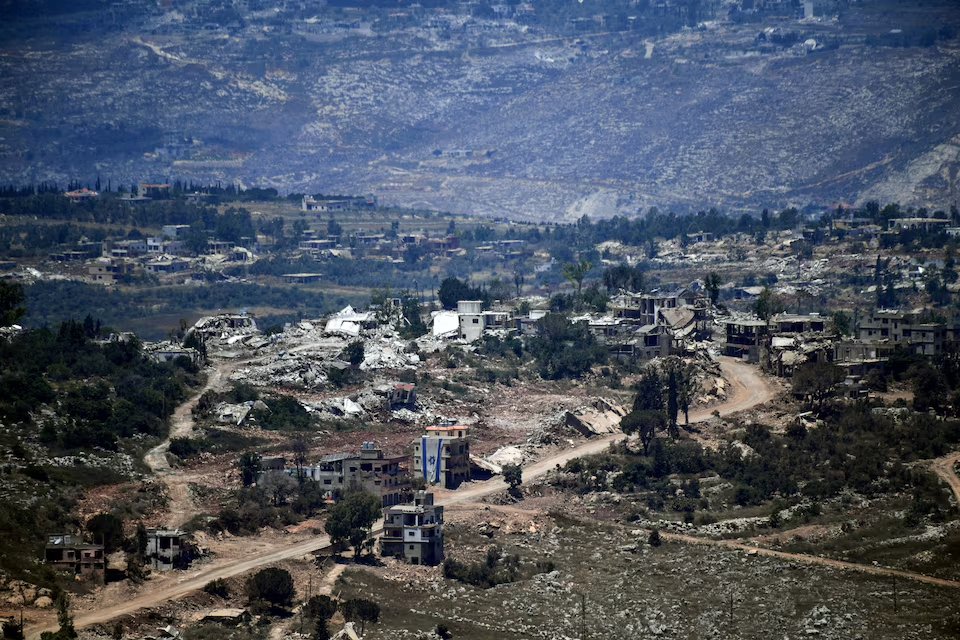
The current buffer zone was announced in late March, during a period of heavy fighting between Israel and Hezbollah that coincided with the broader war involving Iran. It followed similar zones Israel established in Gaza and Syria after the Hamas-led attack on southern Israel on October 7, 2023, a shift in strategy that has reshaped how Israel approaches its borders on multiple fronts.
For Shely, watching the new occupation unfold brought back old fears. “When I hear news that a soldier has been killed there, I am crushed. My heart screams out for the unnecessary sacrifice,” said Shely, 56, whose youngest son is about to enter Israel’s mandatory military service.
Israel has lost dozens of soldiers in the buffer zone since March, when Hezbollah fired missiles into Israel and triggered an Israeli offensive that displaced a million people in Lebanon and killed thousands, including hundreds of civilians. Hezbollah has not released its own casualty figures.
Veterans who served in the original security strip describe years of clearing explosives, running ambushes, and fighting guerrilla-style attacks from militants who used the occupation itself to sharpen their tactics. Erez, 51, who served in Lebanon in the 1990s and asked to be identified only by his first name, lost close friends there. His son is now stationed in the new buffer zone. “We hoped we would never have to go back,” he said.
Netanyahu calls it a turning point
Prime Minister Benjamin Netanyahu, who faces an October election and weak polling numbers, pointed to the buffer zone as a major achievement during a June 30 visit with troops. He called the security zones a fundamental change in approach, saying Israel no longer tolerates an armed group holding ground on its border and that Israeli forces target attack infrastructure both above and below ground.
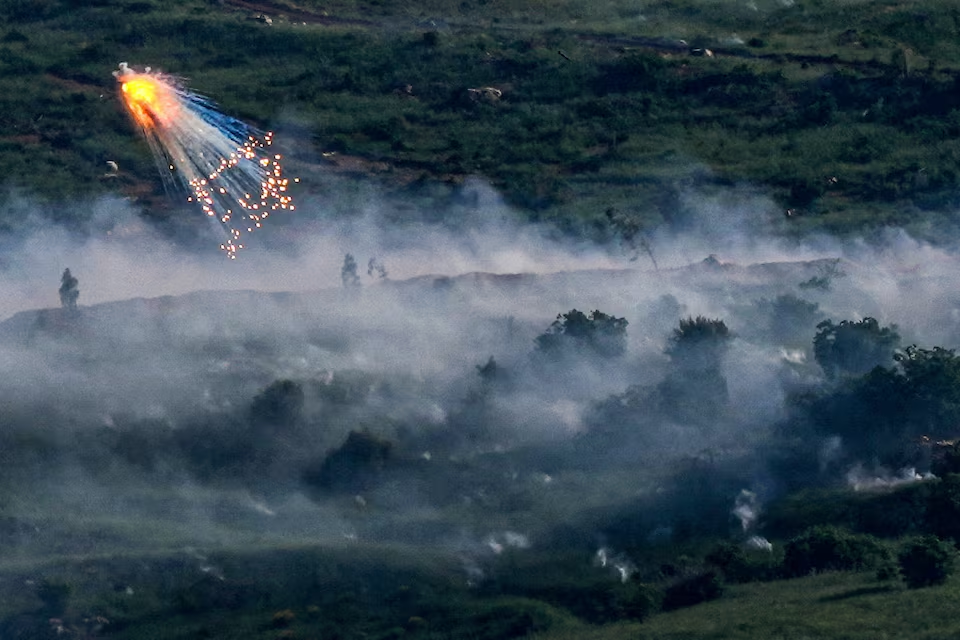
The zone today is largely empty of the Lebanese civilians who once lived there; most fled villages that have since been reduced to rubble. From the Israeli side of the border, military vehicles can be seen moving through destroyed neighborhoods, and the sound of detonations occasionally carries across the hills as smoke rises from the wreckage. Israeli towns hit by Hezbollah missiles and drones sit in plain view on the other side.
One reservist, who served as a young conscript shortly before the 2000 withdrawal and returned to duty this month, said the scale of weapons and infrastructure Hezbollah has built up since then is striking. Still, he said military force alone will not solve the underlying problem. “What’s the purpose? What are you doing it for? You’re fighting, risking yourself, it’s not clear, they don’t make it clear to the soldiers. It’s vague and frustrating,” said the reservist, who spoke on condition of anonymity.
A movement born from the last withdrawal
Israel’s 2000 exit from Lebanon followed years of public pressure that grew louder as soldiers died. Mothers of fallen and active-duty soldiers led that push through a group called Four Mothers — Leave Lebanon in Peace. Rachel Madpis Ben-Dor, one of the group’s founders and its current chairperson, sees history repeating itself. “Then, our children, and now our grandchildren,” she said. “We are making the same mistake now.”
Ben-Dor, who lives in northern Israel, said she believes soldiers can defend her town from positions closer to the border, without occupying Lebanese territory. She said she wants an end to the destruction on both sides. “We don’t want to see villages wiped out. We want peace with Lebanon and we need the world’s support,” she said.
Not everyone shares that view. Benny Gantz, a former defense minister who as a brigadier general in 2000 personally closed the border gate behind Israel’s retreating troops, argues Israel cannot afford to withdraw without safeguards this time. His son recently served on the front line in Lebanon. “We have no choice but to create a buffer,” Gantz said. “We can’t look at reality as we want to see it. We have to look at reality as it is and try to shape it. It will have to be a combination of military, security and diplomacy.”
Talks underway in Rome
Israel and Lebanon are currently holding U.S.-backed negotiations in Rome, working from an initial framework meant to lead toward Hezbollah’s disarmament and eventually a formal peace agreement. Hezbollah has rejected the disarmament demand outright, leaving the talks without clear momentum on the issue most likely to determine whether Israeli troops eventually leave the buffer zone or stay indefinitely.
The gap between the two negotiating positions echoes the years before Israel’s 2000 withdrawal, when political and military leaders debated whether occupying southern Lebanon made Israel safer or simply exposed soldiers to a prolonged guerrilla campaign with no clear endpoint. Hezbollah emerged from that earlier occupation stronger and more sophisticated than when Israel first entered Lebanon in 1982, a pattern veterans like Shely and Erez say worries them now more than ever.
Whether the current buffer zone produces a different outcome will likely depend on what happens in Rome, and on whether Hezbollah’s fighting capacity has been degraded enough by the recent war to change the group’s calculus. For now, Israeli soldiers continue rotating through a landscape of rubble and abandoned villages, patrolling territory that Israeli commanders describe as a strategic necessity and veterans of the last occupation describe as a warning from the past.