
Clicxpost

World News

Russia Strikes Six Energy Targets in Ukraine Days After Trump Announces Energy Ceasefire

Russia Ukraine energy strikes

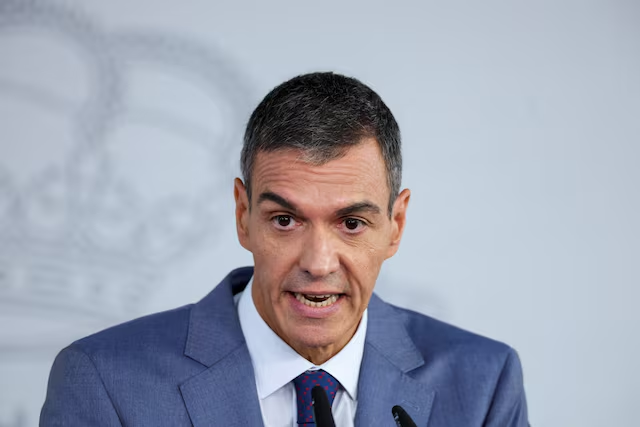
Russia hit at least six energy targets during a night and morning of deadly airstrikes across Ukraine, President Volodymyr Zelenskiy said on Monday, October 12. He said the attacks showed Moscow has no interest in the energy ceasefire that US President Donald Trump announced over the weekend. Kharkiv, Ukraine’s second-largest city, was among the places hit.

Trump said on the weekend that Ukraine and Russia had agreed not to hit each other’s energy systems. The announcement caught Kyiv and its European allies off guard. Neither warring side had confirmed it, and Russian strikes continued on Monday.

Zelenskiy: “Terrorist air attacks” will continue

Zelenskiy posted his assessment on X. “It is increasingly evident that Russia is unwilling to accept an energy ceasefire proposed by the United States and intends to continue its terrorist air attacks against our people and communities,” he wrote.

He tied the timing to Russian revenue. “This is what happens when Russia sees the prospect of higher revenues for its war machine,” he said.

Speaking by video link to a conference in Poland earlier in the day, Zelenskiy named two of the targets: a gas facility and a petrol station. Russian drones hit both.

Kharkiv: a body under the debris

Overnight attacks killed at least three people in Kharkiv. Further strikes in the morning hit residential buildings and wounded at least 22 more people, municipal officials said. Reuters photographed a firefighter at an apartment building damaged by a Russian drone. In the dark, rescue workers searched through wreckage under floodlights. The body of a civilian in jeans and white sneakers lay beneath the debris.

Resident Nataliia Minka had just reached a shelter when a missile hit close by. She and her child watched what they believed was a missile strike on a nearby power station. “Ten minutes had passed since they promised they wouldn’t target energy facilities,” she said.

She described what she saw afterward. “It’s so hard to describe how a child was lying there, already covered up, and the father was running around her, crying and screaming,” Minka said. “It’s so terrifying. It’s impossible to get through something like this.”

In the western city of Ivano-Frankivsk, at least three people were reported killed on Sunday.

A grid campaign two weeks old

Russia began its latest campaign against Ukraine’s power grid two weeks ago. Kyiv has had hours-long power cuts every day since. The outages have reached the capital’s water and sewage systems, and twice stopped its underground trains without warning.

The campaign continues a pattern. Russia has attacked Ukrainian cities for more than four and a half years, including repeated efforts to knock out power and heat in successive winters. Kyiv has answered in recent months with long-range strikes on Russian oil refineries and logistics.

Moscow’s mixed message

Zelenskiy said Ukraine carried out no attacks on Russian refineries overnight. He said Kyiv is willing to agree to an energy ceasefire, but only if Russia keeps to it.

He also raised elections, which are suspended during wartime. Ukraine could hold them, he said, if Moscow agreed to a full ceasefire for 60 days.

Russia gave two answers. Kremlin spokesman Dmitry Peskov said talks on a possible energy ceasefire are continuing and that more information would come in due course. He rejected the 60-day truce. “In the Kremlin, both President (Vladimir) Putin and officials at other levels have repeatedly stated that we do not want a ceasefire,” Peskov said. “We want long-term peace and are prepared to do everything possible to achieve it.”

The two statements sit awkwardly together. Peskov confirmed talks on an energy ceasefire in one breath and said Russia does not want a ceasefire in the next. The strikes on six energy sites came in between.

Oil prices and US politics

Trump is under pressure over high energy prices with US midterm elections next month. Diesel has reached record prices in the United States since he launched his military campaign against Iran. He has increasingly blamed Kyiv’s attacks on Russian refineries for the rise in fuel costs. On Saturday he said Zelenskiy had “better damn well stop” attacking them.

A person familiar with the situation said Washington has threatened to cut off intelligence sharing with Ukraine and supplies of weapons. The United States no longer provides weapons to Kyiv directly but allows European countries to buy them on its behalf, so a cutoff would hit the purchases Europeans make for Ukraine.

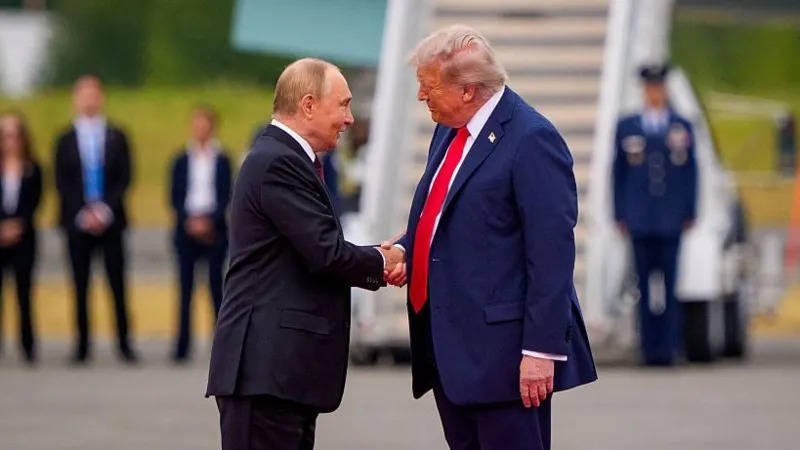
Trump announced the ceasefire days after unveiling a deal to buy diesel from Russia. Zelenskiy has criticised that deal as a reversal of years of Western policy aimed at isolating Russia’s economy. Trump has also called on Ukrainians to unseat Zelenskiy in an election. Reuters described the exchange as unusually severe in a relationship that has been strained since Trump returned to power in 2025.

This was the second time within a few weeks that Trump declared an energy ceasefire without confirmation from both sides.

Europe adds 1,569 names to its sanctions list

Ukraine’s European allies voiced scepticism on Monday about any such agreement and spoke strongly in support of Kyiv. EU foreign ministers added 1,569 individuals and businesses to the sanctions list, described as the largest single package since Russia’s full-scale invasion in 2022.

German Chancellor Friedrich Merz said Moscow “will only negotiate seriously under pressure, which is why we are sticking to our sanctions against Russia.” He added: “Following Moscow’s ruthless attacks on Ukraine’s civilian energy infrastructure, we must actually tighten them further.”

What to watch

Three things will show where the energy talks stand. The first is whether Moscow gives the “further information” Peskov promised. The second is whether Washington follows through on the reported threat to cut intelligence and weapons purchases. The third is whether Russia’s grid attacks continue in Kyiv, where the power cuts have run daily for two weeks.

Zelenskiy has set his condition: Ukraine will stop hitting Russian refineries when Russia stops hitting Ukrainian power. Russia’s strikes on Monday were the answer so far.

Sources

  • Volodymyr Zelenskiy, post on X and remarks by video link to a conference in Poland, October 12, 2026
  • Dmitry Peskov, Kremlin spokesman, October 12, 2026
  • Friedrich Merz, German Chancellor, October 12, 2026
  • Kharkiv municipal officials; Nataliia Minka, Kharkiv resident
  • Reuters reporting from Kharkiv, Brussels and Washington

RECOMMENDED
World News

Zelensky Slams Trump’s Russian Diesel Deal as “Investment in War”

By George Mensah 7 min read

Ukrainian President Volodymyr Zelensky on Friday condemned an agreement announced by US President Donald Trump to import Russian diesel into the United States. He called it a gift to Russian President Vladimir Putin and “an investment in a war that must be ended, not prolonged”.

Trump announced the deal on Truth Social. He said Putin had agreed to release 300,000 tonnes of diesel immediately “to the American and global marketplace”, followed by 500,000 tonnes in November and another million tonnes after that. The BBC understands that the US Treasury is suspending sanctions on Russian diesel exports until 7 April as part of the arrangement. Other Russian assets, including those held in American banks, remain frozen.

The timing matters. Diesel in the US now averages $6.28 (£4.74) a gallon, according to the AAA, and the midterm elections that will decide whether Republicans keep control of Congress are close.

What Trump announced

Trump’s post laid out a delivery schedule, not a contract. The first 300,000 tonnes are meant to move at once. A further 500,000 tonnes are due in November, and a million more after that. He then added that three million tonnes would arrive “within a short period”, but only depending on the condition of Russia’s refineries, which Ukraine has been attacking.

Add the firm figures and the total comes to 1.8 million tonnes. Include the conditional three million and it reaches 4.8 million tonnes. Those sums are our own arithmetic from Trump’s numbers. Neither government has confirmed them.

Shortly after the post, the US Treasury formally issued a temporary licence allowing Russian diesel into the market. Putin said he had spoken to Trump about the global energy situation on Friday. “The Russian side confirmed its willingness to supply oil and petroleum products to the US market and global markets at large,” his statement read. It gave no amounts. Russia introduced a ban on its own diesel exports earlier this year.

Kirill Dmitriev, an envoy for Putin, welcomed the deal on social media. “Russia-US co-operation on diesel and energy will benefit the world,” he wrote.

Zelensky says Russia will repay with “further terror”

Zelensky answered in a social media post. He said Russia would repay the diesel with “further terror”, and he asked Washington for a different kind of pressure on Moscow.

“We count on America’s fair support for our defence of life, for our defence of people in Ukraine – and on the United States having a correspondingly strong conversation with Russia. A strong one, not a weak one,” he wrote.

He also defended Ukraine’s drone strikes on Russian oil refineries. Trump has said he is unhappy about those attacks and has blamed them for rising fuel prices. Zelensky said they respond to “Russia’s years-long campaign of terror against Ukraine’s energy sector”.

“Ukraine will not set Russian oil refineries on fire if Russia does not destroy our energy infrastructure,” he said.

That exchange exposes a contradiction in the deal. Washington now wants more Russian diesel on the market, while the refineries that make it are targets of a country the US supports. If Ukraine keeps hitting them, the volumes Trump announced get harder to produce.

Can Russia deliver this much diesel?

Analysts have asked that question since the announcement. Russia has gone through two waves of severe fuel shortages this year, both caused by Ukrainian drone strikes on its refineries. The International Energy Agency estimates that Russian diesel production has fallen by nearly 30%.

A country that has struggled to fuel its own regions is now promising to ship fuel abroad. Putin’s statement offered willingness, not tonnage. Trump’s own wording on the three million tonne batch, which depends on refinery conditions, concedes the same uncertainty.

The schedule also gets harder as it goes. The first 300,000 tonnes ask the least of Russian refineries. The million-tonne tranche and the conditional three million ask far more from plants that are already running well below normal output. If production is down by nearly 30%, every tonne sent abroad is a tonne not available to the domestic market that has just been through two shortages.

What it means at the pump

Tim Armitage, investment strategist at Quilter Cheviot, said the numbers Trump mentioned were “relatively small”. He put the first tranche at about 2.25 million barrels. US consumption is around 3.8 million barrels a day, “so it won’t make a material difference to pump prices in the US”.

The comparison is easy to run. The first shipment equals roughly 59% of one day of American diesel use. “Granted, there are then two more releases to come, but it does appear to be a slightly desperate move by President Trump to try to lower inflation ahead of the midterms,” Armitage said.

Using the same conversion Armitage implies, about 7.5 barrels per tonne, the 1.8 million firm tonnes come to roughly 13.5 million barrels. That is about 3.5 days of US diesel consumption, spread over several months.

The price record explains the urgency. The AAA put the diesel average at $6.53 a gallon at the end of September, the highest ever recorded. It has since eased to $6.28, a drop of 25 cents. That drop came before any Russian diesel arrived, so the easing so far cannot be credited to this deal. Brent crude, the global benchmark, remains above $103 a barrel. Before the war with Iran it traded around $73, so crude is about 41% higher than it was.

That war began in February. It sent petrol prices up, and diesel prices up even faster, and the knock-on costs fed inflation across the economy. Voters noticed. Trump has spent months dealing with the political damage.

A reversal of recent US policy

The deal contradicts a law Trump signed recently. Congress enacted legislation, with the president’s signature, authorising new American sanctions and tariffs on nations that import Russian oil and gas. A Treasury licence for Russian diesel now cuts against the spirit of that measure.

Trump’s Truth Social posts often leave out detail, and this one is no exception. How Russia will supply the fuel to the global market is unclear. So is what Russia gets in return. The BBC has asked the White House what Moscow will receive.

The arrangement also hands critics an argument. European allies and pro-Ukraine politicians in the US can say the American president is now helping to fund Moscow’s war.

London responds

A UK government spokesperson said Britain’s position “could not be clearer”. “We will continue working closely with international partners to ensure Ukraine has the military and financial support it needs to defend itself,” the spokesperson said.

The spokesperson added that the government would “maintain pressure on Russia through the toughest sanctions regime ever imposed by UK”. “Russia could end this war today. We remain committed to supporting Ukraine for as long as it takes and to working with partners to bring about a durable peace.”

The statement does not mention the US deal by name. It restates London’s support for Ukraine and its sanctions policy as Washington moves to suspend its own diesel sanctions.

Midterm pressure drives a run of fuel measures

The diesel agreement is one of several steps Trump has taken in the past few days. Earlier this week he said he was “thinking about” suspending the federal tax on gasoline. He also announced that so-called red dye diesel can be used on US highways without facing federal tax.

He has also pressed G7 nations into releasing 100 million barrels of oil and diesel from stockpiles, and he previously backed calls for a ban on diesel exports from the US.

Set against those measures, the Russian volumes look modest. The first 2.25 million barrels are about 2% of the G7 stockpile release. That release draws on oil and diesel already in storage. The Russian cargoes depend on refineries that Ukraine is attacking and on a government whose commitments so far are verbal.

What to watch next

Several dates and questions will show whether the deal holds. The November shipment of 500,000 tonnes is the first test of Russia’s capacity after the initial release. The 7 April expiry of the sanctions suspension sets a deadline for Washington to renew or end it.

Putin’s statement did not say whether the export ban Russia introduced earlier this year will be lifted or waived for these cargoes. The White House has not said what Russia receives in return. Putin has not named a quantity. And Zelensky has tied an end to the refinery strikes to an end of Russian attacks on Ukraine’s energy network.

For American drivers and truckers, the near-term picture depends less on this announcement than on Brent crude, which still sits roughly $30 above its pre-war level.

Sources: BBC News reporting on the Russian diesel agreement; statements from Volodymyr Zelensky, Vladimir Putin, Kirill Dmitriev, the UK government and Quilter Cheviot; AAA diesel price data; International Energy Agency.

World News

China’s LOGINK Shipping Data Platform Goes Dark, Leaving Empty Offices and Unpaid Bills

By George Mensah 6 min read

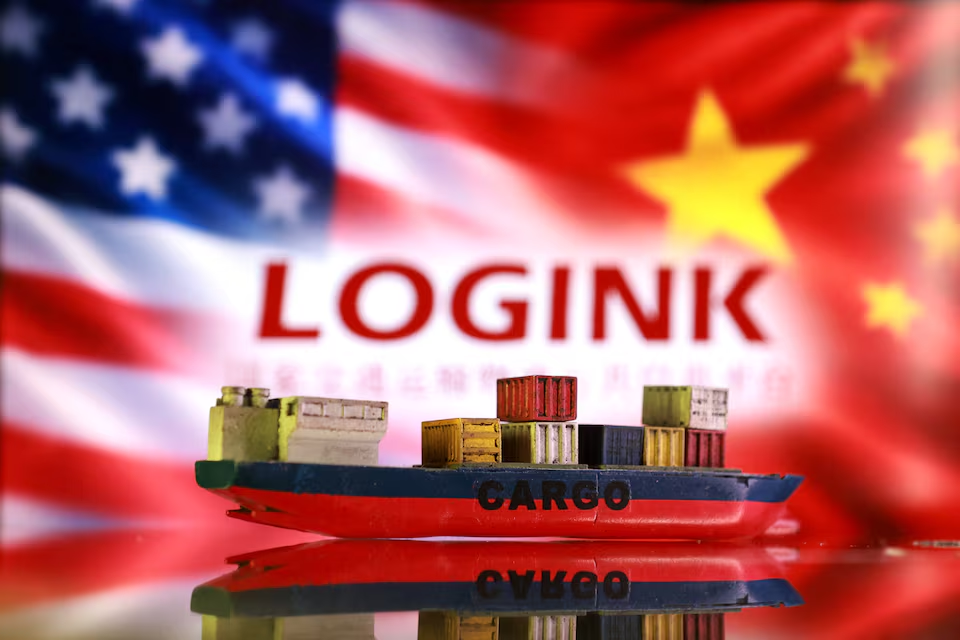
China’s LOGINK shipping data platform has lost its foreign partners, dropped out of an international port association and is facing lawsuits over unpaid bills, according to a Reuters investigation based on more than 20 interviews and a review of court filings. A reporter who visited its operations hub in Wenzhou in September found the offices apparently abandoned.

Four years ago, the United States warned that LOGINK would spread across the world and give Beijing a view into the movement of international cargo. The reverse has happened. Shipping carries 80% of world trade, and the platform meant to sit at the centre of its data is now short of money, members and staff.

Empty offices in Wenzhou

Reuters visited the Wenzhou building, on the edge of the city beside a river, in September. The lights were off, the reception area was bare and the computer cabling had been stripped out. Desks and chairs were collecting dust.

Calls and emails to LOGINK went unanswered. China’s transport ministry declined to answer questions. In June, though, it issued a policy document calling for the system to be connected to more domestic data streams.

A large Communist Party slogan still covers a wall next to the empty desks. It announces China’s plans for global supply chains by 2035.

Reuters could not establish why a platform that China’s cabinet had championed as a major project went quiet so abruptly. The timing matches a period of US pressure on allies and organisations that had taken early steps to work with it.

What LOGINK was built to do

LOGINK’s formal name is the National Transportation and Logistics Public Information Platform. It began about 20 years ago as a project of the Zhejiang provincial government. The aim was to pull data from ports, trucks and vendors into one searchable system and improve how cargo moves.

Policymakers in Beijing backed it and soon moved control to the transport ministry. Expanding abroad became a priority.

In 2010, China signed a cargo data-sharing deal with the Japanese and South Korean governments that linked LOGINK to their national logistics platforms. A few years later it signed an agreement with a Hong Kong-based logistics platform. A press release from the Chinese side said the deal would give it access to ‘more than 90% of global ship tracking data.’

A 2015 transport ministry presentation to a United Nations commission described LOGINK as a ‘one-stop portal connected with global logistics information systems.’ By the late 2010s it was exploring ties with European ports.

Why Washington objected

US officials and security analysts feared that Beijing could use LOGINK to collect non-public details on traded goods, volumes and prices. They said that information could help Chinese firms undercut Western rivals.

Some also worried that the platform could track sensitive military shipments, including US arms deliveries to Ukraine and Taiwan, many of which travel through commercial freight networks.

LOGINK has never publicly said what data it collects or how much. In a 2024 submission to the US Trade Representative’s Office, LOGINK official Li Zhao said the platform lacked ‘the capacity to collect sensitive commercial information or to continuously monitor global cargo movements.’

US policymakers began pushing back in public in 2022. In April of that year, LOGINK joined an international data-sharing project that links the operators of digital platforms handling cargo and customs information at ports. A US congressional commission report said that move would double LOGINK’s cooperation with international ports.

A few months later, a group of Republican lawmakers wrote an open letter urging then-President Joe Biden to act. Marco Rubio, now Secretary of State under President Donald Trump, was among the signers. They warned that unchecked growth could let the Chinese Communist Party ‘gain a stranglehold on the arteries of global trade.’

In late 2023, then-Representative Michelle Steel asked the International Port Community Systems Association (IPCSA), which led the data-sharing project, to cut its ties with LOGINK at once. Around the same time, Congress passed a law that bars the Pentagon from contracting with LOGINK-connected entities and tells officials to discourage allies and partners from using the platform.

Officials in Seoul and Tokyo told Reuters that the data shared with LOGINK was narrower than some in Washington feared. South Korea’s Ministry of Oceans and Fisheries and Japan’s transport ministry said they provided only vessel arrival and departure times and details of cargo loading and unloading, not what the cargo contained.

Partners fall away

Building where LOGINK's operations hub is based, in Wenzhou

LOGINK’s membership in the IPCSA ended in 2024 after it stopped paying dues, according to a person familiar with the matter. Its website went dark around the same time. The latest copy on the Wayback Machine archive dates from June 2024.

IPCSA General Manager Inga Morton confirmed that LOGINK is no longer a member. She said the international data-sharing project is ‘on hold and inactive.’

The trilateral service with South Korea and Japan, LOGINK’s main international initiative, has also stopped. Participants from the three countries met regularly after it launched. China then cancelled a March 2024 event, citing ‘internal circumstances,’ according to South Korea’s oceans ministry. No meetings have taken place since.

Japan’s access to LOGINK data later ended without notice. A transport ministry official told Reuters in August that Tokyo lost access more than a year earlier and has been unable to reach its Chinese counterparts.

European efforts went nowhere. Ana Rita Rosa, a spokesperson for the authority that runs Sines, Portugal’s largest port, said a 2017 memorandum of understanding with LOGINK to explore data-sharing produced no notable results.

Portbase, the digital system behind Europe’s largest port at Rotterdam, said a 2019 memorandum never moved past exploratory talks. A person familiar with the matter said Dutch government questions about the relationship in early 2022 contributed to Portbase’s decision not to pursue it.

Rosa and Portbase declined to say whether US diplomatic pressure played a part. The Dutch foreign ministry also declined to comment.

Court claims and a possible eviction

LOGINK's operations hub in Wenzhou

At home, LOGINK is facing legal trouble. The commercial entity behind the Wenzhou hub has faced at least 39 court claims since January 2024, totalling about $1.3 million, according to filings on Qichacha, a corporate data provider. Some of the complaints are listed as labour disputes. Others appear to involve unpaid utilities.

A local subsidiary of China Mobile sued LOGINK in October 2025 over a ‘contract dispute over service provision.’ A court later ordered LOGINK to pay the telecoms company, though the filings do not show whether it did.

LOGINK may also be facing eviction. In May, a judge heard a ‘property lease dispute’ brought against it by the state-backed developer that runs the industrial park where it is based, the records show. China Mobile and the developer did not respond to requests for comment.

Washington’s view

A cargo ship carrying containers moves through the waters at Yantian port in Shenzhen, Guangdong

Randall Schriver, chair of the US congressional commission that published a 2022 report on LOGINK, said the US helped cause the reversal by ‘naming and shaming’ those who used the system. He said the platform’s decline will be welcomed in Washington.

A US State Department spokesperson gave no details of its diplomatic work to limit LOGINK’s use. The spokesperson said Washington would not allow a Beijing-controlled platform to ‘gain a chokehold over global maritime data.’

‘We have prohibited its use across our own government and critical port infrastructure, and we urge allies and industry to take this threat with the same seriousness,’ the spokesperson added.

What happens next

LOGINK’s overseas network has shrunk to almost nothing, but its domestic plans have not been dropped. The transport ministry’s June policy document shows Beijing still wants it linked to more Chinese data sources.

The open questions are who pays for it and whether the Wenzhou hub survives its lease dispute. China’s transport ministry and LOGINK have not answered. Court records and any future filings will show whether the platform can pay its debts.

ADVERTISEMENT
Scroll to Top