Clicxpost

US News

Public executions in the US stopped nearly a century ago – why are they resuming now?

Fort Hood shooter livestream

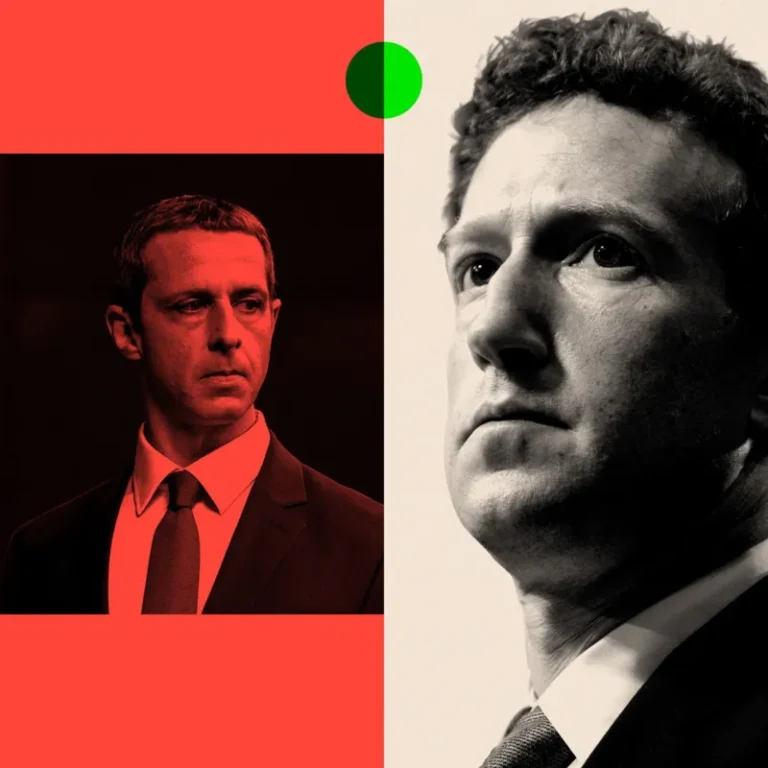
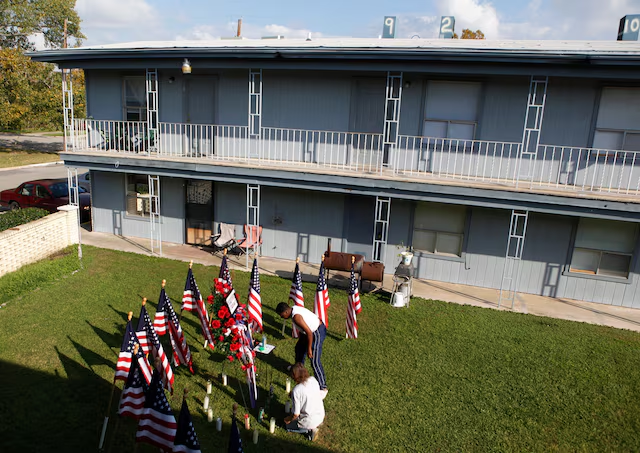
The US military plans to carry out a public execution by firing squad and broadcast it live, the first announcement of its kind in the United States in almost 90 years. US Secretary of Defense Pete Hegseth said the military would publicly execute Nidal Hasan, who killed 13 unarmed fellow soldiers at the Fort Hood base in Texas in 2009. The Pentagon later said the execution would be live-streamed.

“People need to understand that there’s serious consequences for these types of things,” Hegseth said.

The announcement has drawn alarm from a death penalty scholar, an author who researched the last major public hanging in America, a violence researcher and the chair of the US Conference of Catholic Bishops. President Donald Trump has said he approved the decision to livestream Hasan’s death. Vice-President JD Vance says he will not watch.

What was announced

The sources available so far describe the plan in broad terms. Hasan, who killed 13 people in the 2009 shooting at Fort Hood, would be executed by firing squad. The military would conduct the execution in public, and the Pentagon says it will be livestreamed.

Trump was asked whether he would tune in himself and avoided the question. He confirmed that he had approved the livestream. “I really don’t care how he goes as long as he goes,” Trump said. “And I think that the death penalty is a very worthy way of going for him.”

Vance, who is Catholic, has said he would not be watching the execution.

The reports do not say when the execution will take place, where it will be held or who will be able to view the stream. Those details have not been made public in the material reviewed for this article.

The last time America did this

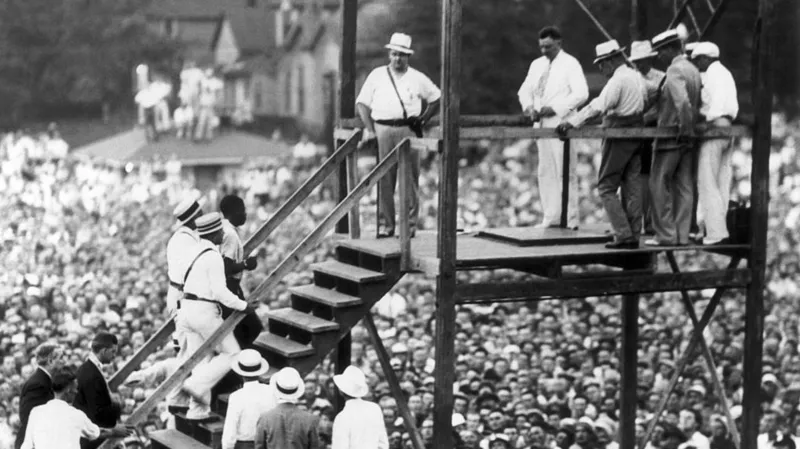
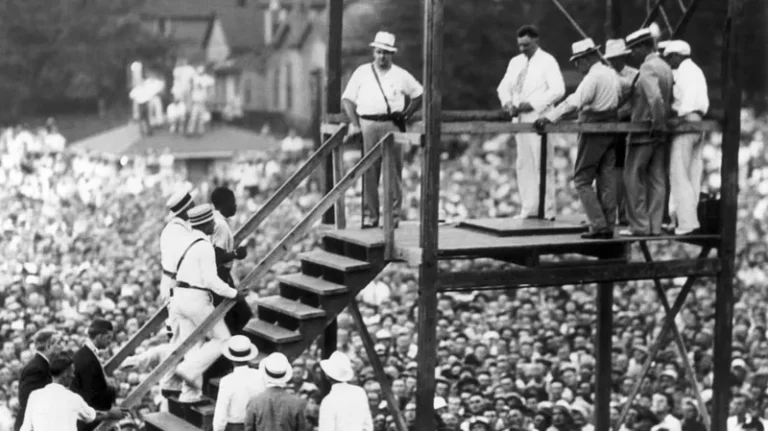
The previous public executions in the US belong to a different era. The most prominent took place on 14 August 1936 in Owensboro, Kentucky, during a heat wave. It was a Friday.

Rainey Bethea, an orphan in his 20s, was hanged on a riverfront gallows. He had been sentenced to death after allegedly confessing to robbing, raping and killing Lischia Edwards, 70, an elderly white widow. Bethea was black.

The scene around the gallows turned into a public event. Spectators arrived from near and far. Some slept overnight close to the gallows to keep their places. Others held “necktie” parties the evening before and arrived hungover. Teenagers sold popcorn and soda to the crowd.

By the time of the execution at 5am, the crowd was estimated at 20,000 people, including men, women and children. Reporters had come from as far away as Chicago and New York. Many spectators were there to see a rumoured “Lady Executioner”. The local sheriff had died four months earlier and his widow had taken over the post. She declined to pull the lever herself, and hired hangmen carried out the hanging.

Bethea had eaten his last meal the previous afternoon: fried chicken, pork chops, mashed potatoes, pickled cucumbers, cornbread, lemon pie and ice cream.

The spectacle embarrassed many in Kentucky. Eighteen months later, the governor outlawed public executions. By then most states had already stopped holding executions in view of the public, as attitudes turned toward more humane and private methods. A hanging in Missouri in 1937 drew a few hundred people. It was less well known, and it is recorded as the final public execution in America.

Hegseth’s announcement comes a little more than 90 years after Bethea’s death.

A scholar who did not expect it

Michael Radelet, a professor emeritus at the University of Colorado and a long-time scholar of capital punishment, said the announcement shocked him. “I never imagined [another] public execution,” he told the BBC.

He pointed to falling public support for the death penalty. Backing for capital punishment was 80% in 1994 and stands at 52% now. That is a drop of 28 percentage points, or a fall of 35% from the 1994 level, by our calculation. “It’s gone down precipitously, especially when you give the alternative of life without parole,” Radelet said.

It is too soon to know what Americans think of livestreaming an execution. The BBC’s reporting assumes a large audience, saying it is nearly certain that millions of people or more would tune in.

That prospect troubles Radelet. With Hegseth’s announcement, he said, “the justification for the death penalty becomes entertainment … bring your popcorn, invite your friends”.

An author with a family link to 1936

Sonya Lea published a book last year about Bethea’s execution. When she heard of the planned livestream, she “felt absolute horror for our descendants”.

“What they called it in 1936 was a carnival of sadism,” she said. “That we now have the technology that can make it go wider than the 20,000 people who showed up … to witness in Owensboro, Kentucky, it just makes it even more horrific.”

Her connection is personal. Lea’s grandparents were teenage newlyweds in the 1936 crowd. She learned that only after her grandmother died in 2002, when she read an account her grandmother had left. It said they stood close enough to hear Bethea’s neck snap.

Years of research afterward taught Lea that many Kentuckians were “haunted” by the execution. She had believed that kind of event belonged to the past.

“I really thought, with all my heart, that we had put this in the rearview mirror, this level of grotesquery that only a few countries in the world engage in – Iran, North Korea, Afghanistan,” she said. “Are we now, as the United States of America, considering ourselves to be part of that kind of government? It’s just horrific.”

Polarisation and desensitisation

Kurt Gray, a social psychology professor at Ohio State University, said the polarised tone of American politics may have made the announcement possible. He does not think most Americans want to see it.

“Some Americans might thirst for blood, but I think a lot of Americans don’t, and, if anything, I think a lot of other Americans are just kind of maybe desensitised,” he said. “So it’s not like they’re cheering a public execution; they’re just like, ‘Oh, yeah, I guess that’s where we’re at now.’”

Gray’s point separates two groups. Some Americans may welcome the broadcast. Many others, in his view, may simply accept it as normal.

A reading of the country that may be wrong

Other research suggests Hegseth and the administration may be misjudging the public. Garen Wintemute, director of the Violence Prevention Research Program at the University of California, Berkeley, said survey data point to a declining appetite for violence in the US.

He also cited the response from religious leaders. “This morning, the chair of the US Conference of Catholic Bishops labeled this [livestream execution announcement] as barbaric,” Wintemute said. “And I think he speaks for a lot of people.”

“I think it’s this: A public execution is not who we are,” he added. “It’s not who we aspire to be as a country.”

Vance is a Catholic. The chair of the bishops’ conference has called the plan barbaric, and Vance has said he will not watch.

The case and the reaction

The criticism in the BBC’s reporting is aimed at the method and the broadcast, not at the verdict. Radelet objects to turning a punishment into entertainment. Lea objects to the technology. Gray and Wintemute talk about what the plan says about the country. None of them is quoted disputing that Hasan killed 13 people.

Hegseth framed it as a response to that crime. His stated reason was that people need to understand there are serious consequences for such acts. Trump’s reason was blunter: he said he did not care how Hasan dies as long as he does.

What to watch

The material reviewed so far leaves several questions open. The date of the execution is not given. Neither is the format of the stream, or whether the public will be allowed to attend in person. The sources also do not say whether any legal challenge is planned.

Opinion surveys will be worth watching. Public support for the death penalty is at 52%, the current figure Radelet cited, and no poll yet measures how Americans feel about a livestreamed execution. The first such numbers will show whether Gray’s reading of a desensitised public or Wintemute’s reading of a country that rejects the idea is closer to the truth.

The 1936 hanging in Owensboro shows how long the memory of such a spectacle can last. Many Kentuckians were haunted by it, and the governor acted within 18 months. Whether the Hasan execution produces a similar reaction depends on how many people watch and what they make of it.

Sources: BBC News reporting on the planned execution of Nidal Hasan; statements from Pete Hegseth, Donald Trump and JD Vance; comments from Michael Radelet (University of Colorado), Sonya Lea, Kurt Gray (Ohio State University) and Garen Wintemute (University of California, Berkeley).

RECOMMENDED
US News

Trump wants to reduce the cost of fuel as the midterms loom

By George Mensah 7 min read

With a few weeks left before the US midterm elections, President Donald Trump on Friday announced a deal with Russian President Vladimir Putin to release Russian diesel to American and global markets. It is his latest attempt to bring down fuel costs that have more than doubled since the US-Israel conflict with Iran began in February. Analysts quoted by the BBC say high prices will outlast this announcement.

The price rise has hit transport businesses, farmers and anyone who drives a vehicle in America. Calls for action have grown as voters move toward the polls, and Trump has made several announcements aimed at getting costs down.

What Trump announced

Trump said the arrangement covers an immediate supply of over 300,000 tonnes of Russian diesel, 500,000 tonnes in November and a further million tonnes “immediately thereafter”. By his own account, diesel prices in the US and across the world “will be COMING DOWN, IN RECORD NUMBERS, AND FAST!”

“Lower prices for Americans, especially our Great Farmers, Ranchers, and Truckers, is my Greatest Priority,” he said.

He added that another 3m tonnes would be delivered “within a short period” after that, depending on the condition of Russia’s refineries. The three batches he named without conditions add up to at least 1.8 million tonnes. That total is our own arithmetic, not a figure either government has published.

Fuel prices and the midterm vote

Earlier in the week, at a campaign stop, Trump announced a waiver on red dye diesel. The move shows how much weight gas prices carry in an election dominated by affordability.

Public worry over the cost of fuel, food and other goods is widespread. Voters have tied the issue to Trump and his party, and it is weighing on Republicans running in November. Polls show a majority of Americans disapprove of how Trump is handling the economy and the war in Iran, which has contributed to high diesel and gasoline prices.

What is pushing prices up

Charles-McClintock Wilson/NurPhoto via Getty Images A customer wearing a backwards cap and a blue tshirt refuels a red vehicle at a gas station in Salt Lake City, Utah, United States on a clear, sunny day.

Global oil supplies have been restricted since the conflict in the Middle East effectively halted the usual flow of oil and refined products through the Strait of Hormuz for months. Crude is flowing again at nearly pre-war levels, but the price remains above $100 a barrel. Those sustained crude prices have carried through to diesel and gasoline.

Russia’s war with Ukraine also plays a part. David Ruisard, pricing manager at the commodities intelligence firm Argus, put numbers on the split.

“Our estimates are that your price increase from about $3 a gallon up to $6 a gallon [for diesel] is 60% connected to the Strait of Hormuz, 40% connected to the Russia-Ukraine conflict,” he said.

Apply his percentages to the $3 increase and about $1.80 of it traces to Hormuz and about $1.20 to the Russia-Ukraine conflict. Those dollar amounts are our calculation from his estimate. They suggest the larger share of the increase comes from a disruption that Russian cargoes cannot reach.

Michael Pearce, chief US economist at Oxford Economics, said higher energy prices account for most of this year’s rise in inflation, which is pushing up interest rates. “The combined impact of higher rates and higher energy prices is squeezing household budgets and adding to firms’ costs,” he said.

Prices are still high, but Patrick De Haan, head of petroleum analysis at the fuel price tracking site GasBuddy, said gasoline and diesel have both seen modest declines recently. “A lot of that is likely due to some of the manoeuvres that we’ve seen the Trump administration employ over the last couple of weeks,” he said.

What Trump has already tried

Friday’s diesel deal follows a series of other policies and ideas.

Red dye diesel. This week Trump said he would let so-called red dye diesel, which is used off-road and carries no federal tax, be used on US highways without federal levies. Ruisard said the only difference between that fuel and the diesel used by truck drivers and everyday consumers is the dye.

The dye is the problem. “It’s extremely hard to clean it out of your tank,” Ruisard said. Trucking companies that fill up with dyed diesel face a question once the temporary tax relief ends. “The fines are pretty high for having that in your fuel tank because it’s considered tax evasion,” he said.

He raised a second issue. People and businesses, rail operators among them, usually set aside a fixed amount of red dye diesel. “If suddenly people go out and they start consuming that diesel, that depletes their available supply as well,” he said.

Stockpile releases. Last week the G7 countries announced they would release 100 million barrels of oil and diesel from stockpiles, after pressure from Trump. Analysts rate this one as more effective. De Haan said the announcement alone, whatever has physically been released so far, “has worked to push prices down to some degree”.

Pearce agreed but called the release temporary. “As long as energy exports from the Gulf remain disrupted, stocks will need to be drained further to supply the market,” he said. “And the need to refill those stocks will mean energy prices remain elevated for a period, even when disruption in the Middle East clears.”

State gasoline taxes. Trump has urged states to cut their own gasoline taxes, and several have, including Ohio and Georgia. De Haan said state taxes make up a “moderate portion” of what consumers pay at the pump, and the cuts have helped lower prices and national averages. They cost money. By De Haan’s estimate, Indiana’s May cut has cost the state government $1bn (£760m) in lost revenue.

The federal gasoline tax. Trump said earlier this week he was “thinking about” suspending it. That would need Congress to cooperate. “That may be difficult to obtain ahead of the midterm elections,” De Haan said.

A diesel export ban. Trump has previously supported calls to ban diesel exports from the US. Pearce said this would give partial relief in the Gulf and the Midwest, but “little benefit” to the Northeast and the West Coast. He also warned of a side effect. “The policy risks backfiring because it would result in stockpiling of diesel, and as that storage runs out, refineries would need to cut back on production,” he said. “That would raise prices of other energy products, including gasoline.”

The options that remain

De Haan thinks the president has “basically pulled all of the small levers that a president can pull, and we’re still seeing prices very elevated”.

In his view the remaining answer lies outside fuel policy. “The only way out of this to reduce gas prices in a meaningful way is solve one or both of the geopolitical tensions that are causing high prices,” he said. That means reaching a deal with Iran and helping to broker an agreement between Ukraine and Russia. Pearce noted that the White House cannot directly control either.

Even a settlement would not bring quick relief. Ruisard said damage to Middle East facilities from military strikes means production would still need four to six months to return to normal. Counted from today, that points to a window between February and April 2027, and only if a deal came immediately.

“The message to consumers and industry is that regardless of what happens and whether the president is able to successfully negotiate that kind of a deal,” Ruisard said. “High prices are here to stay for a little while at least.”

What to watch next

The first test of the Russian arrangement is the November shipment of 500,000 tonnes. The three million tonne batch after it depends on the condition of Russian refineries, so its timing is open.

Three other items will decide how drivers and businesses feel by election day. The first is whether Congress takes up a federal gasoline tax suspension, which De Haan expects to be hard to win. The second is whether more states follow Ohio and Georgia and cut their own taxes, with Indiana’s $1bn cost as a warning to state budgets. The third is whether talks on Iran or on Ukraine and Russia produce anything before November.

Each of those depends on governments the White House does not control, or on a legislature that has to agree. The analysts quoted here treat the Russian diesel deal as a modest, temporary help at best. Their shared view is that fuel prices will fall in a meaningful way only after the conflicts behind them are settled, and that even then relief would take months to reach the pump.

Sources: BBC News reporting on Trump’s Russian diesel announcement and US fuel prices; statements from Donald Trump; comments from David Ruisard (Argus), Michael Pearce (Oxford Economics) and Patrick De Haan (GasBuddy).

US News

Pentagon Will Livestream Fort Hood Shooter’s Execution by Firing Squad

By George Mensah 11 min read

The Pentagon will livestream the Army’s firing squad execution of Nidal Hasan, the former Army psychiatrist who killed 13 people at Fort Hood, Texas, in 2009. It would be the first broadcast of a legal execution in the United States, and experts say no other country is known to televise or stream one.

A Pentagon official confirmed the plan to Reuters on Thursday, speaking on condition of anonymity. “It will be livestreamed. Details will follow,” the official said. Defense Secretary Pete Hegseth, who pushed for the firing squad, confirmed the livestream in a post on X.

The execution is set for December 3 at Fort Hood, the same Texas base where Hasan opened fire in 2009. If it goes ahead, Hasan, now 56, will be the first person the US military has executed by firing squad since 1945, and the first person it has executed by any method since 1961.

What the Pentagon has and has not said

The announcement came in two pieces. A Pentagon official told Reuters about the livestream, and Hegseth then confirmed it publicly. Beyond that, little has been settled in public.

Axios reported that the Pentagon did not say where the stream would be hosted. The department regularly posts speeches and videos on X and YouTube, but it has not named a platform for this event. The Army has not said how it will carry out the execution, and it is unclear whether anyone beyond official witnesses will be allowed to attend in person. A Defense Department spokesperson declined to comment on Hegseth’s remarks to Axios.

The White House has also kept its distance on the livestream itself. Asked whether President Donald Trump supports it, the White House declined to say and referred questions to the Pentagon.

Why December 3, and why 1 p.m.

Hasan’s attack happened on a Thursday afternoon. December 3 is a Thursday, and the execution is scheduled for 1 p.m. Hegseth told the Human Events Daily program, according to Reuters, that choosing a Thursday at 1 p.m. at Fort Hood, matching the approximate time, day of the week and location of the 2009 shooting, was a “no-brainer.”

He also explained why the public should see it. “We’ll make sure that people are able to watch it, that it’s public. Because people need to understand that … there’s serious consequences for these types of things,” Hegseth said.

Asked whether Hasan had made any final requests, Hegseth answered: “Don’t care. We’ll see him on December 3.”

In a separate interview with Real America’s Voice, which the Associated Press says he gave aboard the USS Abraham Lincoln while visiting its crew, Hegseth said Hasan will face a firing squad “of soldiers, as it should be,” according to CBS News and Axios.

The 2009 shooting and the sentence

Hasan was an Army major and psychiatrist at Fort Hood in November 2009. He walked into a medical building where soldiers were lining up for immunizations and deployment clearances, shouted “Allahu akbar” and opened fire with a laser-sighted handgun, according to the AP. Thirteen people died and 32 were wounded. The shooting came weeks before Hasan was due to deploy to Afghanistan.

Evidence at trial showed he spent weeks preparing. He videotaped a store clerk showing him how to change a pistol magazine, and he visited a gun range near Austin to ask an instructor about fast, precise reloading. Soldiers testified that his rapid reloading made the shooting nearly impossible to stop. Investigators recovered 146 shell casings inside the building and dozens more outside, where he fired at soldiers who were running away.

Police shot Hasan during his arrest. The wounds left him partially paralyzed, and he uses a wheelchair.

A military jury sentenced him to death in August 2013. It had found him guilty on 45 counts of premeditated murder and attempted premeditated murder. Hasan represented himself at the court-martial. He told jurors the evidence would show he was the shooter, described himself as a soldier who had “switched sides,” and offered almost no defense. He has said he acted to stop soldiers from deploying to Afghanistan and killing fellow Muslims. A military judge barred him from presenting that as a defense.

His court-appointed standby attorneys clashed with him, because they worried he was deliberately seeking the death penalty.

His case reached the Supreme Court in 2024. Hasan asked the justices to review whether the trial judge violated his right to a public trial by clearing the courtroom while discussing some issues with attorneys. The court declined to take up the question last year.

How a military firing squad execution gets approved

Under US military law, a president must approve an execution by firing squad. The Pentagon said on Monday that Trump gave that approval after Hegseth recommended it. Chief Pentagon spokesman Sean Parnell described the sequence the same way to CBS News: Hegseth recommended the method and Trump approved it.

The military has carried out very few executions in the modern era. Death Penalty Action, a group that opposes capital punishment, says Hasan’s would be the first military execution since 1961. The Death Penalty Information Center says that 1961 execution was a hanging. The AP identified the man as Army Private John Bennett, and CBS News reported that he was convicted of raping and attempting to murder an 11-year-old girl.

The last known executions by US military firing squads took place in 1945, according to the Death Penalty Information Center. Axios identified the best known of them: Private Eddie Slovik, shot for desertion in France.

So a firing squad is not new to American military law. Broadcasting one is.

No precedent for a livestream

Media organizations have asked to televise US executions before. Courts have blocked those efforts. Experts told Reuters that no other country is known to televise or livestream a legal execution.

Public executions have become rare worldwide. Iran and Taliban-run Afghanistan are among the countries known to have held them in recent years.

The United States has its own history here. Lynchings, often carried out by white mobs targeting Black Americans, were public spectacles well into the 20th century. The last legally sanctioned public execution in the country took place in 1936, death penalty experts told Reuters. Thousands watched the hanging of a young Black man convicted of raping a white woman. Axios named him as Rainey Bethea, hanged in Kentucky, and cited a reported crowd of about 20,000.

Hegseth’s plan would put viewers in front of a screen instead of in a crowd, and Hegseth has said the goal is for people to see the consequences. The AP noted a contrast in Washington’s own record: Trump has criticized public executions in Iran, and he has cited the possibility of protesters being killed there as a reason for military action.

What legal and military experts say

Eugene Fidell, a lawyer and military law expert who lectures at Yale Law School and has written on the subject, called the plan unusual. “It would be extremely, extremely strange” to livestream the event, Fidell said.

Fidell said that, as far as he knew, livestreaming or televising an execution would be unprecedented. He added that Hasan would have to sue in federal court if he wanted to block a public display of his death.

That raises a question no court has settled. “The Supreme Court has never addressed this question, and it’s an interesting question whether the current Supreme Court would put on their originalist hat and say, ‘Well, it was OK in 1790, so what the hell?'” Fidell said.

Jonathan Lurie, an author and historian of military justice, said he sees no compelling reason to make the execution public. “What’s the point of it? Who would want to see that?” Lurie said.

Military law experts told the AP that Hasan could also file a habeas petition in civilian court, which could delay the execution considerably. Fidell put it bluntly: “It frankly might outlast the current administration.”

Neither Hasan’s lawyers nor the Pentagon has said whether a court challenge is coming. CBS News contacted Hasan’s attorney for comment and had not received a response when it published.

Firing squads are returning

The Hasan execution arrives as firing squads come back into use in civilian courts. The Death Penalty Information Center says at least five states have the method on their books. Axios listed them as Idaho, Mississippi, Oklahoma, South Carolina and Utah.

South Carolina carried out the first firing squad execution in the United States in 15 years in 2025. CBS News reported that the state used the method three times last year.

The federal government has widened its options too. The Trump administration recently added firing squad to the permissible forms of execution for the gravest federal crimes. It also added electrocution and gas asphyxiation.

Part of the reason is supply. Drugs for lethal injection have become harder to obtain, and lethal injections have sometimes proved hard to carry out. That expanded the list of federal options.

The Tennessee case that frames the debate

The livestream announcement lands one week after Tennessee’s attempt to execute Christa Pike went wrong. Pike, 50, would have been the first woman executed in Tennessee in more than 200 years.

Prison personnel botched attempts to administer a lethal injection. Pike survived and was hospitalized. According to her lawyers’ court filings, she was given two doses of the drugs and kept breathing for nearly an hour. Her attorney, Randy Spivey, said staff spent about an hour trying to establish an IV line and used at least seven needles in her left arm alone. Her arm turned purple after the second dose, and witnesses were asked to leave without being told whether she was alive.

The Death Penalty Information Center says Pike is the first person known to survive lethal doses of execution drugs.

Her lawyers said on Wednesday that she woke up “angry and confused” in a hospital. They said she remains very sick and shackled to her hospital bed. Earlier in the week her lawyers had described her condition as critical, and they said they had been unable to see or speak with her.

Pike was convicted for a 1995 killing in Knoxville. She was 18 when she helped lure Colleen Slemmer into the woods, where the teenagers tortured and killed her. Her 17-year-old boyfriend, Tadaryl Shipp, received a life sentence and is now eligible for parole. A third teen, Shadolla Peterson, testified against the other two and received probation.

Before the execution, Pike’s lawyers challenged Tennessee’s lethal injection protocol. They cited a blood disorder and small veins, and they asked the state to consider a firing squad or hanging instead. The Tennessee Department of Correction says it followed established protocol and that lethal injection has worked consistently in the state.

Governor Bill Lee halted scheduled executions for the rest of 2026 and ordered a review of what happened. Death penalty opponents want the results of that review made public. In May, Tennessee also called off the execution of Tony Carruthers after officials could not establish a backup IV line, and Carruthers received a one-year reprieve.

The two events share a timeline and little else. Pike’s case involved a state, a lethal injection and a failure of equipment and staff. Hasan’s case involves the federal military, a firing squad and a deliberate choice to make the event visible. Opponents of capital punishment have linked them anyway, because both happened within days of each other and both put the methods of execution under public scrutiny.

Timeline of the case

  • November 2009: Hasan kills 13 people and wounds 32 at Fort Hood, weeks before his scheduled deployment to Afghanistan.
  • August 2013: A military jury sentences him to death after convicting him on 45 counts of premeditated murder and attempted premeditated murder.
  • 2024: Hasan asks the Supreme Court to review his public trial claim.
  • 2025: The Supreme Court declines the case. South Carolina carries out the first US firing squad execution in 15 years.
  • Last week: Tennessee’s attempt to execute Christa Pike fails, and Governor Bill Lee halts executions for the rest of 2026.
  • Monday: The Pentagon says Trump approved a firing squad on Hegseth’s recommendation.
  • Thursday: The Pentagon confirms a livestream, and Hegseth confirms it on X.
  • December 3, 1 p.m.: Scheduled execution at Fort Hood.

What happens between now and December 3

Several pieces are still open.

The Pentagon has to name the platform for the livestream and explain whether any recording will be kept online afterward. It has to say who will be allowed to attend at Fort Hood. It also has to tell the public how the Army will set up and run an execution it has not carried out since the 1940s.

Hasan’s lawyers have a decision to make. Fidell said a challenge to the public display would have to go to federal court. If a suit is filed, a judge would have to rule on a question that, in Fidell’s words, the Supreme Court has never addressed. The timeline is short, with the execution under two months away, but a habeas petition could change it.

The victims and their families are also part of this, though none of the reporting so far includes their reactions to the livestream. Thirteen people died at Fort Hood in 2009 and more than 30 were wounded. Whether those families want the execution broadcast, and whether the Army will offer them a choice about watching, has not been reported.

For now, the schedule stands. A Thursday at 1 p.m. at Fort Hood, a firing squad of soldiers, and a camera that the Pentagon says will be running.

Sources

ADVERTISEMENT
Scroll to Top