
Ukrainian President Volodymyr Zelensky on Friday condemned an agreement announced by US President Donald Trump to import Russian diesel into the United States. He called it a gift to Russian President Vladimir Putin and “an investment in a war that must be ended, not prolonged”.
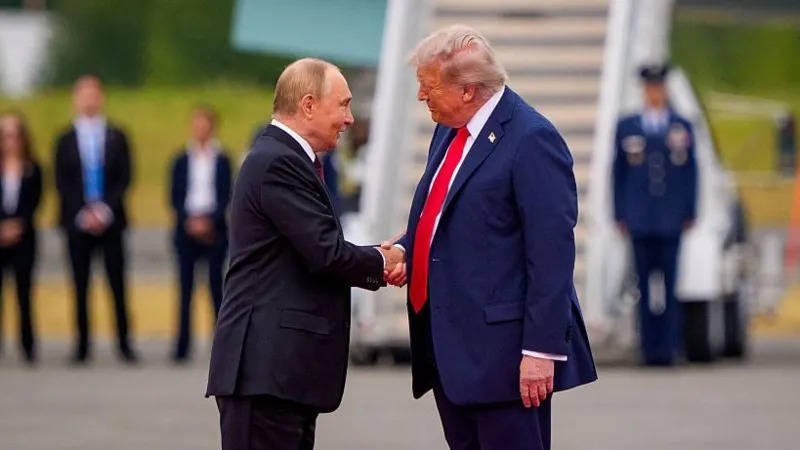
Trump announced the deal on Truth Social. He said Putin had agreed to release 300,000 tonnes of diesel immediately “to the American and global marketplace”, followed by 500,000 tonnes in November and another million tonnes after that. The BBC understands that the US Treasury is suspending sanctions on Russian diesel exports until 7 April as part of the arrangement. Other Russian assets, including those held in American banks, remain frozen.
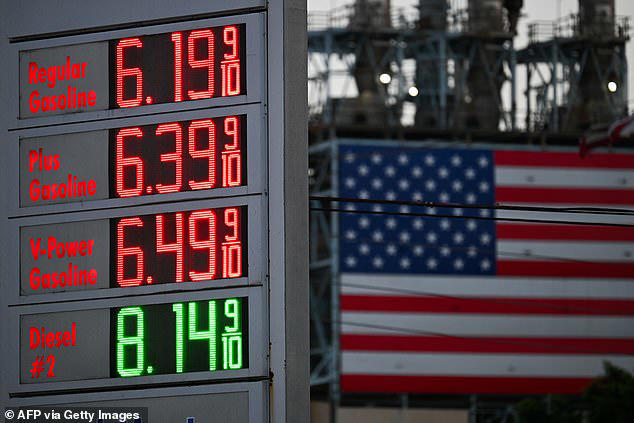
The timing matters. Diesel in the US now averages $6.28 (£4.74) a gallon, according to the AAA, and the midterm elections that will decide whether Republicans keep control of Congress are close.
What Trump announced
Trump’s post laid out a delivery schedule, not a contract. The first 300,000 tonnes are meant to move at once. A further 500,000 tonnes are due in November, and a million more after that. He then added that three million tonnes would arrive “within a short period”, but only depending on the condition of Russia’s refineries, which Ukraine has been attacking.
Add the firm figures and the total comes to 1.8 million tonnes. Include the conditional three million and it reaches 4.8 million tonnes. Those sums are our own arithmetic from Trump’s numbers. Neither government has confirmed them.
Shortly after the post, the US Treasury formally issued a temporary licence allowing Russian diesel into the market. Putin said he had spoken to Trump about the global energy situation on Friday. “The Russian side confirmed its willingness to supply oil and petroleum products to the US market and global markets at large,” his statement read. It gave no amounts. Russia introduced a ban on its own diesel exports earlier this year.
Kirill Dmitriev, an envoy for Putin, welcomed the deal on social media. “Russia-US co-operation on diesel and energy will benefit the world,” he wrote.
Zelensky says Russia will repay with “further terror”
Zelensky answered in a social media post. He said Russia would repay the diesel with “further terror”, and he asked Washington for a different kind of pressure on Moscow.
“We count on America’s fair support for our defence of life, for our defence of people in Ukraine – and on the United States having a correspondingly strong conversation with Russia. A strong one, not a weak one,” he wrote.
He also defended Ukraine’s drone strikes on Russian oil refineries. Trump has said he is unhappy about those attacks and has blamed them for rising fuel prices. Zelensky said they respond to “Russia’s years-long campaign of terror against Ukraine’s energy sector”.
“Ukraine will not set Russian oil refineries on fire if Russia does not destroy our energy infrastructure,” he said.
That exchange exposes a contradiction in the deal. Washington now wants more Russian diesel on the market, while the refineries that make it are targets of a country the US supports. If Ukraine keeps hitting them, the volumes Trump announced get harder to produce.
Can Russia deliver this much diesel?
Analysts have asked that question since the announcement. Russia has gone through two waves of severe fuel shortages this year, both caused by Ukrainian drone strikes on its refineries. The International Energy Agency estimates that Russian diesel production has fallen by nearly 30%.
A country that has struggled to fuel its own regions is now promising to ship fuel abroad. Putin’s statement offered willingness, not tonnage. Trump’s own wording on the three million tonne batch, which depends on refinery conditions, concedes the same uncertainty.
The schedule also gets harder as it goes. The first 300,000 tonnes ask the least of Russian refineries. The million-tonne tranche and the conditional three million ask far more from plants that are already running well below normal output. If production is down by nearly 30%, every tonne sent abroad is a tonne not available to the domestic market that has just been through two shortages.
What it means at the pump
Tim Armitage, investment strategist at Quilter Cheviot, said the numbers Trump mentioned were “relatively small”. He put the first tranche at about 2.25 million barrels. US consumption is around 3.8 million barrels a day, “so it won’t make a material difference to pump prices in the US”.
The comparison is easy to run. The first shipment equals roughly 59% of one day of American diesel use. “Granted, there are then two more releases to come, but it does appear to be a slightly desperate move by President Trump to try to lower inflation ahead of the midterms,” Armitage said.
Using the same conversion Armitage implies, about 7.5 barrels per tonne, the 1.8 million firm tonnes come to roughly 13.5 million barrels. That is about 3.5 days of US diesel consumption, spread over several months.
The price record explains the urgency. The AAA put the diesel average at $6.53 a gallon at the end of September, the highest ever recorded. It has since eased to $6.28, a drop of 25 cents. That drop came before any Russian diesel arrived, so the easing so far cannot be credited to this deal. Brent crude, the global benchmark, remains above $103 a barrel. Before the war with Iran it traded around $73, so crude is about 41% higher than it was.
That war began in February. It sent petrol prices up, and diesel prices up even faster, and the knock-on costs fed inflation across the economy. Voters noticed. Trump has spent months dealing with the political damage.
A reversal of recent US policy
The deal contradicts a law Trump signed recently. Congress enacted legislation, with the president’s signature, authorising new American sanctions and tariffs on nations that import Russian oil and gas. A Treasury licence for Russian diesel now cuts against the spirit of that measure.
Trump’s Truth Social posts often leave out detail, and this one is no exception. How Russia will supply the fuel to the global market is unclear. So is what Russia gets in return. The BBC has asked the White House what Moscow will receive.
The arrangement also hands critics an argument. European allies and pro-Ukraine politicians in the US can say the American president is now helping to fund Moscow’s war.
London responds
A UK government spokesperson said Britain’s position “could not be clearer”. “We will continue working closely with international partners to ensure Ukraine has the military and financial support it needs to defend itself,” the spokesperson said.
The spokesperson added that the government would “maintain pressure on Russia through the toughest sanctions regime ever imposed by UK”. “Russia could end this war today. We remain committed to supporting Ukraine for as long as it takes and to working with partners to bring about a durable peace.”
The statement does not mention the US deal by name. It restates London’s support for Ukraine and its sanctions policy as Washington moves to suspend its own diesel sanctions.
Midterm pressure drives a run of fuel measures
The diesel agreement is one of several steps Trump has taken in the past few days. Earlier this week he said he was “thinking about” suspending the federal tax on gasoline. He also announced that so-called red dye diesel can be used on US highways without facing federal tax.
He has also pressed G7 nations into releasing 100 million barrels of oil and diesel from stockpiles, and he previously backed calls for a ban on diesel exports from the US.
Set against those measures, the Russian volumes look modest. The first 2.25 million barrels are about 2% of the G7 stockpile release. That release draws on oil and diesel already in storage. The Russian cargoes depend on refineries that Ukraine is attacking and on a government whose commitments so far are verbal.
What to watch next
Several dates and questions will show whether the deal holds. The November shipment of 500,000 tonnes is the first test of Russia’s capacity after the initial release. The 7 April expiry of the sanctions suspension sets a deadline for Washington to renew or end it.
Putin’s statement did not say whether the export ban Russia introduced earlier this year will be lifted or waived for these cargoes. The White House has not said what Russia receives in return. Putin has not named a quantity. And Zelensky has tied an end to the refinery strikes to an end of Russian attacks on Ukraine’s energy network.
For American drivers and truckers, the near-term picture depends less on this announcement than on Brent crude, which still sits roughly $30 above its pre-war level.
Sources: BBC News reporting on the Russian diesel agreement; statements from Volodymyr Zelensky, Vladimir Putin, Kirill Dmitriev, the UK government and Quilter Cheviot; AAA diesel price data; International Energy Agency.