
The Pentagon will livestream the Army’s firing squad execution of Nidal Hasan, the former Army psychiatrist who killed 13 people at Fort Hood, Texas, in 2009. It would be the first broadcast of a legal execution in the United States, and experts say no other country is known to televise or stream one.
A Pentagon official confirmed the plan to Reuters on Thursday, speaking on condition of anonymity. “It will be livestreamed. Details will follow,” the official said. Defense Secretary Pete Hegseth, who pushed for the firing squad, confirmed the livestream in a post on X.
The execution is set for December 3 at Fort Hood, the same Texas base where Hasan opened fire in 2009. If it goes ahead, Hasan, now 56, will be the first person the US military has executed by firing squad since 1945, and the first person it has executed by any method since 1961.
What the Pentagon has and has not said
The announcement came in two pieces. A Pentagon official told Reuters about the livestream, and Hegseth then confirmed it publicly. Beyond that, little has been settled in public.
Axios reported that the Pentagon did not say where the stream would be hosted. The department regularly posts speeches and videos on X and YouTube, but it has not named a platform for this event. The Army has not said how it will carry out the execution, and it is unclear whether anyone beyond official witnesses will be allowed to attend in person. A Defense Department spokesperson declined to comment on Hegseth’s remarks to Axios.
The White House has also kept its distance on the livestream itself. Asked whether President Donald Trump supports it, the White House declined to say and referred questions to the Pentagon.
Why December 3, and why 1 p.m.
Hasan’s attack happened on a Thursday afternoon. December 3 is a Thursday, and the execution is scheduled for 1 p.m. Hegseth told the Human Events Daily program, according to Reuters, that choosing a Thursday at 1 p.m. at Fort Hood, matching the approximate time, day of the week and location of the 2009 shooting, was a “no-brainer.”
He also explained why the public should see it. “We’ll make sure that people are able to watch it, that it’s public. Because people need to understand that … there’s serious consequences for these types of things,” Hegseth said.
Asked whether Hasan had made any final requests, Hegseth answered: “Don’t care. We’ll see him on December 3.”
In a separate interview with Real America’s Voice, which the Associated Press says he gave aboard the USS Abraham Lincoln while visiting its crew, Hegseth said Hasan will face a firing squad “of soldiers, as it should be,” according to CBS News and Axios.
The 2009 shooting and the sentence
Hasan was an Army major and psychiatrist at Fort Hood in November 2009. He walked into a medical building where soldiers were lining up for immunizations and deployment clearances, shouted “Allahu akbar” and opened fire with a laser-sighted handgun, according to the AP. Thirteen people died and 32 were wounded. The shooting came weeks before Hasan was due to deploy to Afghanistan.
Evidence at trial showed he spent weeks preparing. He videotaped a store clerk showing him how to change a pistol magazine, and he visited a gun range near Austin to ask an instructor about fast, precise reloading. Soldiers testified that his rapid reloading made the shooting nearly impossible to stop. Investigators recovered 146 shell casings inside the building and dozens more outside, where he fired at soldiers who were running away.
Police shot Hasan during his arrest. The wounds left him partially paralyzed, and he uses a wheelchair.
A military jury sentenced him to death in August 2013. It had found him guilty on 45 counts of premeditated murder and attempted premeditated murder. Hasan represented himself at the court-martial. He told jurors the evidence would show he was the shooter, described himself as a soldier who had “switched sides,” and offered almost no defense. He has said he acted to stop soldiers from deploying to Afghanistan and killing fellow Muslims. A military judge barred him from presenting that as a defense.
His court-appointed standby attorneys clashed with him, because they worried he was deliberately seeking the death penalty.
His case reached the Supreme Court in 2024. Hasan asked the justices to review whether the trial judge violated his right to a public trial by clearing the courtroom while discussing some issues with attorneys. The court declined to take up the question last year.
How a military firing squad execution gets approved
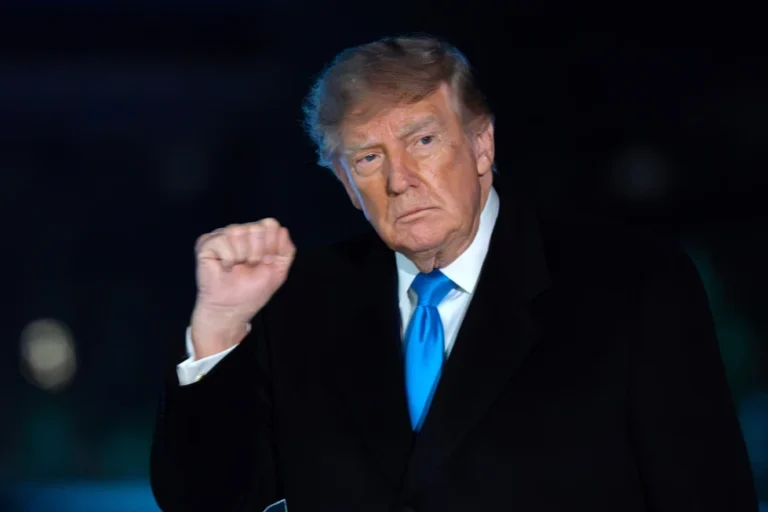
Under US military law, a president must approve an execution by firing squad. The Pentagon said on Monday that Trump gave that approval after Hegseth recommended it. Chief Pentagon spokesman Sean Parnell described the sequence the same way to CBS News: Hegseth recommended the method and Trump approved it.
The military has carried out very few executions in the modern era. Death Penalty Action, a group that opposes capital punishment, says Hasan’s would be the first military execution since 1961. The Death Penalty Information Center says that 1961 execution was a hanging. The AP identified the man as Army Private John Bennett, and CBS News reported that he was convicted of raping and attempting to murder an 11-year-old girl.
The last known executions by US military firing squads took place in 1945, according to the Death Penalty Information Center. Axios identified the best known of them: Private Eddie Slovik, shot for desertion in France.
So a firing squad is not new to American military law. Broadcasting one is.
No precedent for a livestream
Media organizations have asked to televise US executions before. Courts have blocked those efforts. Experts told Reuters that no other country is known to televise or livestream a legal execution.
Public executions have become rare worldwide. Iran and Taliban-run Afghanistan are among the countries known to have held them in recent years.
The United States has its own history here. Lynchings, often carried out by white mobs targeting Black Americans, were public spectacles well into the 20th century. The last legally sanctioned public execution in the country took place in 1936, death penalty experts told Reuters. Thousands watched the hanging of a young Black man convicted of raping a white woman. Axios named him as Rainey Bethea, hanged in Kentucky, and cited a reported crowd of about 20,000.
Hegseth’s plan would put viewers in front of a screen instead of in a crowd, and Hegseth has said the goal is for people to see the consequences. The AP noted a contrast in Washington’s own record: Trump has criticized public executions in Iran, and he has cited the possibility of protesters being killed there as a reason for military action.
What legal and military experts say
Eugene Fidell, a lawyer and military law expert who lectures at Yale Law School and has written on the subject, called the plan unusual. “It would be extremely, extremely strange” to livestream the event, Fidell said.
Fidell said that, as far as he knew, livestreaming or televising an execution would be unprecedented. He added that Hasan would have to sue in federal court if he wanted to block a public display of his death.
That raises a question no court has settled. “The Supreme Court has never addressed this question, and it’s an interesting question whether the current Supreme Court would put on their originalist hat and say, ‘Well, it was OK in 1790, so what the hell?'” Fidell said.
Jonathan Lurie, an author and historian of military justice, said he sees no compelling reason to make the execution public. “What’s the point of it? Who would want to see that?” Lurie said.
Military law experts told the AP that Hasan could also file a habeas petition in civilian court, which could delay the execution considerably. Fidell put it bluntly: “It frankly might outlast the current administration.”
Neither Hasan’s lawyers nor the Pentagon has said whether a court challenge is coming. CBS News contacted Hasan’s attorney for comment and had not received a response when it published.
Firing squads are returning
The Hasan execution arrives as firing squads come back into use in civilian courts. The Death Penalty Information Center says at least five states have the method on their books. Axios listed them as Idaho, Mississippi, Oklahoma, South Carolina and Utah.
South Carolina carried out the first firing squad execution in the United States in 15 years in 2025. CBS News reported that the state used the method three times last year.
The federal government has widened its options too. The Trump administration recently added firing squad to the permissible forms of execution for the gravest federal crimes. It also added electrocution and gas asphyxiation.
Part of the reason is supply. Drugs for lethal injection have become harder to obtain, and lethal injections have sometimes proved hard to carry out. That expanded the list of federal options.
The Tennessee case that frames the debate
The livestream announcement lands one week after Tennessee’s attempt to execute Christa Pike went wrong. Pike, 50, would have been the first woman executed in Tennessee in more than 200 years.
Prison personnel botched attempts to administer a lethal injection. Pike survived and was hospitalized. According to her lawyers’ court filings, she was given two doses of the drugs and kept breathing for nearly an hour. Her attorney, Randy Spivey, said staff spent about an hour trying to establish an IV line and used at least seven needles in her left arm alone. Her arm turned purple after the second dose, and witnesses were asked to leave without being told whether she was alive.
The Death Penalty Information Center says Pike is the first person known to survive lethal doses of execution drugs.
Her lawyers said on Wednesday that she woke up “angry and confused” in a hospital. They said she remains very sick and shackled to her hospital bed. Earlier in the week her lawyers had described her condition as critical, and they said they had been unable to see or speak with her.
Pike was convicted for a 1995 killing in Knoxville. She was 18 when she helped lure Colleen Slemmer into the woods, where the teenagers tortured and killed her. Her 17-year-old boyfriend, Tadaryl Shipp, received a life sentence and is now eligible for parole. A third teen, Shadolla Peterson, testified against the other two and received probation.
Before the execution, Pike’s lawyers challenged Tennessee’s lethal injection protocol. They cited a blood disorder and small veins, and they asked the state to consider a firing squad or hanging instead. The Tennessee Department of Correction says it followed established protocol and that lethal injection has worked consistently in the state.
Governor Bill Lee halted scheduled executions for the rest of 2026 and ordered a review of what happened. Death penalty opponents want the results of that review made public. In May, Tennessee also called off the execution of Tony Carruthers after officials could not establish a backup IV line, and Carruthers received a one-year reprieve.
The two events share a timeline and little else. Pike’s case involved a state, a lethal injection and a failure of equipment and staff. Hasan’s case involves the federal military, a firing squad and a deliberate choice to make the event visible. Opponents of capital punishment have linked them anyway, because both happened within days of each other and both put the methods of execution under public scrutiny.
Timeline of the case
- November 2009: Hasan kills 13 people and wounds 32 at Fort Hood, weeks before his scheduled deployment to Afghanistan.
- August 2013: A military jury sentences him to death after convicting him on 45 counts of premeditated murder and attempted premeditated murder.
- 2024: Hasan asks the Supreme Court to review his public trial claim.
- 2025: The Supreme Court declines the case. South Carolina carries out the first US firing squad execution in 15 years.
- Last week: Tennessee’s attempt to execute Christa Pike fails, and Governor Bill Lee halts executions for the rest of 2026.
- Monday: The Pentagon says Trump approved a firing squad on Hegseth’s recommendation.
- Thursday: The Pentagon confirms a livestream, and Hegseth confirms it on X.
- December 3, 1 p.m.: Scheduled execution at Fort Hood.
What happens between now and December 3
Several pieces are still open.
The Pentagon has to name the platform for the livestream and explain whether any recording will be kept online afterward. It has to say who will be allowed to attend at Fort Hood. It also has to tell the public how the Army will set up and run an execution it has not carried out since the 1940s.
Hasan’s lawyers have a decision to make. Fidell said a challenge to the public display would have to go to federal court. If a suit is filed, a judge would have to rule on a question that, in Fidell’s words, the Supreme Court has never addressed. The timeline is short, with the execution under two months away, but a habeas petition could change it.
The victims and their families are also part of this, though none of the reporting so far includes their reactions to the livestream. Thirteen people died at Fort Hood in 2009 and more than 30 were wounded. Whether those families want the execution broadcast, and whether the Army will offer them a choice about watching, has not been reported.
For now, the schedule stands. A Thursday at 1 p.m. at Fort Hood, a firing squad of soldiers, and a camera that the Pentagon says will be running.
Sources
- Reuters, via Marine Corps Times: US to livestream Army execution of Fort Hood shooter, Pentagon official says
- CBS News: Fort Hood shooter’s execution will be livestreamed, Pentagon says
- Axios: Hegseth says public can watch Nidal Hasan’s execution
- The Washington Post, via The Nightly: What to know about Christa Pike, her failed execution and what happens next