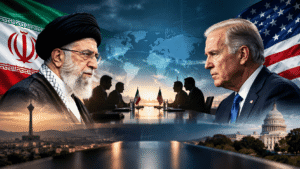


U.S. Defense Secretary Pete Hegseth is set to face another round of intense questioning on Capitol Hill as lawmakers examine the Trump administration’s handling of the ongoing conflict with Iran. Thursday’s hearing before the Senate Armed Services Committee follows a contentious session in the House that exposed deep divisions over the war’s cost, strategy, and long-term implications.
The appearance gives senators their first opportunity to directly challenge—or support—the Pentagon chief since the conflict began earlier this year. Alongside Dan Caine, Hegseth is expected to outline the administration’s proposed 2027 defense budget, which calls for a record $1.5 trillion in military spending.
Budget Push Meets War-Time Concerns
The administration argues that the proposed increase is necessary to modernize the U.S. military and respond to evolving threats. Key priorities include expanding drone capabilities, strengthening missile defense systems, and increasing naval power.
However, lawmakers are likely to press for clarity on how these investments align with the realities of the Iran conflict, which remains under a fragile ceasefire. Critics have raised concerns about whether the war has stretched U.S. resources too thin, particularly as stockpiles of critical munitions continue to decline.
During Wednesday’s nearly six-hour session with the House Armed Services Committee, Hegseth faced repeated questions about the financial and human toll of the conflict. Pentagon officials disclosed that the war has already cost approximately $25 billion, largely driven by the use of advanced weaponry.
Yet Hegseth declined to provide estimates on how long the conflict might continue or how much additional funding may be required, leaving many lawmakers frustrated.
Political Divisions on Full Display

The hearings have underscored stark partisan divides in Washington. Many Democrats have criticized the war as an avoidable conflict launched without sufficient congressional oversight. They argue that lawmakers were sidelined in the decision-making process, despite the scale of the military engagement.
Republicans, by contrast, have largely defended the administration’s approach, focusing on national security priorities and the need to counter Iran’s military capabilities. Some GOP lawmakers are expected to use the Senate hearing to reinforce support for the administration’s strategy while seeking more details on budget allocations.
Despite multiple attempts, Congress has not passed resolutions that would require formal approval of the military action, leaving the legal framework for the conflict a point of ongoing debate.
Key Questions Remain Unanswered
Several critical issues raised during the House hearing are expected to resurface in the Senate. Among them is a controversial airstrike that reportedly hit a school near a military installation in Iran, resulting in significant civilian casualties.
Hegseth stated that the incident is still under investigation but did not provide further details, even as reports suggest potential U.S. involvement. Lawmakers are likely to push for greater transparency on the circumstances surrounding the strike and the safeguards in place to prevent civilian harm.
Another flashpoint involves the deaths of U.S. service members in a drone attack in Kuwait. When questioned about whether the attack could have been prevented, Hegseth emphasized that the military had taken proactive measures but stopped short of addressing the specifics of the incident.
Strategy Under Scrutiny
Lawmakers have also questioned the administration’s broader strategy in the region. In a heated exchange, Democratic Representative Adam Smith challenged Hegseth’s assertion that Iran’s nuclear infrastructure had been effectively neutralized in earlier strikes.
Smith argued that if the threat had been eliminated, it raises questions about the justification for launching a new conflict so soon afterward. Hegseth countered that Iran continues to pursue nuclear capabilities and maintains a significant missile arsenal, posing an ongoing threat.
The exchange highlighted a central tension in the debate: whether the war has meaningfully improved U.S. security or simply prolonged instability.
Leadership Changes Add to Controversy
Beyond battlefield concerns, Hegseth is also facing criticism over recent changes within military leadership. His decision to remove several senior officers, including Army Chief of Staff Randy George, has drawn bipartisan scrutiny.
Hegseth has defended the move as necessary to bring in “new leadership,” but critics argue that the dismissals lack clear justification and risk undermining morale within the armed forces.
Democratic lawmakers, including Representative Chrissy Houlahan, have questioned the rationale behind the firings, calling for greater accountability and transparency in personnel decisions.
Broader Geopolitical Implications
The Senate hearing is also expected to address growing tensions with U.S. allies. Donald Trump recently signaled the possibility of reducing American troop levels in Germany amid disagreements over the Iran conflict with Chancellor Friedrich Merz.
Such a move could have significant implications for NATO and the broader security architecture in Europe, adding another layer of complexity to an already volatile situation.
A Defining Moment for U.S. Defense Policy
As Hegseth returns to Capitol Hill, the stakes are high. Lawmakers from both parties are seeking answers not only about the current conflict but also about the long-term direction of U.S. defense policy.
With rising costs, unresolved strategic questions, and shifting global alliances, the hearings could prove pivotal in shaping the next phase of America’s military and diplomatic approach.