Clicxpost

US News

Iran Oil Sanctions: US Restrictions, Oil Exports and Economic Impact

Iran Oil Sanctions US Restrictions

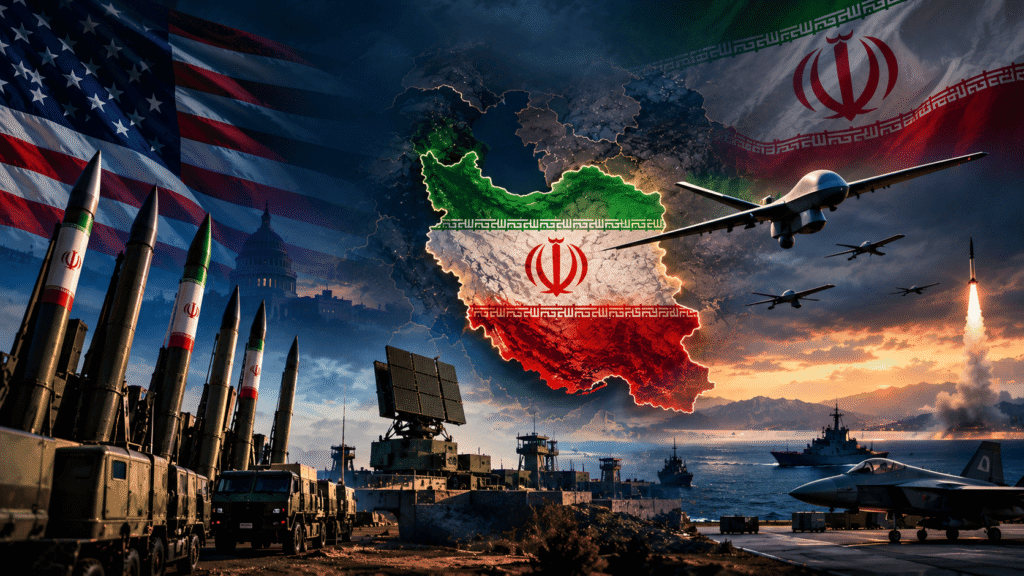
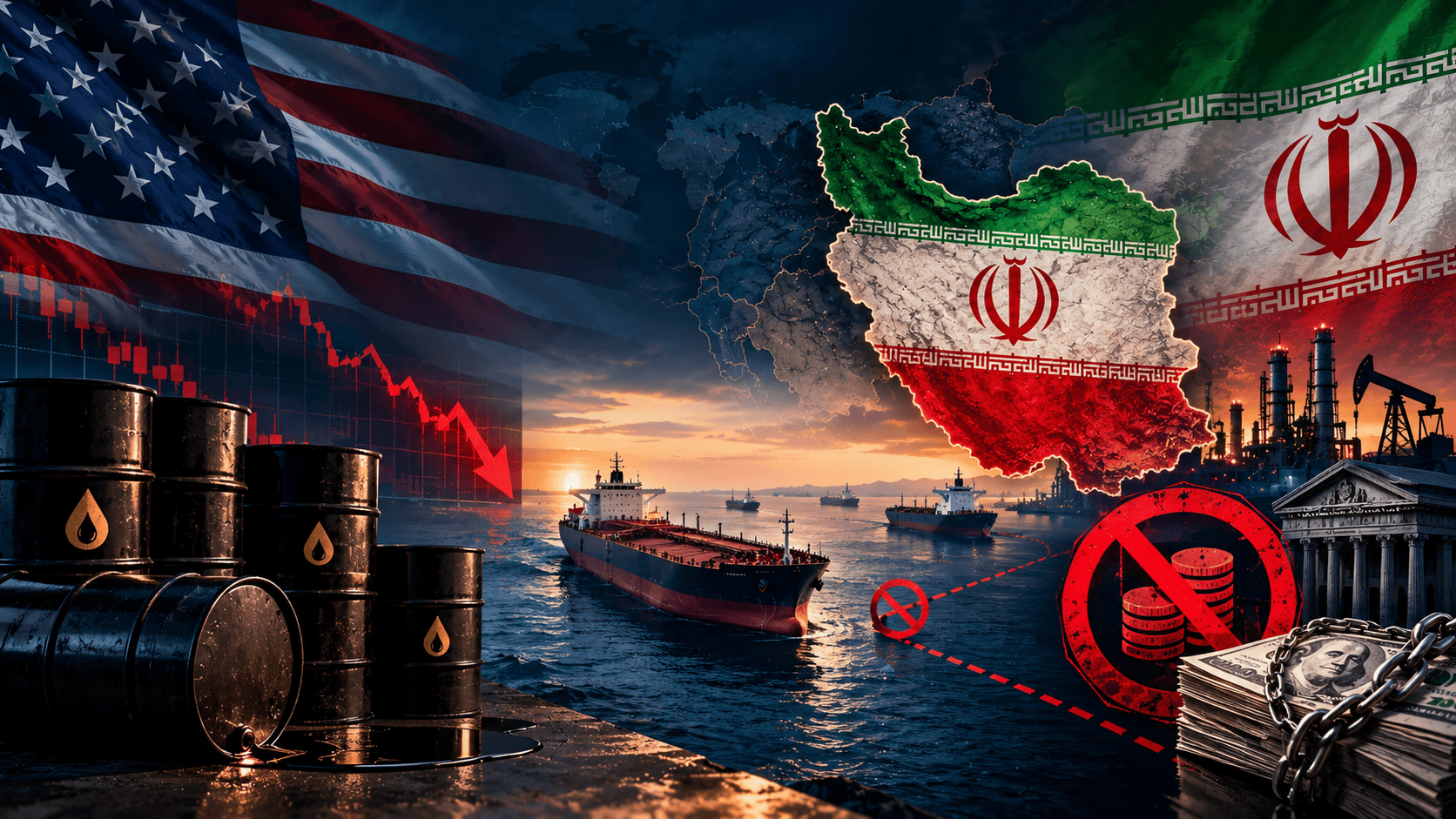
Iran oil sanctions are US-led restrictions on the production, sale, shipping and financing of Iranian crude oil and petroleum products. Oil is the Iranian government’s largest source of foreign currency, so Washington has long treated it as the main lever of economic pressure. This guide covers how US sanctions on Iranian oil work, how they have changed, and what they mean for Iran and global energy markets. Facts below are current as of October 5, 2026, and the situation is moving quickly.

What Are Iran Oil Sanctions?

Oil sanctions are legal measures that make it risky or illegal to buy, ship, insure, finance or process a country’s oil. They can target the state oil company, tankers, traders, refiners and banks.

Two layers exist:

Oil is the focus because it funds the state. Cutting oil revenue is the quickest way to pressure Tehran economically.

Why Does the US Sanction Iran’s Oil Industry?

Washington’s stated reasons are tied to Iran’s nuclear program, missiles, regional armed groups and sanctions evasion. In a May 11, 2026 statement, the State Department said the sanctions aim to disrupt funding streams that finance Iran’s support for terrorist proxies and regional aggression. Iran rejects these characterizations and calls the sanctions unlawful economic coercion. Those are government positions, not independent findings.

History of Iran Oil Sanctions

US restrictions on Iran’s energy sector go back decades. The 1996 Iran and Libya Sanctions Act, later renamed the Iran Sanctions Act, penalized foreign firms investing in Iran’s energy sector.

The measures escalated in waves:

  • 2006–2010: UN Security Council resolutions tied to Iran’s nuclear program.
  • 2012: An EU oil embargo and tougher US financial measures sharply cut exports.
  • 2015–2016: The JCPOA nuclear deal eased oil restrictions, with relief taking effect at “Implementation Day” in January 2016.
  • 2018: The US withdrew from the JCPOA on May 8 and reimposed oil sanctions, including waivers for some buyers that ended in 2019.
  • 2020: The US designated NIOC under counterterrorism authorities, on October 26, 2020.
  • 2025: A renewed “maximum pressure” campaign aimed at driving exports toward zero.

For the wider backdrop, see our guide to Iran-US relations history. For the nuclear-monitoring side, see Iran nuclear inspections.

How Do Iran Oil Sanctions Work?

  • Sales restrictions: Dealing in Iranian oil can trigger penalties.
  • Financial restrictions: Banks risk losing US access, which makes payments hard.
  • Shipping and insurance: Tankers and insurers linked to Iranian cargoes can be designated.
  • Designations: Companies, vessels and individuals are added to sanctions lists.
  • Secondary sanctions: Non-US firms that deal with designated Iranian entities can be penalized.
  • Enforcement: This includes designations, seizures and public advisories. OFAC issued an alert on sanctions risks of dealing with “teapot” oil refineries on April 28, 2026.

Impact on Iran’s Oil Exports

Exports survived earlier sanctions rounds through discounts, ship-to-ship transfers and Chinese buyers. Kpler data show Iran delivered an average of 1.38 million barrels per day of crude and condensate to China in 2025.

Since July 2026, the picture has changed. The key factor is a naval blockade rather than a sanctions list. Kpler data seen by Iran International show that no Iranian oil cargo has crossed the blockade line toward China since mid-July. Kpler estimated Iran’s August loadings at roughly 255,000 barrels per day, about 85% below its February–April average.

Chinese buyers are still receiving oil from floating storage. Kpler estimated that this stock fell from about 90 million barrels in mid-July to roughly 29 million by early September, and could run out by mid-October at the then-current rate. That is a projection based on one data provider, not a certainty.

Iran’s Oil Buyers and Sanctions Risk

China is the dominant buyer. Analysts at Steptoe note that China has built a ring-fenced system of refiners that mostly settles in yuan through hard-to-track intermediaries.

Buyers face several risks:

  • Designation of refiners, terminals or traders.
  • Loss of access to dollar banking.
  • Difficulty getting vessels insured.
  • Cargo seizures.

Analysts widely discuss possible secondary sanctions on larger trading partners, but those remain speculation. So far, US action has mostly consisted of direct sanctions on individuals and entities.

Impact on Iran’s Economy

Oil revenue funds the government budget and supplies the dollars needed to import goods. When it falls, pressure shows up in the currency, prices and public finances.

Recent indicators:

  • The rial hit a record low of about 2.548 million per US dollar, according to the Pashizi tracker.
  • Central Bank Governor Abdolnaser Hemmati put September year-on-year inflation at 83.8%. Other outlets cite figures near 90%.
  • Fortune reports that GDP is expected to shrink 5.4% this year.

These effects are not caused by sanctions alone. Iran had high inflation and structural problems before 2026, and the war, the blockade and domestic policy all play roles. Isolating sanctions’ share is difficult and contested.

Impact on Global Oil Markets

Iranian crude is a modest share of global supply, but the wider crisis has larger effects. Brent traded near $64 in January 2026 (Trading Economics). On October 5, Brent was around $101.59 a barrel.

The Strait of Hormuz is central. Kpler reported Hormuz crude flows reached a seven-day average of 13.5 million barrels per day, matching the prewar baseline, helped by US escorts and pipelines. About 40% of Gulf crude now bypasses Hormuz, versus 17% before the war. G7 countries also agreed to release 100 million barrels from emergency reserves. For route and shipping updates, see Strait of Hormuz updates.

Prices reflect war risk and infrastructure attacks as well as Iranian supply, so no single cause explains the level.

Iran’s Response to Oil Sanctions

Iran’s documented approach has combined evasion networks, discounted sales to China, floating storage and diplomacy. Politically, Iranian officials have tied relief to sanctions and the blockade. Parliament Speaker Mohammad Bagher Ghalibaf said on October 4 that Hormuz stays closed until Washington meets seven conditions. In July, Iranian officials said they were suspending commitments under the memorandum of understanding.

Iran Oil Sanctions and Iran-US Relations

Oil sanctions sit at the center of nearly every negotiation. Washington has offered limited relief as a bargaining tool, while Tehran has demanded sanctions removal and access to frozen funds. This article does not repeat the full picture; our pillar page on Iran-US relations covers it. For the diplomatic track, see Iran-US nuclear talks, Iran-US ceasefire updates and US strikes on Iran.

Latest Iran Oil Sanctions Developments

  • June 22, 2026: After the June 17 memorandum, OFAC issued General License X, authorizing broad Iranian oil transactions through August 21.
  • July 7, 2026: OFAC revoked it, allowing only wind-down activity through July 17 and no new purchases or loadings. Reports linked this to attacks on three tankers in Hormuz.
  • July 14, 2026: The US reinstated its naval blockade of Iranian ports.
  • August 24, 2026: OFAC issued an alert on sanctions risks of Iranian demands for Strait of Hormuz passage. State announced sanctions on petroleum and petrochemical traders the same day.
  • October 1, 2026: State announced further “Operation Economic Outcast” actions, this time targeting Iran’s rail and automotive sectors.

Iran Oil Sanctions Timeline

  • 1996 — Iran Sanctions Act enacted.
  • 2012 — EU oil embargo.
  • 2015–2016 — JCPOA and oil sanctions relief.
  • May 2018 — US withdraws from the JCPOA.
  • Nov 2018 — Oil sanctions reimposed.
  • Oct 2020 — NIOC designated.
  • Feb 28, 2026 — US-Israeli strikes begin the war.
  • June 17, 2026 — Memorandum signed.
  • July 7, 2026 — General License X revoked.
  • July 14, 2026 — Blockade reinstated.

Frequently Asked Questions

What are Iran oil sanctions?

Legal restrictions on buying, shipping, insuring and financing Iranian oil.

Why does the US sanction Iranian oil?

The US says oil revenue funds nuclear, missile and proxy activity. Iran disputes this.

When did US oil sanctions on Iran begin?

Energy-sector measures date back to the 1990s, with major escalation after 2012 and 2018.

Can Iran still export oil under sanctions?

It did for years, mainly to China. Since mid-July 2026, Kpler data indicate new exports have largely stalled.

How do sanctions affect Iran-US relations?

Relief is a bargaining chip, and enforcement actions can derail talks.

Sources / References

US Department of State, Iran Sanctions page (verify directly — could not be loaded during this review); US Treasury OFAC, Iran Sanctions page and advisories; State Department press statement, May 11, 2026; Baker McKenzie, Holland & Knight, Greenberg Traurig and Trade Compliance Resource Hub on General Licenses X and X1; Steptoe, Sanctions Update, August 24, 2026; Kpler data via CNBC, Al Jazeera and Iran International; Reuters/Business Recorder, Washington Examiner and Fortune on prices and Iran’s economy.

RECOMMENDED
US News

Iran Military Developments: Latest Updates, Missiles, Drones and Regional Security

By George Mensah 11 min read

Iran military developments are central to understanding the Middle East’s security environment today. Since 28 February 2026, the United States and Israel have been at war with Iran and its regional allies, following strikes that killed Supreme Leader Ali Khamenei and other senior officials. Iran’s missiles, drones and naval forces have shaped how the conflict unfolded, how Gulf states responded, and why talks have repeatedly stalled.

This article explains Iran’s main capabilities, what is publicly documented about its missile and drone programs, and what the latest verified developments mean for Iran-US relations. Where a claim comes from one government or party, we say so.

What Are Iran’s Major Military Capabilities?

Iran’s military has two parallel structures: the regular armed forces (Artesh) and the Islamic Revolutionary Guard Corps (IRGC), which runs the missile and drone programs and a separate navy. The main capability areas are:

  • Missiles: Iran’s ballistic missile inventory is widely described as the largest in the Middle East.
  • Drones: Cheap one-way attack drones that can be launched in large numbers.
  • Air defense: A mix of imported and domestically built systems, heavily contested in recent fighting.
  • Naval forces: Small fast-attack craft, mines and anti-ship missiles, built for the confined waters of the Gulf rather than open-ocean combat.
  • Ground forces: The Army, IRGC ground units and the Basij volunteer force. Analysts found little evidence of significant defections during the early weeks of the war.
  • Cyber: Open information is limited, but see the cyber section below.

Iran has long relied on asymmetric tools because sanctions limited its access to modern fighter aircraft and heavy conventional equipment.

Iran’s Missile Developments

Iran’s missile program has its roots in the Iran-Iraq War of the 1980s. Iran started a ballistic missile program to deter Iraqi missile attacks on its cities and to compensate for its lack of a modern air force under sanctions.

What is publicly documented

Iran’s arsenal covers several categories:

  • Short-range ballistic missiles such as the Fateh-110 family, with ranges under 1,000 km.
  • Medium-range ballistic missiles such as the Shahab-3 and the Khorramshahr. The Shahab-3 is Iran’s most mature liquid-fueled medium-range missile, with a range of roughly 1,300 km. Published figures for variants differ by source.
  • Cruise missiles, including the Quds (Paveh) type, which some analysts credit with a range of about 1,650 km.
  • Hypersonic claims: In 2023 Iran unveiled what it described as its first domestically produced hypersonic ballistic missile, the Fattah series. That description comes from Iran, and independent verification of its performance is limited.

Range and numbers

Reuters has reported that Iran maintains a self-imposed ballistic missile range limit of about 1,240 miles (roughly 2,000 km), and found no evidence supporting claims that Iran’s missiles could soon reach the United States. A 2025 US Defense Intelligence Agency assessment said Iran’s space launch vehicles could eventually support an intercontinental ballistic missile, potentially by 2035, if the government chose that path.

Stockpile estimates vary. An Israeli-linked think tank citing IDF assessments put the arsenal at about 2,500 missiles by February 2026, while a former US commander has said Iran had more than 3,000. These are estimates, not confirmed inventories.

Strategic role

For Tehran, missiles are a deterrent and a way to hit targets that its air force cannot reach. Iranian officials describe the range limit as sufficient because it places Israel and US-linked bases in the Gulf within reach. Western governments, by contrast, see the program as a security threat. Iran says its program is defensive.

Iran’s Drone Developments

Drones are the other pillar of Iran’s military strategy. Iran has built a large fleet of unmanned aerial vehicles, including Shahed-series one-way attack drones that loiter before striking. They are slower and cheaper than ballistic missiles and can be launched in waves alongside them.

Major categories

  • One-way attack (loitering) drones: the Shahed-136 and related types.
  • Combat and surveillance drones: the Shahed-129 class and others.
  • Newer jet-powered variants, reported by analysts.

Use and international concern

Iran used hundreds of drones in its April 2024 and June 2025 strikes on Israel. The Shahed-136 also became a global concern after Russia used it in Ukraine. Iran Watch notes that Tehran supplied the Shahed-136 to Moscow early in the Ukraine war, and that Russia is now reportedly supplying Iran with drone-warfare advice, components and a pending shipment of Geran-2 drones, an improved version of the Shahed. Those transfers are reported, not officially confirmed.

Confirmed versus claimed in 2026

  • Reported: Long-range Shahed-136 drones have been a damaging part of Iran’s strikes on Gulf infrastructure and on commercial ships near the Strait of Hormuz.
  • Disputed: In June, a US official said a Shahed drone downed a US helicopter near the strait. Iran said it did not deliberately target the helicopter.
  • Iranian claims: Iran has stated it shot down several US drones (MQ-9 and MQ-1 types) over the Gulf in August and September. These claims come from Iranian officials and military sources.

Iran’s Military Developments and Regional Security

Iran’s capabilities directly affect Gulf security. After the strikes began, Iran launched missile and drone attacks on Israel, US bases and US allies in the region, and blocked the Strait of Hormuz. Gulf states including the UAE, Saudi Arabia, Kuwait and Bahrain have also been drawn into the fighting.

Key security concerns now include:

  • Air defense strain: Cheap drones force defenders to use expensive interceptors.
  • Energy infrastructure: Attacks on or near oil and gas facilities affect global markets.
  • Maritime risk: Commercial shipping has been targeted or delayed.
  • Spread to other fronts: Fighting resumed between Hezbollah and Israel, and the Houthis in Yemen joined the conflict in late March.

Iran has also been accused of reaching beyond the region. UK Prime Minister Andy Burnham said on 30 September there were “strong indications that Iran played a part” in a 27 September incident near RAF Fairford, in which five men were arrested. Iran’s foreign minister Abbas Araghchi rejected the claim. The police investigation was still ongoing at the time of writing.

Iran’s Naval and Strait of Hormuz Capabilities

The Strait of Hormuz is a narrow passage at the mouth of the Persian Gulf, through which a large share of the world’s seaborne oil and gas passes. That makes Iran’s ability to threaten shipping a major source of leverage.

Iranian naval forces

The IRGC Navy and the regular Navy operate different roles. The IRGC emphasizes fast boats, mines, coastal missiles and drones. The regular Navy operates frigates and submarines. US officials say they severely damaged Iran’s naval capabilities, mainly in the Gulf of Oman, and the US Navy reportedly sank the frigate IRIS Dena in the Indian Ocean in March. Iran’s own damage assessments differ.

Shipping and the 2026 crisis

Iran has restricted transit through the waterway since early March, and its top security official said in August that it would not fully reopen until the US met Tehran’s conditions. Iran’s parliament speaker repeated in September that the strait would stay closed until the US meets its conditions. The US position differs: President Trump has insisted the strait is open and operating. And on 4 October, Al Jazeera reported that Iran said Hormuz would remain closed until the US meets its conditions.

International bodies have weighed in. The International Maritime Organization’s administrative council agreed that member states should reject Iran’s efforts to impose sovereignty over the strait. For the day-to-day picture, see our Strait of Hormuz updates.

Iran Military Developments and US-Iran Tensions

Military events have driven the diplomacy rather than the other way around. The February strikes took place during US-Iran negotiations over Iran’s nuclear program. Since then, the US has built up forces in the region, enforced a naval blockade on Iranian ports at different points, and struck Iranian military targets.

Both sides cite deterrence. The US says it must keep Iran from threatening shipping and US forces. Iran says its missiles, drones and control of the strait are what stop further attacks. In early September, the Defense Secretary extended the deployment of about 50,000 US troops in the region into 2027.

For the history behind this pattern, see Iran-US relations history and our coverage of US strikes on Iran.

Recent Iran Military Developments

These are the most recent developments we could verify as of 5 October 2026:

  • 27-30 September: Incident at RAF Fairford and the UK allegation of Iranian involvement (see above). US Secretary of State Marco Rubio said the “hands of a foreign actor” were involved; Iran denied any involvement.
  • 1 October: Reports said Rubio ordered the Iranian delegation, including Araghchi, to leave the US, citing Axios. That report has not been independently confirmed here. The Hill reported that Trump rejected an Iranian seven-day proposal.
  • 1 October: An IRGC official claimed Iran achieved a first long-range ballistic hit on moving targets. The claim was not verified.
  • 1 October: A senior Iranian delegation visited southern Lebanon.
  • 2 October: CGTN reported Trump said renewed strikes after the 3 November midterms were “possible” as ceasefire talks stalled.
  • 3-4 October: Reports said the US was deploying a third aircraft carrier to the Middle East. Iran told the US there is “no military solution” to the war, and the Houthis claimed a strike on an Aramco site as Yemen fighting intensified.

One daily tracker noted that no US or coalition strike on Iranian territory ashore was reported between 2 and 3 October.

Iran’s Military Strategy and Regional Partnerships

Iran’s strategy combines deterrence, distributed command and regional partners. Analysts have described a decentralized “mosaic defence” approach, with units responding semi-independently. Iran also works with groups often called the “Axis of Resistance,” including Hezbollah, the Houthis and Iraqi armed factions.

It helps to separate three types of information:

  1. Documented relationships: Iran openly supports Hezbollah and has long been tied to the Houthis and Iraqi groups. The October 1 delegation to southern Lebanon is one recent public sign.
  2. Government allegations: The US and UK link Iran to plots and attacks abroad. Iran denies them.
  3. Independent reporting: One analyst at the Washington Institute said Russia and China provided satellite imagery to help Iran target US forces. That is an analyst’s assessment, not a confirmed government statement. Russia’s Security Council chairman said on 3 October that Russia would “never sacrifice” its relationship with Iran.

International Response

Reactions have been divided:

  • UN: The UN Secretary-General and several countries condemned the US-Israeli strikes, while the Security Council passed a resolution condemning Iran’s retaliatory strikes on Gulf states.
  • Europe and NATO: In March, China and European NATO members rejected a US call for military support to reopen the strait. The UK later allowed use of its bases for certain defensive operations.
  • Gulf states: Several have been both targets of Iranian strikes and, in some cases, participants in the conflict.
  • Russia and China: Both have opposed US actions and kept ties with Tehran.

Impact on Iran-US Relations

Military developments affect almost every track of diplomacy:

  • Negotiations: Talks in Islamabad in April ended without agreement, and a June memorandum to end the war collapsed in early July. Iran says the deal is “suspended”; Trump called it “over.”
  • Sanctions: On 24 August, Treasury Secretary Scott Bessent announced a sanctions campaign, “Operation Economic Outcast,” warning other countries to halt economic activity with Iran.
  • Nuclear issues: Inspectors’ access remains limited. Iran told the IAEA in February that normal safeguards were “legally untenable and materially impracticable.” See Iran nuclear inspections and Iran-US nuclear talks.
  • Ceasefire efforts: See Iran-US ceasefire updates. In September, Vice President JD Vance said Washington had cut contact with Iran while it fires on ships without permission.

The central dispute is sequencing: Iran wants sanctions relief, frozen assets and an end to military operations before reopening Hormuz, while the US wants shipping restored first.

Iran Military Developments Timeline

  • April and October 2024: Iran strikes Israel after earlier escalation.
  • June 2025: The Twelve-Day War between Israel and Iran, with US strikes on nuclear sites, ends in a ceasefire.
  • September 2025: The UN reimposes sanctions on Iran through the “snapback” mechanism.
  • 28 February 2026: US-Israeli strikes begin; Ali Khamenei is killed. Iran retaliates against Israel, US bases and Gulf states.
  • Early March 2026: Iran restricts Hormuz shipping. Mojtaba Khamenei is named Supreme Leader on 8 March.
  • 7-8 April 2026: Pakistan-mediated two-week ceasefire announced.
  • 11-13 April 2026: Islamabad talks fail; a US naval blockade of Iranian ports begins.
  • Mid-June 2026: US and Iran sign a memorandum to end the war and lift blockades.
  • Early July 2026: The memorandum collapses amid new Hormuz attacks and US strikes.
  • 24 August 2026: US announces a new sanctions campaign.
  • Late August-early September 2026: Clashes at sea and across the region over Hormuz.
  • 27 September 2026: RAF Fairford incident.
  • 1-4 October 2026: Talks stall; US reinforcements reported; Iran repeats that Hormuz stays closed.

Frequently Asked Questions

What are the latest Iran military developments?

As of 5 October 2026, talks have stalled, Iran says Hormuz stays closed until its conditions are met, and Trump has said renewed strikes after the midterms are “possible.” A third US carrier is reportedly heading to the region.

What missiles does Iran have?

Short-range (Fateh-110 family), medium-range (Shahab-3, Khorramshahr) and cruise missiles, plus systems Iran calls hypersonic. Exact numbers and performance are estimates.

What are Iran’s drone capabilities?

A large fleet of one-way attack drones such as the Shahed-136, plus combat and surveillance types. They have been used against Israel, Gulf targets and shipping.

Why are Iran’s military developments important?

They influence Gulf security, global energy flows and the prospects for talks with Washington.

How do Iran’s military capabilities affect the Strait of Hormuz?

Iran’s missiles, drones, mines and fast boats let it threaten or restrict shipping, and it has restricted transit since March. The US disputes Iran’s claim of control.

How do Iran military developments affect Iran-US relations?

Strikes, blockades and attacks on shipping have repeatedly interrupted or ended diplomacy. See our Iran-US relations pillar for the wider picture.

What role do missiles and drones play in Iran’s strategy?

They are its main tools for deterrence and retaliation, designed to reach targets its air force cannot and to strain expensive air defenses.

How has Iran’s military capability developed over time?

From improvised missiles during the 1980s Iran-Iraq War to a large domestic missile and drone industry, shaped by sanctions and repeated conflict.

Sources / References

  • Critical Threats (CTP-ISW), Iran Update, 1 October 2026
  • Al Jazeera, Iran coverage, 3-5 October 2026
  • Reuters, “Rubio says UK airbase incident involved a foreign state,” 29 September 2026
  • BBC and Global News, reports on UK Prime Minister Burnham’s 30 September remarks
  • IANS, Araghchi response on RAF Fairford, 1 October 2026
  • CGTN, 2 October 2026; The Hill and CBS News, 1-3 October 2026, via GlobalSecurity.org
  • Jerusalem Post live updates, 1 October 2026
  • Reuters via Oman Observer; Bernama-Anadolu (12 August, 20 September 2026), on Hormuz positions
  • Iran Watch, “Iran War: Weapon Programs One-Month Update,” 31 March 2026
  • Gulf News, “Inside Iran’s missile playbook,” March 2026
  • Wikipedia, “2026 Iran war” (background timeline; cross-checked where possible)
US News

Air Ambulance With Six Aboard Missing Off Nantucket

By George Mensah 5 min read

The US Coast Guard is searching the Atlantic south of Nantucket, Massachusetts, for an air ambulance jet carrying six people that lost contact with air traffic control early Saturday, October 3. The Gulfstream G100 was flying from Bermuda to Boston after a medical evacuation mission. As of mid-morning, no debris or survivors had been publicly reported, and officials had not named the people on board.

The Federal Aviation Administration lost contact with the aircraft early Saturday and issued a Search and Rescue alert at about 1:20 a.m., according to FAA spokesperson Rick Breitenfeldt. The Coast Guard’s Northeast District announced the search on X at about 6:15 a.m. and said air and surface crews had launched.

What officials have confirmed

The aircraft is a Gulfstream G100 with Canadian registration C-GRJP. Latitude Air Ambulance, a company based in Hamilton, Ontario, operates it. The jet left L.F. Wade International Airport in Bermuda at 11:41 p.m. ET on Friday, according to flight-tracking data. It was due to land at Boston Logan International Airport at about 1:25 a.m. Saturday.

The Boston Globe reported that four crew members and two passengers were on board. Latitude says its air ambulance flights typically carry two pilots, a nurse and a respiratory therapist, and sometimes a physician. Officials have not said whether a patient was on the flight, and nobody has released the identities of those aboard. The Coast Guard said it is working with the FAA and the agency’s Rescue Coordination Center.

The Coast Guard said the search area lies off the coast of Nantucket. The Nantucket Current reported that the search began about 13 nautical miles south of the island.

What the flight data shows

Public flight-tracking records list the aircraft under the call sign HTT104, according to the New Bedford Guide. The same records show the jet flew from Bermuda to Boston in June 2025, so the route is one this aircraft has flown before.

Here is the timeline as reported so far. The jet left Bermuda at 11:41 p.m. ET Friday. The altitude drop came shortly after 1 a.m. The FAA issued its alert at about 1:20 a.m. The scheduled landing was about 1:25 a.m. The Coast Guard posted about the search at about 6:15 a.m., and the search was still under way at 10 a.m., Boston.com reported.

FlightAware data showed the plane dropping from roughly 25,000 feet to about 11,000 feet shortly after 1 a.m., according to the Daily Mail’s reporting. CBS News reported that the aircraft lost contact after about one hour and 45 minutes in the air. The Daily Mail said the final ping came at around 1:30 a.m., shortly before the scheduled landing.

The exact times differ between reports, and neither the FAA nor the Coast Guard has described what happened to the plane. Investigators have not given a cause, and nothing in the public record yet explains the drop in altitude.

NBC News obtained air traffic control audio from Boston that appears to show controllers asking the aircraft whether it was “coming in blind.” Authorities have not commented on it.

Who is searching

Several Coast Guard units are on scene. The service said crews from Air Station Cape Cod, Station Brant Point on Nantucket and the cutter William Sparling are responding. Boston 25 News reported that the air assets include an HC-144 Ocean Sentry fixed-wing aircraft and an MH-60 Jayhawk helicopter from Air Station Cape Cod. Master Chief John Lowell told the Nantucket Current that the Brant Point station’s 47-foot motor lifeboat was already in the search area.

The Coast Guard said it will post updates as information becomes available. The FAA is coordinating with the Coast Guard to locate the aircraft.

At Boston Logan, Massachusetts Port Authority Fire Rescue began staging to meet the plane, which did not arrive, Massport spokesperson Jennifer Mehigan told the Globe. Massport confirmed the jet did not land as scheduled.

What Latitude Air Ambulance has said

Clarence Togeretz, Latitude’s director of flight operations, told NBC News that the crew was carrying out a medical evacuation in Bermuda. He said Latitude has an emergency response plan “absolutely for anything that might occur to any of our missions.”

Togeretz acknowledged the company’s concern. He said Latitude gets worried when a crew “doesn’t report to us in a timely manner.” He also said he was staying hopeful. In his words, the delay “doesn’t mean that the worst has happened.”

The company had not issued a fuller statement when these reports were published. The Daily Mail said it had contacted both Latitude and the Coast Guard for comment.

About the company and the aircraft

Latitude launched in 2009 and flies patients to hospitals and back to their home countries. The Daily Mail reported that the Canadian company has a fleet of 10 aircraft, including four Gulfstream G100s. A listing with the European air ambulance accreditation body EURAMI describes a smaller fleet of five aircraft, three of them G100-type jets, so published counts vary by source.

The G100 is a twin-engine business jet originally developed in Israel, and the Daily Wire reported that some are equipped as intensive care transport aircraft. Bermuda is a British overseas territory in the North Atlantic, about 650 miles from North Carolina. The flight path to Boston runs northwest across open ocean and ends near the Massachusetts coast, where the search is concentrated.

What happens next

The Coast Guard has not given an end time for the search. Crews will keep working the area south of Nantucket, and the service has said more information will follow. The reporting available so far does not identify any of the six people on board or their families.

Several questions remain open: who was aboard, whether a patient was on the flight, what caused the loss of contact, and where the aircraft is. No agency has announced an investigation in the coverage available so far.

This is a developing story. The Coast Guard and the FAA are the main sources for confirmed updates.

ADVERTISEMENT
Scroll to Top