Clicxpost

News

US Strikes on Iran: Latest Developments, Targets and Impact on Iran-US Relations

US Strikes on Iran Latest Developments

Introduction

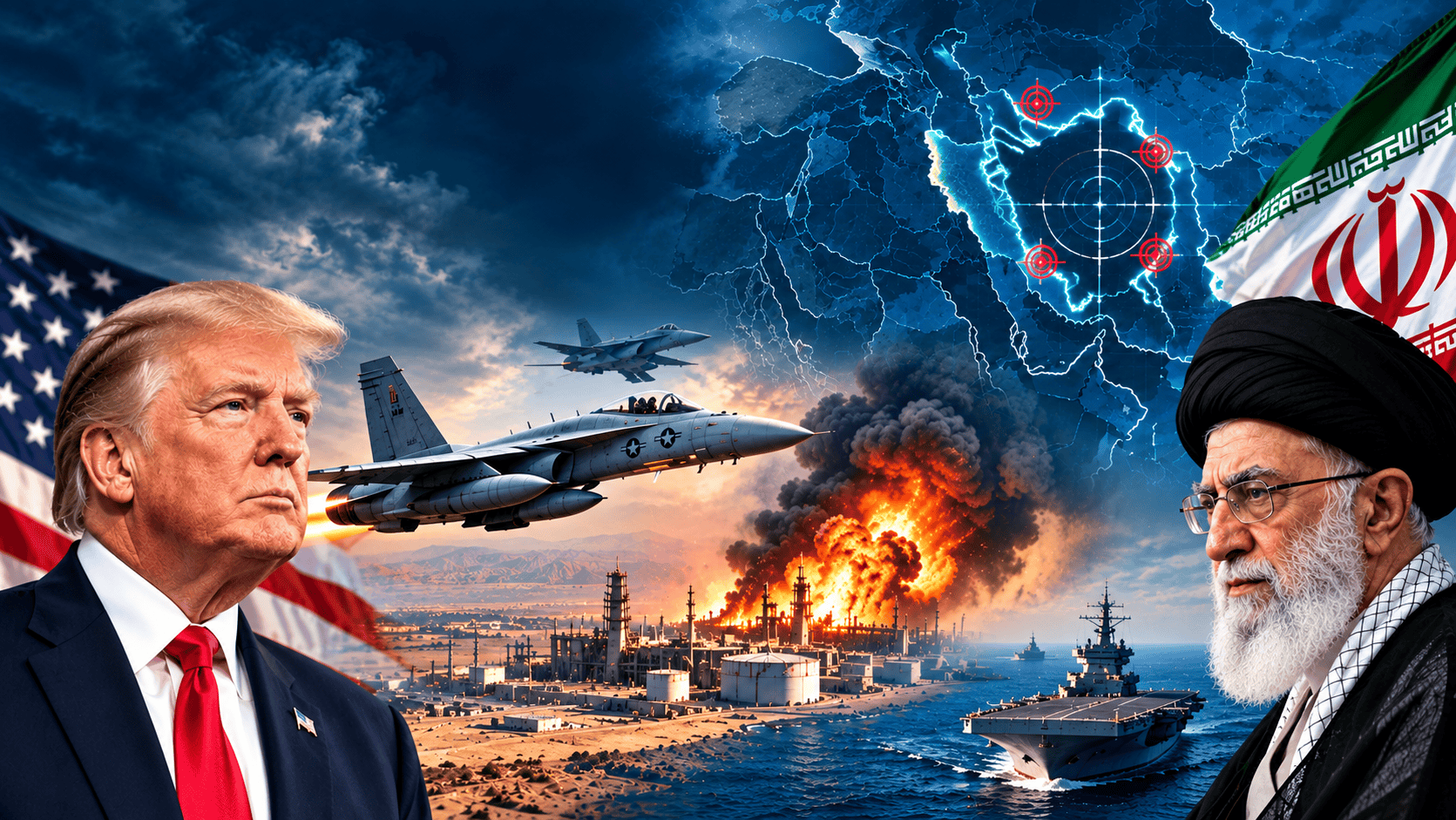
“US strikes on Iran” refers to the campaign of American airstrikes and missile operations against Iranian military and nuclear-linked targets that has unfolded through 2026. What began as a coordinated US-Israeli attack in late February has since evolved into a prolonged, on-and-off conflict marked by ceasefires that collapsed and periods of renewed fighting. The stakes are significant for all sides: Iran faces direct damage to its military and economic capacity, the US is weighing the costs of sustained engagement in the region, and neighboring Gulf states, Israel, and global shipping and energy markets remain exposed to spillover. Because official military claims, casualty tolls, and target lists are frequently disputed or unverified in real time, readers should treat early reports with caution.

What Are US Strikes on Iran?

US Strikes on Iran are military operations — primarily airstrikes and missile strikes, though also naval actions — carried out by American forces against targets inside Iran or against Iranian assets elsewhere in the region. These have included strikes on air-defense systems, IRGC-linked facilities, and reported nuclear-related sites, as well as retaliatory strikes on Iranian vessels and rocket-launching positions.

It’s important to separate confirmed facts from claims: government and military statements from both Washington and Tehran are frequently contested, and independent verification often lags behind initial announcements. There’s also a meaningful difference between individual, discrete strikes — a single retaliatory hit on a vessel or launch site — and broader coordinated military operations that unfold over days or weeks and involve multiple fronts.

Latest Developments in US Strikes on Iran

As of mid-September 2026, the conflict has settled into what analysts describe as a war of attrition, with intermittent strikes continuing alongside stalled diplomacy. The US and Iran were again trading limited strikes as of September 2026, amid a renewed US sanctions campaign and regional efforts to restart diplomatic engagement.

The most recent major escalation began on September 1, 2026, when US forces launched a series of airstrikes against IRGC targets in southern Iran, an escalation of the broader 2026 Iran war. CENTCOM said the strikes followed alleged IRGC attempts to attack commercial shipping in the Strait of Hormuz and American service members in the region. These strikes reportedly followed an earlier exchange in which the US struck Iranian rocket launchers on Larak Island, prompting Iranian missile retaliation against US-linked bases in Jordan. Iranian state media reported explosions in southern Iran in connection with the September 1 strikes.

Days later, on September 5, US forces struck three Iranian crude oil tankers after the IRGC launched ballistic missiles toward two US Navy warships, an exchange that threatened to intensify a broader shipping conflict in and around the Persian Gulf.

Diplomatically, September has brought further friction rather than progress. On September 17–18, Russia and China vetoed a UN Security Council resolution that would have kept UN experts monitoring sanctions reimposed on Iran over its nuclear program, with 11 Council members voting to extend the monitoring mandate while Pakistan and Somalia abstained. Iran’s UN mission publicly thanked Moscow and Beijing for the vetoes.

Casualty figures remain difficult to verify independently; where official tallies exist, they should be attributed to the issuing government or military rather than presented as settled fact. This section will be updated as new developments are confirmed.

US Strikes on Iran: Background and Timeline of Military Tensions

Tensions between the US and Iran trace back to the 1979 Iranian Revolution, which severed formal diplomatic relations and set the pattern for decades of hostility, proxy conflict, and periodic direct confrontation. The 2015 Iran nuclear agreement (JCPOA) briefly eased tensions by constraining Iran’s nuclear program in exchange for sanctions relief, but the US withdrew from the deal in 2018, reimposing sanctions. Tensions escalated sharply in January 2020 with the US killing of IRGC commander Qassem Soleimani and Iran’s subsequent missile retaliation against US forces in Iraq. Through 2025, nuclear negotiations and regional friction continued without resolution.

The current major conflict began on February 28, 2026, when Israel and the United States launched air strikes against Iran, stating they aimed to curb Iran’s nuclear and ballistic missile programs; Iran’s Supreme Leader Ali Khamenei was killed in the strikes, according to official statements from the time. Iran responded with attacks on US bases, Israel, and neighboring states, and closed the Strait of Hormuz. The US then imposed a naval blockade on Iranian shipping starting April 13, 2026. A ceasefire and diplomatic process followed, including Pakistan-mediated Islamabad talks and a June 17 memorandum of understanding, but the truce repeatedly broke down — most notably in early July, when Iran attacked commercial vessels in the Strait of Hormuz to assert sovereignty over it, collapsing the ceasefire deal. By late August, a 60-day ceasefire window had expired without a lasting resolution, and the Trump administration had shifted toward expanded secondary sanctions. September saw a return to direct strikes, as detailed above.

US Strikes on Iran: Reported Targets and Objectives

Reported targets in US Strikes on Iran fall into three broad categories: military infrastructure, nuclear-related sites, and strategic or maritime assets.

Military Infrastructure

Reported and confirmed targets have included air-defense systems, radar installations, communications facilities, IRGC-linked sites, and missile-related infrastructure across Iran, including locations in Tehran and southern Iran.

Nuclear-Related Infrastructure

US officials have said strikes aimed at degrading Iran’s nuclear program, though the extent of damage to specific nuclear sites has been disputed, with independent assessments — including from the IAEA — often diverging from official claims. Distinguishing US government statements from independently verified findings is essential here.

Strategic and Maritime Targets

Strikes and counter-strikes have repeatedly touched naval and oil-related assets, including Iranian tankers and infrastructure such as the Kharg Island export terminal, reflecting the centrality of shipping routes and the Strait of Hormuz to the conflict.

Iran’s Response to US Strikes on Iran

Iran has responded to US and Israeli strikes with a sustained campaign of missile and drone attacks against US military positions and allied states across the region, including a multiday series of missile and drone strikes on the United Arab Emirates beginning February 28, 2026 and missile and drone operations against American positions in Jordan, Bahrain, and Iraq in early September. Iranian officials have repeatedly warned of further retaliation and have used control over the Strait of Hormuz as leverage, including brief closures and attacks on shipping transiting the waterway.

On the diplomatic front, Iran has said it is unwilling to negotiate while US attacks continue, condemning recent strikes as violations of the June memorandum of understanding and lodging formal complaints with the UN Security Council and Secretary-General. Iranian leaders have set conditions for ending the conflict, including guarantees against future aggression, recognition of Iran’s rights, and reparations, and have insisted issues such as its ballistic

missile program are not open for negotiation.

US Government’s Stated Position on US Strikes on Iran

The US administration says its objectives include curbing Iran’s nuclear and ballistic missile capabilities, degrading IRGC military infrastructure, protecting American personnel and regional allies, and safeguarding maritime shipping through the Strait of Hormuz. Washington has paired military action with economic pressure, including an expanded sanctions campaign in the second half of 2026, while stating an openness to a negotiated settlement.

President Trump has said that a resumption of US military action would remain conditioned on issues including the complete, immediate and safe reopening of the Strait of Hormuz, and administration officials have described unresolved nuclear issues as the central sticking point in talks. Washington has framed US Strikes on Iran as a response to specific provocations rather than an open-ended campaign.

US Strikes on Iran: Impact on Iran-US Relations

The prolonged conflict has deepened an already severe trust deficit between Washington and Tehran, with repeated ceasefire collapses undermining confidence in any future agreement. Nuclear negotiations remain stalled, and UN sanctions on Iran — reimposed in September 2025 through the JCPOA’s “snapback” mechanism — remain in effect, freezing Iranian assets abroad and restricting arms deals and ballistic missile development. The US maintains an elevated military presence in the region, and the security of Strait of Hormuz shipping continues to be a central, unresolved condition attached to any renewed negotiations. For more on how this fits into the longer arc of bilateral relations,

US Strikes on Iran: Impact on Regional Security

The conflict has drawn in a wide array of regional actors. Gulf states including the UAE, Saudi Arabia, Kuwait, and Bahrain have faced direct Iranian missile and drone strikes and have hosted US military assets targeted in retaliation. Israel participated in the initial February strikes and has continued separate operations against Iran-backed groups, including Hezbollah in Lebanon. Iraq and Syria have seen strikes tied to Iranian proxy networks, while Yemen and the Red Sea/Bab el-Mandeb corridor remain flashpoints tied to Iran-aligned armed groups. Commercial shipping throughout the Gulf and adjacent waterways has faced repeated disruption and security risk as a direct consequence of the fighting.

US Strikes on Iran: Impact on Oil and the Strait of Hormuz

The Strait of Hormuz is one of the world’s most critical oil chokepoints, carrying a large share of globally traded crude and LNG. Repeated closures, blockades, and attacks on tankers through 2026 have disrupted transit, driven up shipping insurance costs, and introduced sustained uncertainty into oil markets. Iran has periodically asserted a right to control or restrict passage through the strait, while the US has responded with naval deployments and operations explicitly framed around freedom of navigation, including the since-paused “Project Freedom” initiative. The scale of disruption has varied significantly depending on the state of the ceasefire at any given time, and readers should consult current shipping and oil-market data for up-to-date figures rather than relying on conflict-era averages.

US Strikes on Iran: International Reactions

The war has produced sharply divided international responses to US Strikes on Iran. The UN Security Council adopted Resolution 2817 on March 11, 2026, condemning Iranian attacks against Gulf Arab states and Jordan, with 13 votes in favor and two abstentions. Russia and China, by contrast, have consistently criticized US and Israeli military action; Russia’s Foreign Ministry condemned the initial February strikes and warned of potential humanitarian, economic, and even radiological consequences, while China’s foreign ministry called the strikes and the killing of Iran’s Supreme Leader a violation of international law. Moscow and Beijing have since repeatedly used Security Council vetoes to block measures targeting Iran, most recently in September 2026 over sanctions-monitoring mechanisms. Gulf states have jointly condemned Iranian strikes on their territory, while European governments have generally supported diplomatic efforts to restore a ceasefire.

US Strikes on Iran: Timeline of Major Developments

  • Feb. 28, 2026: US and Israeli strikes begin; Iran’s Supreme Leader killed — start of the current major conflict.
  • Mar. 11, 2026: UN Security Council adopts Resolution 2817 — formal condemnation of Iranian regional attacks.
  • Apr. 13, 2026: US naval blockade of Iranian shipping begins — economic and maritime escalation.
  • Jun. 17, 2026: US-Iran memorandum of understanding signed in Islamabad talks — 60-day ceasefire and negotiation framework.
  • Jul. 8, 2026: Ceasefire collapses after Iranian attacks on Strait of Hormuz shipping — end of diplomatic lull.
  • Aug. 2026: 60-day ceasefire window expires; US expands secondary sanctions — shift toward economic pressure campaign.
  • Sept. 1, 2026: US strikes IRGC targets in southern Iran — return to direct military escalation.
  • Sept. 5, 2026: US strikes three Iranian oil tankers after IRGC missile fire on Navy ships — expansion of shipping-related conflict.
  • Sept. 17–18, 2026: Russia and China veto UN sanctions-monitoring resolution — diplomatic deadlock at the Security Council.

All dates and events should be fact-checked before publication.

Frequently Asked Questions About US Strikes on Iran

Why did the US strike Iran?

The US government has cited Iran’s nuclear and ballistic missile programs, threats to American personnel and regional allies, and attacks on commercial shipping as its stated reasons, distinct from independent assessments of Iran’s actual capabilities or intentions.

When did the current US-Iran conflict begin?

The present phase began on February 28, 2026, with coordinated US-Israeli strikes that killed Iran’s Supreme Leader and triggered a wide regional conflict.

What targets have been reported in Iran?

Reported targets include air-defense and radar systems, IRGC facilities, nuclear-related infrastructure, and maritime and oil assets — though the extent of damage to some sites, particularly nuclear facilities, remains disputed.

How has Iran responded to US Strikes on Iran?

Iran has launched missile and drone strikes against US and allied positions across the Gulf region, targeted Strait of Hormuz shipping, and set conditions — including guarantees against future attacks and reparations — for ending hostilities.

Is the Strait of Hormuz affected by the conflict?

Yes. The strait has faced repeated closures, blockades, and tanker attacks throughout 2026, with control over its shipping lanes remaining a central point of contention.

Are the US and Iran negotiating?

Talks have started and collapsed multiple times in 2026, most notably around the June memorandum of understanding. As of September 2026, Iran has said it won’t negotiate while US strikes continue, and no new formal talks have been confirmed.

What is the impact on oil prices?

Disruptions to Strait of Hormuz shipping and repeated strikes on tankers and export infrastructure have introduced sustained volatility into oil markets; specific price movements should be checked against current market data rather than assumed from the conflict’s trajectory alone.

This is a fast-moving, high-sensitivity news topic. All claims above are attributed to the government, military or news source that made them and should be verified against current wire reporting (Reuters, AP, official statements, UN sources) before publication.
RECOMMENDED
News

Trump–Xi State Dinner: What Happened and Why It Matters

By George Mensah 7 min read

When and Where the State Dinner Took Place

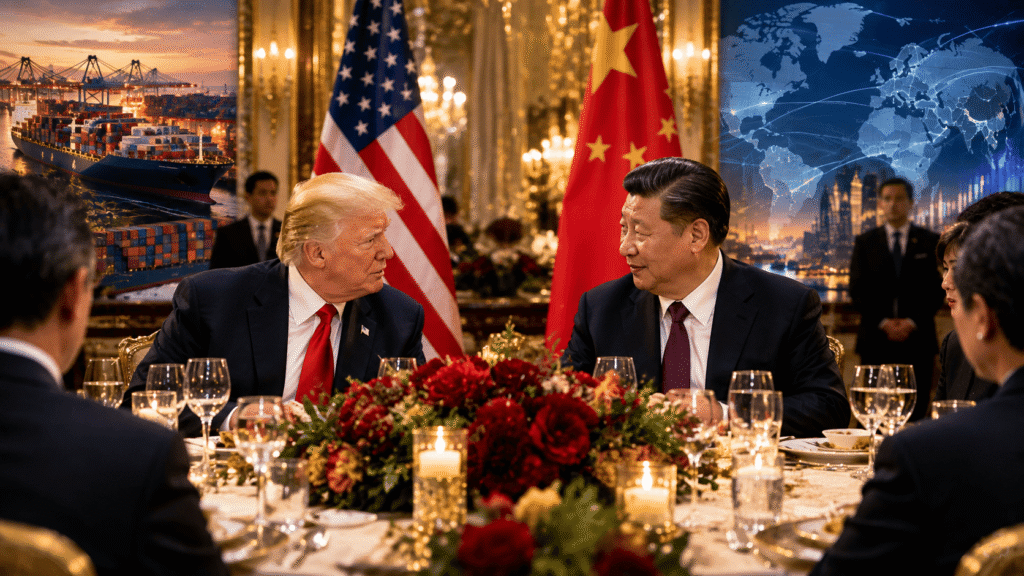
The Trump–Xi state dinner is scheduled to be held in the East Room of the White House in Washington, D.C on September 24, 2026. It followed a day of ceremony which had already been very full — military review in the Rose Garden, flyover, and a closed door meeting of the two leaders of about 90 minutes duration. At nightfall, the atmosphere shifted from tight-fisted diplomatic to candle-lit toasts and fine china.

Who Hosted the Dinner

The evening was hosted by President Donald Trump and his wife Melania Trump. Chinese President Xi Jinping and his wife, Peng Liyuan, attended. The office of Melania Trump said it was her who planned the entire thing, even choosing the wine and the flatware. The red china set used at the table was the one that was often used during Ronald Reagan’s presidency — a slight nod to White House practice.

Why Xi Jinping Was Honored With a State Dinner

It was not simply an ordinary dinner, as it was Xi’s first visit to Washington in 11 years and his second official U.S. state visit ever. It was also convenient, as Trump’s visit to the Chinese capital had come only a few months earlier, in May 2026, after Xi had been the host at the Great Hall of the People. Washington wanted to let him know that the relationship, despite its complexity, was taken seriously by rolling out a state dinner in his honor.

What Was on the Menu for the Trump–Xi State Dinner?

The White House described the menu as one that showcases “American ingredients with subtle Chinese influence.” Notably, there wasn’t a scrap of red meat on the table — the entire meal was pescatarian.

First Course

The menu began with a yellow squash velouté, smoothened and served with a wild mushroom fricassée, fresh herbs, crispy pancetta and a little scallion oil. It seems like a fancy dish on paper, but because it’s a classic and comforting dish, it’s actually just plain old comfort food, this time for company!

Main Course

Next, sesame-crusted sea bass, which has a thin layer of toasted sesame growing on its sides.Then, sea bass with a thin crust of sesame, which is toasted just enough to give the fish a crunch that doesn’t overpower it. It was served over braised baby bok choy and roasted garden eggplant, drizzled with a verdant sauce verde from fresh green herbs.

Dessert

For dessert, the kitchen served a vanilla crémeux with a sour cherry confit center, set on a walnut frangipane and shaped to look like a piece of fruit. Alongside it came a scoop of ice cream made with honey harvested from the White House’s own beehives — a detail Melania Trump introduced back in April when she unveiled the hive on the grounds.

Drinks and Wine Served

The evening opened with a toast of Schramsberg “Blanc de Noir,” a sparkling American wine. That choice wasn’t random — it was the same wine served during the historic 1972 “Toast to Peace” between President Nixon and Chinese Premier Zhou Enlai in Beijing, and it’s become something of a fixture at White House functions involving China ever since.

How the Menu Blended American and Chinese Influences

American Ingredients With Chinese-Inspired Elements

The kitchen leaned on homegrown American produce — squash, mushrooms, eggplant, sea bass — but cooked it with techniques and flavors that nod to China: sesame crusts, bok choy, scallion oil. It’s a small culinary handshake, really, meeting in the middle rather than picking a side.

The Significance of the Menu’s Flavors and Ingredients

Skipping red meat entirely was a quiet statement in itself. Fish-forward menus are common at high-level diplomatic dinners because they’re lighter, easier to pair with wine, and less likely to clash with any dietary customs among guests. It also let the kitchen show restraint instead of going for the classic American steak-and-potatoes approach.

Historical Connections Behind the Meal

The Nixon-era wine reference wasn’t just trivia for the menu card — it tied the entire evening back to the moment that first cracked open U.S.–China relations more than fifty years ago. Whether or not every guest at the table caught the reference, it was clearly meant to frame the dinner as part of a much longer story.

Who Attended the State Dinner?

Trump and Xi Jinping

Both leaders gave toasts during the evening. Trump gifted Xi a gold sculpture of a bald eagle, calling it a symbol of America’s “free and soaring spirit.” Xi, speaking through a translator, described their earlier talks as producing a shared understanding on multiple fronts.

First Lady Melania Trump and Peng Liyuan

Melania Trump and Peng Liyuan had their own separate program earlier in the day while the two presidents met privately, then joined together for the dinner itself.

Notable Political, Business and Diplomatic Guests

The attendees included a who’s-who of American tech. Among the guests were Jeff Bezos, Elon Musk, Mark Zuckerberg, Sundar Pichai, Michael Dell, Jensen Huang, Sam Altman, former Apple CEO Tim Cook, and Citigroup’s Jane Fraser and AMD’s Lisa Su. Tim Cook, Jensen Huang and his wife sat right beside the two presidential couples. Also in attendance were Trump’s extended family, including Melania’s father. Notably, no Anthropic representatives were on the guest list, and reports suggested that the Chinese business leaders who were earlier expected to join the delegation were not a part of the delegation.

Entertainment and Events During the Evening

Musical Performances

Tenor Christopher Macchio, a longtime fixture at Trump events, provided musical entertainment for the evening, backed by a military ensemble.

Special Presentations or Ceremonial Events

Trump used part of the evening to show off ongoing construction on a new White House ballroom, telling guests he wished it had been finished in time to fit even more people into the celebration.

The Evening’s Program and Atmosphere

Between the toasts, the gift exchange, and the music, the night carried the feel of a carefully choreographed performance — equal parts genuine diplomacy and photo opportunity, with both sides clearly aware the cameras were rolling.

State Dinner Protocol and White House Traditions

How a U.S. State Dinner Is Organized

A state dinner is the most formal type of White House social event, reserved for visiting heads of state. Planning usually spans months and covers everything from the guest list to the specific pattern on the china.

Seating Arrangements and Formal Etiquette

Seating at these dinners is never accidental. Placing tech executives like Cook, Huang, and Musk right alongside the two presidents signaled how central the tech and AI relationship is to the broader U.S.–China conversation.

The Role of the First Lady in Planning the Event

Traditionally, the first lady oversees the finer details — menu, flowers, table settings — and this dinner was no exception. Melania Trump’s office was the one that released the official menu details to the press, underscoring just how much of the event fell under her direction.

Trump and Xi’s Broader U.S.–China Meeting

Key Issues Discussed by the Two Leaders

Behind closed doors earlier that day, Trump and Xi covered a lot of ground: artificial intelligence safety, Taiwan, trade, the Iran war, and critical minerals. None of these are small topics, and none of them get fully resolved over a 90-minute meeting — but putting them all on the agenda at once shows how tangled U.S.–China relations have become.

Trade and Economic Relations

Trade remained a central thread, with Trump noting that both countries have been working toward what he called a more balanced trading relationship. Given the tariff battles and tech restrictions of recent years, even modest progress here counts as newsworthy.

Other Areas of U.S.–China Cooperation and Disagreement

Taiwan and AI safety remain the trickiest sticking points, areas where the two governments see the stakes very differently. Critical minerals, meanwhile, have become an increasingly practical concern, since so much of the global tech supply chain depends on materials China controls.

Why This State Dinner Is Significant for U.S.–China Relations

Diplomatic Symbolism of Hosting Xi Jinping

Rolling out a full state dinner for Xi, complete with military pageantry, sent a clear signal: Washington wanted this visit to be seen as a big deal, not a routine meeting.

How State Dinners Are Used in International Diplomacy

Dinners like this exist for a reason beyond good food. They give leaders a lower-pressure setting to build rapport, and they let both governments broadcast a message of stability to their own publics and to the rest of the world.

What the Event Signals About the Relationship

Between the toasts, the gift-giving, and the friendly language from both sides, the dinner suggested a period of cautious warmth — even if the underlying disagreements over trade, Taiwan, and technology haven’t gone anywhere.

Trump–Xi State Dinner: Key Details at a Glance

Detail Information
Date and Location September 24, 2026, East Room, White House
Menu Yellow squash velouté, sesame-crusted sea bass, vanilla crémeux with White House honey ice cream
Hosts and Honored Guest Hosted by Donald and Melania Trump; honoring Xi Jinping and Peng Liyuan
Major Attendees and Entertainment Bezos, Musk, Zuckerberg, Pichai, Cook, Huang, Altman, Su; performance by Christopher Macchio
News

Trump and Xi Meet at the White House, Trade Symbolism for Substance

By George Mensah 5 min read

President Donald Trump hosted Chinese President Xi Jinping at the White House on Thursday for a state visit built around pageantry, but the closed-door talks produced no visible breakthroughs on Taiwan, artificial intelligence, trade, or the war involving Iran.

Xi pressed Washington to oppose “Taiwan independence” during the afternoon meeting, according to a readout issued by China’s state news agency Xinhua shortly after the session ended. The White House had not released its own account of the discussion by Thursday evening.

Taiwan Arms Sales Remain in Question

Xi had been expected to push Trump this week to halt US arms sales to Taiwan. After his trip to Beijing in May, Trump said he was holding back a $14 billion arms package to the island, describing it at the time as a “very good negotiating chip.”

That decision unsettled some US allies in Asia and drew quiet concern from Republicans who worry Trump could trade away support for Taipei to secure economic concessions from Beijing. China claims Taiwan as its own territory and has not ruled out taking it by force.

The summit followed Trump’s speech at the United Nations earlier this week, where he defended his willingness to use military force and said he could “annihilate” Iran. His tone with Xi on Thursday was noticeably different. Analysts point to a shift in leverage between the two leaders since a trade standoff earlier this year that ended with Washington backing down on tariffs.

Trump Emphasizes Personal Ties, Xi Talks Policy

Greeting Xi on Thursday, Trump spoke of a “truly great friendship” between the two men rather than dwelling on policy disputes. He said trade relations had improved since his May visit to China.

“During this visit, we will also discuss pressing issues concerning security, technology, and ‘super intelligence,'” Trump told reporters, using his preferred term for artificial intelligence.

Xi’s remarks carried a different tone. He said the two countries’ interests are closely linked and that competition between them should stay “healthy.” He added that US companies remain welcome in China and said he hopes “Chinese companies are treated fairly here in the United States.” Xi also called for regular military-to-military dialogue between the two nations to reduce the risk of miscalculation.

Edgard Kagan, a former senior White House official for East Asia now at the Center for Strategic and International Studies, said the contrast in approach reflects two different strategies.

“The president is casting it very much as about his personal relationship with Xi,” Kagan said. “What I found interesting was Xi is being much more cautious and suggesting that it’s less about the personal relationship than the national relationship.”

Thursday marked Xi’s first visit to Washington in more than a decade and the second meeting this year between the leaders of the world’s two largest economies.

A Visit Built for Spectacle

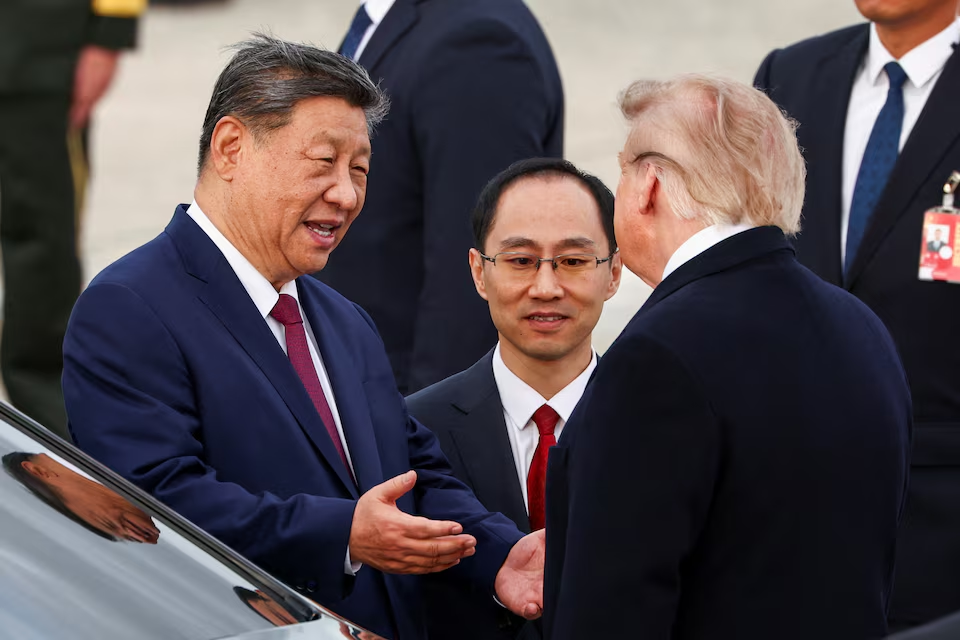
US President Donald Trump welcomes China's President Xi Jinping at Joint Base Andrews

Trump, who has long favored ceremony in his dealings with world leaders, treated the visit as a matter of national prestige as much as diplomacy. Yet the remarks from both leaders were not broadcast live by any major US television network. The networks declined to carry the footage after the White House barred CNN, MS Now, and Politico from the event.

Trump welcomed Xi on Wednesday evening with a red carpet reception at Joint Base Andrews, the first time a US president has greeted a foreign leader there since Barack Obama met Pope Francis in 2015, according to C-SPAN.

On Thursday, the two leaders watched a military ceremony that included a flyover at the Rose Garden. After their private meeting, Trump gave Xi a tour of a newly built helipad on the South Lawn.

“He loves good granite,” Trump told reporters afterward, calling the meeting “great” without offering further detail.

The optics carry political risk for Trump at home. With midterm elections approaching in November and Republicans defending narrow majorities in Congress, voters are already anxious about inflation and the ongoing conflict with Iran. Trump has spent months branding Democrats as “communists,” yet on Thursday he welcomed the head of the Chinese Communist Party as a personal friend, with Chinese flags hung alongside American ones above the Oval Office.

Analysts See Few Real Breakthroughs

Despite the ceremony, few expect the visit to produce major policy shifts. Treasury Secretary Scott Bessent told Fox News on Wednesday, after talks with Chinese Vice Premier He Lifeng, that the two sides had agreed to extend a pause in their trade dispute until January 10.

Trump wrote in a Truth Social post Thursday morning that AI, which he calls “super intelligence,” would be a major topic but signaled little appetite for new regulation, despite warnings from industry figures about the technology’s risks.

“Super Intelligence (SI) will be a big topic of discussion, but I want to leave it exactly where it is,” Trump wrote. “That is China’s position also.”

Xi struck a more cautious note on the same subject, saying both countries must “ensure that the development of AI is always under human control.”

Analysts expect the rivalry between the two nations in AI development to limit any cooperation beyond symbolic statements.

Behind the Scenes, Deeper Disputes Persist

People familiar with the discussions say the talks could yield agreements on lowering some tariffs, curbing drug trafficking, and expanding military dialogue. Trump is also expected to press for the release of Americans detained in China.

Xi holds a stronger hand than he did in earlier rounds of talks. China has posted strong trade growth this year, and Beijing controls much of the global supply of rare earth minerals, giving Xi added leverage in negotiations.

Both leaders have reasons to want stability. Trump remains tied down by an unpopular war involving Iran, while Xi is managing economic pressures at home. Still, disagreements over Taiwan, export controls, artificial intelligence, and the Iran conflict could resurface at any point.

Beijing has shown little willingness to pressure Iran, a longtime ally, into meeting US demands. During Thursday’s meeting, Xi voiced support for a ceasefire between the US and Iran and said he hopes the two sides eventually reach a peace agreement, according to Xinhua.

A Dinner Guest List Heavy With Tech Power

Thursday’s state dinner drew a list of attendees that included Apple’s Tim Cook, Amazon’s Jeff Bezos, Alphabet’s Sundar Pichai, OpenAI’s Sam Altman, Tesla’s Elon Musk, and Nvidia’s Jensen Huang.

Despite the presence of executives eager for looser trade rules, people familiar with US planning say Trump intends to keep existing export controls on American technology in place, controls that Beijing has pushed to have eased.

The state visit closes with both sides claiming progress on narrow issues like tariffs and trade timelines, but with the core disputes over Taiwan, technology, and the broader US-China rivalry left largely where they started.

ADVERTISEMENT
Scroll to Top