Clicxpost

US News

Iran Military Developments: Latest Updates, Missiles, Drones and Regional Security

Iran Military Developments Latest Updates

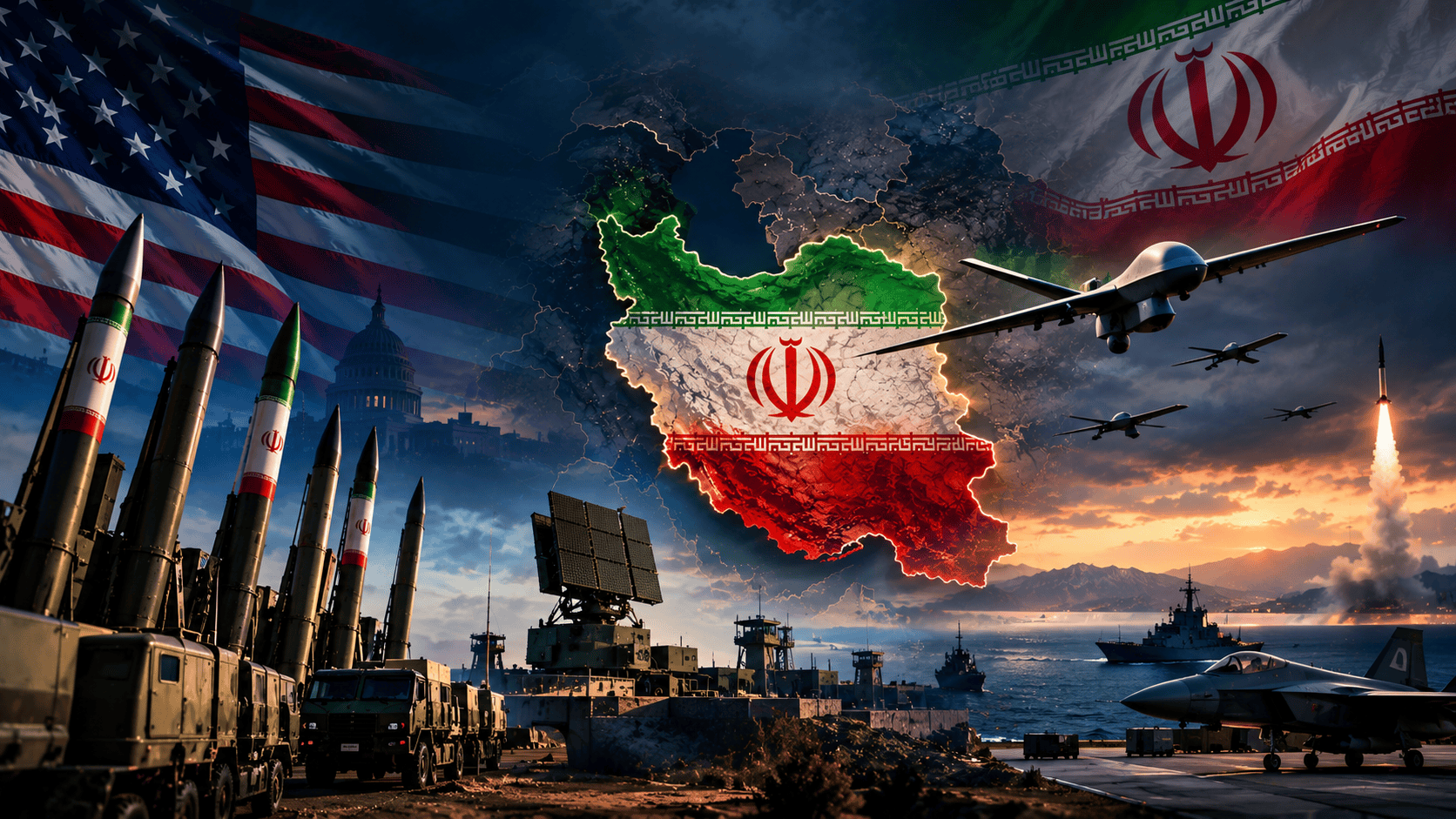
Iran military developments are central to understanding the Middle East’s security environment today. Since 28 February 2026, the United States and Israel have been at war with Iran and its regional allies, following strikes that killed Supreme Leader Ali Khamenei and other senior officials. Iran’s missiles, drones and naval forces have shaped how the conflict unfolded, how Gulf states responded, and why talks have repeatedly stalled.

This article explains Iran’s main capabilities, what is publicly documented about its missile and drone programs, and what the latest verified developments mean for Iran-US relations. Where a claim comes from one government or party, we say so.

What Are Iran’s Major Military Capabilities?

Iran’s military has two parallel structures: the regular armed forces (Artesh) and the Islamic Revolutionary Guard Corps (IRGC), which runs the missile and drone programs and a separate navy. The main capability areas are:

  • Missiles: Iran’s ballistic missile inventory is widely described as the largest in the Middle East.
  • Drones: Cheap one-way attack drones that can be launched in large numbers.
  • Air defense: A mix of imported and domestically built systems, heavily contested in recent fighting.
  • Naval forces: Small fast-attack craft, mines and anti-ship missiles, built for the confined waters of the Gulf rather than open-ocean combat.
  • Ground forces: The Army, IRGC ground units and the Basij volunteer force. Analysts found little evidence of significant defections during the early weeks of the war.
  • Cyber: Open information is limited, but see the cyber section below.

Iran has long relied on asymmetric tools because sanctions limited its access to modern fighter aircraft and heavy conventional equipment.

Iran’s Missile Developments

Iran’s missile program has its roots in the Iran-Iraq War of the 1980s. Iran started a ballistic missile program to deter Iraqi missile attacks on its cities and to compensate for its lack of a modern air force under sanctions.

What is publicly documented

Iran’s arsenal covers several categories:

  • Short-range ballistic missiles such as the Fateh-110 family, with ranges under 1,000 km.
  • Medium-range ballistic missiles such as the Shahab-3 and the Khorramshahr. The Shahab-3 is Iran’s most mature liquid-fueled medium-range missile, with a range of roughly 1,300 km. Published figures for variants differ by source.
  • Cruise missiles, including the Quds (Paveh) type, which some analysts credit with a range of about 1,650 km.
  • Hypersonic claims: In 2023 Iran unveiled what it described as its first domestically produced hypersonic ballistic missile, the Fattah series. That description comes from Iran, and independent verification of its performance is limited.

Range and numbers

Reuters has reported that Iran maintains a self-imposed ballistic missile range limit of about 1,240 miles (roughly 2,000 km), and found no evidence supporting claims that Iran’s missiles could soon reach the United States. A 2025 US Defense Intelligence Agency assessment said Iran’s space launch vehicles could eventually support an intercontinental ballistic missile, potentially by 2035, if the government chose that path.

Stockpile estimates vary. An Israeli-linked think tank citing IDF assessments put the arsenal at about 2,500 missiles by February 2026, while a former US commander has said Iran had more than 3,000. These are estimates, not confirmed inventories.

Strategic role

For Tehran, missiles are a deterrent and a way to hit targets that its air force cannot reach. Iranian officials describe the range limit as sufficient because it places Israel and US-linked bases in the Gulf within reach. Western governments, by contrast, see the program as a security threat. Iran says its program is defensive.

Iran’s Drone Developments

Drones are the other pillar of Iran’s military strategy. Iran has built a large fleet of unmanned aerial vehicles, including Shahed-series one-way attack drones that loiter before striking. They are slower and cheaper than ballistic missiles and can be launched in waves alongside them.

Major categories

  • One-way attack (loitering) drones: the Shahed-136 and related types.
  • Combat and surveillance drones: the Shahed-129 class and others.
  • Newer jet-powered variants, reported by analysts.

Use and international concern

Iran used hundreds of drones in its April 2024 and June 2025 strikes on Israel. The Shahed-136 also became a global concern after Russia used it in Ukraine. Iran Watch notes that Tehran supplied the Shahed-136 to Moscow early in the Ukraine war, and that Russia is now reportedly supplying Iran with drone-warfare advice, components and a pending shipment of Geran-2 drones, an improved version of the Shahed. Those transfers are reported, not officially confirmed.

Confirmed versus claimed in 2026

  • Reported: Long-range Shahed-136 drones have been a damaging part of Iran’s strikes on Gulf infrastructure and on commercial ships near the Strait of Hormuz.
  • Disputed: In June, a US official said a Shahed drone downed a US helicopter near the strait. Iran said it did not deliberately target the helicopter.
  • Iranian claims: Iran has stated it shot down several US drones (MQ-9 and MQ-1 types) over the Gulf in August and September. These claims come from Iranian officials and military sources.

Iran’s Military Developments and Regional Security

Iran’s capabilities directly affect Gulf security. After the strikes began, Iran launched missile and drone attacks on Israel, US bases and US allies in the region, and blocked the Strait of Hormuz. Gulf states including the UAE, Saudi Arabia, Kuwait and Bahrain have also been drawn into the fighting.

Key security concerns now include:

  • Air defense strain: Cheap drones force defenders to use expensive interceptors.
  • Energy infrastructure: Attacks on or near oil and gas facilities affect global markets.
  • Maritime risk: Commercial shipping has been targeted or delayed.
  • Spread to other fronts: Fighting resumed between Hezbollah and Israel, and the Houthis in Yemen joined the conflict in late March.

Iran has also been accused of reaching beyond the region. UK Prime Minister Andy Burnham said on 30 September there were “strong indications that Iran played a part” in a 27 September incident near RAF Fairford, in which five men were arrested. Iran’s foreign minister Abbas Araghchi rejected the claim. The police investigation was still ongoing at the time of writing.

Iran’s Naval and Strait of Hormuz Capabilities

The Strait of Hormuz is a narrow passage at the mouth of the Persian Gulf, through which a large share of the world’s seaborne oil and gas passes. That makes Iran’s ability to threaten shipping a major source of leverage.

Iranian naval forces

The IRGC Navy and the regular Navy operate different roles. The IRGC emphasizes fast boats, mines, coastal missiles and drones. The regular Navy operates frigates and submarines. US officials say they severely damaged Iran’s naval capabilities, mainly in the Gulf of Oman, and the US Navy reportedly sank the frigate IRIS Dena in the Indian Ocean in March. Iran’s own damage assessments differ.

Shipping and the 2026 crisis

Iran has restricted transit through the waterway since early March, and its top security official said in August that it would not fully reopen until the US met Tehran’s conditions. Iran’s parliament speaker repeated in September that the strait would stay closed until the US meets its conditions. The US position differs: President Trump has insisted the strait is open and operating. And on 4 October, Al Jazeera reported that Iran said Hormuz would remain closed until the US meets its conditions.

International bodies have weighed in. The International Maritime Organization’s administrative council agreed that member states should reject Iran’s efforts to impose sovereignty over the strait. For the day-to-day picture, see our Strait of Hormuz updates.

Iran Military Developments and US-Iran Tensions

Military events have driven the diplomacy rather than the other way around. The February strikes took place during US-Iran negotiations over Iran’s nuclear program. Since then, the US has built up forces in the region, enforced a naval blockade on Iranian ports at different points, and struck Iranian military targets.

Both sides cite deterrence. The US says it must keep Iran from threatening shipping and US forces. Iran says its missiles, drones and control of the strait are what stop further attacks. In early September, the Defense Secretary extended the deployment of about 50,000 US troops in the region into 2027.

For the history behind this pattern, see Iran-US relations history and our coverage of US strikes on Iran.

Recent Iran Military Developments

These are the most recent developments we could verify as of 5 October 2026:

  • 27-30 September: Incident at RAF Fairford and the UK allegation of Iranian involvement (see above). US Secretary of State Marco Rubio said the “hands of a foreign actor” were involved; Iran denied any involvement.
  • 1 October: Reports said Rubio ordered the Iranian delegation, including Araghchi, to leave the US, citing Axios. That report has not been independently confirmed here. The Hill reported that Trump rejected an Iranian seven-day proposal.
  • 1 October: An IRGC official claimed Iran achieved a first long-range ballistic hit on moving targets. The claim was not verified.
  • 1 October: A senior Iranian delegation visited southern Lebanon.
  • 2 October: CGTN reported Trump said renewed strikes after the 3 November midterms were “possible” as ceasefire talks stalled.
  • 3-4 October: Reports said the US was deploying a third aircraft carrier to the Middle East. Iran told the US there is “no military solution” to the war, and the Houthis claimed a strike on an Aramco site as Yemen fighting intensified.

One daily tracker noted that no US or coalition strike on Iranian territory ashore was reported between 2 and 3 October.

Iran’s Military Strategy and Regional Partnerships

Iran’s strategy combines deterrence, distributed command and regional partners. Analysts have described a decentralized “mosaic defence” approach, with units responding semi-independently. Iran also works with groups often called the “Axis of Resistance,” including Hezbollah, the Houthis and Iraqi armed factions.

It helps to separate three types of information:

  1. Documented relationships: Iran openly supports Hezbollah and has long been tied to the Houthis and Iraqi groups. The October 1 delegation to southern Lebanon is one recent public sign.
  2. Government allegations: The US and UK link Iran to plots and attacks abroad. Iran denies them.
  3. Independent reporting: One analyst at the Washington Institute said Russia and China provided satellite imagery to help Iran target US forces. That is an analyst’s assessment, not a confirmed government statement. Russia’s Security Council chairman said on 3 October that Russia would “never sacrifice” its relationship with Iran.

International Response

Reactions have been divided:

  • UN: The UN Secretary-General and several countries condemned the US-Israeli strikes, while the Security Council passed a resolution condemning Iran’s retaliatory strikes on Gulf states.
  • Europe and NATO: In March, China and European NATO members rejected a US call for military support to reopen the strait. The UK later allowed use of its bases for certain defensive operations.
  • Gulf states: Several have been both targets of Iranian strikes and, in some cases, participants in the conflict.
  • Russia and China: Both have opposed US actions and kept ties with Tehran.

Impact on Iran-US Relations

Military developments affect almost every track of diplomacy:

  • Negotiations: Talks in Islamabad in April ended without agreement, and a June memorandum to end the war collapsed in early July. Iran says the deal is “suspended”; Trump called it “over.”
  • Sanctions: On 24 August, Treasury Secretary Scott Bessent announced a sanctions campaign, “Operation Economic Outcast,” warning other countries to halt economic activity with Iran.
  • Nuclear issues: Inspectors’ access remains limited. Iran told the IAEA in February that normal safeguards were “legally untenable and materially impracticable.” See Iran nuclear inspections and Iran-US nuclear talks.
  • Ceasefire efforts: See Iran-US ceasefire updates. In September, Vice President JD Vance said Washington had cut contact with Iran while it fires on ships without permission.

The central dispute is sequencing: Iran wants sanctions relief, frozen assets and an end to military operations before reopening Hormuz, while the US wants shipping restored first.

Iran Military Developments Timeline

  • April and October 2024: Iran strikes Israel after earlier escalation.
  • June 2025: The Twelve-Day War between Israel and Iran, with US strikes on nuclear sites, ends in a ceasefire.
  • September 2025: The UN reimposes sanctions on Iran through the “snapback” mechanism.
  • 28 February 2026: US-Israeli strikes begin; Ali Khamenei is killed. Iran retaliates against Israel, US bases and Gulf states.
  • Early March 2026: Iran restricts Hormuz shipping. Mojtaba Khamenei is named Supreme Leader on 8 March.
  • 7-8 April 2026: Pakistan-mediated two-week ceasefire announced.
  • 11-13 April 2026: Islamabad talks fail; a US naval blockade of Iranian ports begins.
  • Mid-June 2026: US and Iran sign a memorandum to end the war and lift blockades.
  • Early July 2026: The memorandum collapses amid new Hormuz attacks and US strikes.
  • 24 August 2026: US announces a new sanctions campaign.
  • Late August-early September 2026: Clashes at sea and across the region over Hormuz.
  • 27 September 2026: RAF Fairford incident.
  • 1-4 October 2026: Talks stall; US reinforcements reported; Iran repeats that Hormuz stays closed.

Frequently Asked Questions

What are the latest Iran military developments?

As of 5 October 2026, talks have stalled, Iran says Hormuz stays closed until its conditions are met, and Trump has said renewed strikes after the midterms are “possible.” A third US carrier is reportedly heading to the region.

What missiles does Iran have?

Short-range (Fateh-110 family), medium-range (Shahab-3, Khorramshahr) and cruise missiles, plus systems Iran calls hypersonic. Exact numbers and performance are estimates.

What are Iran’s drone capabilities?

A large fleet of one-way attack drones such as the Shahed-136, plus combat and surveillance types. They have been used against Israel, Gulf targets and shipping.

Why are Iran’s military developments important?

They influence Gulf security, global energy flows and the prospects for talks with Washington.

How do Iran’s military capabilities affect the Strait of Hormuz?

Iran’s missiles, drones, mines and fast boats let it threaten or restrict shipping, and it has restricted transit since March. The US disputes Iran’s claim of control.

How do Iran military developments affect Iran-US relations?

Strikes, blockades and attacks on shipping have repeatedly interrupted or ended diplomacy. See our Iran-US relations pillar for the wider picture.

What role do missiles and drones play in Iran’s strategy?

They are its main tools for deterrence and retaliation, designed to reach targets its air force cannot and to strain expensive air defenses.

How has Iran’s military capability developed over time?

From improvised missiles during the 1980s Iran-Iraq War to a large domestic missile and drone industry, shaped by sanctions and repeated conflict.

Sources / References

  • Critical Threats (CTP-ISW), Iran Update, 1 October 2026
  • Al Jazeera, Iran coverage, 3-5 October 2026
  • Reuters, “Rubio says UK airbase incident involved a foreign state,” 29 September 2026
  • BBC and Global News, reports on UK Prime Minister Burnham’s 30 September remarks
  • IANS, Araghchi response on RAF Fairford, 1 October 2026
  • CGTN, 2 October 2026; The Hill and CBS News, 1-3 October 2026, via GlobalSecurity.org
  • Jerusalem Post live updates, 1 October 2026
  • Reuters via Oman Observer; Bernama-Anadolu (12 August, 20 September 2026), on Hormuz positions
  • Iran Watch, “Iran War: Weapon Programs One-Month Update,” 31 March 2026
  • Gulf News, “Inside Iran’s missile playbook,” March 2026
  • Wikipedia, “2026 Iran war” (background timeline; cross-checked where possible)
RECOMMENDED
US News

US Asks UN Aviation Agency to Challenge Flight Ban on Taiwan President’s Africa Trip

By George Mensah 9 min read

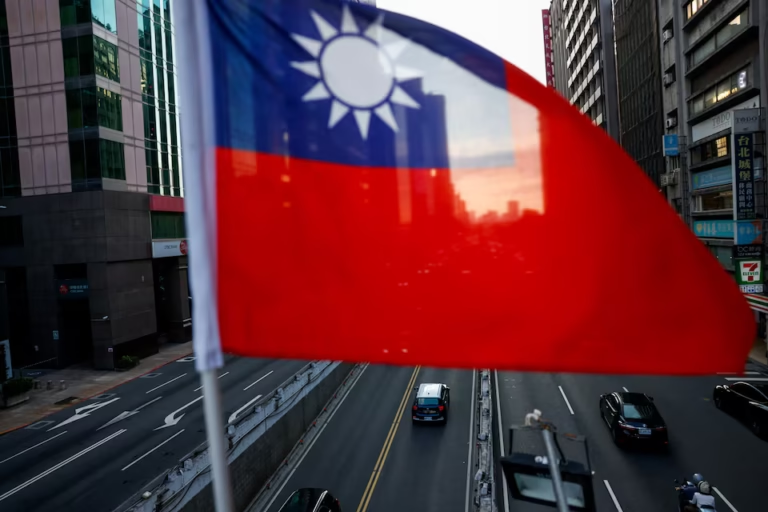
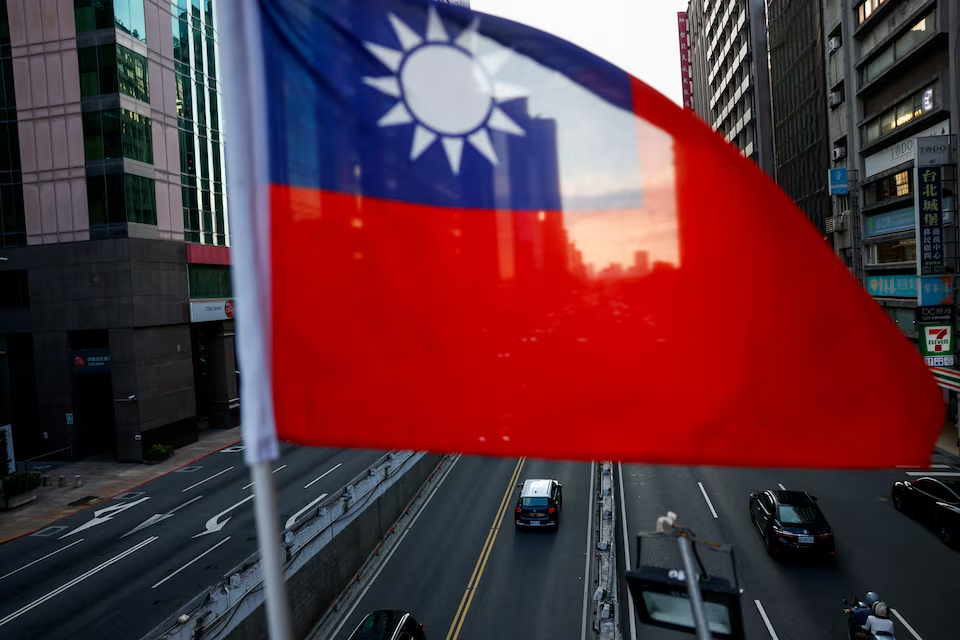
The United States has asked the UN aviation agency to rule on whether two Indian Ocean states can use their air traffic role to block a Taiwanese presidential flight. In a paper submitted for the November session of the International Civil Aviation Organization (ICAO) Council, Washington challenged the decision by Mauritius and Seychelles to revoke permission for an aircraft carrying Taiwan President Lai Ching-te to cross parts of international airspace they manage. The flight was planned for April, and it reopens the long-running dispute between the United States and China over Beijing’s efforts to limit Taiwan’s international engagement.

China hit back at the proposal. Its foreign ministry accused Washington of using Taiwan for political purposes and of wasting international resources. Taiwan thanked the United States for its concern. The governments of Mauritius and Seychelles did not respond to requests for comment.

What Washington wants the council to do

Members of ICAO agency arrive at their headquarters in Montreal

The US paper, seen by Reuters, asks the ICAO Council to reaffirm a narrow principle. Countries responsible for managing air traffic over the high seas do not have sovereignty over that airspace, the paper says, and they cannot use the role for political purposes. Such actions could “set a dangerous precedent,” the paper warns, by encouraging similar disruptions or political pressure on other countries.

Washington lists three specific requests. It wants the council to express concern over the withdrawn permits. It wants the agency’s secretary general to seek written explanations from Mauritius and Seychelles. And it wants ICAO to determine whether any remedies are needed to ensure the two countries comply with international aviation rules.

The paper names only Mauritius and Seychelles. Taiwan’s government said Madagascar also revoked permission for the flight, but the US document does not mention it. The paper as reported does not explain why.

The State Department raised the issue earlier, in April. It said responsibility for managing international airspace beyond a country’s sovereign territory was “solely to ensure aviation safety, not to serve as a political tool for Beijing.” The ICAO paper takes that statement out of the press briefing room and puts it before a body that can ask member states for explanations.

The flight that never left in April

Lai was due to begin his first trip to Africa on April 22, 2026. His destination was Eswatini, where he planned to attend events marking the 40th anniversary of King Mswati III’s accession to the throne. Eswatini is one of only 12 countries with formal diplomatic ties to Taiwan, which China claims as its territory, and it is the last of Taipei’s official allies in Africa.

According to the US paper, Taiwan’s China Airlines had received permits for a charter flight to cross portions of the flight information regions, known as FIRs, that Mauritius and Seychelles manage over the high seas. Both countries revoked the permits days before departure. They did not cite safety or operational concerns, the paper says.

At an April 21 press conference, the president’s secretary-general said the permits were cancelled without prior notice or justification. He blamed pressure from Beijing, including economic coercion. Taipei announced the same day that the whole trip was off because the plane could not reach Eswatini. The aircraft had no mechanical problems.

Lai said China had used economic coercion to secure the cooperation of the three countries. Beijing denied that. Seychelles and Madagascar do not recognize Taiwan. Global Taiwan, a research publication, reported that Madagascar said it recognizes only one China and Seychelles said its decision followed established procedures. A Taipei official also claimed Beijing threatened to withdraw debt relief from the countries if they did not block the flight, but that claim has not been independently confirmed.

On April 22, Chinese Foreign Ministry spokesperson Guo Jiakun welcomed the decisions of the three countries and restated Beijing’s one-China position.

Airspace and flight information regions are not the same thing

The legal argument depends on a distinction that most travelers never encounter. Countries have sovereignty over the airspace above their land and their territorial waters. Flight information regions are a separate matter. A country assigned to manage a region provides air traffic services there, and those regions can extend far beyond a country’s borders over international waters.

Under the US paper’s reading, providing those services is a safety and operational job. It does not hand the country control over the airspace itself. A Taipei Times editorial published in May made the same point about the Chicago Convention and its annexes. It said a state overseeing a region is responsible for air traffic safety and security there, including over the high seas, but does not gain control of that airspace.

If that reading holds, a permit to cross a region over the high seas is a coordination step, and a refusal needs an aviation reason. The US paper says Mauritius and Seychelles gave none. The countries have not publicly answered that point to Reuters, so the council would be asked to rule on the US account of events with no stated position from the two governments.

China’s reply

China’s foreign ministry gave Reuters a statement rejecting the US paper. It said the document “selectively and one-sidedly cites” principles including freedom of overflight over the high seas. It said Washington, “under the pretext of safeguarding freedom of navigation,” smears other countries and presumes sovereign states were at fault.

The statement then turned to sovereignty. “There is only one China in the world, and Taiwan is an inalienable part of China’s territory,” the ministry said. “China urges the countries concerned to stop using the Taiwan issue for political manipulation.”

Beijing’s response does not address the paper’s central claim, which is that managing air traffic over international waters confers no sovereignty. It answers the paper’s motive instead. That pattern is common in this dispute. Washington frames each case as a rules question, and Beijing frames the same case as a question about Taiwan’s status.

Taiwan’s response

Taiwan’s foreign ministry said it thanked the United States and other like-minded countries for their earlier concern about the issue. In a statement, it said it will keep working with allied countries to explain to ICAO and the international community that “China’s actions undermine the international civil aviation order and flight safety.”

Taiwan is not a member of the United Nations or its agencies because of opposition from Beijing, which considers the democratically governed island part of its territory. Taiwan rejects Beijing’s sovereignty claims and says China has no right to represent it internationally. That position leaves Taipei dependent on friendly governments to carry its case into rooms where it has no seat.

The Taipei Times editorial put numbers on the aviation stakes. Taiwan manages the Taipei FIR, which about 1.64 million flights used in 2024, and 64 million passengers passed through Taiwan’s airports that year. Taiwan has still been denied observer status at the ICAO assembly. The editorial argued that China has used its position in the organization to advance its aims toward Taiwan, and that it has set up new civil air routes over the Taiwan Strait on several occasions in the past eight years without prior consultation with Taipei.

What the paper asks for, and what it leaves out

The requests are procedural. The paper does not ask ICAO to penalize Mauritius or Seychelles, and it does not ask the agency to take a position on Taiwan’s status. It asks for concern to be expressed, for explanations to be sought in writing, and for a check on whether remedies are needed to bring both countries into line with aviation rules. That framing keeps the case inside ICAO’s own subject matter, which is how air traffic is managed.

The precedent argument in the paper reaches beyond Taiwan. A country that manages a flight information region over the high seas sits on the route of every airline crossing it. If that role can be used to pull permits for political reasons once, the paper warns, other countries and other flights could face the same pressure. Taiwan’s own region shows the scale of what is at stake for any such system, since about 1.64 million flights used the Taipei FIR in 2024, according to the Taipei Times editorial.

Taiwan’s narrow diplomatic footing

The Eswatini trip was planned around one of Taipei’s few formal relationships. Only 12 countries maintain diplomatic ties with Taiwan, and Eswatini is the sole African country among them. A visit by the president to an ally is a rare chance for Taipei to show its relationships in person, which explains why the cancellation drew a press conference and why the follow-up trip was announced only after Lai arrived.

A pattern Washington has now put in front of ICAO

The dispute over Lai’s flight is one front in a wider contest. The United States and China have clashed over China’s efforts to restrict the island’s room to operate internationally. Those efforts cover participation in global bodies, diplomatic ties and overseas travel by senior officials. The April flight touched the last of those three areas directly.

The US move is also notable for its venue. Washington could have raised the issue only through diplomatic channels with Mauritius and Seychelles. ICAO instead gives it a multilateral platform and a procedural path, and the US paper asks for written explanations that would sit on the record.

That path carries a risk. A council that declines to act would leave Washington with a public record showing the limits of the process. A council that issues a mild statement of concern would give Taipei a documented position to cite the next time a presidential flight needs permits. Either result will be read as a measure of how much support exists for the US reading of FIR rules.

Lai reached Eswatini anyway, in secret

The trip did not end with the cancellation. Lai eventually traveled to Eswatini the following month aboard the Eswatini king’s private aircraft, and he announced the visit only after arriving. Global Taiwan reported the date as May 2, and said the plane was accompanied by Eswatini’s deputy foreign minister and took a route that avoided the airspace of the three countries.

That reporting also names the countries that did grant overflight for the second flight: Indonesia, Malaysia, Brunei, the Philippines and Australia. Germany and the Czech Republic reportedly refused a refueling stopover request after the original route failed. Foreign Minister Lin Chia-lung also made the trip to Eswatini in Lai’s place.

The outcome shows what the April restrictions cost and what they did not. They forced Taipei to cancel the announced trip and delayed the visit by about ten days. They did not stop it. For Washington, that is both a reason to press the legal point, because the restrictions were avoidable by other means, and a risk, because China can argue that the dispute ended when the visit took place.

What to watch

The council session is the next test. Three outcomes are worth tracking. The first is whether the council asks its secretary general to write to Mauritius and Seychelles, since that is the most concrete request in the US paper. The second is whether either government answers publicly, because neither has done so to Reuters. The third is whether other council members back the US reading that managing high-seas airspace carries no sovereignty.

Taipei will watch the same points. Its foreign ministry has said it will keep working with allied countries to make its case to ICAO. The next time a Taiwanese leader plans a long flight over international waters, the answer on permits may depend on what the council does at its November session.

US News

Trump Asks Supreme Court to Limit Judges’ Power to Strike Down Federal Rules Nationwide

By George Mensah 7 min read

President Donald Trump’s Justice Department has asked the US Supreme Court to restrict a tool federal judges use to cancel agency regulations for everyone, not just the people who sued. The appeal, now pending before the justices, targets the courts’ long-standing power to halt the actions of federal agencies that carry out the Republican president’s policy priorities. The Supreme Court is expected to consider whether to take up the case early next year.

The request follows a win the administration secured in June 2025, when the court limited nationwide injunctions. That ruling left a separate tool untouched, and the new appeal goes after it.

What the administration is asking for

The administration argues that courts should not be able to shut down an agency’s regulation entirely. Judges, it says, should limit any relief to the specific plaintiffs in a given case.

The Justice Department put its position directly in its filing. The Supreme Court “should return the lower courts to their proper role under the Administrative Procedure Act,” it said.

The administration made the same argument against universal injunctions. It contends that the law does not give courts such sweeping authority, and that the most a court can do is block a regulation’s enforcement against the plaintiffs who challenged it.

The tool at the center of the appeal

The lawsuits the administration is targeting are brought under the Administrative Procedure Act, known as the APA. Congress passed it in 1946, and it governs how federal agencies operate, including how they put regulations into effect.

Judges and appeals courts have long claimed the power under the APA to “hold unlawful and set aside” agency regulations they find illegal. A ruling of that kind invalidates the regulation on a universal basis. It does not stop at the courtroom door of the people who filed suit.

That is different from the nationwide injunctions the Supreme Court restricted in June 2025. Those orders can block the government from enforcing a policy against anyone, not only the challengers. Judges had used them more and more in a wide range of cases against Trump, including cases alleging violations of the US Constitution. The administration now wants the same limits applied to the similar orders judges can issue to invalidate policies under the APA.

A case about surprise medical bills

The vehicle for the appeal is a challenge by Texas medical providers to federal rules that implement a statute Trump signed into law during his first term. The statute aims to limit unexpected medical bills.

The regulation at issue sought to constrain “surprise” bills from hospitals and health providers outside a patient’s health insurance network. A Texas association of medical doctors, air-ambulance providers and other plaintiffs argued that the rule violated the APA and artificially lowered their insurance reimbursement rates.

The New Orleans-based 5th US Circuit Court of Appeals voided parts of the rule nationwide in August, finding an APA violation. The administration’s appeal does not contest that finding about the rule’s legality. It asks a narrower question: whether courts can use the APA to stop a policy nationwide at all.

Two readings of the same words

The dispute comes down to what the APA’s language allows. Judges point to the phrase “hold unlawful and set aside” when they invalidate a rule for everyone. The administration reads the statute as permitting relief only for the plaintiffs in front of the court. Judges and appeals courts have read it the other way for a long time.

The Supreme Court did not resolve that disagreement in 2023, when Biden’s administration invited it to. The justices backed Biden in that case on other grounds, so the question comes back to them now in a new case, under a different president.

What a win would change

Aditya Bamzai, a University of Virginia expert in administrative law, said a victory for Trump could let the government keep enforcing rules against everyone except the plaintiffs in a given case. That could continue for years while litigation plays out, even after judges have deemed the rules unlawful.

Siding with Trump “would give more flexibility to the executive branch,” Bamzai said.

“Whether you like or dislike that flexibility can perhaps depend on whether you like or dislike a particular administration’s policies,” Bamzai added.

Ronald Levin, a law professor at Washington University in St. Louis, described the practical effect from the other side. If the Supreme Court agrees with the administration, he said, “it would take longer for challengers to get unlawful regulations removed from the books.”

The case for keeping the tool

Numerous state governments that regularly sue the federal government say this judicial power is an essential check against executive overreach. Others say the APA matters because it keeps regulations uniform and applies them equally to everyone.

Levin gave examples. “When an agency adopts a rule that has been held to be unlawful, sometimes the only sensible solution is to wipe it off the books,” he said.

“You can’t have a food-safety rule that applies only to some. You can’t have an auto-safety manufacturing rule that applies only to some manufacturers,” Levin said. He added that judges should not use the tool in every case, but, in his words, “there are some cases where the need for it is compelling.”

Texas, Florida and some other states, mostly led by Republicans, had urged the 5th Circuit not to “neuter” the APA’s effectiveness. They called the law important for maintaining the balance of power between states and the federal government. “The APA is a critical tool … to curb federal overreach and incursions into state sovereignty by executive-branch agencies,” these states said.

Trump’s administration may face pushback from a broad array of opponents on this effort, and the Republican-led states in that group show that the objection does not come from one side only.

Cases that depend on the tool

Since Trump returned to office in January 2025, his administration has faced hundreds of lawsuits over its actions on immigration, mass deportation, diversity initiatives and transgender rights, among others. Many of those actions pushed the boundaries of presidential authority.

Plaintiffs invoked the APA in numerous cases. They used it to fight the termination of humanitarian legal status for hundreds of thousands of migrants living in the United States. They used it against major cuts to research grants related to racial minorities or LGBT people. They used it against the use of a mass voter verification system to conduct sweeping citizenship checks.

Trump and his allies have attacked judges who stood in the way of those policies, calling some of them radical or corrupt. At the same time, the president has tested the limits of his powers.

What the 2025 ruling did and did not decide

The June 2025 ruling came in litigation over Trump’s bid to limit birthright citizenship, a right long recognized in the United States. The ruling addressed judicial power, not whether the birthright citizenship directive was legal.

The legality question came separately. In June, the justices issued a 6-3 ruling rejecting Trump’s birthright citizenship policy as unconstitutional.

The administration is not the first to ask for limits on judges’ power. President Joe Biden’s administration also asked the Supreme Court to rein in universal injunctions when lower courts hindered many of his main initiatives. The 2025 ruling still proved to be a major victory for Trump.

Biden’s administration also tried in 2023 to persuade the Supreme Court to limit the APA power that the new appeal targets. That case involved a challenge by Republican attorneys general from Texas and Louisiana to an immigration policy. The justices did not take up the invitation and backed Biden on other grounds.

What happens next

The justices will decide, probably early next year, whether to hear the case. If they do, the question before them will be narrow in form and broad in effect. They will not rule on the surprise-billing rule itself, since the administration has left the 5th Circuit’s finding about it alone. They will rule on whether a federal judge can cancel an agency rule for everyone.

For the administration, a yes would add to the 2025 ruling and leave judges with fewer ways to stop a policy before a case ends. For challengers, it would mean a rule found unlawful could stay in force against everyone except the plaintiffs, as Bamzai and Levin described. Both men tied the outcome to time: how long an unlawful rule can remain on the books while the case continues.

Bamzai’s remark about liking or disliking an administration’s policies also points to a feature of the case that does not depend on party. Whatever the justices decide would apply to whichever administration holds office next. Biden’s team asked for similar limits on judges, which is why the question has now come up under two presidents of opposite parties.

ADVERTISEMENT
Scroll to Top