
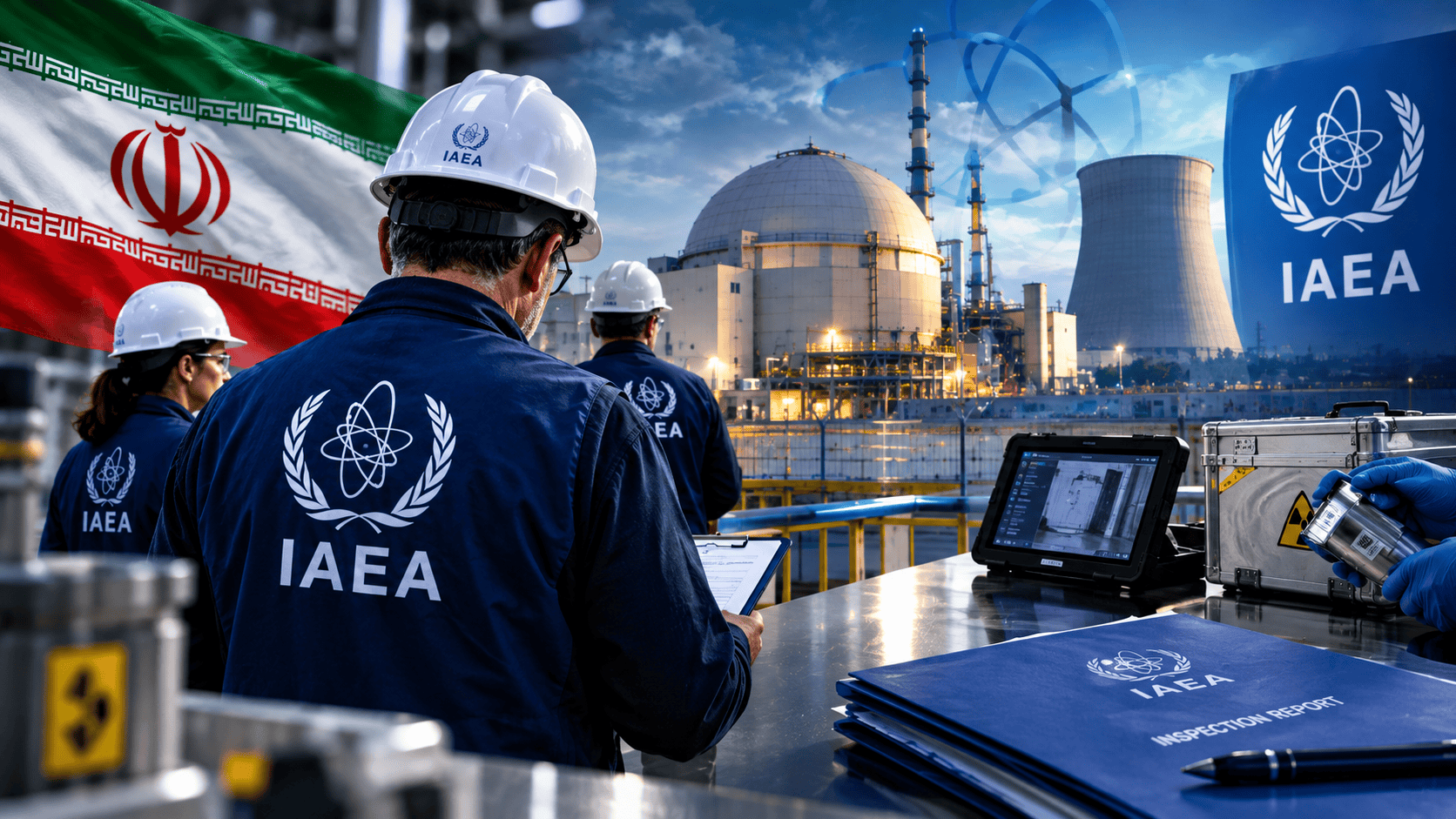
Iran nuclear inspections are the process by which the International Atomic Energy Agency (IAEA) verifies whether Iran’s nuclear program is being used for peaceful purposes. These inspections sit at the center of a decades-long verification effort and, in 2025 and 2026, have become one of the most contested issues in global nonproliferation policy. Disputes over inspector access have also become tightly linked to the broader Iran-US relations dynamic, shaping sanctions decisions, diplomatic talks and UN Security Council debates. Understanding how Iran nuclear inspections actually work is essential to following these debates.
What Are Iran Nuclear Inspections?
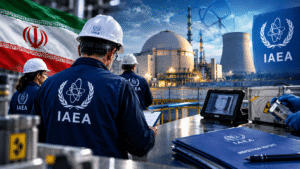
Nuclear inspections are on-site checks carried out by IAEA officials to confirm that a country’s declared nuclear material and facilities are being used only for peaceful purposes, not diverted toward weapons development. Inspectors visit facilities, review records, install monitoring equipment such as cameras and seals, and take measurements of nuclear material.
This is a technical verification process, not a political or intelligence assessment. IAEA inspectors report only on what they can independently confirm through access, documentation and physical measurement — they do not make judgments about a country’s intentions. That distinction matters in Iran’s case, where IAEA findings, US and European government statements, and Iranian official positions have frequently diverged.
What Does the IAEA Inspect in Iran?
Iran nuclear inspections cover a wide range of technical checks. Under Iran’s Safeguards Agreement with the IAEA, inspectors are authorized to examine:
- Nuclear material — tracking quantities and locations of enriched uranium and other safeguarded material
- Uranium enrichment facilities, including centrifuge halls at sites such as Natanz and Fordow
- Nuclear research and fuel-cycle facilities, including conversion and fuel fabrication plants
- Nuclear material accounting — reconciling declared stockpiles against physical inventories
- Environmental sampling — swabs and samples used to detect undeclared nuclear activity
- Monitoring equipment — cameras and seals that provide continuity of knowledge between visits
- Facility design information and access rights, which determine how thoroughly a site can be checked
Why Are Iran Nuclear Inspections Important?
Inspections give the international community independent, technical confirmation that declared nuclear material isn’t being diverted for weapons purposes. This matters for several reasons: it underpins global nonproliferation commitments under the Treaty on the Non-Proliferation of Nuclear Weapons (NPT), it builds diplomatic trust that can support sanctions relief or negotiated agreements, and it allows early detection of activities that fall outside a country’s declared program. Importantly, verification findings are distinct from political accusations — an IAEA statement that it “cannot verify” something is not the same as a finding that weapons activity is occurring, though the two are often conflated in public debate.
History of Iran Nuclear Inspections
The history of Iran nuclear inspections dates back to the early 2000s, when previously undeclared enrichment-related activities at Natanz and a heavy-water facility at Arak were revealed, triggering years of IAEA investigations and UN Security Council sanctions. Iran signed but did not fully ratify the Additional Protocol, which allows broader inspector access, and cooperation fluctuated for over a decade.
That changed with the 2015 nuclear deal, which introduced the most intensive monitoring regime the IAEA had ever applied to a single country. It unraveled after the US withdrawal in 2018, and Iran progressively reduced its cooperation and monitoring commitments in the years that followed. The most dramatic rupture came after Israeli and US military strikes on Iranian nuclear facilities in June 2025 — during a 12-day conflict — after which Iran suspended cooperation with the IAEA and passed legislation requiring its Supreme National Security Council to approve any future inspections.
Iran Nuclear Inspections and the 2015 Nuclear Deal
The Joint Comprehensive Plan of Action (JCPOA), reached in July 2015 between Iran, the P5+1 powers (the US, UK, France, Russia, China and Germany) and the EU, made IAEA verification central to sanctions relief. Iran agreed to limits on enrichment levels, centrifuge numbers and stockpiles, alongside expanded monitoring including additional cameras, more frequent inspections and provisional application of the Additional Protocol. In exchange, the US and international partners lifted a range of nuclear-related sanctions.
After the US withdrew from the agreement in 2018 and reimposed sanctions, Iran began stepping back from its commitments starting in 2019, gradually increasing enrichment levels and restricting monitoring access, including disconnecting some IAEA cameras in 2021 and further curbing cooperation in subsequent years.
Challenges Facing Iran Nuclear Inspections
Verification in Iran has faced sustained and escalating obstacles. Iran has stated that its cooperation has been constrained by threats to its nuclear facilities and personnel, arguing that normal safeguards implementation is legally difficult under current security conditions. The IAEA, for its part, reported that as of early 2026, Iran had allowed access to each of its unaffected nuclear facilities at least once since the June 2025 strikes, but had not provided declarations, reports or access relating to facilities that were damaged in the attacks.
By mid-2026, the Agency’s quarterly report stated it remained largely unable to verify Iran’s implementation of its Safeguards Agreement or its JCPOA-related commitments, and said it had lost continuity of knowledge across all of Iran’s declared nuclear facilities, leaving it unable to account for the size or location of Iran’s enriched uranium stockpile. These gaps illustrate how fragile Iran nuclear inspections have become since 2025.
Latest Iran Nuclear Inspections Developments
Cooperation has moved through several distinct phases since mid-2025. In September 2025, Iran and the IAEA reached what became known as the Cairo Agreement, brokered with Egyptian mediation, establishing procedures for inspections and safeguards implementation across Iran’s declared facilities. Iran terminated that agreement on November 20, 2025.
In January 2026, the IAEA warned Iran in writing that without further cooperation, it could not conclude that no declared nuclear material had been diverted from peaceful use. A February 2026 report said the Agency believed most of Iran’s stockpile of highly enriched uranium was stored at an underground tunnel complex at Isfahan, and urged Tehran to allow access there. Limited inspections did continue in early 2026, including at the Laboratory for Fuel Fabrication and a waste storage site at Karaj in February, and — reportedly at Russia’s urging — at the Bushehr power plant in June 2026.
Diplomatic pressure escalated through 2026’s Board of Governors sessions. In June 2026, the Board adopted a resolution calling on Iran to disclose stockpile information and grant inspectors full access. Tensions peaked in September 2026, when the United States, joined by France, Germany and the UK (the “E3”), introduced a resolution at a special Board session citing Iran’s continued non-compliance and calling for the matter to be referred to the UN Security Council and General Assembly. The resolution passed on September 9, 2026, with Russia, China and Niger voting against it. Iran’s government dismissed the move as politically motivated and said it would have no practical effect. Separately, the E3’s 2025 invocation of the JCPOA “snapback” mechanism to reimpose UN sanctions remains disputed — Russia and China argue the underlying UN resolution expired in October 2025 before snapback took effect, while most other Council members treat the sanctions as reinstated, leaving unresolved questions about the sanctions committee’s mandate.
Iran’s Position on Nuclear Inspections
Iranian officials maintain that the country’s nuclear program is peaceful and that its safeguards obligations remain intact in principle, but that cooperation must reflect the security realities created by the 2025 military strikes and threats against nuclear personnel. Iran’s foreign ministry has said that eliminating these threats would create the conditions for renewed cooperation with the Agency, and Iranian diplomats have repeatedly characterized recent Board resolutions and Security Council actions as politically driven rather than technically justified. Iranian officials frame their approach to Iran nuclear inspections as conditional on security guarantees, not a rejection of verification in principle.
US and International Concerns About Iran’s Nuclear Program
The United States and European governments have expressed concern over Iran’s uranium stockpile, enrichment levels reported near weapons-grade purity, and the IAEA’s inability to verify material following the 2025 strikes. These are largely government and diplomatic positions rather than confirmed IAEA findings; the Agency itself has been careful to frame its statements around what it cannot verify due to lack of access, rather than asserting weapons activity is underway. Independent nonproliferation analysts have separately noted unresolved questions about the recovery status of equipment and enriched uranium from the damaged sites. Much of the international debate over Iran nuclear inspections centers on these unresolved technical gaps rather than confirmed conclusions.
How Iran Nuclear Inspections Affect Iran-US Relations
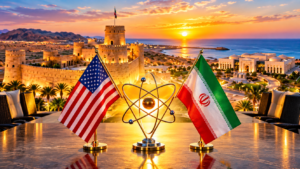
Verification access is now one of the central pressure points in Iran-US relations. US sanctions policy, snapback disputes at the UN, and any future negotiations over Iran’s nuclear program are all shaped by whether and how IAEA inspectors can confirm the status of Iran’s declared and previously undeclared material. Until inspection access is restored to pre-2025 levels, both diplomatic trust-building and sanctions-relief negotiations remain constrained.
Iran Nuclear Inspections Timeline
- Early 2000s: Undeclared enrichment activity revealed; IAEA investigations begin
- July 2015: JCPOA signed, introducing expanded monitoring
- May 2018: US withdraws from the JCPOA
- 2019–2021: Iran reduces nuclear commitments and monitoring cooperation
- June 2025: US-Israeli strikes on Iranian nuclear sites; Iran suspends IAEA cooperation
- September 2025: Cairo Agreement reached with Egyptian mediation
- November 2025: Iran terminates the Cairo Agreement; Board reinstates reporting mandate
- February 2026: IAEA reports Isfahan tunnel complex likely holds most HEU stockpile
- June 2026: Board resolution demands stockpile disclosure and access
- September 2026: Board refers Iran’s case to the UN Security Council and General Assembly
Frequently Asked Questions
What are Iran nuclear inspections?
They are on-site checks by IAEA inspectors verifying that Iran’s declared nuclear material and facilities are used only for peaceful purposes.
Who conducts nuclear inspections in Iran?
The International Atomic Energy Agency, a UN-affiliated technical body, conducts inspections under Iran’s Safeguards Agreement.
What does the IAEA look for during inspections?
Inspectors verify nuclear material quantities, check enrichment and fuel-cycle facilities, review records, and use monitoring equipment and environmental sampling.
Why are Iran nuclear inspections important?
They provide independent confirmation for nonproliferation purposes and underpin diplomatic trust in any nuclear-related agreement.
How are Iran nuclear inspections connected to the JCPOA?
The 2015 deal built its sanctions relief around an expanded IAEA verification regime; cooperation has narrowed sharply since the US withdrew in 2018.
What is the current status of Iran nuclear inspections?
As of September 2026, the IAEA says it cannot fully verify Iran’s safeguards compliance or account for its enriched uranium stockpile, and the Board of Governors has referred Iran’s case to the UN Security Council.