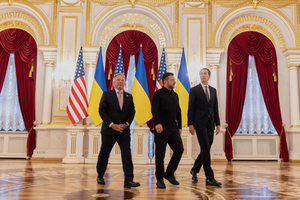
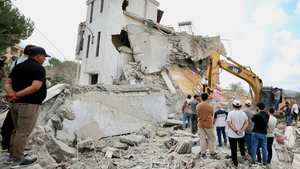
The Russia-Ukraine war is now in its fifth year, and it remains one of the most consequential conflicts of the 21st century. What began as Russia’s full-scale invasion of its neighbor in February 2022 has evolved into a grinding war of attrition — fought with tanks and trenches as much as with drones, long-range missiles, sanctions, and diplomacy. As of September 2026, the war continues on the battlefield even as renewed US-led diplomacy tries to find a path to peace. This page brings together the latest developments, the key military and diplomatic threads, and the historical context needed to understand where things stand — and where they might go next. It is updated regularly as the situation evolves. Russia-Ukraine War: Current Situation More than four and a half years after Russia’s invasion, the front line in eastern and southern Ukraine has shifted only gradually in recent months. Independent monitors tracking territorial control describe Russian advances as slow and costly, measured in single-digit square miles per month rather than sweeping breakthroughs, even as fighting remains intense in the Donetsk region and along other parts of the roughly 1,000-kilometer front. Away from the front line, the war has increasingly been fought through the air. Both sides regularly exchange long-range drone and missile strikes — Russia targeting Ukrainian cities and energy infrastructure, and Ukraine striking Russian oil refineries, drone-storage sites, and military-industrial targets deep inside Russian territory. At the same time, diplomacy has re-accelerated. In early September 2026, US envoys Steve Witkoff and Jared Kushner traveled first to Moscow to meet President Vladimir Putin and then to Kyiv to meet President Volodymyr Zelenskyy, carrying a renewed American proposal to end the war. Ukraine briefly paused strikes on Moscow around the visit, and Russia held off strikes on Kyiv, in a gesture of goodwill — but officials on both sides cautioned that a comprehensive deal remained elusive, with territorial questions still unresolved. In short: the war has not ended, but active, high-level diplomatic engagement is underway alongside continued fighting. How the War Started — Background and Timeline 2014–2022: The Origins The current war has roots that stretch back to 2014, when Russia annexed Crimea from Ukraine following the ouster of Ukraine’s pro-Russian president, and Russian-backed separatists seized parts of the Donetsk and Luhansk regions in eastern Ukraine (together known as the Donbas). A low-intensity conflict in the Donbas continued for the next eight years, alongside repeated but unsuccessful diplomatic efforts, including the Minsk agreements, to reach a lasting settlement. February 2022: Full-Scale Invasion On February 24, 2022, Russia launched a full-scale invasion of Ukraine, sending forces across the border from the north, east, and south, including an assault on the capital, Kyiv. Russia’s stated goals included preventing Ukraine’s membership in NATO and asserting influence over what it described as historically Russian territory. Ukraine, backed rapidly by Western military and financial support, mounted a defense that repelled the assault on Kyiv within weeks. 2022–2024: Shifting Front Lines Ukraine launched successful counteroffensives in the second half of 2022, retaking territory around Kharkiv and the city of Kherson. Russia responded by annexing four partially occupied Ukrainian regions — Donetsk, Luhansk, Zaporizhzhia, and Kherson — in a move not recognized by most of the international community. A major Ukrainian counteroffensive in 2023 made only limited territorial gains against heavily fortified Russian defenses. In November 2024, Russia used its new Oreshnik intermediate-range ballistic missile in combat for the first time, striking the city of Dnipro. 2025–2026: War of Attrition and Renewed Diplomacy Through 2025 and into 2026, the war settled into a costly war of attrition, marked by incremental Russian territorial gains, intensifying long-range strikes by both sides, and repeated but inconclusive rounds of diplomacy. The Trump administration made ending the war a top foreign policy priority, leading to the emergence of a detailed US-brokered peace framework in late 2025 and a series of high-level negotiating rounds continuing into September 2026. Peace Talks and Negotiations The US-Brokered Peace Plan In November 2025, details emerged of a US-drafted peace proposal — often referred to as the 28-point plan — developed by envoy Steve Witkoff with input from Secretary of State Marco Rubio and Jared Kushner. According to reporting on the draft, its key elements included: The original draft drew sharp criticism from Ukrainian and European officials, who described several provisions as effectively rewarding Russian aggression and requiring Kyiv to make concessions it had long rejected. European leaders, including from France and the UK, proposed amendments — such as ruling out permanent NATO troop stationing in Ukraine while preserving other security commitments — and a revised, shorter version of the plan has been under discussion since. Witkoff–Kushner Shuttle Diplomacy (September 2026) In early September 2026, Witkoff and Kushner traveled to Moscow for roughly three hours of talks with Putin, followed by a trip to Kyiv to meet Zelenskyy and European allies. Kremlin aide Yuri Ushakov described the Moscow talks as “useful” and “constructive,” while a source involved in the Kyiv meetings said negotiators aimed to develop a “refreshed” peace proposal. Kushner also signaled a US preference for returning to a “trilateral” negotiating format involving the US, Russia, and Ukraine directly, a format used in earlier rounds of talks. No breakthrough or signed agreement resulted from this round of shuttle diplomacy. Officials on both sides described the discussions as constructive but acknowledged that core disagreements — particularly over territory — remain unresolved. Key Sticking Points Ceasefire Efforts and Limited Truces Full nationwide ceasefires have so far proven elusive. However, both sides have periodically agreed to narrow, short-term measures — such as brief mutual pauses on long-range strikes against Moscow and Kyiv around diplomatic visits, or localized truces to allow prisoner exchanges or repair of critical infrastructure. Earlier in the peace process, Ukraine indicated it was prepared to accept a 30-day ceasefire proposal, with US officials at the time saying “the ball is now in Russia’s court.” Russia has not agreed to a comprehensive ceasefire, and fighting along the front line and aerial strikes on both sides have continued largely uninterrupted through these episodes. Military Developments Russia’s Military Position Russian forces continue to press offensives primarily in the Donetsk region, making gradual territorial gains at a high cost in personnel and equipment, according to open-source monitoring groups. Russian officials have publicly argued that Ukraine’s economy and military capacity are being steadily worn down, while Western and Ukrainian assessments emphasize that Russia’s own economic and manpower base is under mounting strain, even as it retains the capacity to continue fighting into 2027 and beyond absent a settlement. Ukraine’s Military Position Ukraine has shifted increasingly toward a defense strategy that combines holding fortified front-line positions with long-range strikes deep into Russian territory — hitting oil refineries, drone-production and storage sites, and military logistics hubs more than 1,000 kilometers from the border in some cases. Ukraine has also significantly expanded its domestic defense industry; Ukrainian officials stated in early 2026 that the country was producing more than half of the weapons systems it uses, with a defense production capacity estimated at around $55 billion for the year. The Oreshnik Missile The Oreshnik is a Russian-developed intermediate-range ballistic missile (IRBM), a weapons class banned for decades under a Cold War-era US-Soviet treaty that both countries abandoned in 2019. Russia first used it in combat against Dnipro in November 2024. Moscow has claimed the missile can carry multiple warheads traveling at hypersonic speeds and is difficult to intercept; independent analysts have been more skeptical of some of these claims, describing the strikes partly as a show of force. Russia has since deployed Oreshnik systems to Belarus and, along with Belarusian forces, has conducted joint exercises practicing its deployment. Drone and Missile Warfare Aerial warfare has become one of the defining features of the conflict’s later years. Russian Strikes on Ukraine Russia regularly launches large combined waves of drones and missiles at Ukrainian cities, sometimes numbering in the hundreds of drones and dozens of missiles in a single night. These strikes have targeted government and security buildings, residential areas, and — especially during the winter months — the country’s electricity and heating infrastructure. Ukrainian Strikes on Russia Ukraine has built up its own long-range drone capability, striking oil refineries, fuel depots, drone-storage and launch sites, and other military-industrial targets across multiple Russian regions. Ukrainian officials have said this campaign is intended to raise the economic and military cost of the war for Moscow. Russian officials have said Ukrainian strikes have themselves cost the Russian economy a measurable share of GDP. Energy Infrastructure Under Fire Attacks on Ukraine’s Grid Since 2022, Russia has carried out dozens of large-scale coordinated strikes on Ukraine’s power plants, substations, and gas facilities, part of what Ukrainian officials have called a campaign of “energy terror.” The winter of 2025–2026 was described by Ukrainian officials and analysts as among the hardest of the war: Ukraine’s available electricity generation capacity, once around 55 gigawatts before the war, had fallen to roughly 11–17 gigawatts by early 2026, forcing rolling blackouts across the country during periods of severe cold. In response, Ukraine has increasingly pursued smaller, distributed and harder-to-target power generation as a long-term resilience strategy. Attacks on Russian Refineries In a mirrored campaign, Ukraine has repeatedly struck Russian oil refineries and energy infrastructure, aiming to disrupt fuel supplies for the Russian military and reduce the export revenue that helps fund the war. Russia’s Defense Ministry has, at times, framed its own strikes on Ukrainian energy sites as retaliation for these Ukrainian attacks. NATO, the US, and Western Military Support NATO’s Role NATO has not deployed combat forces to Ukraine, which is not a member of the alliance, but it has served as a central coordinating body for Western military assistance, intelligence sharing, and training. NATO members have also increased their own defense posture along the alliance’s eastern flank in response to the war and to Russian military activity in and around Belarus. The PURL Program and Weapons Aid In 2025, the United States and NATO launched the Prioritized Ukraine Requirements List (PURL) — a mechanism through which NATO allies and partners pay for American-made weapons, munitions, and equipment that the US then delivers to Ukraine. By mid-2026, dozens of countries had contributed several billion dollars to PURL, funding more than ten weapons packages, including the large majority of Patriot air-defense interceptors reaching Ukraine. Separately, the US has continued limited Foreign Military Financing and sales support, though officials in Europe have expressed concern at times about funding gaps and competing US military priorities elsewhere in the world affecting the pace of deliveries. Sanctions on Russia How Sanctions Work Sanctions on Russia have primarily taken three forms: asset freezes and travel bans on individuals and entities; blocking sanctions that cut companies off from the US or EU financial systems (in the US, this means being added to the Treasury’s Specially Designated Nationals, or SDN, list); and sector-wide trade restrictions, such as bans on importing Russian oil, gas, or other goods. Latest Sanctions Measures In October 2025, the United States, United Kingdom, and European Union coordinated a significant escalation of sanctions targeting Russia’s energy sector. The US Treasury added Russia’s two largest oil companies, Rosneft and Lukoil, to its SDN list, alongside dozens of their subsidiaries. The UK imposed asset-freeze sanctions on the same companies. The EU adopted its 19th sanctions package, which for the first time included a ban on imports of Russian liquefied natural gas (LNG) — phased in between April 2026 and January 2027 depending on contract type — along with tightened restrictions on Rosneft and Gazprom Neft and new designations of tankers, financial institutions, and third-country entities accused of helping Russia evade sanctions. Ukraine’s Own Sanctions Ukraine has separately imposed its own sanctions regime targeting Russian officials, companies, and individuals it accuses of supporting the invasion, war crimes, or sanctions evasion, coordinating in many cases with its Western partners’ designations. Belarus and Nuclear Concerns Belarus, which borders both Russia and Ukraine as well as NATO members Poland, Lithuania, and Latvia, has served as a staging ground and close military partner for Russia throughout the war. Since 2025, Russia has stationed tactical nuclear weapons and Oreshnik missile systems on Belarusian territory, with Belarusian leader Alexander Lukashenko citing perceived threats from neighboring NATO states. Russia and Belarus have conducted joint military exercises — including the large-scale Zapad drills — that have explicitly included planning for the potential use of non-strategic nuclear weapons and the deployment of Oreshnik systems. NATO and Polish officials have expressed concern that such exercises, held close to the alliance’s borders, could at times serve as cover for broader military activity. Belarusian opposition figures have criticized the nuclear posture, arguing it turns the country into a target rather than a source of security. Diplomatic Relations and Key Players The diplomatic landscape involves several key actors: What Could Happen Next Several scenarios remain plausible as of September 2026: