
Three senior Iranian sources say Washington’s campaign to choke off Iran’s oil exports and shut down sanctions evasion is becoming harder for Tehran to withstand, as the six-month war grinds toward a possible turning point.
The US has ratcheted up economic pressure in recent weeks, aiming to extract concessions that months of military conflict have failed to secure. Iran’s clerical rulers spent decades finding ways around sanctions, but the latest measures have left them with few remaining channels to secure foreign currency or import goods, the sources said.
Fighting Resumes as Pressure Builds
The war erupted back into open combat this week. US forces struck targets along Iran’s Gulf coast, and Iran retaliated with strikes on US bases in Arab states. Neither side has signaled it will make the concessions the other is demanding, leaving the conflict in what may be a shifting stalemate.
More oil is moving through the Strait of Hormuz despite Iranian attempts to keep disrupting the waterway. At the same time, the US blockade has cut off Iran’s main source of revenue entirely.
Iran’s economy was already struggling before the war began, with a collapsing currency and rising inflation. Months of bombing have added a steep bill for rebuilding damaged industry and infrastructure. The financial strain is now eating into Tehran’s ability to pay the high premiums it needs to skirt sanctions illegally, according to the sources.
Two Months of Gasoline Left
The rial has hit record lows in recent days. One senior source said Iran has roughly two months of gasoline supply remaining. The fuel has to be imported despite the country’s domestic oil production, because Iran’s refining capacity cannot keep up with demand.
Iran’s leadership understands the danger. An economic collapse could reignite the mass protests the government put down in January, when security forces killed thousands of demonstrators.
“They are under very, very severe economic pressure. They’re losing control of the Straits. It’s really a question of if they choose to negotiate and I think they’ll have to,” said Ali Ansari, a professor of modern history at St Andrews University in Scotland.
The conflict has entered a new stage, with each side now trying to shape the other’s domestic politics. A senior Iranian official said Tehran hopes the threat of runaway inflation will pressure the Trump administration ahead of November’s midterm elections, while Washington is betting the same pressure will push Iranians to revolt against their government.
Sanctions Squeeze the Smuggling Routes
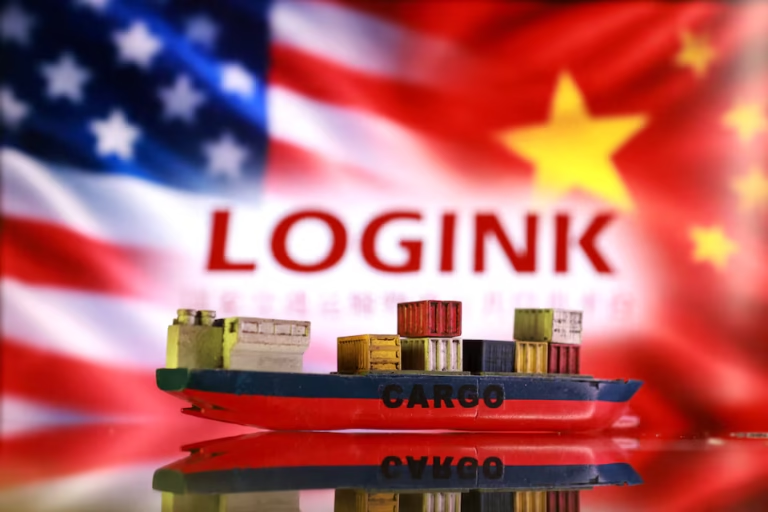
Washington’s newest measures expand secondary sanctions on countries that do business with Iran, targeting the dollar transactions Tehran needs both to sell oil and to pay for imported goods and raw materials.
That expansion is making Iran’s existing evasion networks, built on front companies, unregistered tankers and smuggling routes, too costly to keep running, the three senior sources said.
Iranian crude loadings have dropped to about 260,000 barrels a day this month, down from roughly 1.7 million barrels a day a year earlier, according to data from commodity analytics firm Kpler. Only a trickle of oil still moves off Iranian terminals, carried out by truck, train or small boats across the Caspian Sea.
Tehran maintains it still holds tens of millions of barrels in tankers stationed outside the blockade zone. But one official said the new sanctions are pushing intermediaries to step back from deals or demand higher payments to take the risk.
Trade Falls, UAE Cuts Ties
President Masoud Pezeshkian said total trade has fallen between 25% and 35%, with imports hit harder than exports. He is one of several senior officials who have warned in recent weeks that Iran’s economic situation is deteriorating fast.
The United Arab Emirates, long one of Iran’s main trade conduits, announced on August 19 that it had halted all commercial exchange and financial dealings with Tehran until further notice. US pressure and Iran’s own military attacks have disrupted that route along with others.
“If those channels stay closed, a supplier wants cash, a deal is routed through another country and a shipment arrives later and dearer,” said an Iranian trader in Tehran who deals in imported goods.
Currency Crash and Rising Poverty
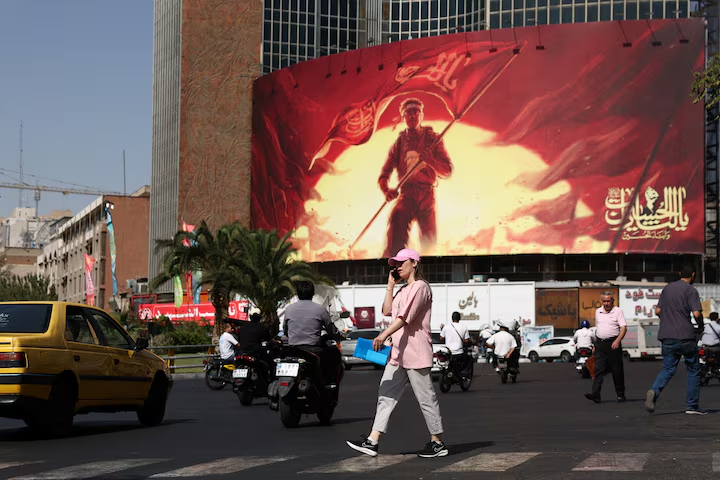
The rial has lost more than half its value in a year, falling from about 1 million to the dollar to over 2.2 million now. Official figures put 12-month average inflation at 69.9%, with prices for food, beverages and tobacco rising at nearly double that rate.
Official unemployment climbed to 9.1% this spring. The number of Iranians in work fell by about 450,000 compared with a year earlier, part of a broader drop in labor force participation.
Even those still employed are struggling. The average monthly salary in Iran is around $125, far short of the roughly $450 a month that official data says a household needs to cover basic spending.
“We are getting poorer every day,” said Mahnaz, a 34-year-old private-sector employee in Tehran, who asked that her family name not be used.