
The death toll from a Russian missile strike that leveled a residential building in Kyiv has risen to 24, Ukrainian officials confirmed on Friday, as rescue teams concluded search operations through the rubble of one of the deadliest attacks on the capital in months of intensified warfare.
Among the victims were three teenagers, according to President Volodymyr Zelenskyy, who led national mourning efforts and visited the site alongside senior officials and foreign diplomats.
The strike has deepened fears of escalating civilian casualties as Russia and Ukraine continue to exchange heavy aerial attacks despite intermittent diplomatic signals suggesting potential de-escalation.
Missile Strike Destroys Residential Block in Kyiv
The attack hit a nine-story apartment building in a Kyiv neighborhood late Thursday, collapsing an entire section of the structure. Ukraine’s air force described the assault as part of Russia’s largest coordinated aerial barrage since the start of the full-scale invasion more than four years ago.
Emergency crews worked through the night and into Friday, carefully removing debris in search of survivors. Zelenskyy said operations had ended after more than 24 hours of continuous recovery work.
According to Ukrainian officials, 48 additional people were injured in Kyiv alone, including children. Authorities warned that the final casualty figures could still be revised as identification efforts continue.
Grief Spreads as Families Gather at Memorial Site
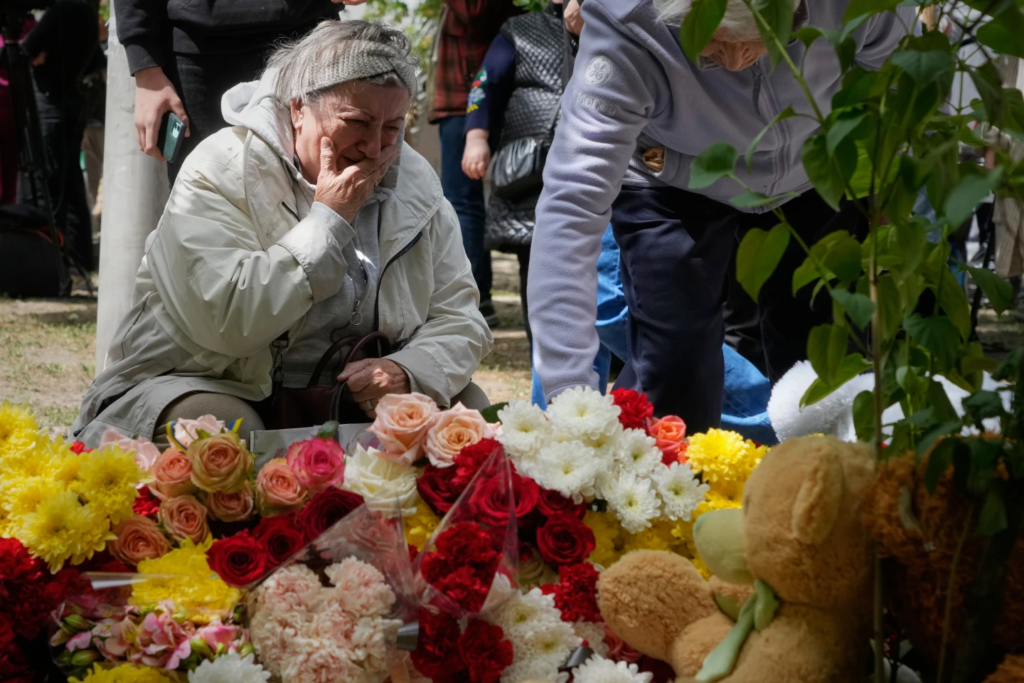
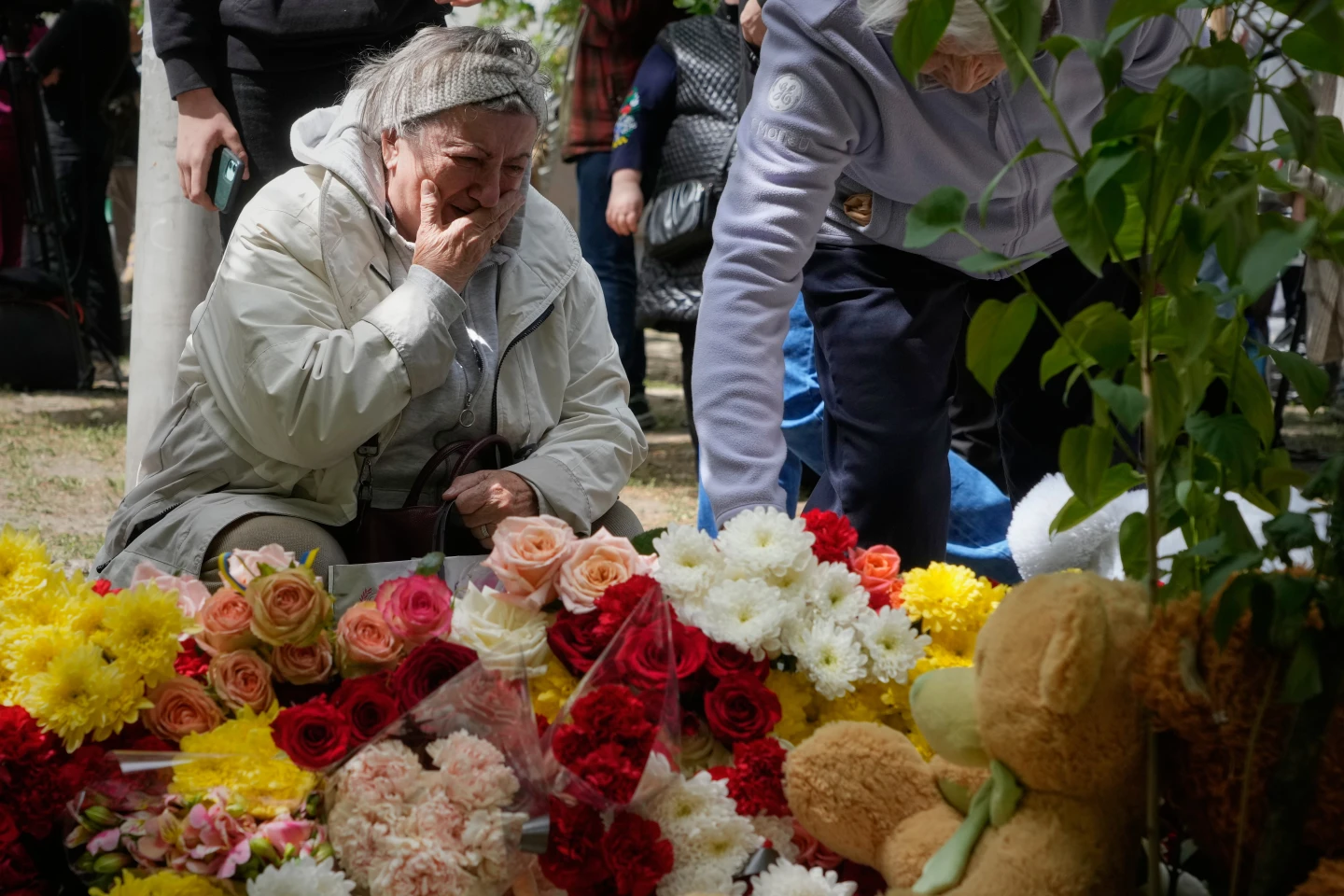
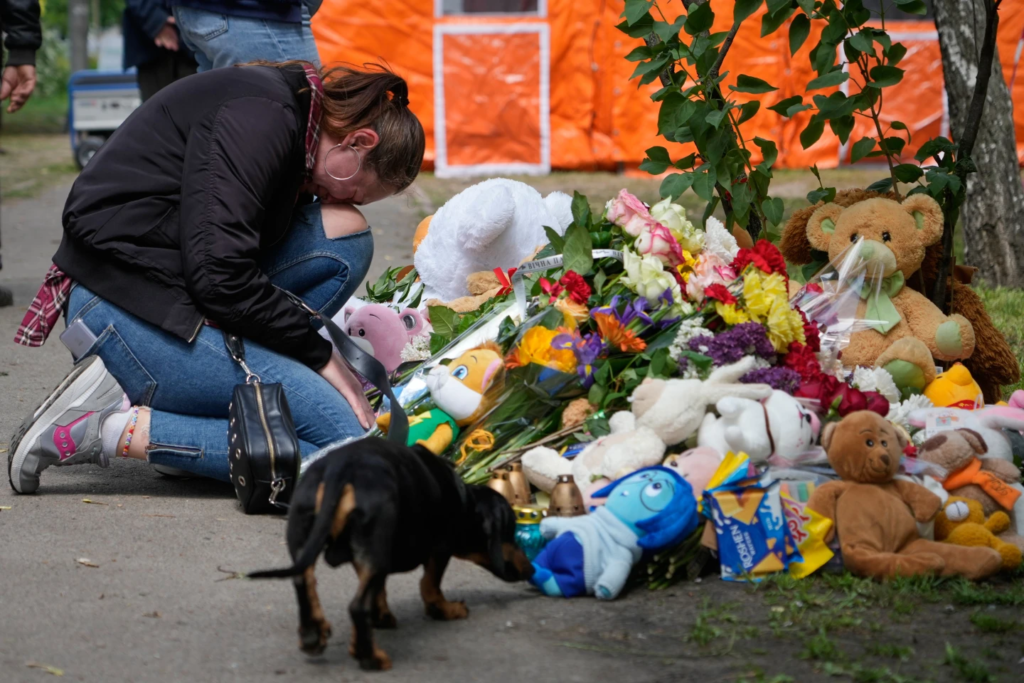
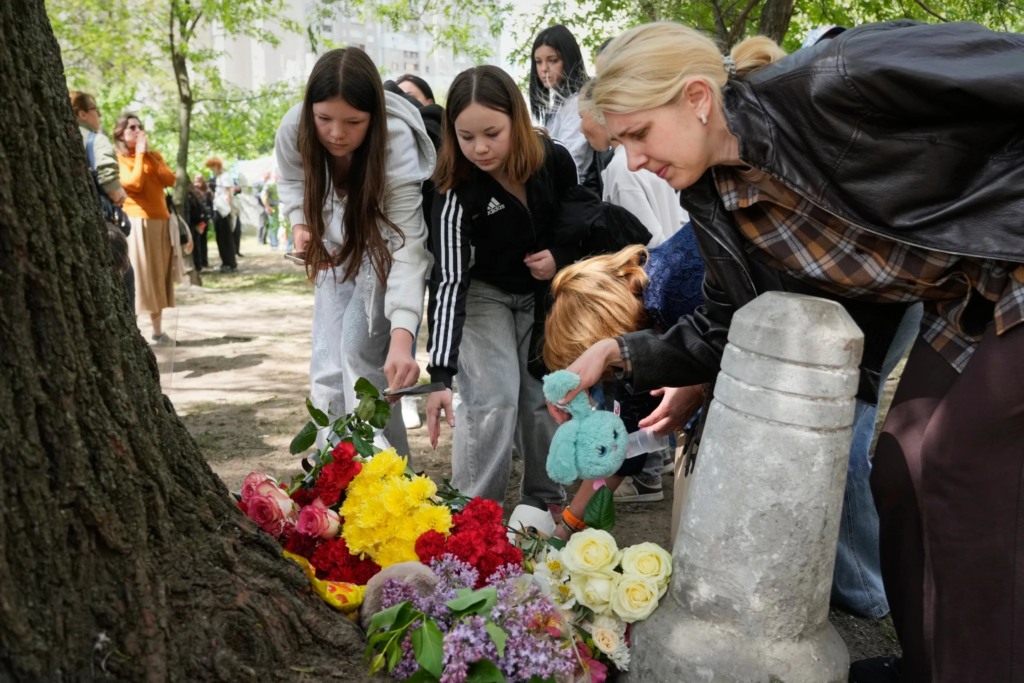
As rescue operations concluded, crowds of mourners gathered near the destroyed building, where a temporary memorial has formed beneath a nearby tree. Flowers, candles, toys, and photographs now cover the ground in tribute to the victims.
Teenagers and families arrived throughout the day, many visibly distraught as they placed bouquets beside images of those killed. One portrait of a schoolgirl, set against a bright yellow background, became a focal point of mourning.
Officials from Ukraine’s government and foreign embassies in Kyiv also visited the site to pay respects, underscoring the international attention drawn by the scale of the strike.
Intensified Aerial Warfare Across Ukraine
Zelenskyy said Russia had launched more than 1,560 drones targeting Ukrainian territory since Wednesday, damaging roughly 180 sites nationwide, including over 50 residential buildings.
He compared the latest wave of attacks to previous large-scale barrages, noting that while Ukraine has endured similar strikes before, the frequency and intensity have increased in recent weeks.
The Kyiv strike came shortly after a brief May 9–11 ceasefire window that had been discussed publicly by global leaders, including U.S. President Donald Trump, though both sides accused each other of continuing hostilities during that period.
Cross-Border Drone Attacks Escalate
The conflict also continued to spill into Russian territory. Russia’s Defense Ministry reported that its air defenses intercepted 355 Ukrainian drones overnight, describing it as one of the largest drone waves launched by Ukraine during the war.
Several Russian airports temporarily suspended operations due to security concerns.
Separately, a Ukrainian drone strike hit the city of Ryazan, located about 100 kilometers southeast of Moscow, killing four people, including a child, according to regional authorities. The attack also caused a fire at a major oil refinery, sending thick smoke into the air.
Ukraine has increasingly targeted Russian energy infrastructure, aiming to reduce Moscow’s revenue streams and disrupt military logistics. Ukrainian officials did not immediately comment on the Ryazan incident.
Questions Over Missile Production and Sanctions Evasion
Following analysis of debris from the Kyiv strike, Zelenskyy said the cruise missile used appeared to have been manufactured earlier this year, suggesting ongoing Russian production capabilities despite international restrictions.
He argued that Russia continues to obtain components and technology through indirect channels, bypassing sanctions imposed by Western nations.
“This demonstrates that sanction evasion networks must be addressed more decisively,” he said, urging international partners to tighten enforcement and close supply gaps.
Prisoner Exchange Offers Rare Diplomatic Break
Amid the escalation, Russia and Ukraine carried out a prisoner-of-war exchange involving 205 detainees from each side. The swap marks the latest in a series of limited humanitarian agreements that have continued despite ongoing fighting.
Zelenskyy said the exchange represents the first phase of a broader arrangement that could eventually see up to 1,000 prisoners released on each side.
Russia’s Defense Ministry confirmed the exchange and acknowledged mediation efforts by the United Arab Emirates, which has played a quiet diplomatic role in facilitating prisoner releases during the war.
War Shows No Clear Path to De-escalation
Despite sporadic diplomatic efforts and public statements suggesting openness to negotiation, the latest escalation highlights how far both sides remain from any durable ceasefire.
The Kyiv apartment strike, in particular, has reinforced concerns about civilian safety as long-range missile and drone warfare continues to define the conflict.
As rescue crews finished their work in Kyiv, the city turned to mourning—another reminder that, even amid diplomatic signals and prisoner swaps, the human cost of the war continues to mount.