

This week’s preliminary agreement between the US and Iran looks like a diplomatic win on paper. Behind the scenes, it nearly didn’t happen. Officials involved say the talks came close to collapsing more than once before a last-minute push pulled both sides back to the table.
Pakistani mediators spent weeks grinding through shifting demands, competing drafts, and deep mistrust between Washington and Tehran, according to people familiar with the process. Even after a framework took shape, the whole thing nearly fell apart in the final hours.
Pakistani Prime Minister Shehbaz Sharif announced the deal earlier this week: a 14-point memorandum meant to halt the fighting and ease tension around the Strait of Hormuz, one of the most strategically important waterways on the planet.
Diplomats and analysts are now warning that turning this into a permanent settlement over the next 60 days could be harder than reaching the interim deal was. The conflict has hit energy markets, destabilized the region, and raised fears of a wider war. The pause buys time. It doesn’t settle anything.
A Process Defined by Constant Crises
People involved describe weeks of setbacks and shifting priorities. Sanctions relief, access through the Strait of Hormuz, Iran’s nuclear program, the war in Lebanon, and broader questions about Israel all became sticking points at different points.
One diplomat said the talks kept getting stuck on wording. At one point, negotiators spent close to an hour arguing over whether a clause should say “including” or just “etc.” That’s how much suspicion shaped every line of this agreement.
“There were many moments when it looked like the process was coming apart,” Sharif told lawmakers after the announcement.
Multiple sources say that going into the final weekend, nobody was confident a deal would actually get signed.
Qatar Stepped In When Things Stalled
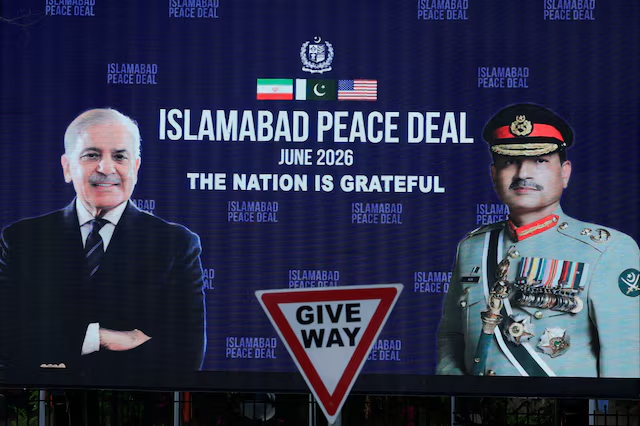
Pakistan led the mediation, but several sources say Qatar’s involvement is what kept the deal alive. Doha had wanted to stay in the background. That changed by mid-May, when talks had stalled for more than a week and people started worrying the fighting could resume.
Qatari officials began making quiet trips to Tehran to work through disagreements between Iranian negotiators and Pakistani mediators. One source said Qatar offered assurances on economic terms and implementation details that convinced Iranian leaders to stay at the table.
Early June was the turning point, according to another source. Qatari and Pakistani delegations were in Tehran at the same time, working through the most contested sections of the draft. Qatar’s relationships with both Washington and Tehran gave it a kind of credibility other mediators couldn’t match, and that’s what got the talks moving again when they were close to dying.
The US and Iran Still Don’t Agree on the Big Stuff
Iran’s nuclear program remains the hardest problem. The framework gives both sides 60 days to work out enrichment limits, inspections, and future restrictions. The US wants ironclad guarantees Iran will never build a weapon. Iran says its program is peaceful and calls outside scrutiny excessive.
Alex Vatanka of the Middle East Institute says Washington and Tehran are already reading the same agreement two different ways. “Washington and Tehran appear to have different interpretations of several parts of the agreement,” he said. His read: Iran will lean on vague language to keep its options open, while the US will use that same ambiguity to keep pressing for more concessions. That gap could make the next round of talks even rougher than this one.
Politics at Home Aren’t Helping
This isn’t just a diplomatic problem. Domestic politics are working against both sides too.
In Washington, some Republican lawmakers are asking whether Trump gave up too much for a ceasefire. The deal includes sanctions relief, access to frozen Iranian assets, and permission to resume some oil exports. Critics say Iran got real economic benefits without giving up enough in return.
In Tehran, Supreme Leader Mojtaba Khamenei has said publicly that Iran won’t accept demands that go beyond what’s already agreed. Iran’s Supreme National Security Council has backed that up, threatening to respond in kind if the US breaks its commitments. Decades of mutual suspicion haven’t gone anywhere.
Even Talking to Each Other Was Hard
Multiple sources point to communication as one of the toughest parts of the whole process. American and Iranian negotiating styles clashed constantly. US positions reportedly shifted fast, which forced mediators to keep rewriting draft language. Iranian responses, on the other hand, sometimes took days, because messages had to move through layers of approval.
One source said Iran’s decision-making got even more fragmented after military strikes weakened parts of its leadership. That meant urgent proposals sat unanswered longer than anyone wanted.
Pakistan reportedly grew frustrated with both sides. “With the Americans, positions could change unexpectedly,” the source said. “With the Iranians, you might wait days for a response.” Things improved once a representative of Khamenei traveled to Islamabad, opening a more direct line between Iranian decision-makers and Pakistani mediators.
The Night It Almost Collapsed
The closest call came on the final night. Officials were gathered in Islamabad on Sunday evening when news broke of renewed Israeli strikes in Lebanon, threatening to blow up the whole agreement.
Military and diplomatic officials worked through the night to keep everyone at the table. Pakistan’s Army Chief, Field Marshal Asim Munir, reportedly helped relay messages between the key players as talks dragged into the early morning. Hours later, the framework memorandum was finally signed.
That breakthrough is what got the ceasefire moving. But people who were in the room say it showed exactly how fragile this whole thing still is.
The Next 60 Days Will Decide a Lot
The interim deal buys time. It doesn’t fix the problems that caused the war in the first place. Negotiators still have to work through sanctions, nuclear restrictions, maritime security, and regional stability, all while trying to keep a ceasefire intact in a region that’s still on edge.
Fresh violence in Lebanon, disputes over Hormuz, and political resistance in both capitals could all knock this off course. People close to the process say the next phase will be harder than the first.
One international source put it bluntly: “I don’t think I’ve ever seen a negotiation process built on so little trust.” That’s the real obstacle here, more than any specific clause or sanction. Whether this momentum survives another two months will say a lot about where US-Iran relations go next, and about how stable the rest of the Middle East stays in the meantime.