
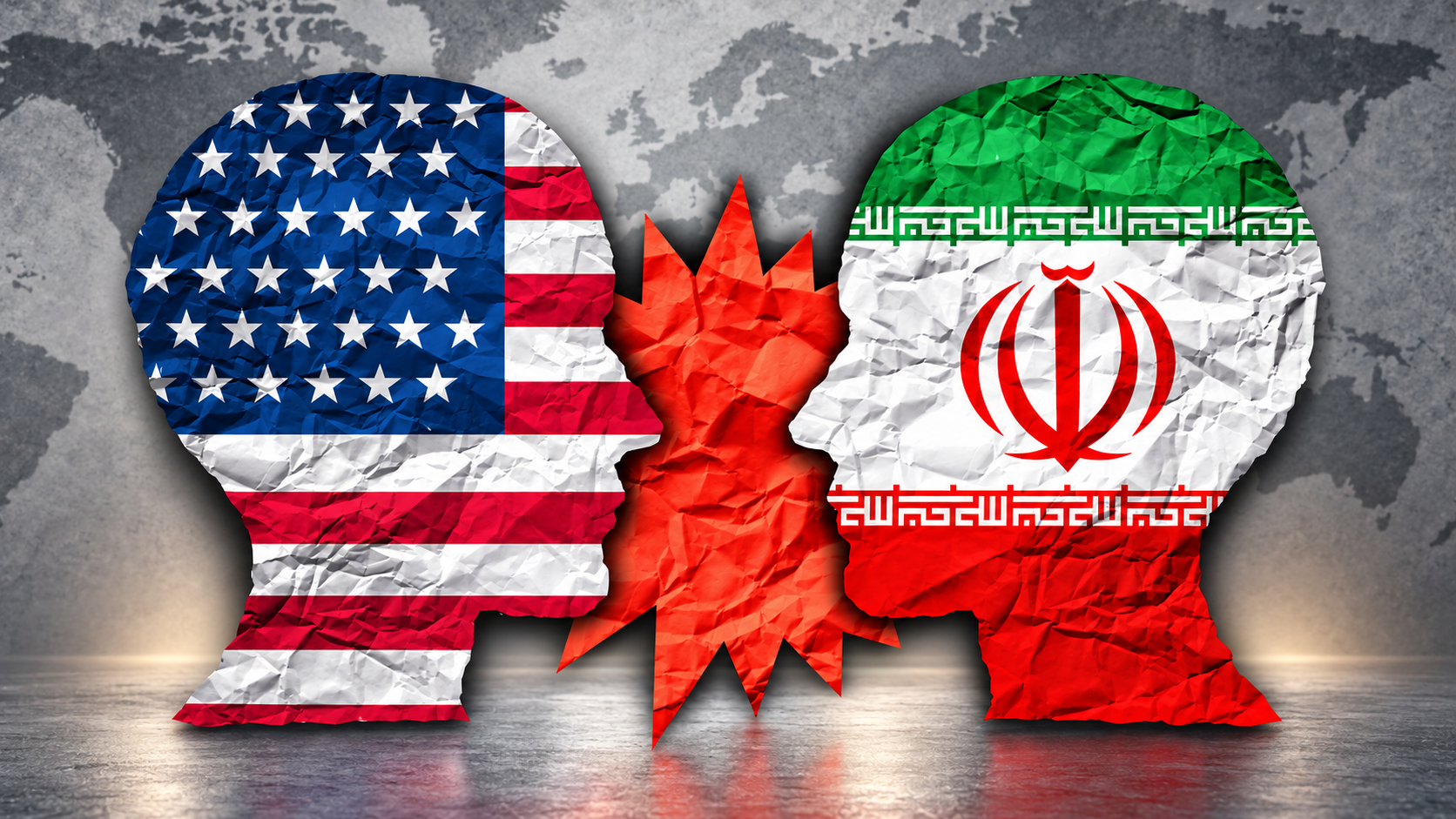
Iran-US relations have entered one of the most volatile and closely watched phases since the 1979 revolution. What began as a slow-burning standoff over Iran’s nuclear program erupted into open conflict in February 2026, and in the months since, the relationship between Washington and Tehran has swung between fragile ceasefires, renewed strikes, stalled negotiations, and economic warfare. For anyone trying to make sense of where US and Iran relations stand today — and where they might be headed — the picture can feel fragmented, with new headlines emerging almost daily about strikes, sanctions, or diplomatic signals.
This guide brings the full picture together in one place. Rather than treating each headline as an isolated story, we walk through the history that shaped the current standoff, the 2026 war and ceasefire, the state of nuclear negotiations and inspections, the Strait of Hormuz flashpoint, the sanctions regime, Iran’s military posture, and the diplomatic track (or lack of one) connecting the two countries. Throughout, you’ll find links to deeper, regularly updated articles on each specific development.
A Brief History of Iran-US Relations
To understand today’s Iran-US tensions, it helps to see how the relationship evolved over seven decades — from close allies to open adversaries.
From Allies to Adversaries (1953–1979). The US and Iran were strategic partners through much of the Cold War, with Washington backing the Shah of Iran as a bulwark against Soviet influence in the region. That alliance collapsed with the 1979 Islamic Revolution, which replaced the monarchy with an Islamic Republic openly hostile to US influence in the Middle East.
The Hostage Crisis and Decades of Estrangement (1979–2015). The 444-day US embassy hostage crisis severed diplomatic relations between the two countries entirely — ties that have never been restored. For the next three decades, the relationship was defined by sanctions, proxy conflicts, and periodic crises, including tensions over Iran’s nuclear program that intensified through the 2000s and 2010s.
The Nuclear Deal Era (2015–2024). In 2015, Iran and world powers — including the US — signed the Joint Comprehensive Plan of Action (JCPOA), trading sanctions relief for strict limits on Iran’s nuclear activities. The US withdrew from the deal in 2018 and reimposed sanctions under a “maximum pressure” campaign. Iran gradually resumed higher levels of uranium enrichment in response, and indirect nuclear negotiations through 2022–2024 repeatedly stalled.
The Road to 2026. By late 2025, the US had built up its largest Middle East military presence since the 2003 Iraq invasion while simultaneously pursuing nuclear talks with Tehran. When Iran declined to fully halt uranium enrichment, diplomacy broke down — setting the stage for direct military conflict in early 2026.
The 2026 Iran-US War and Ceasefire
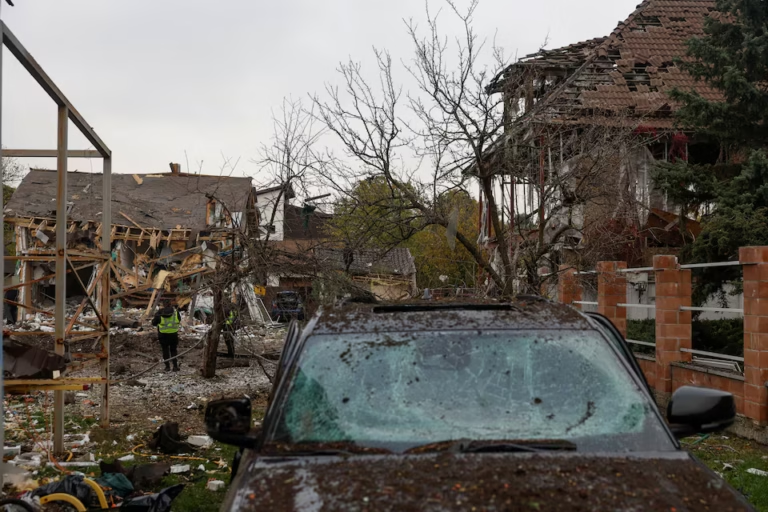
The February 2026 strikes. On February 28, 2026, the United States and Israel launched joint airstrikes on Iran, targeting nuclear and military infrastructure. The strikes killed Iran’s Supreme Leader Ali Khamenei and senior military commanders, triggering a wave of Iranian missile and drone retaliation against Israel, US assets in the region, and Gulf states seen as aiding the US military. Iran’s regime consolidated quickly under new hardline leadership, and the conflict caused significant destruction and casualties on both sides before either party moved toward a truce.
The April 2026 ceasefire. After weeks of fighting, Pakistan brokered a two-week ceasefire between the US and Iran on April 7–8, 2026. President Trump linked the pause to Iran reopening the Strait of Hormuz, and Iran signaled conditional acceptance contingent on attacks stopping. A senior US delegation, led by Vice President JD Vance, met Iranian counterparts in Islamabad on April 11–12 — the highest-level direct US-Iran diplomatic engagement since 1979. Nuclear issues remained the key sticking point, and President Trump later extended the ceasefire indefinitely rather than letting it lapse.
Renewed US strikes on Iran. The truce proved fragile. In early May 2026, the US launched “Project Freedom,” a naval effort to guarantee safe commercial shipping through the Strait of Hormuz. Iran responded with what appeared to be its first post-ceasefire attacks, striking targets in the UAE. On May 7, 2026, the US carried out further airstrikes on military sites in southern Iran and Tehran after Iranian forces targeted US warships — underscoring how quickly the ceasefire could unravel even after it took effect.
Where the ceasefire stands now. By June 14, 2026, the US and Iran reached a Pakistan-mediated interim deal — often referred to as the June memorandum of understanding (MOU) — that addressed reopening the Strait of Hormuz, a halt to Israel-Hezbollah fighting in Lebanon, and a 60-day cessation of hostilities. Both sides have repeatedly accused each other of violating its terms. As recently as September 1, 2026, US Central Command confirmed strikes on Islamic Revolutionary Guard Corps (IRGC) targets in response to attacks on US forces and shipping near the Strait — a clear sign that, months after the original truce, the ceasefire remains partial and unstable rather than a genuine end to hostilities.
Why the ceasefire keeps breaking down. Three unresolved disputes keep pulling the two sides back toward conflict: Iran’s nuclear program (specifically whether Tehran will accept “zero enrichment”), free and toll-free passage through the Strait of Hormuz, and the pace and scope of sanctions relief. Until these are resolved, expect the pattern of partial de-escalation followed by renewed strikes to continue. (For a continuously updated timeline, see our dedicated Iran-US ceasefire updates article.)
Iran-US Nuclear Talks and Negotiations
Nuclear negotiations sit at the center of the broader US-Iran relationship — nearly every other flashpoint, from sanctions to military posture, is tied to progress or failure on this track.
What the US wants. Washington’s central demand has been “zero enrichment” — a complete halt to Iranian uranium enrichment activity, not merely a cap as under the 2015 deal. The US has also prioritized reopening the Strait of Hormuz to unrestricted, toll-free shipping and has signaled it will not make direct state investments in Iran, restricting any released funds to food and medicine purchases.
What Iran wants. Tehran has pushed for sanctions relief, security guarantees against further strikes, and recognition of its right to maintain a ballistic missile arsenal “in relative proportion” to neighboring Gulf states. Iran’s post-Khamenei leadership has shown internal division: Iran’s new supreme leader has voiced a different view than elected President Masoud Pezeshkian on the terms of the June memorandum, though the president reportedly secured assurances that the interests of Iran’s regional allied groups would be protected.
The June 2026 memorandum of understanding. The MOU signed in June 2026 was the most substantive diplomatic document to emerge from the conflict, addressing the Strait of Hormuz, a Lebanon ceasefire, and a temporary halt to hostilities. Gulf Cooperation Council states welcomed the reopening of Hormuz but pushed back, arguing that lasting regional peace requires addressing the “full spectrum” of Iranian threats, including its missile program, drone capabilities, and support for armed proxy groups.
Where talks stand now. Since the June MOU, formal US-Iran negotiations aimed at ending the conflict have largely stalled. The US has continued layering on new economic sanctions rather than advancing a comprehensive settlement, and by mid-2026 there were, by several accounts, no active talks focused on a durable end to hostilities — only sporadic, indirect exchanges through mediators. (See our dedicated article on US-Iran negotiations for the latest on when — or whether — talks might resume.)
Iran Nuclear Inspections and the IAEA
Separate from the political negotiations, the International Atomic Energy Agency (IAEA) has been trying — with limited success — to verify what remains of Iran’s nuclear program after the strikes.
What the IAEA can and cannot verify. Iran resumed IAEA inspections at nuclear sites that were not damaged in the conflict, including the Bushehr power plant, where inspectors conducted a design information verification in June 2026. However, Iran has not provided access to any of the facilities directly hit by US and Israeli strikes, nor has it delivered updated nuclear material accountancy reports for those sites. As of the IAEA’s most recent reporting, the agency had inspected only a fraction of Iran’s unaffected declared facilities and none of the affected ones.
Bombed facilities Iran has blocked inspectors from. Iran’s nuclear chief has stated explicitly that IAEA inspectors will not be permitted to visit nuclear sites bombed by the US and Israel — a position reaffirmed as recently as late August 2026. Iran has also declined to clarify the status of a previously undisclosed enrichment facility at Isfahan, which it says was struck during the conflict; the IAEA cannot confirm the facility’s current condition or location.
Why uranium stockpile verification matters. Both Iran and the IAEA maintain that Tehran has not resumed enrichment since the war, but without access to the affected sites, inspectors cannot independently verify the location or status of Iran’s pre-war enriched uranium stockpile. That uncertainty is one of the most consequential open questions in the entire Iran-US relationship, since any diplomatic settlement will likely hinge on the ability to verifiably account for that material. (Full details in our Iran nuclear inspections deep-dive.)
The Strait of Hormuz — Chokepoint of the Conflict
Why it matters. Roughly a fifth of the world’s oil supply transits the Strait of Hormuz, making it one of the most economically consequential flashpoints in the entire Iran-US standoff — any disruption ripples immediately through global energy markets.
Blockades and incidents. During the 2026 war, Iranian forces targeted oil infrastructure and commercial shipping in and around the strait, and IRGC vessels have repeatedly challenged commercial and US-flagged tankers transiting the waterway. Iran has closed or restricted the strait more than once since the initial ceasefire, including in response to renewed Israel-Hezbollah fighting in Lebanon.
US naval operations to keep it open. In May 2026, the US launched “Project Freedom” to help commercial vessels transit the strait safely, temporarily pausing the effort at the request of Pakistan and other mediating parties as talks progressed. The strait’s reopening — and keeping it open on a toll-free basis — has remained one of the US’s clearest, most consistently stated priorities throughout negotiations.
Impact on oil markets. Continued instability around Hormuz has kept oil prices elevated and contributed to broader market jitters, with rising energy costs cited alongside bond-market pressure as a drag on US and global equities through the second half of 2026. (For live updates, see our Strait of Hormuz updates article.)
Iran Sanctions and Economic Pressure
Sanctions since 2026. The US Treasury has continued expanding sanctions throughout 2026, including a late-February round targeting more than 30 individuals, entities, and vessels connected to Iran’s oil shipping network. Congress has also considered legislation that would further expand sanctions authority over Iranian petroleum and petrochemical exports.
Iran oil sanctions and the shadow fleet. Iran has continued exporting oil despite sanctions pressure, with China remaining the primary destination for the bulk of those exports. Reporting indicates Iranian oil exports through the Strait of Hormuz exceeded roughly 2 million barrels a day even during active fighting, underscoring the limits of sanctions enforcement against a determined “shadow fleet” of tankers operating outside conventional shipping channels.
Sanctions relief as a bargaining chip. Any comprehensive settlement will almost certainly require the US to offer sanctions relief in exchange for verifiable nuclear restrictions — mirroring the basic trade-off of the original 2015 nuclear deal, though on considerably harsher terms given the post-war context.
Economic fallout inside Iran. The war and subsequent sanctions triggered a sharp collapse in Iran’s currency, fueling protests that began in late December 2025 and spread nationwide through January 2026 — met, according to Iranian health officials, with a violent government crackdown. (Full sanctions history and current designations in our Iran sanctions and Iran oil sanctions articles.)
Iran’s Military Developments
Missile and drone capabilities after the war. Despite significant losses in the February 2026 strikes, Iran retained enough missile and drone capacity to strike Israel, US assets, and Gulf states repeatedly throughout the year, including attacks that reportedly caused substantial damage in at least one Iranian city, according to independent post-strike assessments.
Regional proxies and allied militias. Iran’s network of regional partners remains a central feature of its military posture. Yemen’s Houthi movement, which had reached a separate ceasefire with the US over Red Sea shipping attacks in 2025, opened a new front by launching missiles and drones toward Israel in March 2026 — illustrating how the conflict has drawn in Iran-aligned groups well beyond its own borders.
Leadership after Khamenei. The killing of Ali Khamenei in the opening strikes forced a rapid leadership transition, with the regime consolidating around a new hardline supreme leader. That transition has introduced fresh uncertainty into Iran’s decision-making, with reports of friction between the new supreme leadership and Iran’s elected president over how far to go in nuclear and diplomatic concessions. (More in our Iran military developments article.)
Iran-US Diplomatic Relations
No formal ties since 1980. Despite everything above, it’s worth restating the baseline: the US and Iran have had no formal diplomatic relations since the 1979–1980 hostage crisis. Every negotiation, ceasefire, and agreement between the two governments happens without embassies, ambassadors, or direct standing communication channels.
Backchannel and third-party mediation. Pakistan has emerged as the dominant mediator of the 2026 conflict, brokering both the April ceasefire and the June memorandum. Oman and Qatar, which have historically hosted indirect US-Iran talks, along with Egypt’s diplomatic engagement on the IAEA track, continue to play supporting roles.
Gulf states’ role. The Gulf Cooperation Council has positioned itself as a stakeholder in any lasting settlement, insisting that a durable peace must also address Iran’s missile program, drone arsenal, and support for regional militias — not just the nuclear file.
What comes next. Three broad scenarios remain on the table: continued low-grade escalation punctuated by periodic strikes (the pattern seen through most of 2026), a prolonged stalemate in which neither side pursues full-scale war nor a comprehensive deal, or a genuine diplomatic breakthrough that finally resolves the nuclear, Hormuz, and sanctions disputes together. Given the repeated collapse of ceasefire terms since April, most analysts see the stalemate-with-flare-ups scenario as the most likely near-term path. (See our Iran-US diplomatic relations article for ongoing analysis.)
Timeline: Key Events in Iran-US Relations (2025–2026)
| Date | Event |
| Sept 2025 | New sanctions imposed on Iran; Iran’s currency crisis deepens |
| Dec 28, 2025 | Protests break out across Iran amid economic collapse |
| Jan 8, 2026 | Iranian security forces crack down on protests |
| Feb 25, 2026 | US Treasury sanctions 30+ individuals/entities tied to Iran’s oil network |
| Feb 28, 2026 | US and Israel strike Iran; Supreme Leader Ali Khamenei killed |
| March 2026 | Houthi forces join the conflict, striking Israel |
| April 7–8, 2026 | Pakistan brokers two-week US-Iran ceasefire |
| April 11–12, 2026 | Highest-level direct US-Iran talks since 1979 held in Islamabad |
| April 21, 2026 | Trump extends the ceasefire indefinitely |
| May 3–7, 2026 | “Project Freedom” launched; Iran strikes UAE; US conducts new airstrikes on Iran |
| June 14, 2026 | US-Iran interim MOU signed, addressing Hormuz and Lebanon |
| June 2026 | IAEA conducts limited inspections at unaffected sites (e.g., Bushehr) |
| Aug 27, 2026 | Iran confirms it will not allow IAEA access to bombed nuclear sites |
| Sept 1, 2026 | US CENTCOM strikes IRGC targets after attacks on US forces/shipping |
(This table should be updated monthly to preserve accuracy and support featured-snippet eligibility.)