
United Nations High Commissioner for Human Rights Volker Turk issued a “red alert” for el-Obeid last month, warning that the central Sudanese city risks becoming the latest casualty of a war that has already displaced more than 14 million people and pushed over half of Sudan’s 50 million residents into dependence on international aid.
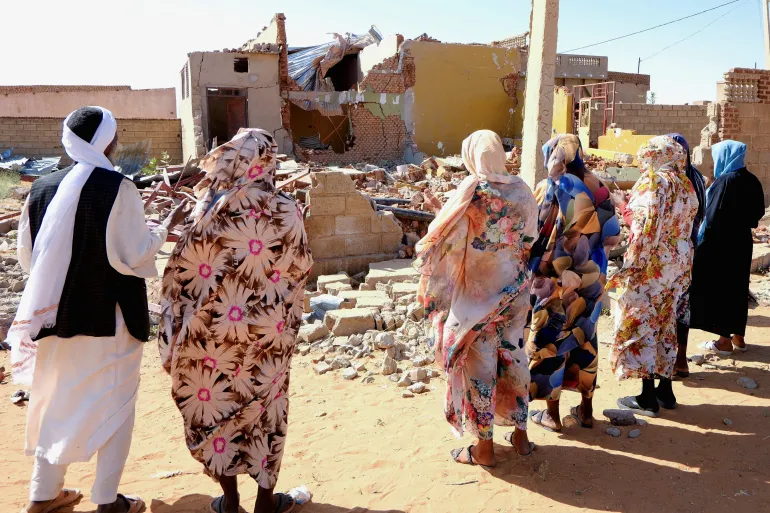
El-Obeid serves as a commercial capital and logistics hub in central Sudan, and it now sits on the front line of a 40-month conflict between the Sudanese army and the Rapid Support Forces, the paramilitary group known as the RSF. In June, the RSF launched 27 drone strikes on the city, the highest monthly total recorded since the war began. Most of those strikes hit fuel depots, water pumps and electrical infrastructure, cutting off basic services for the city’s 500,000 residents.
The RSF has also blocked many of the routes leading out of el-Obeid. Seasonal rains are now making remaining roads difficult to pass, raising the possibility that residents could soon find themselves unable to leave the city at all. Sudan’s army recently recaptured the Sadarat highway connecting el-Obeid to the capital, Khartoum, creating a temporary opening in the RSF’s siege.
A pattern with a name
What is unfolding in el-Obeid follows a script that has already played out twice in this same war. Last year, the RSF besieged the North Darfur city of el-Fasher. A United Nations investigation found that more than 6,000 civilians were killed within days, while thousands more were tortured, raped, enslaved or forcibly disappeared. The investigation’s report, released last month, concluded that the RSF’s actions in el-Fasher constituted genocide. No significant international action followed.
Earlier in the conflict, the RSF’s assault on el-Geneina in West Darfur produced what the UN also classified as genocide, after the group blocked humanitarian aid from reaching the city and prevented civilians from escaping. Then-US Secretary of State Antony Blinken applied the same label to those atrocities in January 2025.
At the time, that designation carried the hope that it might trigger a coordinated international response before the violence spread further. That hope has not materialized.
Echoes of Rwanda
The current inaction recalls a nearly identical failure three decades ago. In 1994, the US government acknowledged that “acts of genocide” were occurring in Rwanda but took no meaningful steps to stop it. Then-Secretary of State Warren Christopher, pressed by a reporter on the distinction, asked, “How many acts of genocide make up a whole genocide?”
That hesitation reflected the prevailing legal understanding at the time: that formally declaring a genocide obligated the international community to intervene. The failures in Rwanda, followed a year later by Bosnia, forced a period of reassessment among Western governments and international institutions responsible for genocide prevention.
That reassessment produced the UN’s Responsibility to Protect framework, which holds that state sovereignty is not absolute and that the international community bears responsibility to intervene when a government cannot or will not protect its own population, or when the government itself is the aggressor. The same period saw the creation of the International Criminal Court, established to prosecute the individuals responsible for such crimes.
In 2004, President George W. Bush’s administration used the term genocide to describe the killing then underway in Darfur, turning the label into a rallying point for international action in a region most policymakers did not consider strategically important.
More than 20 years later, genocide is once again occurring across Sudan, this time in multiple locations rather than one, raising hard questions about what commitments like “Never Again” and “Save Darfur” actually accomplished.
A weakened framework
Over the past two decades, the willingness to act on genocide prevention has eroded considerably. The 2011 US-led intervention in Libya, widely viewed as having produced lasting instability, made military intervention politically toxic. President Barack Obama’s decision not to enforce his declared “red line” after chemical weapons use in Syria further signaled that such declarations carried little practical weight.
The Trump administration has gone further, actively working against the institutions built to respond to genocide. This month, the administration announced what it called a full diplomatic campaign to dismantle the International Criminal Court’s capabilities, with officials saying they intend to do so “brick by brick if necessary.”
That campaign runs counter to the administration’s own stated goal of ending the Sudan conflict and holding perpetrators accountable. US mediators have simultaneously engaged the RSF in ceasefire negotiations, talks that could ultimately grant the group a formal role in a future Sudanese government. Such an arrangement might pause the fighting in the near term, in what is currently the deadliest conflict for civilians anywhere in the world, but it risks setting the stage for renewed violence later.
No coalition, no red line
Unlike earlier genocides, no government or coalition is currently arguing for military intervention to stop the killing in Sudan. Nor does any current administration echo the position Obama articulated in 2016, when he described genocide prevention as “both a core national security interest and a core moral responsibility.”
Sudan’s global neglect stems from a specific contradiction. The country holds enough wealth, size and regional significance to draw outside powers into its conflict, yet it remains too peripheral to the core interests of the US and European Union to justify committing serious diplomatic capital toward ending the violence or preventing the country’s fragmentation.
Washington has instead allowed regional partners in Ankara, Cairo, Riyadh and Abu Dhabi to sell weapons, extract gold and provide tactical support that keeps both sides of the conflict fighting, even as those same capitals publicly criticize unnamed outside actors for fueling the war they are helping sustain.
G7 foreign ministers recently condemned the RSF’s bombardment of el-Obeid and called on the warring parties to pursue ceasefire talks, while urging Sudan’s neighbors and foreign backers to halt their support for the conflict. That statement, like three years of similar declarations before it, stopped short of committing to anything beyond condemnation.
Those condemnations are unlikely to prevent what could become the next genocide in el-Obeid, leaving open the question of how many genocides it will take before genocide prevention returns to the list of national priorities for the powers capable of acting.