Clicxpost

US to Wind Down HIV Funding for South Africa as Diplomatic Rift Deepens

The United States plans to gradually cut off funding for HIV and AIDS programs in South Africa, a decision that could shake one of the largest public health partnerships in the world. The move comes as relations between Washington and Pretoria keep deteriorating, and US officials have tied it directly to disagreements over South Africa’s domestic and foreign policies.

This isn’t a small adjustment. The funding has backed South Africa’s fight against HIV for more than 20 years. Health experts warn that pulling it could hurt prevention, testing, and treatment efforts, even though South African officials say they’ve been preparing for this for years.

The announcement adds one more strain to a relationship that’s already rocky under President Donald Trump.

South Africa Carries the World’s Heaviest HIV Burden

More than eight million South Africans live with HIV, more than any other country, according to health officials and international health organizations.

For decades, the US helped carry that load through PEPFAR, the President’s Emergency Plan for AIDS Relief. Before 2025, PEPFAR sent roughly $400 million a year into South Africa for prevention, treatment, outreach, testing, and healthcare infrastructure. That’s about a fifth of everything South Africa spends on HIV and AIDS.

PEPFAR has saved millions of lives across Africa and other hard-hit regions since it launched in 2003. Pulling funding from South Africa raises a bigger question too: what happens to other countries that depend on the same program.

Washington Ties the Cut to Policy Disputes

A State Department official said the phased withdrawal is happening because South Africa hasn’t made enough progress on issues the Trump administration has raised. Those issues include race, land ownership, economic policy, and South Africa’s international relationships.

Soon after taking office, Trump signed an executive order accusing South Africa of running policies that discriminate against certain groups, specifically white Afrikaners. The White House argues some of South Africa’s policies unfairly target white landowners and stoke social tension.

South African officials reject that framing entirely. They say their policies exist to fix economic inequalities that apartheid left behind decades ago and that haven’t gone away on their own.

Black Economic Empowerment at the Center of It

Much of the disagreement centers on South Africa’s Black Economic Empowerment program, which is designed to bring more Black South Africans and other historically excluded groups into the economy.

South African leaders argue the policy is necessary. Apartheid-era laws kept the Black majority out of land ownership, business, and wealth building for generations, and that gap hasn’t closed. Critics in the US, along with some South African opposition figures, argue parts of the program create new forms of discrimination instead of fixing old ones.

Pretoria has defended the program repeatedly, calling it essential in a country where wealth is still concentrated in very few hands.

The White House Objects to South Africa’s Foreign Policy Too

The criticism doesn’t stop at domestic policy. The Trump administration has also pushed back on South Africa’s foreign policy choices, particularly its case against Israel at the International Court of Justice and its diplomatic ties with Iran.

US officials say these moves show South Africa working against American interests and the interests of close US allies. In a statement explaining the funding decision, the White House said it couldn’t justify continued financial support given what it called “unjust and immoral practices.”

South Africa rejects the accusation. The government says its foreign policy is grounded in international law and its own national interests, not hostility toward the US.

Claims of Afrikaner Persecution Add Fuel

Trump has repeatedly claimed that white South Africans face widespread persecution, going so far as to call it a “white genocide.” South African authorities, independent researchers, and international observers have rejected that claim.

Violent crime is a real and serious problem in South Africa, but it affects communities across racial lines, not one group specifically. Still, the administration’s position led to a special US refugee program for Afrikaners, descendants of Dutch, German, and French settlers who arrived in southern Africa centuries ago. That program has drawn international attention, since Afrikaners are now one of the few groups getting special refugee treatment under current US immigration rules.

South African leaders call the program politically motivated and say it doesn’t reflect what’s actually happening on the ground.

South Africa Says It’s Ready to Stand on Its Own

South Africa’s Health Ministry has tried to calm public concern. Officials say they haven’t received formal notice of the funding decision, but they’ve spent years building toward less reliance on foreign aid.

The ministry points out that most of the country’s supply of antiretroviral medication is already paid for domestically. South Africa funds the majority of its HIV treatment program through its own national budget, not PEPFAR. Officials say the long-term goal has always been a healthcare system that doesn’t depend on outside donors.

That said, public health experts caution that replacing hundreds of millions of dollars a year won’t be simple, especially in areas like community outreach, prevention campaigns, and the support services that help patients stay on their medication.

Efforts to Patch Things Up Haven’t Worked

The past year has brought several attempts to repair the relationship between Washington and Pretoria, and none have landed.

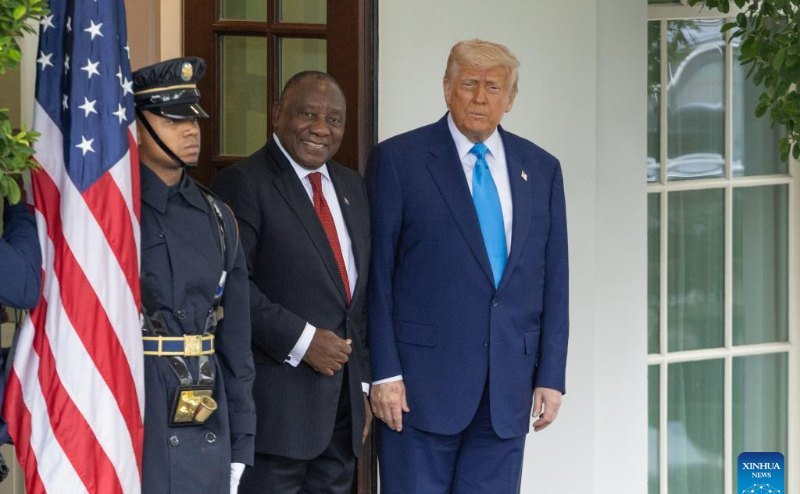
The most visible attempt came during a White House meeting between Trump and South African President Cyril Ramaphosa, where Trump confronted Ramaphosa directly over claims about the treatment of white South Africans. People watching hoped it would ease tensions. It didn’t. The disagreements that mattered most stayed unresolved, and since then the relationship has kept sliding, with new disputes piling up over trade, foreign policy, race, and international security.

What Happens to HIV Care Now

The bigger question is what happens to people who depend on these programs every day.

Government officials say treatment will continue. Healthcare organizations aren’t so sure that’s the whole picture. They warn that losing this funding could hit testing services, community health programs, education campaigns, and the support systems that keep patients on their medication consistently.

For the millions of South Africans living with HIV, none of the diplomatic back-and-forth matters as much as one thing: whether their access to care stays uninterrupted. As the funding drawdown begins and tensions between the two countries keep rising, that’s the part South Africa has to protect, even while the rest of the relationship falls apart around it.

RECOMMENDED
UP NEXT

SpaceX wins $733M Space Force launch contract

The U.S. Space Force has awarded SpaceX a contract worth $733 million for eight launches, reinforcing the organization’s efforts to increase competition among space launch providers. This deal is part of the ongoing “National Security Space Launch Phase 3 Lane 1” program, overseen by Space Systems Command (SSC), which focuses on less complex missions involving near-Earth orbits.

Under the contract, SpaceX will handle seven launches for the Space Development Agency and one for the National Reconnaissance Office, all using Falcon 9 rockets. These missions are expected to take place no earlier than 2026.

Space Force launch contract

In 2023, the Space Force divided Phase 3 contracts into two categories: Lane 1 for less risky missions and Lane 2 for heavier payloads and more challenging orbits. Although SpaceX was chosen for Lane 1 launches, competitors like United Launch Alliance and Blue Origin were also in the running. The Space Force aims to foster more competition by allowing new companies to bid for future Lane 1 opportunities, with the next bidding round set for 2024. The overall Lane 1 contract is estimated to be worth $5.6 billion over five years.

Lt. Col. Douglas Downs, SSC’s leader for space launch procurement, emphasized the Space Force’s expectation of more competitors and greater variety in launch providers moving forward. The Phase 3 Lane 1 contracts cover fiscal years 2025 to 2029, with the option to extend for five more years, and the Space Force plans to award at least 30 missions over this period.

While SpaceX has a strong position now, emerging launch providers and new technologies could intensify the competition in the near future.

Donald Trump and the 2024 Election: Gender, Values, and an Unpredictable Outcome

As Election Day arrives this Tuesday, predictions are everywhere, but the truth is no one really knows how this race will end. With polling showing Donald Trump and Kamala Harris nearly tied, especially in crucial swing states, the nation is watching a deeply divided contest. At the center of this election is a growing gender gap, with women rallying around issues that could tip the scales.

In particular, female voters supporting Harris are driving a movement that’s reshaping traditional election strategies. Despite facing challenges from spouses and communities, many women are quietly mobilizing for change, showing just how much is at stake.

The Grassroots Push for Kamala Harris

In Michigan, Democratic Senate candidate Elissa Slotkin recently highlighted a unique phenomenon observed by her campaign’s canvassers. They encountered women in homes with Trump signs who, when asked whom they support, would discreetly gesture to Harris’s photo on campaign literature. Slotkin also mentioned hearing about a small but symbolic campaign where women leave notes in restroom stalls, encouraging each other to remember their right to vote in private.

This movement, featuring stickers and notes reading “Vote like your daughter’s future depends on it,” has gained coverage from outlets like Ms. Magazine and NBC News. Even former First Lady Michelle Obama has echoed these sentiments, urging women to remember that “your vote is private.” While these “hidden votes” may not sway entire states, they reveal a powerful desire among women to influence this election. If Harris secures victory, it may be in part due to this hidden network of support.

Trump’s “Boys vs. Girls” Election Strategy

The 2024 election marks one of the widest gender divides in recent U.S. politics, with Trump drawing significant male support, while women have shown strong backing for Harris. This division reflects deeply rooted concerns about issues such as reproductive rights and gender equality. However, Trump’s campaign has not attempted to bridge this gap. Instead, it has embraced a “boys vs. girls” approach, a strategy that aligns with his positioning on traditionally “macho” appeals and pushes back against “all-gender inclusivity.”

Months before Harris became the Democratic nominee, Trump’s advisors were reportedly aiming to draw support from Black and Hispanic men, traditionally Democratic groups, in hopes of offsetting potential losses among women. The thinking was that men would respond to Trump’s campaign image, with one insider noting, “For every Karen we lose, we’ll win a Jamal and an Enrique.”

In the final stretch, Trump’s appearances with figures like conservative pundit Tucker Carlson, who suggested the nation needs Trump’s firm leadership, have reflected this image. Conversely, Trump has limited appearances with influential female conservatives like former South Carolina Governor Nikki Haley, who could help attract independent female voters. Polls suggest Harris is facing challenges among Black and Hispanic men compared to previous Democratic candidates, partly due to Trump’s targeted messaging.

Trump’s Record on Reproductive Rights and Gender Issues

Beyond campaign strategy, the Trump administration’s track record on issues like reproductive rights has made a significant impact. The Supreme Court’s 2022 reversal of Roe v. Wade, made possible by justices Trump appointed, fueled the conservative stance on abortion. However, Trump’s stance has cost him some support among women who view reproductive rights as essential.

In recent months, Trump has occasionally suggested that some abortion restrictions might go too far, indicating awareness of this issue. However, his campaign’s selection of Ohio Senator J.D. Vance as running mate has raised further concerns about gender-related policies. Vance, known for controversial statements on women’s roles and family dynamics, once referred to single, childless women as “cat ladies.” Vance and Trump have not distanced themselves from these remarks, leaving many female voters wary.

The Backlash: Women’s Rising Turnout and Organizing Efforts

Recent voting data from battleground states shows women are turning out in large numbers. According to Politico, women comprise 55% of early voters in these regions. Pennsylvania, a crucial state, has seen significant early voting activity from Democratic women who did not vote in 2020, indicating heightened engagement.

Brookings senior fellow Elaine Kamarck’s analysis of potential turnout scenarios suggests that if women vote in numbers comparable to 2020, Harris could secure key states like Michigan, Nevada, Pennsylvania, and Wisconsin. Although polling data can’t guarantee exact outcomes, these insights highlight the potential impact of female voter enthusiasm.

This enthusiasm is also evident in grassroots efforts. Nikki Sapiro Vinckier, an OB-GYN physician’s assistant and Democratic activist in Michigan, has been creating and distributing pro-Harris stickers encouraging women to vote. The sticker’s message—“Ladies, no one will know who you vote for. Vote for your daughters, your sisters, yourself. Vote Kamala”—reflects the deeply personal motivations driving women to the polls. Sapiro Vinckier says she’s distributed tens of thousands of these stickers, underscoring the commitment of women determined to shape the future.

The Final Stretch: Gender, Values, and a Close Race

As this highly charged election nears its conclusion, both Trump and Harris have much at stake. The outcome may hinge not only on policy but also on deeper issues of gender equality and individual rights. If Harris prevails, it could mark a historic shift, driven largely by women mobilizing to challenge Trump’s traditional stance on gender and social issues.

This election may be remembered for redefining the role of gender in American politics, signaling a future where more diverse voices shape national policy. As the final votes are counted, this momentous contest will reveal whether Trump’s “boys vs. girls” approach ultimately resonated—or if it inspired a powerful response from voters advocating for progress and inclusivity.

Trump’s Unconventional Use of Trade Laws for Tariffs on Canada, Mexico, and China

President Donald Trump has taken a novel approach to trade regulations by utilizing emergency sanctions law to implement significant tariffs. His administration has introduced a 25% tariff on imports from Canada and Mexico, along with a 10% duty on Chinese goods, citing the need to control fentanyl trafficking and illegal immigration into the United States.

IEEPA: A Controversial Basis for Trade Tariffs

Legal and trade analysts highlight that Trump’s use of the 1977 International Emergency Economic Powers Act (IEEPA) to enforce these tariffs is unconventional and legally unprecedented. Historically, IEEPA has been used to impose economic sanctions in times of crisis, but never to justify import duties. This move is expected to face legal scrutiny and potential court challenges.

Trump declared a national emergency under IEEPA, citing the “extraordinary threat” posed by fentanyl and illegal immigration. While IEEPA has been used against foreign adversaries, such as imposing sanctions on Russia due to its war in Ukraine, its application to trade policies involving key U.S. allies like Canada and Mexico is unprecedented.

Legal and Trade Consequences

During his first term, Trump imposed tariffs on steel, aluminum, and Chinese imports using different trade statutes, which required thorough investigations and public hearings. By invoking IEEPA in his second term, he has sidestepped these regulatory steps, implementing tariffs more swiftly.

“The courts have traditionally upheld the president’s ability to take emergency actions, particularly on national security grounds,” said Tim Brightbill, co-chair of Wiley Rein’s international trade practice. “The question is whether that includes tariffs, as IEEPA has never been utilized in this way.”

Experts anticipate that business groups and industry associations will seek to challenge the tariffs in court, but they face legal hurdles. Judges tend to defer to the executive branch on matters involving national emergencies. William Reinsch, a trade analyst at the Center for Strategic and International Studies, commented, “An emergency is essentially what the president declares it to be.”

Historical Context and Differences

A similar case occurred in 1971 when President Richard Nixon imposed a 10% tariff on imports under the 1917 Trading With the Enemy Act to stabilize the U.S. economy after abandoning the gold standard. Courts upheld Nixon’s action because it was directly linked to an economic crisis. However, Jennifer Hillman, a trade law professor at Georgetown University and former WTO appellate judge, argues that Trump’s justification lacks such a clear connection.

“Nixon’s tariffs were directly tied to a balance-of-payments crisis,” Hillman explained. “Trump’s argument—that broad tariffs on imports from Canada, Mexico, and China are necessary to curb fentanyl trafficking and illegal immigration—stretches the intent of the law.”

Previous Threats and Congressional Response

In 2019, Trump considered using IEEPA to impose tariffs on Mexican imports over border security concerns but withdrew the plan after Mexico agreed to strengthen its border enforcement. Additionally, during his first term, he used the National Emergencies Act to redirect federal funds for constructing a border wall. Should the courts uphold his use of IEEPA for tariffs, many believe that legislative reforms will be necessary to clarify the law’s scope.

Peter Harrell, a national security lawyer and senior fellow at the Center for a New American Security, expressed concerns over unchecked presidential power: “At the very least, courts should recognize that allowing Trump to use IEEPA unilaterally for tariffs undermines the balance Congress sought when delegating trade authority to the president.”

In response, U.S. Senator Tim Kaine recently introduced legislation to explicitly restrict IEEPA’s application to tariffs, arguing that the law was never intended for such economic measures. “Americans need lower prices, not arbitrary taxes on our top three trading partners,” Kaine stated, emphasizing the economic consequences.

The Future of Trade and Executive Authority

If upheld, Trump’s strategy could redefine how future presidents use emergency powers in trade policy. This move could set a precedent for leveraging national security justifications to bypass congressional oversight on economic decisions. However, if the courts reject this approach, it will reinforce legal limitations on emergency trade measures.

This legal battle will play a pivotal role in shaping U.S. trade policies, testing the limits of executive power, and influencing global trade relationships. As litigation proceeds, both businesses and consumers will closely monitor the potential impact on costs, supply chains, and economic stability.

The Rising Tensions at Republican Town Halls: A Reflection of Political Polarization and Public Sentiment

In recent weeks, Republican members of Congress have found themselves at the center of heated town hall meetings, facing a wave of public anger directed at both former President Donald Trump and billionaire entrepreneur Elon Musk. These events, reminiscent of past political upheavals, highlight the deepening divide in American politics and the challenges lawmakers face in engaging with their constituents.

A Historical Parallel: Echoes of 2009 and 2017

The current wave of town hall confrontations draws striking parallels to previous moments of political unrest. In 2009, during the debate over the Affordable Care Act (Obamacare), and again in 2017, during the GOP’s push to repeal it, town halls became battlegrounds for passionate protests. Today, as Republicans grapple with public backlash over Musk’s controversial policies and Trump’s enduring influence, history seems to be repeating itself.

Ezra Levin, co-executive director of the progressive organization Indivisible, aptly noted, “They say history only rhymes and doesn’t just repeat, but goddamn, this feels like a repeat.” The comparison underscores the cyclical nature of political activism and the power of grassroots movements to shape public discourse.

Republican Strategies: Navigating the Storm

Faced with increasingly hostile town halls, Republican leaders are weighing their options. Some, like Rep. Rich McCormick (R-Ga.), have vowed to continue holding these events despite the challenges. McCormick, who recently faced a contentious town hall where voters shouted him down over Medicaid cuts and Musk’s policies, acknowledged the difficulties but emphasized the importance of dialogue.

“People aren’t there to listen. They’re not there for dialogue. They’re just there to argue,” McCormick told HuffPost. However, he remains committed to finding ways to make these interactions more productive, stating, “I think I could do several things which would optimize the usefulness of it.”

Other Republicans, however, are heeding the advice of strategists to avoid in-person town halls altogether. Instead, they are exploring alternatives like tele-town halls and virtual meetings on platforms like Facebook. These formats offer greater control over the conversation, allowing lawmakers to sidestep the chaos of live protests.

The Role of Liberal Activist Groups

Liberal organizations like Indivisible and MoveOn have long played a pivotal role in mobilizing opposition at Republican town halls. Their strategies include organizing protests, flooding events with passionate constituents, and using social media to amplify their message. These efforts have proven effective in drawing national attention to local issues and holding lawmakers accountable.

Indivisible is now taking its efforts a step further, instructing its members to call their representatives’ offices daily to uncover upcoming town hall schedules. The goal is to prevent Republicans from announcing “surprise” events at the last minute, ensuring that activists have time to organize and attend. If lawmakers refuse to hold town halls, Indivisible plans to host “empty chair” events, using props like cardboard cutouts or even live chickens to symbolize the absence of their elected officials.

The GOP’s Counter-Narrative: Downplaying the Protests

Republican leaders and their allies have sought to downplay the significance of the protests, framing them as orchestrated efforts by paid activists. House Speaker Mike Johnson (R-La.) claimed in a CNN interview that many of the town hall disruptions were staged by “paid protesters.” Similarly, Elon Musk took to social media to dismiss the outrage over his Department of Government Efficiency (DOGE) as “fake.”

These accusations echo past attempts to discredit grassroots movements. In 2009, then-Speaker Nancy Pelosi (D-Calif.) famously dismissed protests against Obamacare as “astroturf,” implying they were not genuine expressions of public sentiment. Such rhetoric, while politically expedient, risks further alienating voters who feel their concerns are being ignored.

The Broader Implications: A Test for Democracy

The ongoing town hall confrontations are more than just political theater—they are a litmus test for the health of American democracy. At their core, these events reflect the public’s demand for accountability and transparency from their elected officials. For Republicans, the challenge lies in balancing their legislative agenda with the need to engage meaningfully with their constituents.

As Rep. Doug LaMalfa (R-Calif.) observed, the current situation mirrors the unrest of 2017, when Trump’s election galvanized liberal activists. “It’s mirroring 2017 when Trump got elected; they came around, they sent busloads of people to various districts,” he said. This historical perspective underscores the cyclical nature of political activism and the enduring power of grassroots movements.

Looking Ahead: A Path Forward

For Republicans, the path forward is fraught with challenges. They must navigate the growing anti-Musk and anti-Trump sentiment while advancing their policy goals, such as extending and expanding the tax cuts from Trump’s first term. As one House Republican strategist noted, “We have a sale to make.” The key will be finding ways to communicate their message effectively, even in the face of widespread opposition.

Meanwhile, progressive groups like Indivisible are urging Democrats to hold their own town halls during upcoming congressional recesses. By creating a contrast with Republicans, they hope to capitalize on the current wave of activism and strengthen their position ahead of the next election cycle.

Why This Matters: A Call for Authentic Engagement

The town hall confrontations of 2025 serve as a reminder of the importance of authentic engagement in a functioning democracy. Whether through in-person meetings, virtual forums, or grassroots activism, the ability of citizens to voice their concerns and hold their leaders accountable is a cornerstone of democratic governance.

As the political landscape continues to evolve, one thing is clear: the voices of ordinary citizens will remain a powerful force in shaping the future of American politics.

Britain, France, and Ukraine Unite to Propose Ceasefire Plan Amid Global Tensions

In a pivotal move toward ending the ongoing conflict in Ukraine, Britain, France, and Ukraine have committed to formulating a comprehensive ceasefire proposal, aiming to present it to the United States. British Prime Minister Keir Starmer confirmed this strategic development on Sunday as he prepared to host a high-stakes European summit in London to address the war and chart a path toward lasting peace.

A Critical Moment in Diplomatic Relations

The London summit arrives at a delicate moment, overshadowed by U.S. President Donald Trump’s controversial rebuke of Ukrainian President Volodymyr Zelenskyy at the White House last Friday. Trump's remarks, questioning Ukraine’s gratitude for American military aid, have heightened concerns over the reliability of U.S. support for Ukraine’s sovereignty.

However, Starmer emphasized his commitment to diplomatic engagement rather than escalating tensions. He positioned the summit as an opportunity to reconnect with both Trump and Zelenskyy, alongside French President Emmanuel Macron, to reinvigorate peace efforts.

"The United Kingdom, in collaboration with France and potentially other allies, is working closely with Ukraine to develop a roadmap for de-escalation. Once finalized, this plan will be presented to the United States," Starmer revealed in an exclusive interview with the BBC.

London Summit: Strengthening Europe's Resolve

The summit in London is poised to play a critical role in stabilizing Ukraine and reinforcing European defense capabilities. Key discussions will revolve around the formation of a European-led military coalition to enforce a ceasefire, ensuring that any peace agreement is upheld.

Starmer acknowledged the need for unwavering vigilance: "We cannot afford a temporary truce that allows Russian President Vladimir Putin to regroup and launch another offensive. A credible ceasefire must be backed by a formidable defense strategy."

A Strategic European Alliance to Bolster Ukraine

As uncertainty looms over U.S. foreign policy commitments, European nations are stepping up their support for Ukraine. France, Germany, Denmark, Italy, the Netherlands, Norway, Poland, Spain, Canada, Finland, Sweden, the Czech Republic, and Romania will all participate in the summit. Also attending will be NATO’s Secretary-General, the Turkish foreign minister, and senior EU officials.

Zelenskyy, who received an outpouring of support from European leaders following his strained encounter with Trump, has been actively engaged in diplomatic talks. Upon his arrival in London, he was warmly embraced by Starmer, who reaffirmed Britain’s unwavering support: "The United Kingdom stands with Ukraine—no matter how long the battle takes."

Tensions Over Trump's Stance on Ukraine

Europe is grappling with the shifting dynamics of U.S. policy, especially following Trump’s direct engagement with Putin—an unprecedented move that has raised alarms across NATO. The former U.S. president’s characterization of Zelenskyy as a "dictator" and his false assertion that Ukraine instigated the war have further complicated diplomatic relations.

Despite earlier optimism following Macron and Starmer’s visits to Washington, tensions escalated after U.S. Vice President JD Vance harshly criticized Zelenskyy for questioning Putin’s trustworthiness. This unexpected shift has intensified Europe's urgency to assert greater leadership in the conflict resolution process.

Europe’s Financial and Military Commitment to Ukraine

Recognizing the gravity of the situation, European leaders are pledging to ramp up military aid and financial support for Ukraine. There is growing momentum to unlock €200 billion ($207 billion) in seized Russian assets to fund defense efforts.

Rachel Ellehuus, Director-General of the Royal United Services Institute, emphasized Europe’s evolving role: "Starmer has demonstrated Europe’s capacity to lead in securing Ukraine’s future. However, Friday’s White House developments underscore the urgent need for a stronger, independent European security framework."

Increased Military Spending to Fortify European Defense

In light of shifting global alliances, Starmer has committed to boosting Britain’s defense spending to 2.5% of GDP by 2027. Other European leaders are expected to follow suit, with Czech Prime Minister Petr Fiala advocating for an increase to at least 3% of GDP.

"If we don’t act swiftly and decisively, we risk allowing aggression to dictate the future of our continent," Fiala warned.

Macron echoed similar sentiments, acknowledging the need for Europe to take greater responsibility for its security. "We must build a sovereign, united, and independent Europe. It is long overdue."

A Defining Moment for Europe’s Leadership

As uncertainty looms over Washington’s commitment, the London summit marks a defining moment in Europe’s approach to the Ukraine conflict. With discussions centered on diplomatic strategies, military reinforcement, and financial backing, European leaders are signaling their readiness to lead the charge for peace and stability.

This landmark gathering could reshape the future of European security and determine Ukraine’s trajectory in its battle for sovereignty. The coming days will test Europe’s ability to unite in the face of geopolitical adversity—and to forge a sustainable path to peace in Ukraine.

Pope Francis’ Recovery: A Testament to Faith and Resilience

As Pope Francis continues his recovery from double pneumonia, the Vatican has reassured the world that his condition is stable. On Sunday, the Vatican Secretary of State visited the Holy Father at Gemelli Hospital, underscoring the pontiff’s steady progress. However, in a bid to conserve his strength, Francis once again refrained from delivering his weekly noon blessing in person, opting instead to share a heartfelt message with the faithful.

A Message of Gratitude and Reflection

In his message, Pope Francis expressed deep gratitude to his doctors and caregivers for their unwavering support. He also extended thanks to the global community for their prayers and well-wishes, highlighting the power of faith in times of adversity.

“From here, war appears even more absurd,” Francis wrote, reflecting on the conflicts plaguing the world, particularly in Ukraine. The pontiff shared that his hospitalization has deepened his empathy for those suffering from illness and hardship.

“I feel in my heart the ‘blessing’ that is hidden within frailty because it is precisely in these moments that we learn even more to trust in the Lord,” he said. “At the same time, I thank God for giving me the opportunity to share in body and spirit the condition of so many sick and suffering people.”

Signs of Recovery and Stability

While Pope Francis remains under medical supervision, signs of improvement are becoming more evident. The Vatican confirmed that his vital signs are stable, with no signs of fever or an elevated white blood cell count—key indicators that his body is effectively fighting the infection.

On Saturday, doctors reported that the pope responded well to treatment. Although he experienced a respiratory crisis the previous day that required noninvasive mechanical ventilation, he has since shown remarkable progress. The Holy Father was able to tolerate prolonged periods without the ventilator, relying solely on high-flow oxygen support. His ability to maintain healthy oxygen levels without additional assistance is a positive sign of recovery.

Despite his improving condition, doctors remain cautious and maintain a guarded prognosis. Francis continues his respiratory therapy and has been able to eat and drink normally. Demonstrating his deep spiritual commitment, he even spent 20 minutes in his private chapel on Saturday.

A History of Resilience

The 88-year-old pope has long demonstrated resilience in the face of health challenges. Having had part of one lung removed as a young man, he has managed chronic lung disease throughout his life. His current hospitalization at Gemelli Hospital, which began on February 14 after his bronchitis escalated into complex pneumonia, serves as yet another testament to his enduring strength.

A Holy Year Amid the Pope’s Absence

Pope Francis’ hospitalization coincides with the Vatican’s ongoing Holy Year, a significant period that has drawn thousands of pilgrims to Rome. These visitors continue their spiritual journey, walking through the Holy Door at St. Peter’s Basilica and traveling to Assisi, the home of St. Francis—after whom the pope is named.

Many of these pilgrims have expressed their prayers and concern for the pontiff. "Every day we’re praying for the pope," said Rev. Jacinto Bento, a priest who recently visited Assisi with a group of Jubilee pilgrims from the Azores Islands. “We’re very sad for his situation.”

In a poignant twist, Pope Francis had originally been scheduled to preside over a Holy Year audience on Saturday for the medical staff of Gemelli Hospital and other healthcare workers. While he was unable to attend, the event proceeded as planned, with hospital staff paying tribute to their most distinguished patient.

“We thought we would be able to meet him this morning in Paul VI Hall for the Jubilee Catechesis, but he surprised us by coming to us,” said Monsignor Claudio Giuliodori, spiritual guide of the Catholic University of the Sacred Heart, to which Gemelli is affiliated.

Looking Ahead

As Pope Francis continues his journey toward recovery, the global Catholic community remains united in prayer. His message from the hospital serves as a powerful reminder of faith’s role in overcoming adversity. The world eagerly awaits his return to public duties, with the hope that he will soon resume his leadership, guiding the faithful with wisdom and compassion.

Republican Lawmakers Navigate Town Hall Turmoil Amid Growing Public Outrage

House Republicans are standing their ground on hosting town halls, despite facing a surge of public anger directed at both former President Donald Trump and billionaire Elon Musk. While some GOP members believe these vocal protests do not accurately represent the broader electorate, others are strategizing ways to manage the charged atmosphere while preventing liberal groups from hijacking the discussions.

The growing unrest mirrors previous political uprisings, particularly the town hall protests of 2017, when Republican lawmakers faced intense backlash over attempts to repeal the Affordable Care Act, and the Tea Party protests in 2009. With viral confrontations surfacing at Republican town halls in Georgia and Wisconsin, political analysts are drawing clear parallels between today’s tensions and past political waves that signaled major shifts in midterm elections.

Republicans Cautiously Approach Town Halls Amid Liberal Mobilization

The growing intensity of town hall meetings has already led to some Republican leaders advising lawmakers to consider alternative formats, such as virtual town halls or tele-town halls, which provide more control over the conversation. However, some Republicans are resisting the pressure to retreat from public appearances.

Rep. Rich McCormick (R-Ga.), who was recently shouted down by constituents over issues involving Medicaid cuts and Musk’s controversial government spending reductions, admitted that some seasoned Republicans advised him against town halls altogether.

“They say, just don’t do them—there’s nothing to gain,” McCormick told HuffPost. “People aren’t there to listen; they’re there to argue. It’s not a conversation.”

Despite the pushback, McCormick and other lawmakers, including Rep. Doug LaMalfa (R-Calif.), insist they will continue holding in-person events, even as they acknowledge that liberal groups such as Indivisible and MoveOn are mobilizing to send activists to these meetings.

“It feels like 2017 all over again,” LaMalfa remarked, referencing the protests that erupted after Trump’s election. “They’re sending busloads of people to different districts to create chaos.”

GOP Leaders Downplay Protests, Dismiss Concerns

House Speaker Mike Johnson (R-La.) and Elon Musk have been working to frame the growing protests as staged political theater rather than genuine public outrage. During a CNN interview, Johnson claimed that many of the protestors disrupting Republican town halls were "paid demonstrators," while Musk took to social media to label the anger directed at his Department of Government Efficiency (DOGE) as "fake outrage."

“Pushing fake outrage will backfire on them,” Musk tweeted, dismissing concerns over his government cost-cutting initiatives, which have sparked widespread criticism.

This response is reminiscent of past dismissals of grassroots political uprisings. In 2009, then-House Speaker Nancy Pelosi (D-Calif.) famously described protests against the Affordable Care Act as "astroturf" rather than authentic grassroots opposition.

Liberal Groups Counter GOP Tactics with Aggressive Strategies

Progressive groups have responded by ramping up efforts to ensure GOP lawmakers remain accountable. Indivisible, one of the key organizers behind the 2017 protests, is encouraging activists to flood congressional offices with phone calls demanding public town halls while rejecting virtual alternatives that Republicans can tightly control.

“We want real engagement, not controlled narratives,” said Ezra Levin, Indivisible’s co-executive director. “If they refuse, we’ll organize ‘empty chair’ town halls with cardboard cutouts of lawmakers or even live chickens to highlight their absence.”

Democratic lawmakers are also being urged to seize the moment by holding their own town halls during the upcoming recess, starting March 14, to contrast their willingness to engage with constituents against GOP evasiveness.

GOP Faces Political Crossroads: Engage or Evade?

As the Republican Party struggles to control the narrative, a deeper political challenge looms: how to balance outreach to constituents while avoiding public relations disasters that could further energize opposition groups. With the GOP aiming to extend and expand Trump-era tax cuts and push Musk’s controversial government efficiency plan, party strategists recognize the need to refine their messaging.

“I don’t think anyone’s hitting the panic button yet,” a House Republican strategist said, speaking on condition of anonymity. “We have a sale to make.”

However, the backlash at recent town halls suggests that the public is increasingly skeptical of the GOP’s agenda. If Republican leaders cannot effectively navigate this growing discontent, the upcoming midterms could once again become a referendum on their policies, just as they were in 2018 and 2022.

For now, the battle over town halls serves as a critical litmus test for both parties—one that could shape the political landscape heading into 2026 and beyond.

Trump Administration Enforces Weekly Reporting for Federal Employees

In a move that has raised eyebrows across federal agencies, the Trump administration has implemented a rigid new reporting requirement for government employees, mandating that they submit a weekly summary of their accomplishments. This initiative, spearheaded by the Office of Personnel Management (OPM), is being framed as an effort to enhance accountability but has been met with widespread confusion and resistance among the more than two million-strong federal workforce.

A New Weekly Mandate: Bureaucratic Efficiency or Control Tactic?

The OPM’s latest directive, titled “What Did You Do Last Week? Part II,” reiterates the demand for federal employees to compile and submit approximately five bullet points detailing their key achievements from the prior week. Employees were given a strict deadline of Monday at midnight to comply, signaling that this will become a recurring expectation.

The initial email directive was paired with a controversial warning from Elon Musk, who leads the newly formed Department of Government Efficiency (DOGE) under President Donald Trump. Musk made it clear that failure to respond would be interpreted as a resignation, creating an atmosphere of uncertainty and fear among government workers. In response, various agency leaders initially provided conflicting guidance—some advising employees to comply, while others encouraged them to ignore the directive and adhere to their agency’s internal reporting structures.

Agencies Adjust to the New Normal

After an initial period of chaos, some agencies have started aligning with the OPM’s directive. The Department of Homeland Security (DHS), which had initially told employees to pause any reporting action, has now embraced the mandate, calling it part of their broader accountability efforts. A follow-up email from DHS leadership stated that they were “implementing a structured process to submit a brief summary of key accomplishments.”

The sudden policy shift has left many employees frustrated, particularly given the time-consuming nature of these reports. At U.S. Customs and Border Protection (CBP), acting commissioner Chris Magnus issued a two-page memo addressing concerns and outlining expectations, including clarifications on how to report activities if an employee was on leave or engaged in repetitive tasks. The memo also emphasized that employees should seek guidance from supervisors if they were unsure about what to include in their reports.

Mixed Reactions Across Federal Agencies

While some departments have fallen in line, others remain resistant. The Department of Energy (DOE), under Secretary Chris Wright, initially told employees they were not required to comply with the OPM’s demand. However, by the second week, DOE leadership shifted its stance, instructing employees to submit their reports, further amplifying confusion and frustration.

Contrastingly, agencies such as the State Department and NASA have firmly rejected the mandate, telling their employees not to respond to the OPM’s request. This defiance suggests ongoing tensions between agency leadership and the Trump administration’s aggressive efforts to exert control over the federal workforce.

A Strategy to Shrink the Federal Workforce?

Critics argue that this new requirement is part of a broader Trump administration strategy to reduce the size of the federal government by fostering a hostile work environment. The White House has previously taken unilateral steps to shut down agencies, terminate probationary employees, and push out seasoned workers through legally ambiguous “deferred resignation” policies.

Further complicating matters, the administration’s stance on enforcement has been inconsistent. Initially, OPM suggested that responding to the weekly reporting directive was voluntary. However, President Trump himself contradicted this guidance, stating publicly that failure to respond could lead to dismissal.

“And then, if you don’t answer, like, you’re sort of semi-fired or you’re fired, because a lot of people aren’t answering because they don’t even exist,” Trump remarked during a recent press briefing.

Looking Ahead: Uncertainty and Resistance

As federal employees navigate these turbulent changes, the broader implications remain uncertain. Will agencies that have resisted continue to hold the line, or will they ultimately succumb to administrative pressure? Will employees, frustrated by bureaucratic micromanagement, choose to leave the workforce rather than comply with what many see as an unnecessary burden?

For now, the cat-and-mouse game between federal agencies, employees, and the Trump administration continues. While the stated goal is increased accountability, the practical impact may be a significant shake-up of the federal workforce, with lasting consequences for government efficiency and morale.

Nationwide Protests Target Tesla Amid Growing Backlash

Demonstrators across the United States took to the streets on Saturday, rallying outside Tesla showrooms to voice their opposition to the automaker’s billionaire CEO, Elon Musk. The protests come amid growing concerns over Musk’s collaboration with President Donald Trump’s administration to implement aggressive federal budget cuts through the Department of Government Efficiency (DOGE).

As one of the most influential figures in both the tech and political landscape, Musk’s actions have ignited widespread resistance from activists, policy experts, and concerned citizens. The protests aim to disrupt Tesla’s sales, urging consumers to reconsider supporting a company whose CEO is at the forefront of efforts to dismantle key government agencies and programs.

Escalating Opposition to Musk’s Influence in Washington

The demonstrations, which have been building momentum for weeks, highlight deep-seated fears that Musk’s initiatives could significantly weaken federal institutions and concentrate power within private enterprises. His role in DOGE has enabled sweeping job cuts, contract cancellations, and the abrupt shutdown of critical government functions, including parts of the U.S. Agency for International Development.

Critics argue that Musk’s actions undermine congressional authority over budget allocations and could lead to unchecked privatization of public resources. Furthermore, many view his vast business empire—including Tesla, SpaceX, and social media giant X—as potential avenues for self-enrichment through federal contracts and government-backed projects.

“We can get back at Elon,” said Nathan Phillips, a 58-year-old ecologist from Newton, Massachusetts, who was among the demonstrators in Boston. “We can impose direct economic damage on Tesla by boycotting the brand and urging shareholders to divest.”

Coordinated Global Movement Against Tesla

The protests have expanded beyond the U.S., with demonstrations planned in Europe, including England, Spain, and Portugal. The activist-led campaign, dubbed “Tesla Takedown,” has mapped out over 50 protest locations, with more being added throughout March.

In several cities, Tesla owners have reported acts of vandalism, including spray-painted swastikas and slogans denouncing Musk’s policies. Jewish advocacy groups have condemned such actions, warning against the rise of antisemitic rhetoric in political discourse.

Authorities have responded with arrests in various locations. In New York City, approximately 300 protesters gathered outside a Tesla dealership, resulting in nine arrests. Meanwhile, in Colorado, federal prosecutors charged a woman with a series of attacks on Tesla properties, including Molotov cocktail incidents.

Tesla’s Market Struggles Under Political Scrutiny

Tesla, the world’s most valuable automaker, has not been immune to the controversy surrounding its CEO. Since Trump’s return to office, Tesla’s stock price has dropped by nearly a third, despite remaining higher than its valuation a year ago. While Musk’s personal net worth remains formidable—estimated at $359 billion—Tesla’s brand image is increasingly being tested as consumers weigh ethical concerns against product innovation.

The Political Ramifications

The White House, however, remains steadfast in its support of Musk’s initiatives. “Protests will not deter President Trump and Elon Musk from delivering on their promise to reform the federal government,” stated White House spokesperson Harrison Fields. “The American people elected this administration to cut waste and restore efficiency.”

Despite the administration’s confidence, opposition groups see this as an opportunity to galvanize the political left ahead of upcoming elections. Liberal organizations are leveraging the Tesla protests to re-energize a base that has been demoralized since Trump’s November victory.

As the protests continue to unfold, it remains to be seen whether the mounting pressure will influence Tesla’s business trajectory or Musk’s political standing. One thing is clear—Elon Musk’s role in reshaping the federal government has turned him into a polarizing figure, placing both Tesla and the broader tech industry at the center of America’s most contentious political debates.

Scroll to Top