

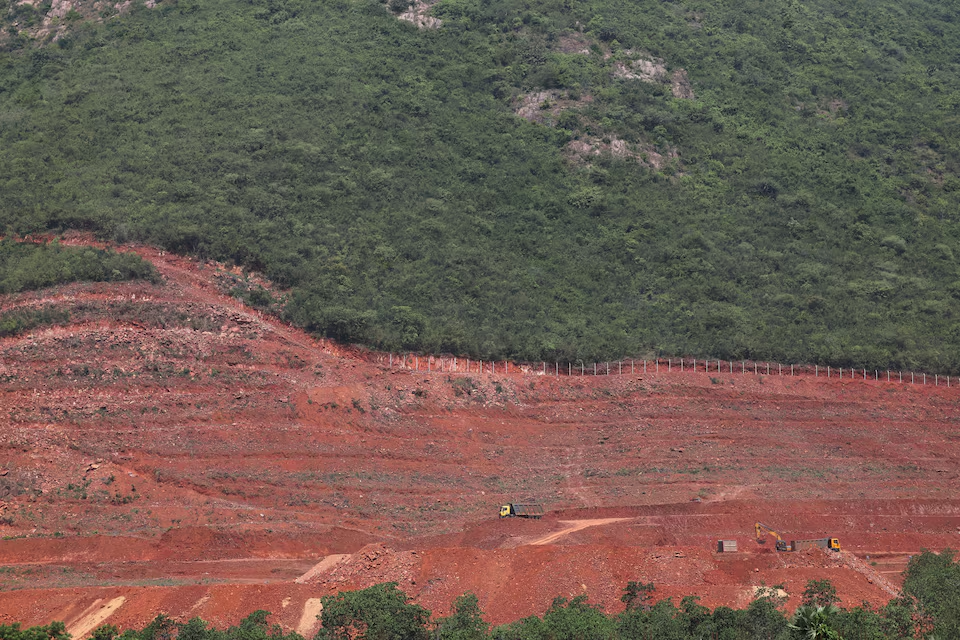
Construction crews have already stripped a hillside above Google’s planned data center site in Andhra Pradesh down to bare red earth, cutting it into terraced steps as work moves forward on the company’s largest-ever investment in India. But the $15 billion project is now facing a wave of legal challenges and public protests over its impact on local water supplies and a nearby wildlife sanctuary.
The southern state of Andhra Pradesh, led by a political ally of Prime Minister Narendra Modi, has called the project historic and transformational. State officials have rejected claims that approvals moved forward without adequately weighing risks to water resources and wildlife.
Even so, the opposition is building into what could become an early test of Google’s ability to expand data center infrastructure in India, a market central to the company’s cloud and AI ambitions. The project faces multiple ongoing legal challenges centered on water usage and its proximity to a sanctuary that shelters leopards and pangolins.
Protests spread through Visakhapatnam
In recent weeks, activists and children have marched through the coastal city of Visakhapatnam carrying banners reading “We cannot drink DATA” and painting handcuff imagery over the Google logo, according to social media posts documenting the demonstrations. Reuters attended a public gathering on Sunday where organizers laid out plans for door-to-door awareness campaigns and beach protests in the coming days.
Raja Rama Mohan Roy, founder of the nonprofit Green Visakha, addressed the crowd with statistics on the city’s water shortage. “Development should not be at the cost of livelihood of the people,” he said.
Government figures show Visakhapatnam receives 410 million liters of water daily from its reservoirs and rivers, short of the 480 million liters the city of 2.5 million people needs. Water rationing is already routine there.
The pushback in Andhra Pradesh mirrors a pattern playing out globally as data center construction accelerates to meet demand for cloud computing and AI. These facilities require large volumes of water for cooling servers and substantial amounts of electricity to run them, concerns that carry added weight in a developing country like India. In the United States, opponents staged 142 separate protests across 42 states in July over similar issues.
Court proceedings and government response
Andhra Pradesh’s High Court on Monday ordered the state government to respond to allegations raised by the activist group Jal Biradari, or Water Community, which argues the project will strain a nearby reservoir and reduce water availability in the surrounding area. The court is scheduled to hear the underlying public interest litigation on August 24.
In a statement to Reuters, the state government described the activists’ concerns as incorrect and misleading, while stopping short of dismissing the protests outright. “Such protests are their democratic right. In case any of these claims are legitimate, government is committed to engage and provide factual clarifications and suitable redressal,” the statement said.
Google, in its own statement, said the project would be built in compliance with applicable laws and that the company plans to use advanced air cooling systems specifically to limit strain on local water resources.
When Reuters visited the site on Monday, earthmovers were still actively working the cleared ground, with construction showing no signs of slowing despite the legal proceedings.
Adani partnership and job projections
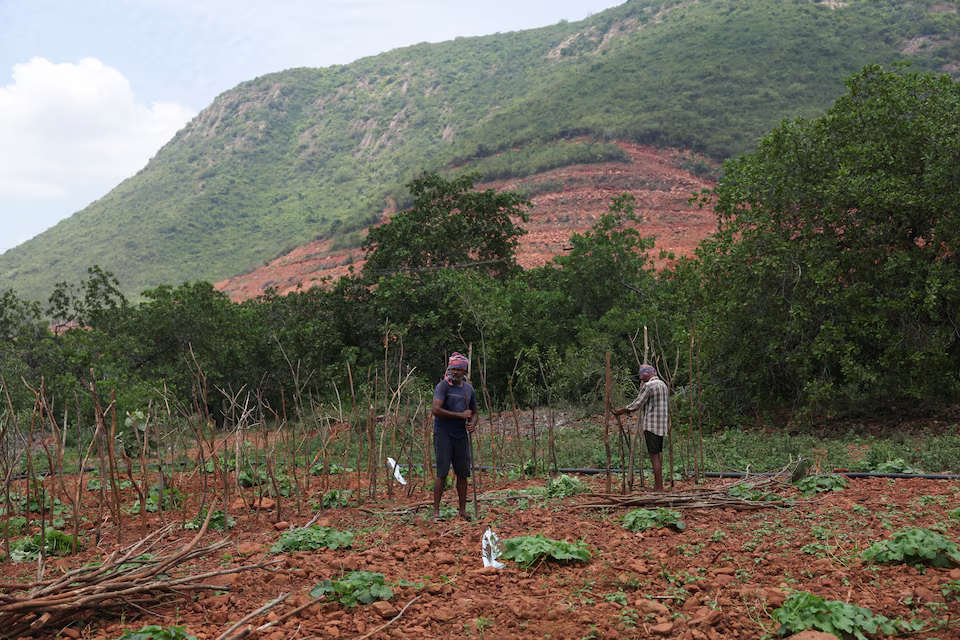
Google is developing the project alongside the Adani Group, the conglomerate led by Indian billionaire Gautam Adani, which is handling construction of the facility. The state government has projected the project could generate up to 188,000 jobs, though that figure has not been independently verified. Adani’s group did not respond to requests for comment.
Wildlife sanctuary concerns
Beyond water supply, the public interest litigation before the Andhra Pradesh High Court also raises concerns about the project’s effect on the Kambalakonda Wildlife Sanctuary, located just 860 meters from the construction site. Petitioners argue that heavy construction activity and ongoing noise could disturb the sanctuary’s ecosystem.
Asked specifically about the site’s distance from the sanctuary, state officials said the project exceeds the legally required buffer distance. Google said it intends to implement sound-dampening measures at the facility, describing its approach as aiming to make the company “a quiet, unobtrusive neighbour.”
Separately, the Human Rights Forum has filed three additional cases against the project in India’s environmental court, seeking to halt construction entirely. Court documents show the group argues that state authorities approved the project without properly evaluating its impact on a rural drinking-water scheme that supplies nearby communities.
The state has pushed back on that claim, saying no water drawn for rural or residential use will be diverted to the data centers, and that the nearby reservoir cited by activists will not supply the facility either.
A 20-year guarantee draws scrutiny
Much of the activist concern centers on the state’s commitment to guarantee water supply to the project for 20 years, a pledge Green Visakha argues is difficult to reconcile with a city already experiencing shortages.
“Who will be the sufferers? The people,” Roy said at Sunday’s gathering.
The dispute leaves Google navigating a familiar tension for major infrastructure investments in fast-growing economies: balancing the economic development promised by large-scale projects against the resource constraints already affecting local communities. With the High Court set to revisit the case later this month and additional litigation still pending in environmental court, the outcome could shape how future data center projects are reviewed and approved across India.