Clicxpost

Life

DIY Weight-Loss Drugs: Inside the Risky Rise of ‘Gray GLP-1s’ in America

DIY Weight-Loss Drugs

Like many postpartum mothers, 33-year-old Liz (who did not want her last name published) struggled to feel comfortable in her own skin after giving birth. Postpartum weight gain had her seeking answers, and even though she looked into prescription weight-loss drugs such as Ozempic, the cost placed them well out of her range. Online pharmacies’ compounded forms gave her some relief, but even those were not in her budget.

It was there that Liz learned of a new, controversial trend: “gray GLP-1s.” They were made famous on TikTok and websites online, where “gray” referred to people who were getting research-grade peptides and mixing them into homemade replicas of GLP-1-like medications in home kitchens. What was at first presented as a cost-saving shortcut soon developed a darker, more sinister undertone to America’s obsession with weight-loss medication.

“I started in the spring,” said Liz of her home experiment. Paying about $100 for 10 months’ worth of medication seemed a reasonable trade-off to the $300–$400 per month price tag of name-brand drugs. She dropped 30 pounds and says she feels like herself again, but she admits the risks: “I know it isn’t safe. But the system doesn’t give people like me affordable options.”

What Are “Gray GLP-1s”?

GLP-1 medications such as Ozempic, Wegovy, and Mounjaro have skyrocketed in popularity the last few years, being prescribed for diabetes as well as immediate weight loss. With more demand than supply, prices skyrocketing, an open black market has appeared.

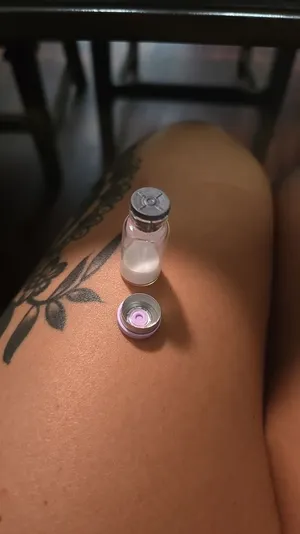
So-called “gray GLP-1s” are peptides labeled “research use only” purchased online from suppliers. Their users like Liz reconstitute or dilute the powders into injectable form, often according to hints in TikTok videos or encrypted messaging groups and not from physicians.

The phenomenon scares doctors, pharmacists, and regulators. “These are black market drugs, period,” says Courtney Sullivan, a pharmaceutical regulation expert in Arizona. “There’s no FDA oversight, no quality controls, and no way to ensure what’s really in those vials. Referring to it as ‘gray’ is minimizing the danger.”

Why People Turn to the Gray Market
Despite risks, Americans are willing to gamble on off-label drugs. The why is clear:

Affordability: FDA-approved GLP-1s are $1,000 or more per month without coverage. Even compounded products from licensed pharmacies are hundreds of dollars.

Insurance Barriers: Only diabetes patients are covered, not those who are treated for obesity without diabetes.

Access Issues: Shortages and delayed supplies have left many patients without prescription access.

It’s a desperate measure,” says Sabina Hemmi, co-founder of GLP Winner, an activist organization that keeps track of the weight-loss medication market. “People see others online losing weight quickly, they encounter problems with the healthcare system, and suddenly the black market appears to be the only solution.”

Medical and Legal Concerns

Doctors warn that “gray” products can be unsafe or even life-threatening. Others have no active ingredients at all, and others have unidentified contaminants.

“I have patients who have lost well over 100 pounds with legitimate GLP-1s, and they say it’s changed their lives,” says Lindsey Landers, an APN in Kentucky. “But when they lose access, some try to go underground and get it from illegal online sources. It’s devastating because these patients are desperate.”

Landers indicates that she began to discontinue prescribing compounded GLP-1s from a licensed pharmacy after she received an August 2025 cease-and-desist letter from a pharmaceutical company. Her less affluent patients have had no option but to make an impossible choice because: shell out thousands of dollars out of pocket for name-brand medication, or risk their health with “gray” alternatives.

The TikTok Effect and Parasocial Guidance

Social media also fueled the boom in “gray GLP-1s.” TikTokers and influencers are filming themselves mixing powders in their home kitchens, promoting stupendous weight-loss results. Many of these appear presented as educational, but experts say that gives them a pseudoscientific sheen.

“Research-use only means the peptides are not for human use,” Sullivan explains. “But sellers market them in ways that erase the difference, and social media helps spread the illusion that this is some kind of do-it-yourself health hack.”

Mysterious chat rooms now act as shadow communities, offering dosing instructions, product ratings, and vendor recommendations. They’re often paid for with cryptocurrency in order to remain untraceable.

The Bigger Picture: Why “Gray” Won’t Disappear Soon

Experts argue that the “gray” market exists as a consequence of the healthcare system failing to provide weight-loss medication at an affordable and accessible rate for all. As long as costs remain high and demand continues to rise, people will find themselves continuing to seek cheaper, riskier options.

“Vanity weight loss is not what this is about,” Hemmi stresses. “For some patients, GLP-1s are a lifeline for managing obesity, diabetes, and cardiovascular disease. But if access is limited, the black market kicks in.”

Liz agrees, although she admits to knowing the risks. “I wish there was a cheaper, regulated alternative,” she says. “People like me wouldn’t have to do this if the system actually gave us safe, affordable options.”

Final Takeaway

The development of “gray GLP-1s” shows where medical innovation, social media influence, and the cost crisis of US health care intersect. Regulators tell consumers for the moment to avoid these illegal drugs, but until systemic reform comes along, many patients will continue to sacrifice safety for results.

As Sullivan states: “The only way to protect patients is to provide effective, safe medicines. Until then, individuals will keep putting their health at risk.”


RECOMMENDED
Life

Heatwaves scorch England’s apples, starve cattle and cut grain yields

By George Mensah 5 min read

England’s summer heatwaves are pushing fruit growers, cattle farmers and grain producers into a season of shrinking harvests, spoiled crops and tough financial choices, with growers in Kent, Surrey and West Horsley all reporting damage that in some cases has cut yields by nearly half.

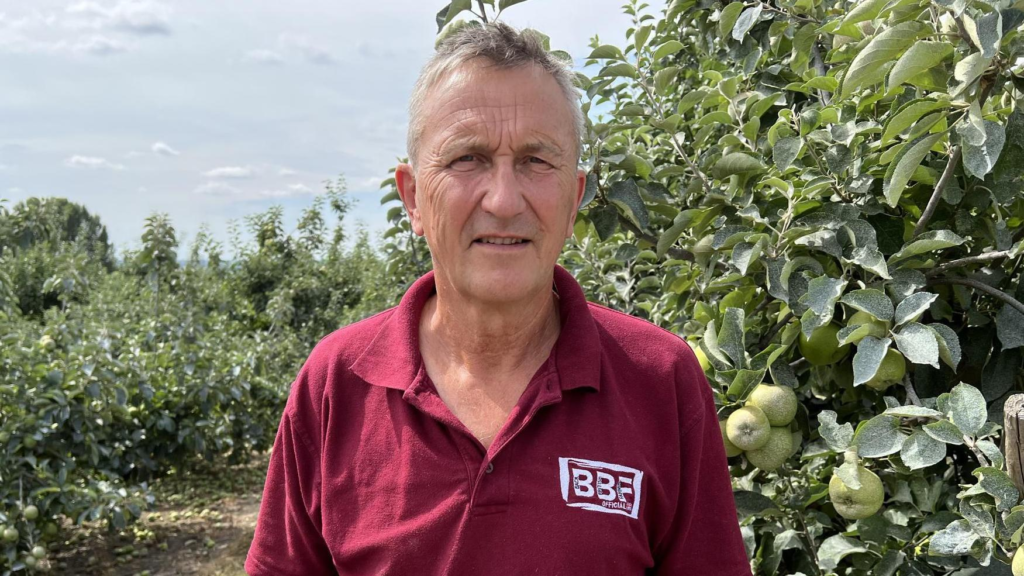
At Amsbury Farm near Maidstone, Kent, Clive Baxter manages roughly 200 acres (81 hectares) of fruit trees. He says the repeated spells of extreme heat this summer have hit nearly every part of his operation. “Everything is suffering now in the heatwaves,” Baxter said.

Bramley apples, a variety long associated with English cooking, are proving especially vulnerable. “Bramley apples are very susceptible to sunburn so we are spraying them with a clay substance that acts like suncream,” Baxter said. He explained that traditional English varieties, including Bramleys and Coxes, were never bred to withstand the kind of sustained heat the region has experienced this year.

The damage becomes severe once temperatures climb past a certain threshold. “Once the temperature gets to 30 degrees and above, if there is no wind, the juice starts to boil in the apples and cooks the fruit,” Baxter said. “When this happens it means the fruit is of no value at all.”

To protect what remains of the crop, Baxter’s team has started thinning the trees, deliberately removing some fruit so the rest has a better chance of surviving. He said the trees themselves are showing signs of strain. “So stressed” is how he described them, adding that the practice, while necessary, means lower yields and smaller apples overall.

Cattle farmers run out of grass

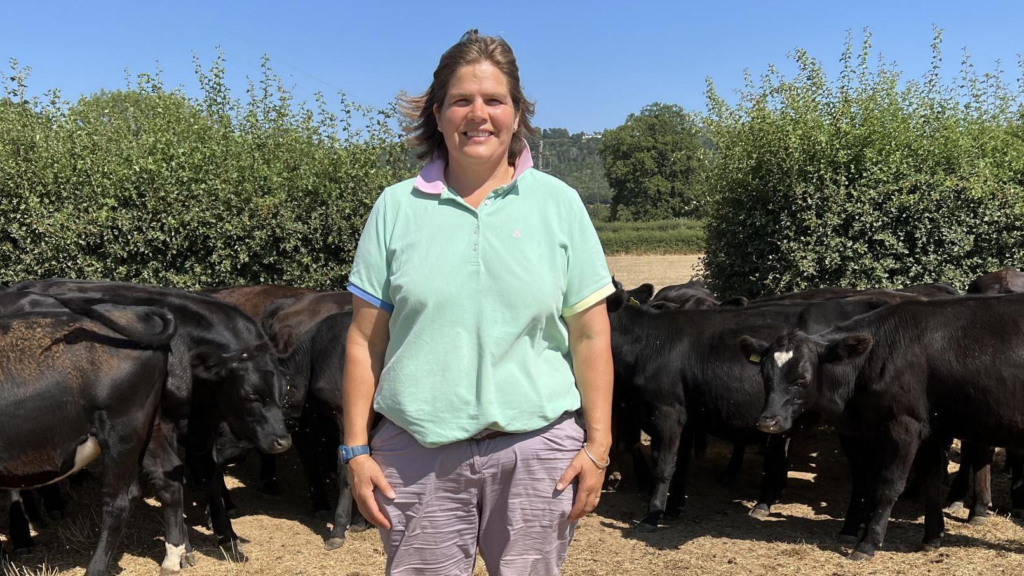
The heat is creating a different kind of pressure eighty miles away in Brockham, Surrey, where Nellie Budd raises 247 cows. For Budd, the central problem this summer has been simple: there is not enough food for the herd to eat.

“We have had 47 days now with no rain,” Budd said. “Grass normally is so resilient, once we cut it for hay or cut it for silage it will come back and we can continue grazing, but, this year, with the heat, there has been no let up.”

With pasture failing to regrow, Budd has started feeding her cattle hay that was meant to carry them through winter, a move that leaves her with a shortfall she will need to make up before the cold months arrive. The shortage is already changing the size of the animals she can bring to market.

“With limited food to eat, the carcasses are just not getting big enough which means they are not going to be the size for what we want because they are beef cattle,” Budd said.

Cutting the size of her herd is not something she is willing to consider, even as costs rise. “We have been putting an overlay in our grasslands to try and help but, this year, with no moisture in the ground, we couldn’t do anything,” she said. Reducing cattle numbers, she added, is not an option, because her family “could not afford to live” if she scaled back.

Budd said she is left hoping conditions change before next year’s growing season begins. “Everything is a gamble for farmers and we just hope weather patterns cause a wetter year next year,” she said.

Grain yields down by a third or more

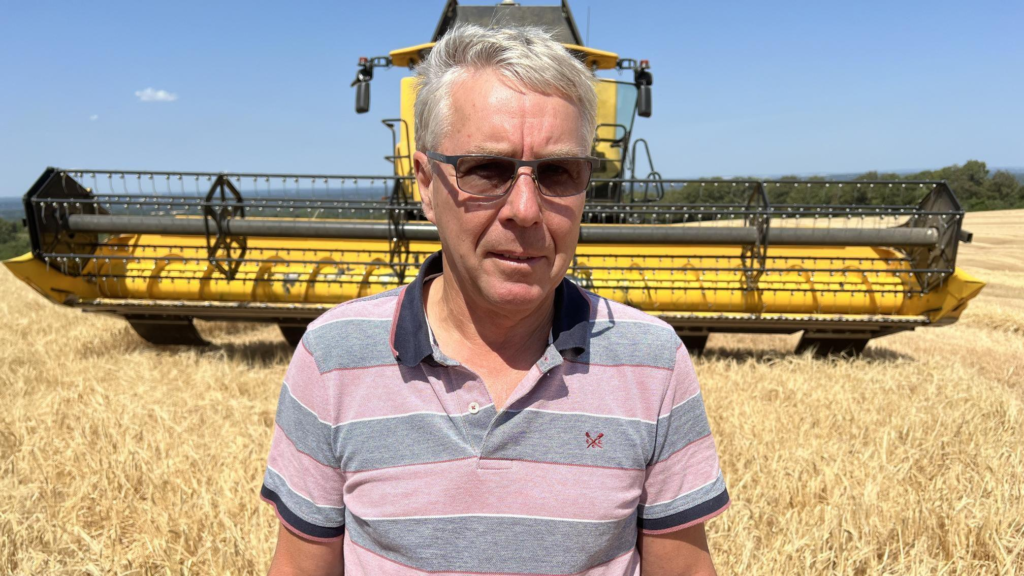
Further west, at Woolgars Farm in West Horsley, arable farmer and contractor Peter Knight is currently harvesting around 2,000 acres (809 hectares), and the numbers coming in are worse than he expected. He traces the trouble back to the first heatwave in May, which struck right as his spring barley, a crop used mainly for brewing beer, needed steady moisture to establish itself.

“Spring barley, which is used for making beer, is planted in March and it has had very little rain on it since then,” Knight said. The timing compounded the damage. “The crops flower in early June but, at that time the heat puts it under stress, which means we immediately know the yield is going to be impacted,” he said.

Knight said the dry spell never really let up through the grain-filling period, the weeks when kernels normally bulk up in size and weight. Without rain during that window, the plants simply could not put on the growth needed for a strong harvest.

He is now watching a pattern repeat itself. “We are very worried because three out of the last five years we have had very similar weather patterns in terms of drought-like conditions and trying to manage our way through that is very difficult,” Knight said.

Unlike some fruit and vegetable operations, arable farms of this scale have few tools to fight back against drought. Knight said irrigating thousands of acres of grain is not realistic given the cost and infrastructure it would require. Instead, he has adjusted his methods where he can. “We are doing our best by trying to sow earlier in the spring and we are doing less cultivations which helps preserve moisture but this year the yield here is reduced by around 30-40% on what we would normally expect,” he said.

Knight said the consequences extend beyond his own farm. If the current weather pattern continues to disrupt arable output across the country, he expects Britain will need to lean more heavily on imported grain to make up the difference.

A season of adjustments across the industry

Baxter’s spraying regimen, Budd’s early dip into winter feed stores, and Knight’s earlier sowing and reduced cultivation all point to the same reality: farmers across different sectors are making real-time changes to how they operate, not waiting for the season to end before responding.

None of the three describe the heat as a one-off. Knight’s reference to three drought-affected years out of the last five suggests a pattern rather than an isolated bad summer, and Budd’s decision to protect her herd size despite the financial strain signals she expects to need that stock again once conditions improve.

For now, the fruit that survives will carry a higher cost of production, the cattle coming to market will run smaller than usual, and the grain harvest at Woolgars Farm will fall well short of a typical year. Whether next year brings the wetter conditions farmers are hoping for remains the open question hanging over the rest of the 2026 growing season.


Life

Vozinha’s world cup heroics earn him a sea slug named in his honour

By George Mensah 4 min read

Cape Verde goalkeeper Vozinha has picked up an unexpected honour after his run at the World Cup, with scientists naming a newly identified sea slug species after him.

The Cape Verde islanders pushed Argentina to extra time before falling 3-2, a result that capped a tournament run few had predicted for the small West African nation. Before that exit, Vozinha kept a clean sheet in a goalless draw against European champions Spain, a result that gave Cape Verde its first-ever point at a World Cup.

That performance changed his profile almost overnight. His Instagram following jumped from 50,000 to 17.4 million, a number that puts him ahead of NFL veteran Tom Brady in social media reach.

A New Species Named In His Honour

Biologist Jesus Ortea, a professor emeritus at the University of Oviedo, found the small red mollusc in the Caribbean and gave it the name Aldisa vozinha, tying it directly to the 40-year-old goalkeeper.

In his published report on the discovery, Ortea wrote that he wanted to mark Vozinha’s role at the tournament. He also pointed out a detail that made the choice feel deliberate rather than arbitrary: the slug’s red colouring mirrors the nickname of Spain’s national team, La Roja, the side against whom Vozinha delivered his best-remembered display.

“The red colour of the dedicated species is a reminder of his feat,” Ortea wrote.

A Scientist With A Football Habit

This isn’t the first time Ortea has mixed marine biology with football. At 75, he has built a pattern of naming new species after players who catch his attention during major tournaments.

He previously named a species discovered in Costa Rica after Keylor Navas, the goalkeeper who played for Costa Rica at several World Cups and spent time at Real Madrid, Paris Saint-Germain and Nottingham Forest.

Ortea also named a separate creature after Quini, the former Sporting Gijon striker, picking a species whose colours matched the club’s kit.

His connection to Cape Verde goes beyond this latest naming. Ortea received the country’s Medal of Merit in 2023 for his research in the waters surrounding the island nation, work that had already put him in contact with Cape Verdean officials before Vozinha’s World Cup run began.

A Breakthrough Run For Cape Verde

Cape Verde’s World Cup campaign stood out as one of the tournament’s more unexpected stories. A nation of roughly 500,000 people reached a stage most had not anticipated, and Vozinha’s saves against Spain became the moment that defined the run for many watching outside the country.

The draw with Spain secured a point that Cape Verde had never managed at a World Cup before that match. Reaching the knockout stage and taking Argentina to extra time added to a run that turned Vozinha into one of the tournament’s more recognisable figures, despite representing one of its smaller footballing nations.

His social media numbers reflect how quickly that recognition spread. Going from 50,000 followers to 17.4 million in the span of a single tournament put him among the most-followed athletes to emerge from this World Cup, regardless of how his side’s run ultimately ended.

Science Meets Sport

Ortea’s naming choices follow a consistent logic. Rather than picking names at random, he has tied each species to a detail about the player or club being honoured, whether through colour, geography, or timing. The Vozinha naming continues that approach, linking a mollusc found in the Caribbean to a goalkeeper who plays his football thousands of miles away in Africa and Europe.

Species names given in honour of public figures are not unusual in taxonomy, but Ortea’s specific focus on footballers gives his research a public profile that pure marine biology often doesn’t attract. Each naming tends to draw attention back to his broader work cataloguing new mollusc species, work that includes his research around Cape Verde’s coastline.

For Cape Verde, the timing adds another layer of recognition to a tournament that already delivered milestones the country had not reached before. Vozinha’s clean sheet against Spain and the near-miss against Argentina will likely remain the sporting highlights of the run, but the naming of Aldisa vozinha gives the goalkeeper a mark tied to the tournament that will outlast this particular World Cup cycle.

Ortea’s report on the discovery did not indicate whether he plans to name further species after players from this tournament, though his history suggests Vozinha may not be the last footballer to receive this kind of tribute.

ADVERTISEMENT
Scroll to Top