Clicxpost

US News

Iran Oil Sanctions: US Restrictions, Oil Exports and Economic Impact

Iran Oil Sanctions US Restrictions

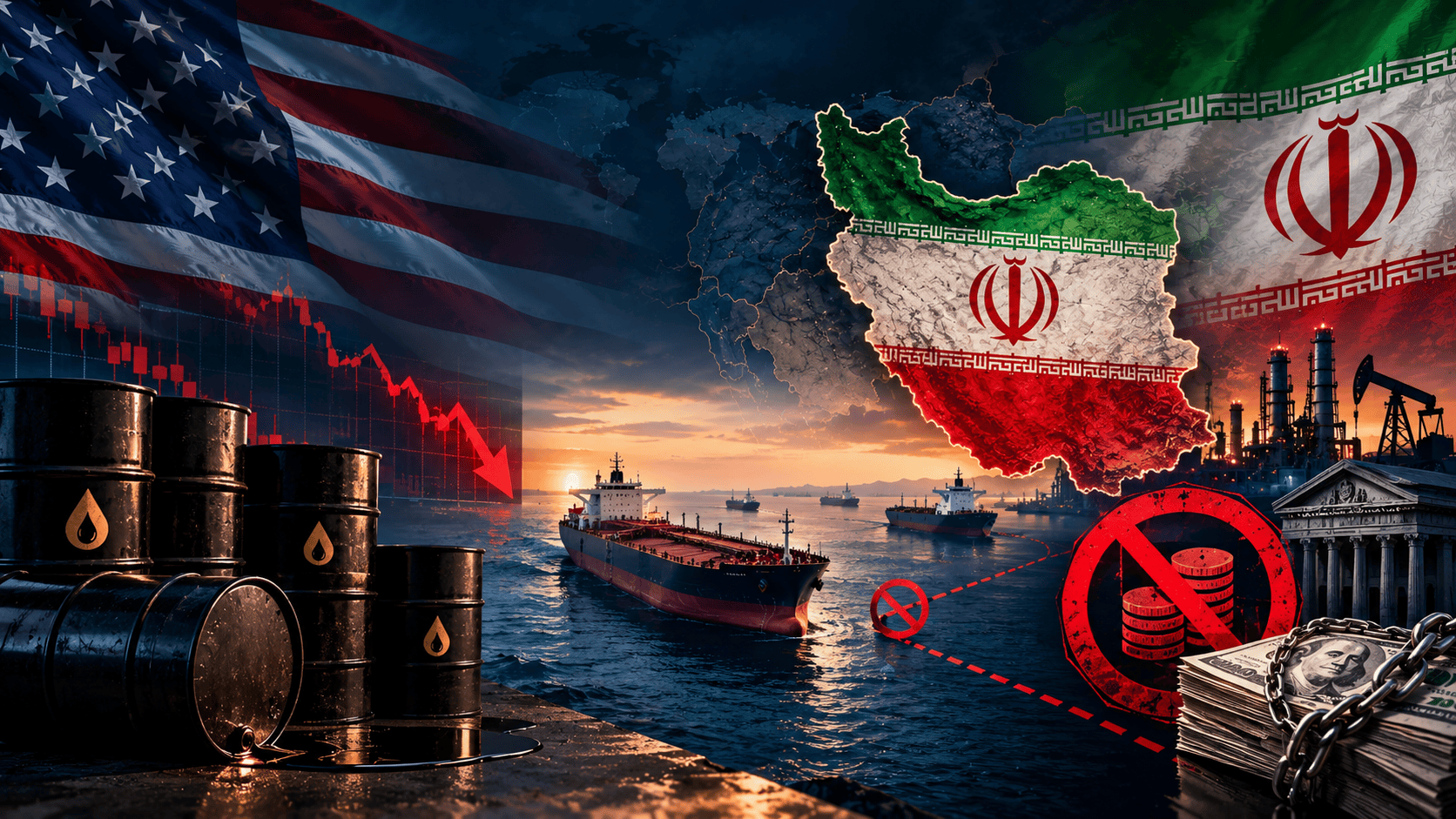
Iran oil sanctions are US-led restrictions on the production, sale, shipping and financing of Iranian crude oil and petroleum products. Oil is the Iranian government’s largest source of foreign currency, so Washington has long treated it as the main lever of economic pressure. This guide covers how US sanctions on Iranian oil work, how they have changed, and what they mean for Iran and global energy markets. Facts below are current as of October 5, 2026, and the situation is moving quickly.

What Are Iran Oil Sanctions?

Oil sanctions are legal measures that make it risky or illegal to buy, ship, insure, finance or process a country’s oil. They can target the state oil company, tankers, traders, refiners and banks.

Two layers exist:

Oil is the focus because it funds the state. Cutting oil revenue is the quickest way to pressure Tehran economically.

Why Does the US Sanction Iran’s Oil Industry?

Washington’s stated reasons are tied to Iran’s nuclear program, missiles, regional armed groups and sanctions evasion. In a May 11, 2026 statement, the State Department said the sanctions aim to disrupt funding streams that finance Iran’s support for terrorist proxies and regional aggression. Iran rejects these characterizations and calls the sanctions unlawful economic coercion. Those are government positions, not independent findings.

History of Iran Oil Sanctions

US restrictions on Iran’s energy sector go back decades. The 1996 Iran and Libya Sanctions Act, later renamed the Iran Sanctions Act, penalized foreign firms investing in Iran’s energy sector.

The measures escalated in waves:

  • 2006–2010: UN Security Council resolutions tied to Iran’s nuclear program.
  • 2012: An EU oil embargo and tougher US financial measures sharply cut exports.
  • 2015–2016: The JCPOA nuclear deal eased oil restrictions, with relief taking effect at “Implementation Day” in January 2016.
  • 2018: The US withdrew from the JCPOA on May 8 and reimposed oil sanctions, including waivers for some buyers that ended in 2019.
  • 2020: The US designated NIOC under counterterrorism authorities, on October 26, 2020.
  • 2025: A renewed “maximum pressure” campaign aimed at driving exports toward zero.

For the wider backdrop, see our guide to Iran-US relations history. For the nuclear-monitoring side, see Iran nuclear inspections.

How Do Iran Oil Sanctions Work?

  • Sales restrictions: Dealing in Iranian oil can trigger penalties.
  • Financial restrictions: Banks risk losing US access, which makes payments hard.
  • Shipping and insurance: Tankers and insurers linked to Iranian cargoes can be designated.
  • Designations: Companies, vessels and individuals are added to sanctions lists.
  • Secondary sanctions: Non-US firms that deal with designated Iranian entities can be penalized.
  • Enforcement: This includes designations, seizures and public advisories. OFAC issued an alert on sanctions risks of dealing with “teapot” oil refineries on April 28, 2026.

Impact on Iran’s Oil Exports

Exports survived earlier sanctions rounds through discounts, ship-to-ship transfers and Chinese buyers. Kpler data show Iran delivered an average of 1.38 million barrels per day of crude and condensate to China in 2025.

Since July 2026, the picture has changed. The key factor is a naval blockade rather than a sanctions list. Kpler data seen by Iran International show that no Iranian oil cargo has crossed the blockade line toward China since mid-July. Kpler estimated Iran’s August loadings at roughly 255,000 barrels per day, about 85% below its February–April average.

Chinese buyers are still receiving oil from floating storage. Kpler estimated that this stock fell from about 90 million barrels in mid-July to roughly 29 million by early September, and could run out by mid-October at the then-current rate. That is a projection based on one data provider, not a certainty.

Iran’s Oil Buyers and Sanctions Risk

China is the dominant buyer. Analysts at Steptoe note that China has built a ring-fenced system of refiners that mostly settles in yuan through hard-to-track intermediaries.

Buyers face several risks:

  • Designation of refiners, terminals or traders.
  • Loss of access to dollar banking.
  • Difficulty getting vessels insured.
  • Cargo seizures.

Analysts widely discuss possible secondary sanctions on larger trading partners, but those remain speculation. So far, US action has mostly consisted of direct sanctions on individuals and entities.

Impact on Iran’s Economy

Oil revenue funds the government budget and supplies the dollars needed to import goods. When it falls, pressure shows up in the currency, prices and public finances.

Recent indicators:

  • The rial hit a record low of about 2.548 million per US dollar, according to the Pashizi tracker.
  • Central Bank Governor Abdolnaser Hemmati put September year-on-year inflation at 83.8%. Other outlets cite figures near 90%.
  • Fortune reports that GDP is expected to shrink 5.4% this year.

These effects are not caused by sanctions alone. Iran had high inflation and structural problems before 2026, and the war, the blockade and domestic policy all play roles. Isolating sanctions’ share is difficult and contested.

Impact on Global Oil Markets

Iranian crude is a modest share of global supply, but the wider crisis has larger effects. Brent traded near $64 in January 2026 (Trading Economics). On October 5, Brent was around $101.59 a barrel.

The Strait of Hormuz is central. Kpler reported Hormuz crude flows reached a seven-day average of 13.5 million barrels per day, matching the prewar baseline, helped by US escorts and pipelines. About 40% of Gulf crude now bypasses Hormuz, versus 17% before the war. G7 countries also agreed to release 100 million barrels from emergency reserves. For route and shipping updates, see Strait of Hormuz updates.

Prices reflect war risk and infrastructure attacks as well as Iranian supply, so no single cause explains the level.

Iran’s Response to Oil Sanctions

Iran’s documented approach has combined evasion networks, discounted sales to China, floating storage and diplomacy. Politically, Iranian officials have tied relief to sanctions and the blockade. Parliament Speaker Mohammad Bagher Ghalibaf said on October 4 that Hormuz stays closed until Washington meets seven conditions. In July, Iranian officials said they were suspending commitments under the memorandum of understanding.

Iran Oil Sanctions and Iran-US Relations

Oil sanctions sit at the center of nearly every negotiation. Washington has offered limited relief as a bargaining tool, while Tehran has demanded sanctions removal and access to frozen funds. This article does not repeat the full picture; our pillar page on Iran-US relations covers it. For the diplomatic track, see Iran-US nuclear talks, Iran-US ceasefire updates and US strikes on Iran.

Latest Iran Oil Sanctions Developments

  • June 22, 2026: After the June 17 memorandum, OFAC issued General License X, authorizing broad Iranian oil transactions through August 21.
  • July 7, 2026: OFAC revoked it, allowing only wind-down activity through July 17 and no new purchases or loadings. Reports linked this to attacks on three tankers in Hormuz.
  • July 14, 2026: The US reinstated its naval blockade of Iranian ports.
  • August 24, 2026: OFAC issued an alert on sanctions risks of Iranian demands for Strait of Hormuz passage. State announced sanctions on petroleum and petrochemical traders the same day.
  • October 1, 2026: State announced further “Operation Economic Outcast” actions, this time targeting Iran’s rail and automotive sectors.

Iran Oil Sanctions Timeline

  • 1996 — Iran Sanctions Act enacted.
  • 2012 — EU oil embargo.
  • 2015–2016 — JCPOA and oil sanctions relief.
  • May 2018 — US withdraws from the JCPOA.
  • Nov 2018 — Oil sanctions reimposed.
  • Oct 2020 — NIOC designated.
  • Feb 28, 2026 — US-Israeli strikes begin the war.
  • June 17, 2026 — Memorandum signed.
  • July 7, 2026 — General License X revoked.
  • July 14, 2026 — Blockade reinstated.

Frequently Asked Questions

What are Iran oil sanctions?

Legal restrictions on buying, shipping, insuring and financing Iranian oil.

Why does the US sanction Iranian oil?

The US says oil revenue funds nuclear, missile and proxy activity. Iran disputes this.

When did US oil sanctions on Iran begin?

Energy-sector measures date back to the 1990s, with major escalation after 2012 and 2018.

Can Iran still export oil under sanctions?

It did for years, mainly to China. Since mid-July 2026, Kpler data indicate new exports have largely stalled.

How do sanctions affect Iran-US relations?

Relief is a bargaining chip, and enforcement actions can derail talks.

Sources / References

US Department of State, Iran Sanctions page (verify directly — could not be loaded during this review); US Treasury OFAC, Iran Sanctions page and advisories; State Department press statement, May 11, 2026; Baker McKenzie, Holland & Knight, Greenberg Traurig and Trade Compliance Resource Hub on General Licenses X and X1; Steptoe, Sanctions Update, August 24, 2026; Kpler data via CNBC, Al Jazeera and Iran International; Reuters/Business Recorder, Washington Examiner and Fortune on prices and Iran’s economy.
RECOMMENDED
US News

Trump Asks Supreme Court to Limit Judges’ Power to Strike Down Federal Rules Nationwide

By George Mensah 7 min read

President Donald Trump’s Justice Department has asked the US Supreme Court to restrict a tool federal judges use to cancel agency regulations for everyone, not just the people who sued. The appeal, now pending before the justices, targets the courts’ long-standing power to halt the actions of federal agencies that carry out the Republican president’s policy priorities. The Supreme Court is expected to consider whether to take up the case early next year.

The request follows a win the administration secured in June 2025, when the court limited nationwide injunctions. That ruling left a separate tool untouched, and the new appeal goes after it.

What the administration is asking for

The administration argues that courts should not be able to shut down an agency’s regulation entirely. Judges, it says, should limit any relief to the specific plaintiffs in a given case.

The Justice Department put its position directly in its filing. The Supreme Court “should return the lower courts to their proper role under the Administrative Procedure Act,” it said.

The administration made the same argument against universal injunctions. It contends that the law does not give courts such sweeping authority, and that the most a court can do is block a regulation’s enforcement against the plaintiffs who challenged it.

The tool at the center of the appeal

The lawsuits the administration is targeting are brought under the Administrative Procedure Act, known as the APA. Congress passed it in 1946, and it governs how federal agencies operate, including how they put regulations into effect.

Judges and appeals courts have long claimed the power under the APA to “hold unlawful and set aside” agency regulations they find illegal. A ruling of that kind invalidates the regulation on a universal basis. It does not stop at the courtroom door of the people who filed suit.

That is different from the nationwide injunctions the Supreme Court restricted in June 2025. Those orders can block the government from enforcing a policy against anyone, not only the challengers. Judges had used them more and more in a wide range of cases against Trump, including cases alleging violations of the US Constitution. The administration now wants the same limits applied to the similar orders judges can issue to invalidate policies under the APA.

A case about surprise medical bills

The vehicle for the appeal is a challenge by Texas medical providers to federal rules that implement a statute Trump signed into law during his first term. The statute aims to limit unexpected medical bills.

The regulation at issue sought to constrain “surprise” bills from hospitals and health providers outside a patient’s health insurance network. A Texas association of medical doctors, air-ambulance providers and other plaintiffs argued that the rule violated the APA and artificially lowered their insurance reimbursement rates.

The New Orleans-based 5th US Circuit Court of Appeals voided parts of the rule nationwide in August, finding an APA violation. The administration’s appeal does not contest that finding about the rule’s legality. It asks a narrower question: whether courts can use the APA to stop a policy nationwide at all.

Two readings of the same words

The dispute comes down to what the APA’s language allows. Judges point to the phrase “hold unlawful and set aside” when they invalidate a rule for everyone. The administration reads the statute as permitting relief only for the plaintiffs in front of the court. Judges and appeals courts have read it the other way for a long time.

The Supreme Court did not resolve that disagreement in 2023, when Biden’s administration invited it to. The justices backed Biden in that case on other grounds, so the question comes back to them now in a new case, under a different president.

What a win would change

Aditya Bamzai, a University of Virginia expert in administrative law, said a victory for Trump could let the government keep enforcing rules against everyone except the plaintiffs in a given case. That could continue for years while litigation plays out, even after judges have deemed the rules unlawful.

Siding with Trump “would give more flexibility to the executive branch,” Bamzai said.

“Whether you like or dislike that flexibility can perhaps depend on whether you like or dislike a particular administration’s policies,” Bamzai added.

Ronald Levin, a law professor at Washington University in St. Louis, described the practical effect from the other side. If the Supreme Court agrees with the administration, he said, “it would take longer for challengers to get unlawful regulations removed from the books.”

The case for keeping the tool

Numerous state governments that regularly sue the federal government say this judicial power is an essential check against executive overreach. Others say the APA matters because it keeps regulations uniform and applies them equally to everyone.

Levin gave examples. “When an agency adopts a rule that has been held to be unlawful, sometimes the only sensible solution is to wipe it off the books,” he said.

“You can’t have a food-safety rule that applies only to some. You can’t have an auto-safety manufacturing rule that applies only to some manufacturers,” Levin said. He added that judges should not use the tool in every case, but, in his words, “there are some cases where the need for it is compelling.”

Texas, Florida and some other states, mostly led by Republicans, had urged the 5th Circuit not to “neuter” the APA’s effectiveness. They called the law important for maintaining the balance of power between states and the federal government. “The APA is a critical tool … to curb federal overreach and incursions into state sovereignty by executive-branch agencies,” these states said.

Trump’s administration may face pushback from a broad array of opponents on this effort, and the Republican-led states in that group show that the objection does not come from one side only.

Cases that depend on the tool

Since Trump returned to office in January 2025, his administration has faced hundreds of lawsuits over its actions on immigration, mass deportation, diversity initiatives and transgender rights, among others. Many of those actions pushed the boundaries of presidential authority.

Plaintiffs invoked the APA in numerous cases. They used it to fight the termination of humanitarian legal status for hundreds of thousands of migrants living in the United States. They used it against major cuts to research grants related to racial minorities or LGBT people. They used it against the use of a mass voter verification system to conduct sweeping citizenship checks.

Trump and his allies have attacked judges who stood in the way of those policies, calling some of them radical or corrupt. At the same time, the president has tested the limits of his powers.

What the 2025 ruling did and did not decide

The June 2025 ruling came in litigation over Trump’s bid to limit birthright citizenship, a right long recognized in the United States. The ruling addressed judicial power, not whether the birthright citizenship directive was legal.

The legality question came separately. In June, the justices issued a 6-3 ruling rejecting Trump’s birthright citizenship policy as unconstitutional.

The administration is not the first to ask for limits on judges’ power. President Joe Biden’s administration also asked the Supreme Court to rein in universal injunctions when lower courts hindered many of his main initiatives. The 2025 ruling still proved to be a major victory for Trump.

Biden’s administration also tried in 2023 to persuade the Supreme Court to limit the APA power that the new appeal targets. That case involved a challenge by Republican attorneys general from Texas and Louisiana to an immigration policy. The justices did not take up the invitation and backed Biden on other grounds.

What happens next

The justices will decide, probably early next year, whether to hear the case. If they do, the question before them will be narrow in form and broad in effect. They will not rule on the surprise-billing rule itself, since the administration has left the 5th Circuit’s finding about it alone. They will rule on whether a federal judge can cancel an agency rule for everyone.

For the administration, a yes would add to the 2025 ruling and leave judges with fewer ways to stop a policy before a case ends. For challengers, it would mean a rule found unlawful could stay in force against everyone except the plaintiffs, as Bamzai and Levin described. Both men tied the outcome to time: how long an unlawful rule can remain on the books while the case continues.

Bamzai’s remark about liking or disliking an administration’s policies also points to a feature of the case that does not depend on party. Whatever the justices decide would apply to whichever administration holds office next. Biden’s team asked for similar limits on judges, which is why the question has now come up under two presidents of opposite parties.

US News

Thousands Stranded as Air Traffic Control Failure Grounds Every Flight in America

By George Mensah 7 min read

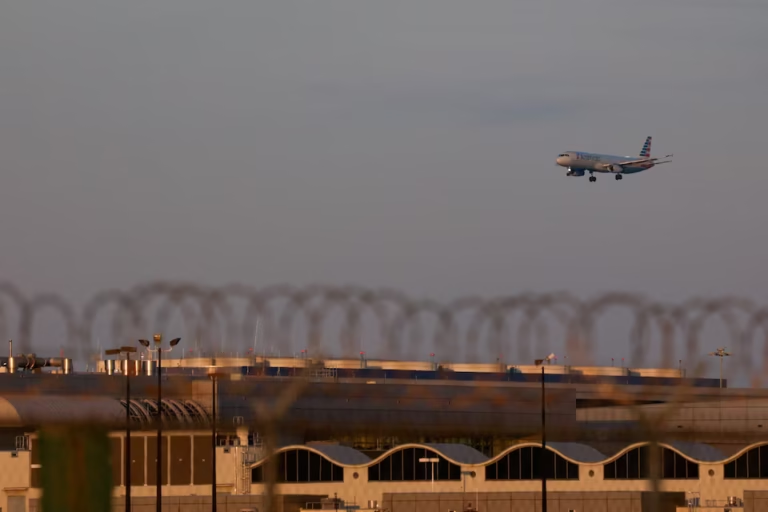
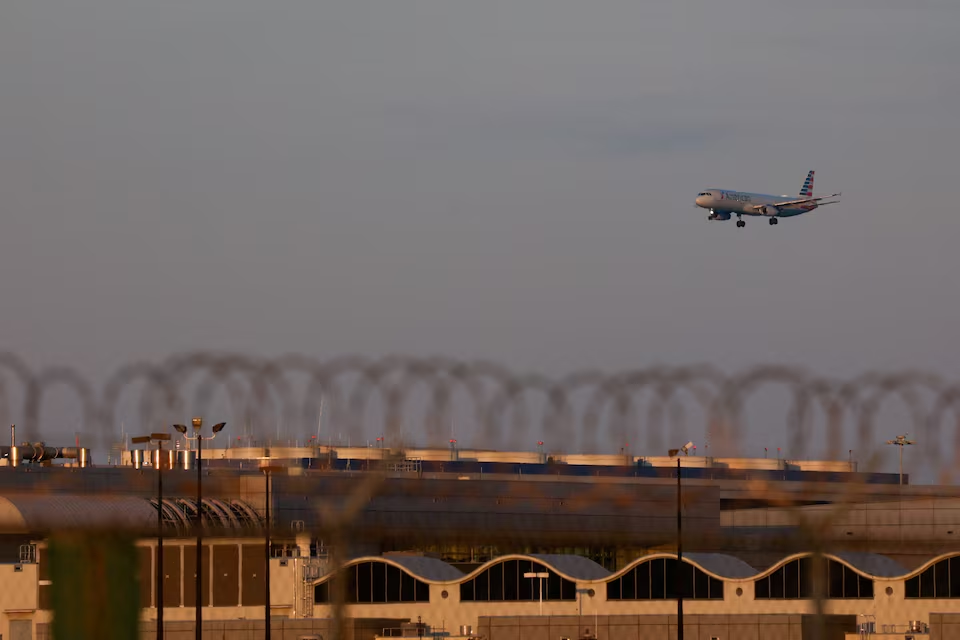
The Federal Aviation Administration lifted a nationwide ground stop on Friday night after a communications failure at air traffic control centers halted flights across the United States. It was the longest shutdown of US airspace since the September 11, 2001, attacks. Transportation Secretary Sean Duffy said airspace reopened at 8:15 p.m. Eastern Time (0115 GMT). By 11:30 p.m., nearly 10,000 flights had been canceled and tens of thousands of passengers were stranded at airports around the country.

The reopening did not end the problem. Departures would resume gradually, Duffy said, and airlines would need time to restore normal operations.

Airspace reopens, but recovery will be slow

Duffy made the announcement at the White House and did not promise a quick fix for travelers. “It’s going to be slow,” he told reporters.

Flightradar24 data shows how far the damage reached. Delta Air Lines canceled more than 2,200 flights and American Airlines canceled more than 2,200 as well. United Airlines canceled 1,800. Those three carriers account for at least 6,200 of the nearly 10,000 cancellations, roughly 60 percent of the total. The plane-tracking website also reported that some aircraft at major airports waited more than five hours for a gate.

Aviation analysts said the four-hour nationwide grounding could disrupt airline schedules for days. The reasoning is simple. A canceled flight leaves its aircraft and its crew somewhere other than where the next day’s schedule expects them, and airlines have to move both back before routes run normally again.

Duffy said he and Homeland Security Secretary Markwayne Mullin met President Donald Trump in the Oval Office to discuss the outage.

How Friday unfolded

FAA issues national ground stop due to 'extraordinary circumstance and reasons for safety'

The timeline, as officials and Flightradar24 described it, runs like this. At 3:36 p.m. Eastern, air traffic control centers began to see instability in radar and communications systems. The FAA stopped flights nationwide. At 8:15 p.m., Duffy said airspace reopened. At 11:30 p.m., Flightradar24 counted nearly 10,000 cancellations. Passengers with evening departures, like Edward Kargbo’s 9 p.m. flight to Lomé, were pushed into Saturday morning.

The numbers describe a bigger disruption than the ground stop alone. The grounding lasted about four hours, yet the cancellations came to nearly 10,000 flights, because every flight that missed its slot pushed the next one back.

What failed, according to Duffy

Duffy said the trouble began at 3:36 p.m., when air traffic control centers experienced instability in radar and communications systems. Four hours and 39 minutes passed between that moment and the reopening of airspace at 8:15 p.m.

He gave a specific explanation. “Our switches, our routers actually got overloaded with data and they started to give us inconsistencies in the data from those routers and because of that we shut the system down,” Duffy said. Controllers never lost radar or communications completely, he added, and they landed thousands of planes safely.

In plain terms, routers and switches began producing data that did not agree with itself, and the FAA stopped departures instead of working from unreliable information. That choice cost airlines and passengers a great deal on Friday night. Duffy said the immediate problem had been fixed and that flying was safe.

Two airline officials gave a different angle. They said the outage appeared to affect a telecommunications network overseen by L3Harris Technologies. That network handles critical radio frequencies controllers use to talk to pilots. L3Harris did not respond to a request for comment. The reports so far do not say how the radio network and the overloaded routers connect, or whether they do.

A $50 billion request

FAA issues national ground stop due to "extraordinary circumstance and reasons for safety\

Duffy used the outage to press Congress. He blamed lawmakers for not funding a new system that he said could prevent failures like this one, and he called for $50 billion to modernize it.

“What we have is an incredibly old air traffic control system,” Duffy said. “Give us the money to fix it.”

The request arrived on the same day as an earlier one. Before the outage, the White House and the Department of Transportation had urged Congress to approve $30.1 billion to upgrade the nation’s aging airports and air traffic control infrastructure. The two numbers cover different ground. The $30.1 billion covers airports as well as air traffic control, while the $50 billion is Duffy’s figure for modernizing the control system itself.

Lawmakers’ response was not available in reports filed Friday night, so the funding question stays open going into the weekend.

The outage landed on a system already under pressure. It is the latest and most dramatic sign of strain on a US air traffic control network beset by aging technology, equipment and communications problems, along with a shortage of several thousand controllers. Duffy warned that fixing Friday’s fault would not be enough, and that a broader overhaul was needed to prevent similar failures.

Cyberattack not ruled out

Mullin addressed the question many travelers were asking: whether someone caused this on purpose. He said there was “zero evidence” so far that the outage resulted from a cyberattack or a rogue AI system. Investigators had not ruled out either possibility, though.

“It appears this was mechanically driven. However, we’re still looking,” Mullin said.

His wording leaves room for the investigation to change course. Mullin did not say a cyberattack was impossible. He said there was no evidence of one so far, and that the outage appeared mechanical. The rogue AI possibility got the same treatment: no evidence yet, not ruled out. The Department of Homeland Security and the NSA now have to settle both questions with findings, and Friday night’s statements do not do that for them.

The National Security Agency was working with the Department of Homeland Security on the investigation, he added. Until that work finishes, the official cause stays open, and Duffy’s account of overloaded routers remains the only explanation officials have offered on the record.

Passengers face a night at the airport

FAA issues national ground stop due to 'extraordinary circumstance and reasons for safety'

Lifting the ground stop did not clear the terminals. Passengers crowded departure halls and airline desks in Boston, Seattle, New York and Los Angeles as delays and cancellations mounted and aircraft stayed parked at gates.

Thousands of passengers faced being stranded overnight. Edward Kargbo, 50, from West Chester, Pennsylvania, had a 9 p.m. Ethiopian Airlines flight to Lomé, Togo. Instead, he planned to spend the night at the airport and take a rescheduled flight at 6 a.m. on Saturday.

“I have to squat the night here,” he said. “I’m stranded.”

Louise Maher, 47, was caught at Newark after her British Airways flight to London was disrupted. “I might cry at some point but not yet,” she said.

Compensation is unlikely. US airlines are not required to compensate stranded passengers because the carriers were not responsible for the FAA system failures. If you hold a ticket this weekend, check your flight status with your airline before you leave for the airport, and ask about rebooking options directly.

Airlines and investors count the cost

FAA issues national ground stop due to 'extraordinary circumstance and reasons for safety'

The only other nationwide ground stop since the September 11 attacks came in January 2023, when the FAA halted domestic departures for about 90 minutes. Friday’s grounding lasted roughly four hours, close to three times as long.

Investors were already pricing in a financial hit to airlines. Shares of American (AAL.O), United (UAL.O) and Delta (DAL.N) fell between 1% and 2% in after-hours trading. JetBlue Airways dropped about 3%.

American Airlines said it was prioritizing flights to international destinations and to smaller cities outside its major hubs. The airline wants to position aircraft and crews for a faster recovery. That plan puts international flights and smaller cities first, so passengers on other routes should expect longer waits for a rebooked seat.

Delta and United face the same problem. Delta and United together canceled more than 4,000 flights, and each cancellation is a passenger who needs a new seat. The plane-tracking figures show the scale, and the schedules for Saturday and Sunday will show how quickly the carriers can absorb it.

What happens next

Friday’s failure left three questions open. The first is the cause: Duffy points to overloaded switches and routers, two airline officials point to a network run by L3Harris, and investigators from the Department of Homeland Security and the National Security Agency have not closed out the cyber question. The second is the schedule. Flights will resume gradually, and analysts expect airline timetables to stay disrupted for days. The third is the money, since Duffy is asking Congress for $50 billion while the administration has a separate $30.1 billion request for airports and control infrastructure already on the table.

For passengers, the practical question comes first. Thousands of travelers faced a night in the terminals, with rescheduled flights set for Saturday morning. Whether Saturday’s flights run on time will show how much of Friday’s damage the airlines have already repaired.

ADVERTISEMENT
Scroll to Top