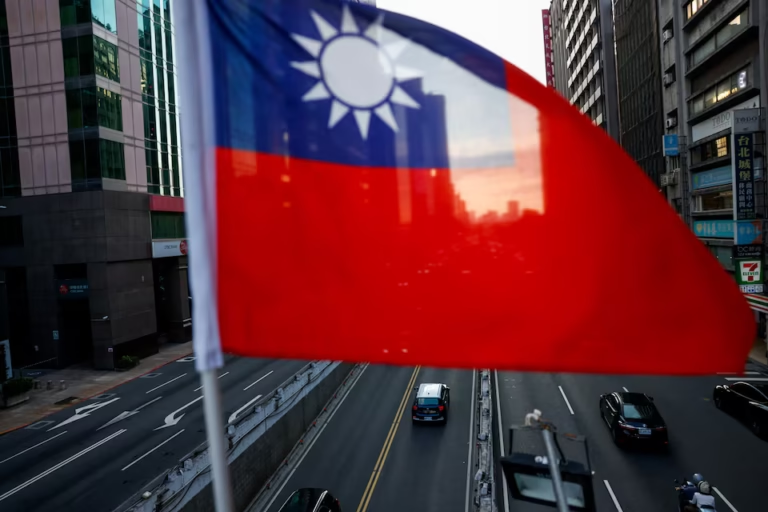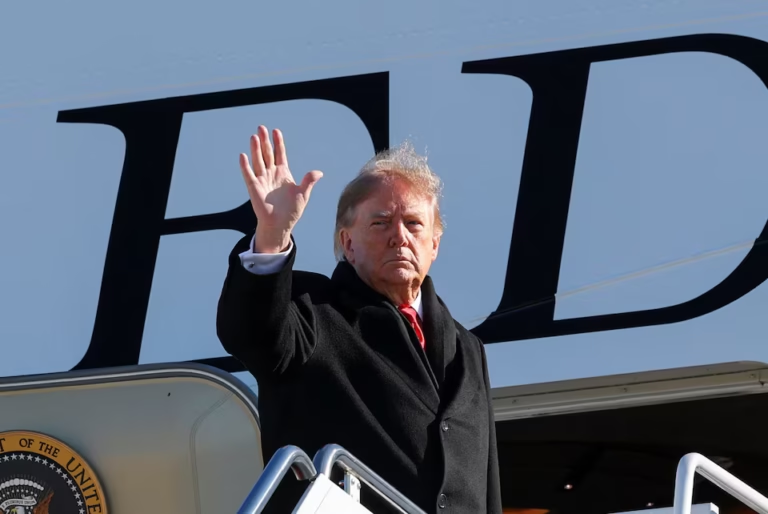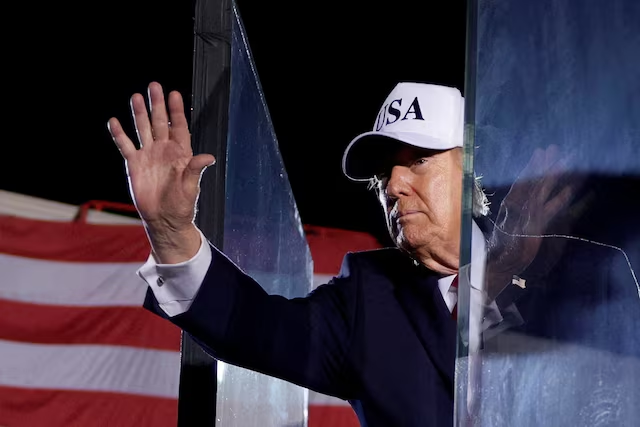

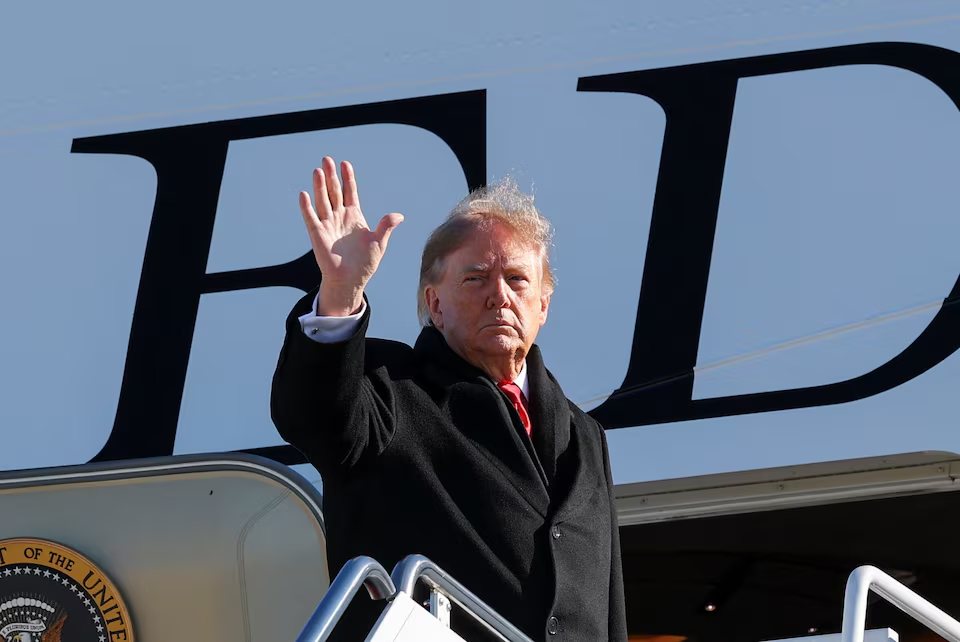
US President Donald Trump arrives in the Philippines on Tuesday, November 17, 2026, for the closing days of a Southeast Asian summit, with protesters already in the streets of Manila and the first Quad leaders’ meeting in two years waiting on the schedule. His flight leaves behind a Republican midterm defeat at home and carries him toward a Chinese-hosted forum where a three-way meeting with Xi Jinping and Vladimir Putin is under discussion.
The Quad brings together the United States, Japan, Australia and India. It last gathered two years ago, and it will be Trump’s first meeting with the group’s leaders. His predecessor Joe Biden treated it as a signature foreign policy initiative.
A trip with three stops and little room for error

Trump boarded Air Force One at Joint Base Andrews, Maryland, on Monday, November 16. After Manila he is due at the Asia-Pacific Economic Cooperation forum in Shenzhen, China, hosted by Xi. The Manila stop sits at the tail end of the Association of Southeast Asian Nations (ASEAN) summit, so Trump will see the region’s leaders in a compressed window rather than across several days of talks.
Two developments at home and abroad complicate the itinerary. Republicans lost the midterm elections, and spy allegations have surfaced that could strain the fragile trade-war truce between Washington and Beijing. Trump heads into the Shenzhen talks after an election loss, with a trade pause that could break if the espionage claims escalate.
Protests in Manila before he lands
Demonstrations in Manila have run for days. Protesters have burned effigies of the president, called for an end to the Middle East war, and demanded that the Philippines scrap Pax Silica, a US-led initiative to secure supply chains for semiconductors, artificial intelligence and rare earth elements.
Pax Silica has become the local flashpoint. Washington plans a critical technology hub at New Clark City, north of Manila, on land that was once part of a US military reservation including Clark Air Base. The Philippines took that land back in 1991. Supporters of the plan say it would bring about 200,000 jobs and up to $70 billion in investment. President Ferdinand Marcos Jr. said on August 14 that Manila’s involvement is economic and “purely practical.”
Analysts describe the hub as a defense against Chinese influence, and Xi launched a rival World Artificial Intelligence Cooperation Organization in July 2026. Opponents read it differently. Teddy Casino, who leads the nationalist group Bayan, says the hub would let US military personnel into the country and compromise Philippine sovereignty. Bayan marched in Manila on August 13. Senator Raffy Tulfo has filed a resolution to investigate the project’s economic, environmental, social and security effects, including its impact on indigenous peoples’ land.
The Philippines is a US defence ally, which makes the timing awkward for both governments. Trump meets Marcos on Wednesday, and the protests give Marcos a domestic audience that is watching how closely he stands to Washington.
Why the Quad meeting carries weight for Beijing

The Quad meeting comes just before APEC, and Xi has previously objected to the group as an effort to encircle China. Quad members say it is not directed against any one country.
Kurt Campbell, a former US Deputy Secretary of State, credited Secretary of State Marco Rubio with the timing and with reconvening the group. Campbell, co-founder of The Asia Group, said the Quad had lost ambition under Trump. He described the Quad meeting as a signal sent before the trilateral talks.
“Part of what he (Rubio) is thinking is that this is probably the best possible signal if you’re going to go into a trilateral meeting,” Campbell said, referring to Thursday’s US-China-Russia talks.
He also pointed to Japan. “The linchpin of everything that we do in Asia is the US-Japan relationship, and a perception that this is not at the top of the president’s mind would concern me,” Campbell said.
The White House framed the Quad in different terms. Spokesperson Olivia Wales said on Friday that under Trump’s leadership the Quad had shown it is “a partnership of action, tackling the region’s toughest challenges and driving opportunities to ensure a free and open Indo-Pacific.”
A Japanese foreign ministry official said last week that Quad leaders were expected to try to show unity. Maritime security, export restrictions, diversification of critical-minerals supply chains and artificial intelligence are among the possible topics.
Those topics overlap with the trade dispute Trump will carry into Shenzhen. Export restrictions and mineral supply chains are the same levers Washington and Beijing have used against each other, so any Quad language on them will be read in Shenzhen as a message, whatever the communiqué intends.
The Shenzhen meeting with Xi and Putin
The trilateral meeting is reportedly pencilled in for November 18 and 19 on the sidelines of APEC. China has not confirmed it. Foreign Ministry spokesperson Mao Ning said Beijing is “in communication with relevant parties.” Kremlin spokesman Dmitry Peskov said work is underway to coordinate it and that he hopes it will be finalized in the coming days. Trump has said he is open to three-way talks focused on nuclear weapons.
Beijing’s position is cooler than Moscow’s. China’s Foreign Ministry has rejected joining trilateral nuclear disarmament negotiations at this stage. German President Frank-Walter Steinmeier said Xi told him the meeting would not discuss Ukraine, and that Europeans must take part in any such talks. Analysts quoted by Al Jazeera expect few concrete results. Inderjeet Parmar argued that Trump wants a high-profile encounter to present himself as a dealmaker after the midterms, and warned that a three-way format breaks from the post-1945 habit of consulting allies before engaging Moscow or Beijing.
Campbell’s warning about Japan reflects the same concern. Tokyo is one of the four Quad capitals, and its foreign ministry is already setting expectations for the agenda. If Trump gives the meeting less attention than the Shenzhen talks, Japan and the other members will notice. That last point explains why Campbell’s comment about Japan carries weight. Allies in Tokyo, Canberra and New Delhi will read the order of the week closely. A Quad meeting that comes first, followed by talks with Xi and Putin, tells them something about priorities, and the Manila stage is where Trump can reassure them or fail to.
ASEAN wants both Washington and Beijing
Chinese Premier Li Qiang spoke at the ASEAN summit on Monday. He praised what he called “truly extraordinary” economic achievements of China and ASEAN in the face of global trade restrictions. He pledged Beijing’s commitment to free trade and said the sides need to “stand united, ward off interference, and work together.”
China is ASEAN’s biggest trading partner and a major source of investment. The bloc has 11 members and a combined GDP of more than $3.9 trillion. Its largest economies still want to deepen ties with the United States, despite the trade and diplomatic uncertainty of the Trump administration.
That position explains the choreography in Manila. On Tuesday, before Trump’s late afternoon arrival, ASEAN leaders meet counterparts from Japan, South Korea, China and India ahead of the annual East Asia Summit. Trump will skip the East Asia Summit. He will instead join a US-ASEAN “Special Summit” and meet Marcos on Wednesday. Skipping the larger gathering means Li’s message gets the main stage, while Trump speaks to ASEAN on a separate track.
Thailand and the trade question
Trump is also expected to hold talks with Thai Prime Minister Anutin Charnvirakul on Tuesday, according to Thai media quoting the commerce minister. A joint statement is planned on negotiations toward a reciprocal trade agreement.
The numbers show why Bangkok wants the deal. The United States is Thailand’s largest export market and took 24% of its total shipments this year. Washington designated Thailand a major non-NATO ally in 2003. Bangkok has a concrete stake in the outcome, because a lower tariff or a quota change affects a quarter of what the country ships abroad. The Thai talks are the clearest test in Manila of whether Trump’s reciprocal trade approach produces signed agreements with Southeast Asian partners or stays at the negotiating stage.
What to watch next
Several dates now matter. The Thai joint statement and the ASEAN sessions come Tuesday. The US-ASEAN Special Summit and Trump’s meeting with Marcos follow Wednesday. The reported Shenzhen trilateral sessions fall on November 18 and 19 and still await Beijing’s confirmation, and the Quad leaders meet just before APEC.
Three questions will decide how the week is remembered. Will the Quad issue a joint statement that mentions export restrictions and critical minerals? Will Marcos defend Pax Silica in front of Trump while protesters stay in the streets? And will China confirm the three-way meeting, or let it lapse?
Campbell’s reading is that Rubio is sequencing the week on purpose: allies first, adversaries second. Whether Xi and Putin see it that way will become clear in Shenzhen.